HUB 02 · Rice Cookers
Why Is My Rice Mushy?
Mushy rice almost always comes down to one of a handful of fixable causes — and the most common is a measuring mix-up, not a broken cooker. Here is every likely reason your rice turns out wet or gluey, the fix for each, and how to rescue a batch that's already too soft.
We earn a commission if you buy through our links. It does not change the price you pay, and it does not decide our picks — the scoring rubric is published in full, including what disqualifies a pick. How this works.
Mushy rice is a symptom, not a verdict
Mushy, wet or gluey rice is one of the most common rice-cooker complaints, and the reassuring news is that it is almost always a small, fixable input problem rather than a fault with the machine. Even the best rice cooker will make mush if it is fed the wrong ratio or the wrong measure. Below are the usual suspects, roughly in order of how often they are the culprit. Work through them and your rice comes back — and one of them, the measuring one, catches almost everybody at least once.
Cause 1: too much water (the big one)
By far the most common cause of mushy rice is simply too much water for the amount of rice. Rice absorbs a set amount of water; give it more and the excess makes the grains swell, split and turn gluey. The fix is to get the ratio right, and because it varies by rice type, we keep the numbers in the rice-to-water ratio guide. If you are using the pot's fill lines, make sure you are reading the correct line for the number of cups of rice — and that you measured with the right cup, which is the next cause.
Cause 2: you measured with the wrong “cup”
This one catches nearly everyone. A rice cooker cup is 180 ml, not a 240 ml US cup, and the pot's water lines are calibrated to that smaller cup. If you measured your rice with the little cup but filled water using a US cup — or eyeballed it — you flooded the rice, and out comes mush. Conversely, mixing measures in the other direction gives you dry rice. The complete explanation, and how to get it right if you lost the plastic cup, is in what is a rice cooker cup. Keeping your rice and water measures consistent fixes an astonishing share of mushy-rice problems on its own.
Cause 3: you skipped the rinse
Unrinsed white rice carries a coat of surface starch, and that starch is what turns cooked rice gluey and sticky. If your rice is less “waterlogged” and more “gummy and claggy,” the missing rinse is a likely cause. Rinse the rice in a few changes of cold water until it runs nearly clear before cooking, as covered in how to cook white rice. It is thirty seconds of work and it is the difference between separate grains and a sticky mass — with the usual exceptions of enriched rice coated in vitamins and dishes where you want the starch.
Cause 4: the wrong setting, or no rest
Two finishing mistakes round out the list. First, the wrong setting: cooking white rice on a porridge, quick or brown-rice program runs a different water and heat profile and can leave it wet or oddly textured — use the plain White setting for plain white rice. Second, and very common, serving it the instant it finishes. Rice needs to rest with the lid closed for about ten minutes so the moisture redistributes and the grains firm up; open it right away and the bottom is wet while the top is done. Then fluff it gently to release steam. A good fuzzy-logic cooker manages the heat well, but it cannot save rice that is served waterlogged and unfluffed. (If the problem is the opposite — rice boiling over during the cook — that is a different issue, covered in why your rice cooker boils over.)
How to rescue a mushy batch
If it is already too wet, do not throw it out. If it is only slightly soft, turn the cooker off, take the lid off, and let the rice sit uncovered for a few minutes so some steam escapes and the surface dries, then fluff. If it is genuinely mushy, the best rescues repurpose it: rice that is too soft makes excellent fried rice (the extra moisture cooks off in a hot pan), congee or rice porridge, or an ingredient in soup, patties or a rice pudding. Then adjust the water down next time. Mushy rice is almost never wasted and almost always a one-variable fix — usually the water, the cup, or the rest.
The checklist:too much water is the usual cause; measuring rice in a US cup while filling water to lines built for the 180 ml cup is the sneaky one; skipping the rinse makes it gummy; the wrong setting or no rest ruins the finish. Fix the ratio and the measure first. And a mushy batch isn't wasted — turn it into fried rice or congee and dial the water down next time.
The hardware
The cookers this page is about
The cookers referred to above, with prices pulled live from Amazon and dated on every card. Full rankings live in the roundups linked from this page.
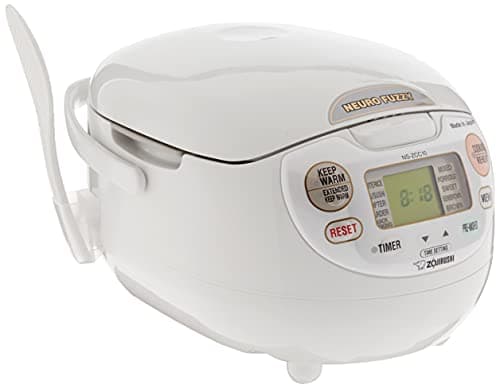
680 W
Zojirushi NS-ZCC10 Neuro Fuzzy Rice Cooker & Warmer, 5.5 Cup
The rice cooker every other one is measured against. Its Neuro Fuzzy microcomputer adjusts heat through the cook rather than running a fixed timer, which is the whole reason a $260 rice cooker cooks rice better than a $30 one. Made in Japan, 680 W, and the settings that matter are all there.
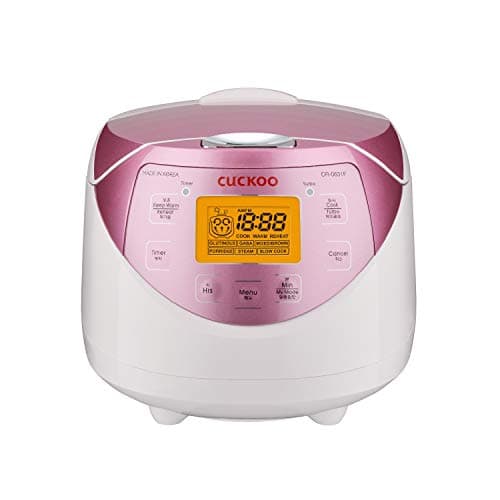
580 W
Cuckoo CR-0631F Micom Rice Cooker, 6 Cup
Cuckoo's non-pressure Micom cooker: the same Korean build and fuzzy-logic control as the CRP, without the pressure mechanism or its price. 580 W, a 6-cup nonstick pot, and a menu set that still covers GABA and brown rice. The sensible Cuckoo if you do not need pressure.
#ad · As an Amazon Associate we earn from qualifying purchases.
Questions
Frequently asked
Why does my rice come out mushy in a rice cooker?
How do you fix mushy rice?
Does rinsing rice stop it being mushy?
Keep reading
Related
Receipts
Sources
- Zojirushi — NS-ZCC10 Neuro Fuzzy Rice Cooker product page
- USDA FoodData Central — rice, cooked (nutrition reference)
We have not tested these machines in a lab and we do not pretend to have. Specifications come from the manufacturer's own published documents; electricity rates come from the US Energy Information Administration; prices come from the live Amazon API. Where a figure is not published, the page says “not published” rather than guessing. Read the full method.