HUB 03 · Sous Vide
How to Clean a Sous Vide Machine
An immersion circulator only touches clean water, so it barely gets dirty, but the parts that matter, the heating element and the impeller, quietly collect mineral scale from hard water. A wipe-down plus an occasional vinegar bath keeps it accurate and running quietly. Here is the whole routine.
We earn a commission if you buy through our links. It does not change the price you pay, and it does not decide our picks — the scoring rubric is published in full, including what disqualifies a pick. How this works.
Why a circulator needs so little cleaning
The good news first: an immersion circulator is one of the easiest kitchen tools to keep clean, because the food is sealed in a bag and the machine only ever sits in clean water. It almost never gets dirty in the way a pot does. What it does collect, slowly, is mineral scaleon the heating element and pump — and that is the thing to stay on top of, because scale can dull the temperature accuracy the whole device exists to provide. This is quiet upkeep, not scrubbing, and it belongs alongside choosing the right container.
The routine wipe-down
After a cook, unplug the circulator and let it cool. Wipe down the body with a damp cloth. Most circulators have a removable stainless skirt or capat the bottom that twists off to expose the heating coil and the impeller (the little pump wheel) — take it off, rinse it, and clear away any food particles that escaped a leaky bag or bits of debris from the water. Never put the motor body in the dishwasher or submerge it past its waterline; check whether the removable skirt is dishwasher-safe for your model. Let everything dry before storing.
Descaling with a vinegar bath
Periodically — more often with hard water — descale it. Fill a pot with a mix of water and white vinegar, clip the circulator in as if for a normal cook, and run it at a warm temperature (well below boiling) for 20–30 minutesso the weak acid dissolves the mineral buildup on the element and impeller. Then run it once in plain water to rinse. This is the single most important maintenance step for keeping temperature accurate and the pump quiet — a circulator like the Greater Goods, prized for its silent motor, only stays quiet if the impeller is not furred with scale.
Water resistance and how often
Do not mistake water resistance for “fully washable.” Many circulators are rated for splashes or brief immersion — the Jouleis IPX7-rated, for instance — but the control head still houses electronics, so follow the manufacturer's cleaning instructions for your specific model rather than assuming. As a cadence, a quick wipe and skirt-rinse after each cook, and a vinegar descale every month or two (or whenever you see white mineral film or hear the pump get louder), keeps a circulator accurate for years. It is a small habit that protects the one thing you bought the machine for — precise, quiet heat.
The hardware
The cookers this page is about
The cookers referred to above, with prices pulled live from Amazon and dated on every card. Full rankings live in the roundups linked from this page.
1,100 W
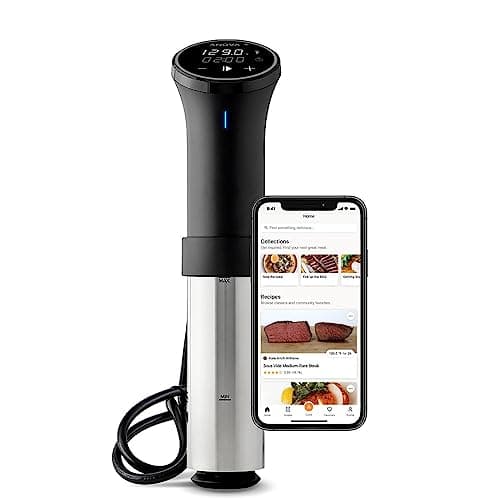
Anova Precision Cooker 3.0 (WiFi), 1100 W
The sous vide circulator most people should buy. Anova publishes the full specification — 1,100 W, a 0–92°C range, ±0.1°C accuracy, an 8 L/min pump — and backs it with a two-year warranty, the longest here. It has an on-device screen so it works without the app, which the Joule does not.
1,100 W
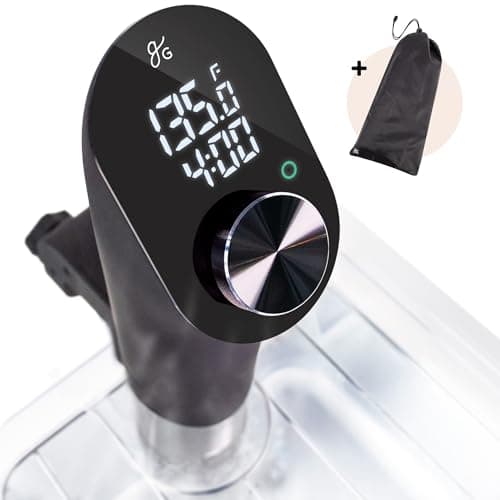
Greater Goods Sous Vide Precision Cooker, 1100 W
The circulator for people who want none of the connectivity. No WiFi, no app, no phone — a dial, a screen and a silent brushless motor rated to run 99 hours straight. 1,100 W, a 20–95°C range, and a build that is quieter than anything else here.
#ad · As an Amazon Associate we earn from qualifying purchases.
Questions
Frequently asked
How do you clean a sous vide immersion circulator?
How do you descale a sous vide machine?
Can you put a sous vide circulator in water fully?
Keep reading