HUB 03 · Sous Vide
Is Sous Vide Worth It?
For some cooks it is a revelation; for others it is a circulator gathering dust next to the good intentions. The difference is not skill — it is whether the thing sous vide is uniquely good at is a thing you actually cook. Here is the honest case, the honest limits, and how to tell which camp you are in.
We earn a commission if you buy through our links. It does not change the price you pay, and it does not decide our picks — the scoring rubric is published in full, including what disqualifies a pick. How this works.
What sous vide is uniquely good at
One thing above all: edge-to-edge precision. Because you cook food in a water bath held at the exact final temperature you want, a steak comes out the same perfect medium-rare from surface to center — no gray band, no guesswork, and impossible to overcook by leaving it in. That same control makes chicken breast reliably juicy, eggs exactly the texture you set, and tough cuts like short ribs meltingly tender over a long, low cook. If those results appeal to you, sous vide delivers them more consistently than any other method.
What it does not do
Two honest limits. It is not fast — even a steak is an hour in the bath before you sear it, and long cooks run overnight or longer, so it is planning-ahead cooking, not weeknight-rush cooking. And it produces no browning on its own: sous vide gets the inside perfect, but you still need a hot pan, torch or grill to sear the outside afterward, which is an extra step and an extra pan. Anyone expecting a one-step, hands-off dinner will be disappointed; that is not what the technique is.
The gear and the real cost
Less than people assume. You need a circulator — a good one starts under $100, and the budget field is genuinely capable — a container or a large pot, and a way to seal food (zip-top bags and the water-displacement method work fine; a vacuum sealer is optional). Running cost is low: a circulator draws its rated wattage only while heating and then cycles to hold, so a long cook costs less than the rated draw suggests. The bigger cost is the sear step and the planning, not the electricity or the equipment.
Who should buy in, and who should not
Buy in if you cook steak, chicken or tough cuts often and care about getting them exactly right, if you like cooking ahead, or if you cook for a crowd and want everything at the same doneness with no last-minute panic. Skip it if you mostly want fast weeknight dinners, if a crispy finish with no extra steps is the goal, or if a good instant-read thermometer already gets you the results you want. If you are curious but unsure, the cheapest way to find out is a sub-$100 circulator — try it before you commit to a premium one.
The hardware
The cookers this page is about
The cookers referred to above, with prices pulled live from Amazon and dated on every card. Full rankings live in the roundups linked from this page.
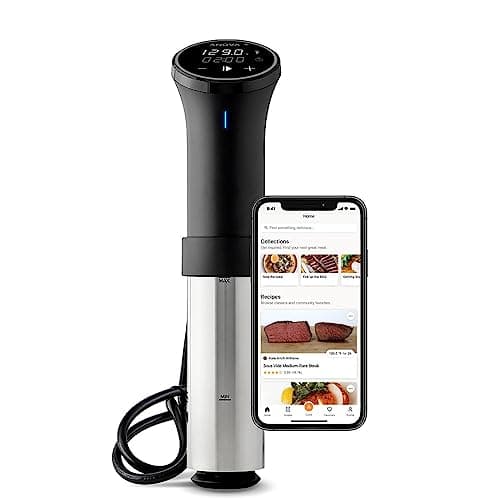
1,100 W
Anova Precision Cooker 3.0 (WiFi), 1100 W
The sous vide circulator most people should buy. Anova publishes the full specification — 1,100 W, a 0–92°C range, ±0.1°C accuracy, an 8 L/min pump — and backs it with a two-year warranty, the longest here. It has an on-device screen so it works without the app, which the Joule does not.
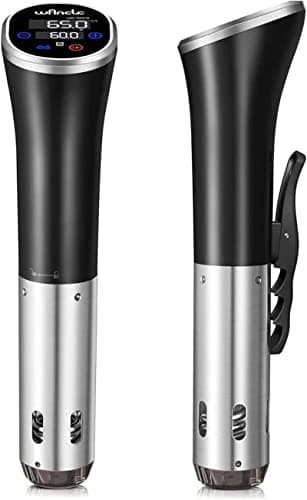
1,100 W
Wancle 1100 W Sous Vide Immersion Circulator (820)
The cheapest way to find out whether you actually like sous vide, now that the Monoprice is gone. 1,100 W, a published 25–90°C range, an IPX7 body you can rinse under the tap, and a spec sheet Wancle actually prints. It claims ±0.1°C, which nobody independent has checked — and it publishes no warranty at all.
#ad · As an Amazon Associate we earn from qualifying purchases.
Questions
Frequently asked
Is sous vide actually worth it?
What are the downsides of sous vide?
Do you need an expensive machine to start sous vide?
Keep reading
Related
- Is sous vide healthy?No added fat, nutrient retention, and the plastic question.
- Sous vide without a vacuum sealerYou do not need one to start.
- What is sous vide?The method, explained from scratch.
- The best sous vide machinesIf the answer is yes, start here.
- The best budget sous vide machinesThe cheapest way to try it.
Receipts
Sources
- USDA FSIS — cooking safely with time and temperature (pasteurization basics)
- US Energy Information Administration — Electric Power Monthly, Table 5.3 (average residential price)
We have not tested these machines in a lab and we do not pretend to have. Specifications come from the manufacturer's own published documents; electricity rates come from the US Energy Information Administration; prices come from the live Amazon API. Where a figure is not published, the page says “not published” rather than guessing. Read the full method.