Skip to content
DD

HUB 04 · Buying Guides

The Best Cookers for Two

Cooking for two is its own problem: most countertop cookers are sized for a family, so you end up heating a big pot to make a small meal. These are the cookers that fit a two-person kitchen without wasting space or energy, ranked by how well they match small-batch cooking. Each with an honest limit.

By Stephen V.Updated How we rank
#ad

We earn a commission if you buy through our links. It does not change the price you pay, and it does not decide our picks — the scoring rubric is published in full, including what disqualifies a pick. How this works.

The short answer

Quick picks

#CookerBest forScorePrice
01700 W
7.3
$89.99Amazon
021,000 W
8.6
$104.67Amazon
03
Toshiba Toshiba Mini Rice Cooker, 3 Cups Uncooked, with Fuzzy Logic
Toshiba Mini Rice Cooker, 3 Cups Uncooked, with Fuzzy Logic

One or two people who still want fuzzy logic

Wattage not published
5.9
$94.99Amazon
04800 W
7.7
$44.99Amazon

#ad · Prices pulled live from the Amazon Product API, last checked Aug 5, 2026. Where we have no verified live price we show none — we would rather leave a gap than print a number that has gone stale. The wattage column is what the manufacturer publishes; “not published” means exactly that, and we have not estimated one. Scores are ours, compiled from published specifications, and are not test results.

Why cooking for two needs different cookers

Most countertop cookers are built for a family, and that is a real problem when you cook for two: a 6-quart pot to make a soup for two people, a rice cooker sized for a crowd, an appliance too big to leave out and too much hassle to dig from a cupboard. The best cookers for a two-person kitchen are the ones that match small-batch cooking— right-sized, low-fuss, and quick to pull out and put away. This roundup ranks four across the categories, and it overlaps with the best cookers for small kitchens and for students, but it is tuned specifically to household size rather than counter space or budget.

How we ranked them

We ranked on how well each machine suits a two-person household: right-sized capacity first, then versatility, storability and running cost. As everywhere on this site, we have tested none of these— every figure comes from the manufacturer's own documents, cited on each card, and every pick carries a real, disqualifying con, because a roundup where everything is perfect helps nobody choose. The full rubric is in our methodology. Prices move, so we do not print them in prose — the live price sits on each card, which also lets you weigh the small-batch picks against the scale-up option honestly.

1. Instant Pot Duo Mini — the right-sized multicooker

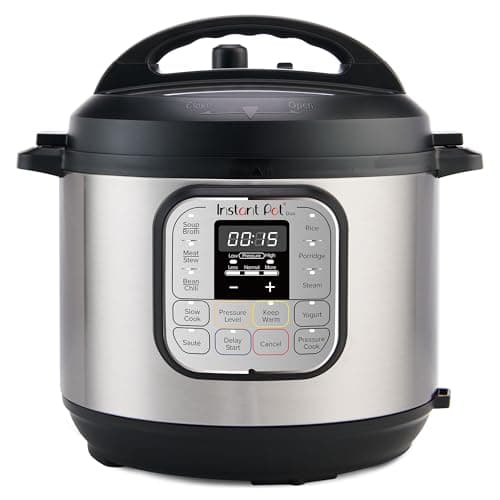
The Instant Pot Duo Mini is the pick that fits a two-person kitchen best, because it is the versatile do-everything machine scaled to the household. At 3 quarts it cooks a couple of portions of rice, a soup or stew for two, or a small braise without heating a family-sized pot for it, and at 700 Wit is the lowest-draw Instant Pot on this site — the cheapest to run and the quickest to come to pressure. It keeps the full Duo's 7-in-1 set (pressure, slow cook, sauté, steam, rice, yogurt, warm) and the same 18/8 stainless inner pot, so nothing about the cooking is compromised, only the size. It is small and light enough to live in a cupboard and pull out when needed. The honest con:3 quarts is a hard ceiling — it will not cook for guests, and doubling a recipe means two rounds — and the tight interior makes batch-searing fiddly. For two people who want one flexible machine that genuinely fits, though, it is the standout, and the Duo Mini vs Duo comparison walks the size decision in detail.

2. Instant Pot Duo (6-quart) — if you want leftovers

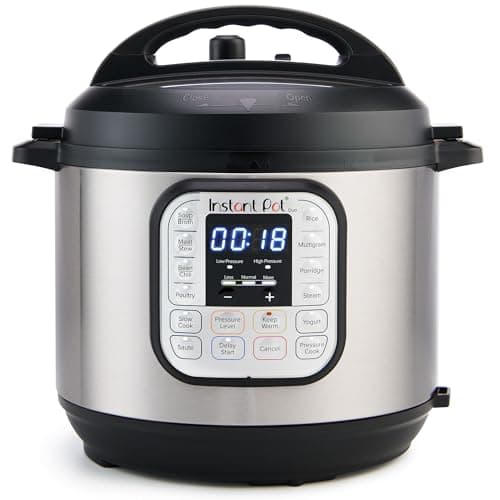
Not every couple wants the smallest pot, and that is the case for the standard 6-quart Instant Pot Duo. Plenty of two-person households deliberately batch-cook and freeze— make a big chili on Sunday, eat it through the week — and for them the Mini's 3 quarts is a frustration, not a feature. The 6-quart Duo is the category default for a reason: 1,000 W, the same well-documented stainless pot, and the space to cook a full meal with leftovers. It is also barely more money than the Mini. The honest con:for genuinely small, single-meal cooking it is oversized — you heat more pot than you need, and it takes more counter and cupboard space. Choose it over the Mini if leftovers and the occasional guest matter more to you than the smallest possible footprint; it is the same decision our what size Instant Pot guide frames. Between these first two picks, most couples are covered on the multicooker front.

3. Toshiba Mini Rice Cooker — rice for two, done well

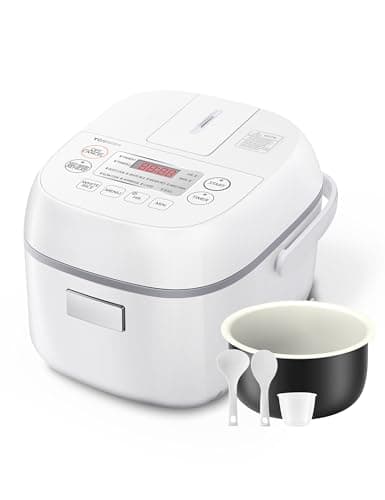
If rice is a regular part of how you eat, a dedicated cooker beats the multicooker's rice program, and the Toshiba Mini is the rare small rice cooker that still uses fuzzy logic— it senses and adjusts the heat rather than running a dumb on/off timer, which is what most compact cookers drop to. At 3 cups uncooked it is right-sized for one or two, so you are not heating a big pot for a small portion, and its 24-hour delay timer means rice is ready when you get home. For a two-person household that eats rice a few times a week, it makes genuinely better rice than a multicooker button, and it stores easily. The honest con:Toshiba does not publish a wattage for this mini SKU that we could verify, so it earns no running-cost figure from us, and 3 cups is a firm ceiling — do not confuse it with Toshiba's larger 6-cup models. If rice matters, this is the small-kitchen rice pick; if it does not, skip it and let the Instant Pot handle occasional rice. The best rice cooker roundup has the full-size options.

4. Monoprice Sous Vide — precision that stores away

Sous vide is a natural fit for two, because portion size does not matter to a circulator — it cooks two steaks as easily as six — and the Monoprice Strata is the cheapest honest way in. It is a slim wand that stores in a drawer, has physical controls (no app to fuss with), an 800 W element, and a directional pump cap that is a genuinely thoughtful touch at the price. For a couple curious about sous vide but not ready to spend, it is the low-risk pick that clips onto any pot you already own. The honest con: it quotes a looser ±1% temperature stability rather than the ±0.1°C of pricier machines — fine for steaks and chicken, less ideal for long, delicate cooks like eggs — and it publishes no warranty term. It is the try-it-first machine, not the keep-it-forever one; if you find you love the technique, the best sous vide roundup has the step-ups.

The rule for two: start with the Instant Pot Duo Mini if you want one right-sized machine that does most things, or the full 6-quart Duo instead if you batch-cook and freeze. Add the Toshiba Mini if you eat rice often enough to want it done well, and the Monopriceif you are curious about sous vide and want it cheap and drawer-sized. Buy for how you actually cook for two — not the family-sized pot the store pushes.

In detail

The picks, in full

01
Instant Pot Instant Pot Duo Mini 7-in-1, 3 Quart Electric Pressure Cooker

One or two people, or a second pot

Instant Pot Duo Mini 7-in-1, 3 Quart Electric Pressure Cooker

Smallest footprintLowest-draw Instant Pot here
7.3/10

The Duo shrunk to 3 quarts. It is the right size for one or two people, for a dorm or an RV, or as a second pot for a side dish while the big one does the main. The same 7-in-1 function set, the same stainless pot, in a footprint that actually fits a small kitchen.

Capability
7
Capacity
4.5
Documentation
9
Build
8
Value
8

What it gets right

  • Three quarts is genuinely one-or-two-person sized — you are not heating a six-quart pot to cook a cup of rice
  • At 700 W it is the lowest-draw Instant Pot on this site, and small and light enough to live in a cupboard
  • The same 18/8 stainless inner pot and 7-in-1 set as the full Duo, so nothing about the cooking is compromised

What it doesn't

  • Three quarts is a hard ceiling — it will not cook for a family, and doubling a recipe means two rounds
  • The smaller pot pressurizes fast but the tight interior makes searing in batches fiddly
  • No sous vide or air fry — it is the plain Duo feature set, scaled down

What it costs to run

About 13.2¢ an hour at full rated draw, at the US average of 18.83¢ per kWh.

700 W ÷ 1000 × 1 h × 18.83¢ = 13.2¢

700 W at 120 V / 60 Hz, published on Instant Brands' own Duo Mini product page and confirmed in the Duo Mini user manual specification table. This is an upper bound: the element only draws full power while it is heating up or pressurizing, then cycles off to hold temperature, and no manufacturer publishes a duty cycle — so we compute at full rated draw rather than invent a correction factor. The full method is published.

Skip this if…

you ever cook for more than two, or you batch-cook. The Mini's size is its whole point and also its whole limit; a 6-quart Duo is only a little more money and vastly more useful for a household.

$89.99on Amazon

Price last checked Aug 5, 2026. Prices move constantly — Amazon's at checkout is the one that counts.

#ad · we may earn a commission from this link to Instant Pot Duo Mini 7-in-1, 3 Quart Electric Pressure Cooker

02
Instant Pot Instant Pot Duo 7-in-1 Electric Pressure Cooker, 6 Quart

The one to buy if you are not sure

Instant Pot Duo 7-in-1 Electric Pressure Cooker, 6 Quart

Stainless inner potWattage & pressure published
8.6/10

The multicooker that made the category, and still the right default. Instant Brands publishes the wattage, the working pressure range and a stainless (not nonstick) inner pot, which is more than most of the field manages — and it costs less than almost all of them.

Capability
7.5
Capacity
8
Documentation
9.5
Build
8.5
Value
9.5

What it gets right

  • Instant Brands publishes the wattage, the working-pressure range and the pot material — the full set, which most of the field does not
  • The 18/8 stainless inner pot has no coating to scratch off, so it outlives the nonstick pots in cookers costing more
  • At the current price it is the cheapest genuinely well-documented multicooker on this site

What it doesn't

  • No sous vide or air-fry program — this is the plain pressure-and-slow-cook model, by design
  • The steam release is a manual toggle, not the quiet auto-release of the Duo Plus or Pro
  • Seven functions is fewer than the sticker-count leaders, though most of those are the same element at different set points

What it costs to run

About 18.8¢ an hour at full rated draw, at the US average of 18.83¢ per kWh.

1,000 W ÷ 1000 × 1 h × 18.83¢ = 18.8¢

1000 W at 120 V / 60 Hz, published on the Instant Pot Duo product page and confirmed on the IP-DUO60 manual specification page. This is an upper bound: the element only draws full power while it is heating up or pressurizing, then cycles off to hold temperature, and no manufacturer publishes a duty cycle — so we compute at full rated draw rather than invent a correction factor. The full method is published.

Skip this if…

you specifically want sous vide, a quieter steam release, or an air-fry lid — the Duo has none of those, and reaching for it and then wishing it did more is the most common Instant Pot regret. Step up to the Pro or Duo Crisp instead.

$104.67on Amazon

$109.995% off

Price last checked Aug 5, 2026. Prices move constantly — Amazon's at checkout is the one that counts.

#ad · we may earn a commission from this link to Instant Pot Duo 7-in-1 Electric Pressure Cooker, 6 Quart

03
Toshiba Toshiba Mini Rice Cooker, 3 Cups Uncooked, with Fuzzy Logic

One or two people who still want fuzzy logic

Toshiba Mini Rice Cooker, 3 Cups Uncooked, with Fuzzy Logic

Fuzzy logic in a miniNo published wattage
5.9/10

A small fuzzy-logic cooker for one or two people — the rare compact rice cooker that still senses and adjusts rather than running a dumb timer. Three cups uncooked, one-touch operation, and a 24-hour delay so rice is ready when you get home.

Capability
7
Capacity
4.5
Documentation
4
Build
6.5
Value
7.5

What it gets right

  • Fuzzy-logic heat control in a genuinely small cooker — most compact rice cookers drop to a dumb on/off thermostat
  • Three cups is right-sized for one or two people, so you are not heating a full pot for a small portion
  • The 24-hour delay timer means rice ready when you walk in, which is most of why people buy a rice cooker at all

What it doesn't

  • Toshiba does not publish a wattage for this mini SKU that we could verify, so we show no running cost — do not confuse it with Toshiba's 6-cup models
  • Three cups is a firm ceiling; it will not cook for a family
  • The nonstick pot is small and thin, and the build is budget-tier

What it costs to run

Toshiba publishes no wattage for this cooker in any document we could find, so we do not show a running-cost figure for it. We are not going to estimate one from a similar model. Here is the method we would have used.

Skip this if…

you cook for more than two or ever entertain — the 3-cup capacity is the whole limit here. A 5.5-cup fuzzy-logic cooker is only a little more and far more flexible for a household.

$94.99on Amazon

Price last checked Aug 5, 2026. Prices move constantly — Amazon's at checkout is the one that counts.

#ad · we may earn a commission from this link to Toshiba Mini Rice Cooker, 3 Cups Uncooked, with Fuzzy Logic

04
Monoprice Monoprice Strata Home Sous Vide Immersion Cooker, 800 W

The floor of the category

Monoprice Strata Home Sous Vide Immersion Cooker, 800 W

Cheapest here±1% stability, not ±0.1°C
7.7/10

The cheapest way to find out whether you actually like sous vide. Physical controls only, an 800 W element, a factory-calibrated sensor you can recalibrate yourself, and a directional pump cap that is a genuinely thoughtful touch at the price. Monoprice publishes the full spec in the manual, which the price does not lead you to expect.

Capability
7
Capacity
7.5
Documentation
8.5
Build
6.5
Value
9

What it gets right

  • The lowest price of any sous vide machine on this site, and enough to learn the technique on
  • The directional pump cap — aim the flow, or run a gentle side-jet for delicate food — is a real feature at this price
  • Monoprice publishes the full specification in the manual, including a user recalibration procedure

What it doesn't

  • It quotes ±1% temperature stability rather than the ±0.1°C the Anova and Inkbird publish — looser control, which matters most on long, low cooks
  • No connectivity and a basic control panel
  • Monoprice does not publish a warranty term in the manual

What it costs to run

About 15.1¢ an hour at full rated draw, at the US average of 18.83¢ per kWh.

800 W ÷ 1000 × 1 h × 18.83¢ = 15.1¢

800 W (110–120 VAC, 60 Hz), published in Monoprice's own Strata Home 21594 user manual specifications table. This is an upper bound: the element only draws full power while it is heating up or pressurizing, then cycles off to hold temperature, and no manufacturer publishes a duty cycle — so we compute at full rated draw rather than invent a correction factor. The full method is published.

Skip this if…

you already know you love sous vide and cook it often — the tighter ±0.1°C control of the Inkbird or Anova is worth the step up for eggs and long low cooks. This is the try-it-first machine, not the keep-it-forever one.

$44.99on Amazon

$72.7138% off

Price last checked Aug 5, 2026. Prices move constantly — Amazon's at checkout is the one that counts.

#ad · we may earn a commission from this link to Monoprice Strata Home Sous Vide Immersion Cooker, 800 W

Building a two-person kitchen

If you are buying just one machine, make it a multicooker — the Duo Mini for the smallest footprint, or the 6-quart Duoif leftovers matter — because a versatile pressure-and-slow cooker covers the most ground for two people. From there, add by habit, not by aspiration: a rice cooker only if rice is genuinely regular on your table, and a sous videonly if precise steaks and chicken appeal enough to try. The mistake couples make is buying family-sized everything and then heating half-empty pots for years; the second mistake is buying the Mini to save a little and then resenting it every time you cook for four. Be honest about which of you cooks, how often you have people over, and whether you batch-cook — those three answers decide the whole list. For neighbouring buyer situations, our small-kitchen and beginner roundups start from different constraints but land on similar, forgiving machines.

How we picked

Machines we claim to have tested: 0

Everyone in this category tells you they tested twenty cookers. We have tested none, and we say so. Here is what we do instead: read the manufacturer's manual and spec page, record the published wattage, capacity, pressure or temperature figure and warranty term, work out what the machine costs to run per hour, show the arithmetic so you can redo it with your own electricity rate, and cite all of it. Where a brand publishes no wattage, we print no running cost rather than borrowing a number from a similar model. Prices come live from Amazon's API and disappear rather than go stale.

The scores above are judgments from that documented research — not test results. One of the five metrics is Documentation: whether the manufacturer will tell you what its cooker draws at all. The full rubric, including what disqualifies a pick, is published in full.
Questions

Frequently asked

What size Instant Pot is best for two people?
The 3-quart Duo Mini is the natural fit for two: it cooks a couple of portions without heating a family-sized pot, draws the least power of any Instant Pot here, and stores easily. Choose the 6-quart Duo instead only if you batch-cook and freeze or often have guests, since the Mini is a hard 3-quart ceiling.
Do you need a rice cooker if you cook for two?
Only if you eat rice regularly. For occasional rice, a multicooker's rice program is enough. If rice is a few-times-a-week staple, a small fuzzy-logic cooker like the Toshiba Mini makes better rice and is right-sized for two. See do you need a rice cooker.
Is sous vide worth it for two people?
It can be, because a circulator does not care about portion size and cooks two steaks as easily as a crowd. The budget Monoprice is a low-risk, drawer-sized way to try it. It is worth it if precise, hard-to-overcook steaks, chicken and eggs appeal to you; if not, skip it and let a multicooker cover the cooking.

Keep reading