HUB 03 · Sous Vide
How to Sous Vide Lamb Chops
Lamb chops are expensive and easy to overcook, which makes them a perfect sous vide candidate: the bath holds them at one exact temperature so they cook edge to edge with no gray band, then a hard sear crisps the fat and browns the outside. Here is the method and the honest safety line.
We earn a commission if you buy through our links. It does not change the price you pay, and it does not decide our picks — the scoring rubric is published in full, including what disqualifies a pick. How this works.
Why lamb chops are a perfect sous vide cut
Lamb chops are lean, expensive and quick to overcook — a minute too long over high heat and a $20 rack is gray and tough. That is exactly the problem sous vide solves. Holding the chops at one exact temperature in a water bath cooks them edge to edge to a single doneness, with no overcooked outer band, and they cannot overshoot while they wait — so the pricey cut comes out exactly as you want it, every time. Then a hard, fast sear crisps the fat cap and browns the outside. As with everything on this site, we have not cooked these ourselves; this is the standard method, grounded in USDA safety guidance.
Season and seal
Lamb takes strong aromatics well: season the chops with salt and pepper and add what you like — rosemary, thyme, garlic, a little olive oil. Seal them in a single layer; you do not need a vacuum sealer, as the water-displacement methodworks perfectly for chops — lower a zip-top bag slowly into the water so the pressure pushes the air out, then seal it. Cook chops of similar thickness together, since thickness, not weight, sets the timing, and lay them flat so they heat evenly. A little garlic and rosemary in the bag will gently perfume the meat as it cooks.
Set the temperature and walk away
Clip the circulator to a pot, set your target, and let the bath come up before the lamb goes in. A precise machine — the Anova or the Monopricefor a budget start — holds the exact temperature that decides whether your chops are rare, medium-rare or beyond. The precise numbers, and how long a given thickness needs, belong in a chart; we keep a full one in the sous vide temperature guide, and you should defer to it rather than guess, because for lamb the time and temperature together are also what make it safe. A generous window is the method's gift here — the chops wait past their minimum without overcooking, so dinner timing is forgiving.
The hard sear to finish
Out of the bag the chops are perfectly cooked but pale, and lamb especially wants that crisp, rendered fat, so the sear matters. Dry them thoroughly with paper towels, then sear them hard and fastin a screaming-hot pan with a little high-smoke-point oil — a minute or so per side, plus a moment held fat-side down to render and crisp the fat cap. Because the interior is already at your target, the sear is purely about browning the outside, the same sear-after logic as any sous vide meat. Rest briefly and serve.
The safety line: 145°F with a rest, or pasteurize
Lamb chops are a whole cut, so the rule is the same as for a steak or a pork loin: the USDA safe minimum for whole cuts is 145°F, followed by a three-minute rest. Because bacteria on a whole cut live on the surface, the hard sear also helps make it safe. Sous vide lets you cook lamb below 145°F for a rarer result, and when you do, safety comes from time and temperature together— holding the chops long enough at your chosen temperature to pasteurize them. As always, that only works with a validated holding time, which is why the pairings live in the temperature guide and are not something to eyeball.
The method in one line: season and seal the chops with the water-displacement method, hold them at one exact temperature from the temperature guide, then sear hard and fast with a moment fat-side down. On safety, whole-cut lamb's USDA minimum is 145°F with a rest, or hold long enough to pasteurize if you go rarer. The same method works for a steak; the difference is only the temperature you choose.
The hardware
The cookers this page is about
The cookers referred to above, with prices pulled live from Amazon and dated on every card. Full rankings live in the roundups linked from this page.
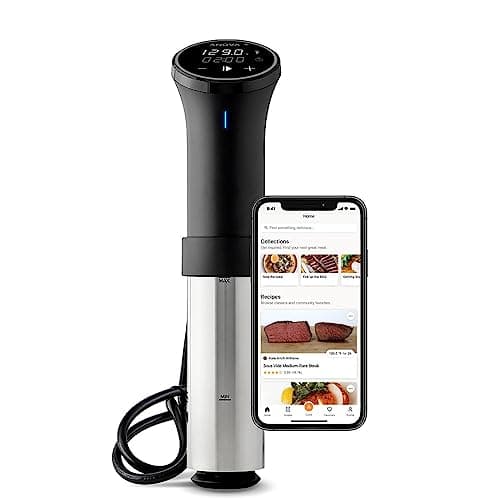
1,100 W
Anova Precision Cooker 3.0 (WiFi), 1100 W
The sous vide circulator most people should buy. Anova publishes the full specification — 1,100 W, a 0–92°C range, ±0.1°C accuracy, an 8 L/min pump — and backs it with a two-year warranty, the longest here. It has an on-device screen so it works without the app, which the Joule does not.
- PickNo image
800 W
Monoprice Strata Home Sous Vide Immersion Cooker, 800 W
The cheapest way to find out whether you actually like sous vide. Physical controls only, an 800 W element, a factory-calibrated sensor you can recalibrate yourself, and a directional pump cap that is a genuinely thoughtful touch at the price. Monoprice publishes the full spec in the manual, which the price does not lead you to expect.
#ad · As an Amazon Associate we earn from qualifying purchases.
Questions
Frequently asked
What temperature do you sous vide lamb chops?
Do you sear lamb chops before or after sous vide?
How long do lamb chops take to sous vide?
Keep reading
Related
Receipts
Sources
- USDA Food Safety and Inspection Service — safe minimum internal cooking temperatures
- USDA FSIS — cooking safely with time and temperature (pasteurization basics)
- Anova Culinary — Precision Cooker 3.0 product page
We have not tested these machines in a lab and we do not pretend to have. Specifications come from the manufacturer's own published documents; electricity rates come from the US Energy Information Administration; prices come from the live Amazon API. Where a figure is not published, the page says “not published” rather than guessing. Read the full method.