Two machines that agree on the big thing
Start with what these two have in common, because it is unusual on this site: neither one pressure-cooks. Both are built for slow, gentle, hands-off cooking, and both are the honest alternative to a pressure cooker for the cook who never actually used the pressure function. The Ninja PossibleCooker PRO is an 8.5-quart multicooker that sears, slow-cooks, steams and goes in the oven; the Crock-Pot Cook & Carry is a plain 6-quart programmable slow cooker that only slow-cooks. So this is not a fast-vs-slow question the way multicooker vs slow cooker is — both are slow. It is a question of how much machine you want around that slow cooking.
Capacity: 8.5 quarts vs 6 quarts
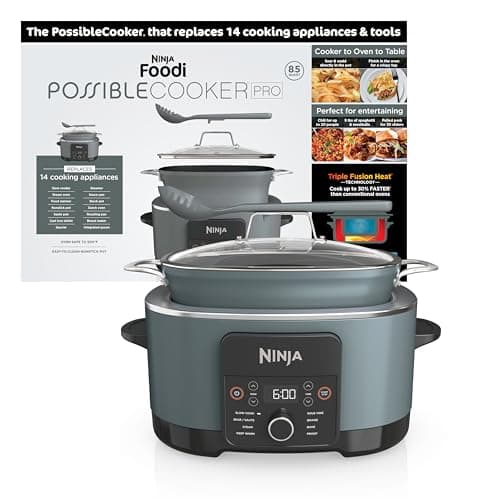
The clearest difference is size. The Ninja holds 8.5 quarts; the Crock-Pot holds 6. That two-and-a-half-quart gap is a real one for the kind of cooking both do best — big-batch chili, a Sunday pot of pulled pork, a stew that becomes three nights of leftovers. If you cook for a crowd or batch-cook in volume, the Ninja's extra capacity is the single strongest reason to pick it, and it is why the Ninja, not the Crock-Pot, is our pick in the large multicooker roundup. Six quarts is still plenty for a normal household dinner and leftovers, and it is the more sensible size for a smaller kitchen — but if “the biggest batch I can make in one go” is what you care about, the Ninja wins this outright.
Searing: the Ninja's real advantage
The Ninja does one thing the Crock-Pot fundamentally cannot: it sears. Its pot heats on the stovetop base to brown meat and soften aromatics before the slow cook, and it is oven-safe to 500°Fso you can finish or brown under a broiler — one vessel from sear to slow-cook to a browned top. That browning step is where a lot of a braise's flavor actually comes from, and on the Crock-Pot you have to do it in a separate skillet and wash a second pan. The Crock-Pot has no sear function at all: you add raw or pre-browned ingredients and it holds a low heat, full stop. For a cook who wants everything in one pot and cares about the depth that browning adds, the Ninja's searing is a genuine, everyday advantage.
Running cost: 1,200 W vs 240 W
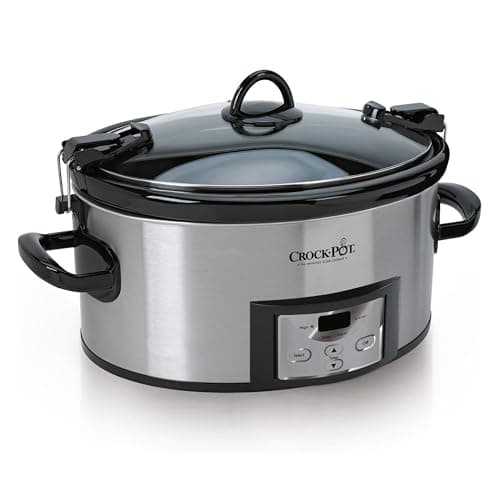
The Crock-Pot's answer to all of that is efficiency, and it is a strong one. The Ninja draws 1,200 W; the Crock-Pot draws just 240 W — the lowest of any cooker on this site. For long, all-day slow cooking, that difference in draw is exactly where a low-wattage slow cooker shines: it is markedly cheaper to run over an eight-hour braise. The per-hour figures are computed on each product card below at the US average rate so you can compare them directly. Two honest caveats keep this fair. First, the Ninja only pulls its full draw while actively heating, and it cycles like any slow cooker once up to temperature, so the real-world gap over a long cook is smaller than 1,200 vs 240 suggests. Second, neither machine is expensive to run in absolute terms. But if the lowest possible running cost for all-day cooking is your priority, the Crock-Pot is the cheaper machine to feed, and it is the point of are electric cookers cheap to run.
The travel lid vs the bigger, heavier pot
The Crock-Pot's other trump card is portability. Its latching Cook & Carry lid clamps down so the full pot travels to a potluck or a tailgate without spilling — a specific, genuinely useful thing the Ninja does not do. The Ninja is a big, heavy 8.5-quart machine that stays on the counter; the Crock-Pot is built to be picked up and carried. If you regularly bring a hot dish to gatherings, that lid can decide this on its own. Storage cuts the same way: the Crock-Pot is smaller and easier to stash, while the Ninja's size — its whole advantage when cooking — is a cost when it comes to finding counter or cupboard space for it. One more build note: the Crock-Pot's crock is heavy, breakable stoneware, while the Ninja's pot is metal and oven-safe, so the Ninja is the more robust and more versatile vessel even though it is the harder one to store.
Which one is for you
Buy the Ninja PossibleCooker PRO if you want the bigger 8.5-quart pot, you want to sear and brown in the same vessel you slow-cook in, and you want the oven-safe flexibility — it is the more capable, more versatile machine, and the better buy for big-batch cooks and anyone who wants one pot to do the browning too. Buy the Crock-Pot Cook & Carry if you want the simplest, cheapest, lowest-draw way to slow-cook, you value the latching travel lid, and you do not need searing or the extra capacity — it does its one job beautifully for less money and less power. The deciding questions are simple: do you need to sear and cook big batches (Ninja), or do you want dead-simple, low-cost, travel-ready slow cooking (Crock-Pot)? Still deciding whether a dedicated slow cooker belongs in your kitchen at all? See are slow cookers worth it.
How we picked
Machines we claim to have tested: 0
Everyone in this category tells you they tested twenty cookers. We have tested none, and we say so. Here is what we do instead: read the manufacturer's manual and spec page, record the published wattage, capacity, pressure or temperature figure and warranty term, work out what the machine costs to run per hour, show the arithmetic so you can redo it with your own electricity rate, and cite all of it. Where a brand publishes no wattage, we print no running cost rather than borrowing a number from a similar model. Prices come live from Amazon's API and disappear rather than go stale.
The scores above are judgments from that documented research — not test results. One of the five metrics is Documentation: whether the manufacturer will tell you what its cooker draws at all. The full rubric, including what disqualifies a pick, is published in full.