HUB 01 · Multicookers
How to Clean an Instant Pot
Most Instant Pot problems people blame on the machine — a smell that transfers between meals, a lid that will not seal — are really cleaning problems. Here is how to clean every part properly, including the three parts nearly everyone forgets, and how to get the curry smell out of the sealing ring.
We earn a commission if you buy through our links. It does not change the price you pay, and it does not decide our picks — the scoring rubric is published in full, including what disqualifies a pick. How this works.
The parts, and which are dishwasher-safe
An Instant Pot comes apart into more pieces than people realize, and the pieces that cause trouble are the ones that never get cleaned. The stainless inner pot is dishwasher-safe on every model here and the easiest part — no coating to baby. The lid, the sealing ring and the small anti-block shield around the steam valve are the ones that need attention, and the condensation cup on the back is the one everyone forgets entirely. Always unplug the base and let it cool first; the housing that holds the electronics is the one part that never goes in water — wipe it with a damp cloth only.
The sealing ring: the part that makes or breaks the machine
The silicone sealing ring is why a lid does or does not hold pressure, and it is a magnet for smell. Take it out after every cook and wash it — it is dishwasher-safe (top rack), and it seats back into the lid's wire rack with a push all the way around. A ring that is stretched, cracked or seated unevenly is the number-one cause of an Instant Pot that will not come to pressure or leaks steam, far more often than any fault in the machine. Instant Brands sells replacement rings, and it is worth owning a spare — many buyers keep one ring for savory food and one for sweet.
How to get the smell out
Silicone absorbs strong aromas — chili, curry, anything with a lot of spice — and then hands them to the next thing you cook. To reset a smelly ring: wash it, then run a steam cycle with a cup of water and a cup of white vinegar (or water plus a couple of lemon rinds) for a few minutes, release, and let the ring air-dry fully in the open. Sun and open air do most of the work; a ring left sealed inside a closed lid stays smelly. If a ring still smells after all that, it has done its time — replace it.
The anti-block shield and steam valve
The small metal cap around the steam-release valve — the anti-block shield — pops off for cleaning and traps food particles that can otherwise clog the valve and stop the pot venting properly. Pull it off (gently, per your model's manual), wash it, and make sure the valve moves freely when you put it back. A blocked valve is a safety part, not a nice-to-have, so this is not the step to skip.
A quick after-every-cook routine
Wash the inner pot and the sealing ring, empty and rinse the condensation cup, wipe the rim and the lid's underside, and wipe the base housing with a damp cloth — never submerge it. Do that each time and the two problems people blame on the machine, the transferred smell and the failure to seal, simply do not happen. The stainless pots on our top picks make this easier than the nonstick liners on cheaper rivals — there is no coating to protect.
The hardware
The cookers this page is about
The cookers referred to above, with prices pulled live from Amazon and dated on every card. Full rankings live in the roundups linked from this page.
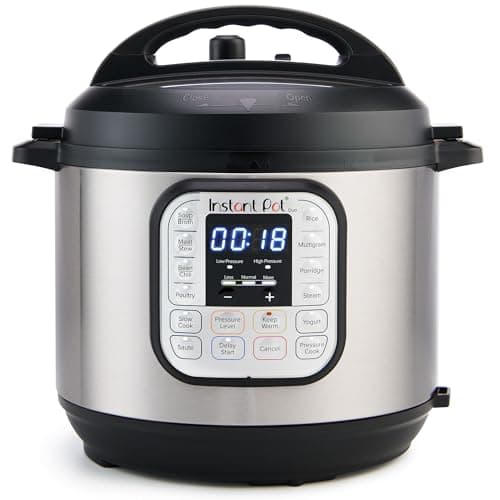
1,000 W
Instant Pot Duo 7-in-1 Electric Pressure Cooker, 6 Quart
The multicooker that made the category, and still the right default. Instant Brands publishes the wattage, the working pressure range and a stainless (not nonstick) inner pot, which is more than most of the field manages — and it costs less than almost all of them.
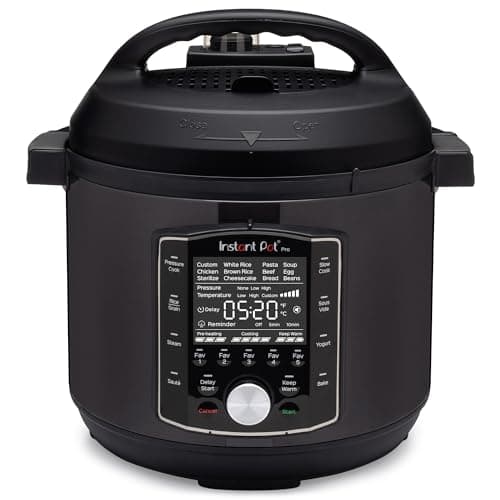
1,200 W
Instant Pot Pro 10-in-1 Pressure Cooker, 6 Quart
The Duo's mechanicals with the interface fixed: a genuine sous vide program, an auto-sealing lid, grab-and-go pot handles and five programmable buttons. It draws 1,200 W rather than the Duo's 1,000, and Instant Brands does not publish a working-pressure figure for it — the one gap in an otherwise well-documented cooker.
#ad · As an Amazon Associate we earn from qualifying purchases.
Questions
Frequently asked
Can you put an Instant Pot in the dishwasher?
How do I get the smell out of my Instant Pot sealing ring?
Why won't my Instant Pot come to pressure after cleaning?
Keep reading
Related
- The Instant Pot Burn message, explainedWhy it happens, and how to prevent it.
- How to clean a rice cookerThe same care, for the rice cooker.
- How to use a pressure cookerThe basics, including the venting-valve mistake.
- The best multicookersStainless-pot picks that are easiest to clean.
- Is an Instant Pot worth it?The honest case for owning one.
Receipts
Sources
We have not tested these machines in a lab and we do not pretend to have. Specifications come from the manufacturer's own published documents; electricity rates come from the US Energy Information Administration; prices come from the live Amazon API. Where a figure is not published, the page says “not published” rather than guessing. Read the full method.