HUB 01 · Multicookers
Pressure cooker vs pressure canner
Both are sealed pots that hold steam under pressure, and that is where the similarity ends. One is a cooking appliance; the other is a measuring instrument that happens to be a pot. Confusing them is the most consequential equipment mistake in home food preservation, because the failure mode is botulism rather than a bad dinner.
We earn a commission if you buy through our links. It does not change the price you pay, and it does not decide our picks — the scoring rubric is published in full, including what disqualifies a pick. How this works.
The short answer
A pressure cooker cooks food. A pressure canner processes sealed jars, and the difference is not marketing. The National Center for Home Food Preservation — the body that writes the approved home-canning processes in the United States — requires a canner to be large enough to hold filled jars upright on a rack with the lid fastened, and to carry a gauge that lets you prove the internal temperature. “Low-acid foods must be processed in a pressure canner to be free of botulism risks” is the NCHFP's own sentence, and the figure behind it is that at sea level a canner operated at a gauge pressure of 10.5 lbs gives an internal temperature of 240 °F. A boiling-water canner cannot reach that temperature, and a pressure cooker — stovetop or electric — cannot demonstrate that it has. The swap works in one direction only: a pressure canner can cook dinner, but a pressure cooker cannot can.
What actually makes a canner a canner
Not the pressure. Several of the cookers on this site hold pressure in the same band a canner uses. Three other things do, and all three are requirements rather than features.
Size, because the process was validated at a size.The NCHFP describes canners that “are designed to hold seven quart jars or eight to nine pints”, and notes that “small pressure canners hold four quart jars”— four is the floor. Its guidance for home cooks is explicit about why that matters: use only canners large enough to take four or more filled quart jars, standing upright on a rack, with the lid fastened in place. And the corollary, in the NCHFP's own words: “Pressure saucepans with smaller volume capacities are not recommended for use in canning.” A smaller vessel heats and — more importantly — cools faster than the one the processing times were tested in, and the cool-down is part of the process.
A gauge, because the process is a temperature claim.This is the part people skip. Canning times are not “pressurize and wait”; they are a validated number of minutes at a specific temperature, and the only way the pot tells you it is at that temperature is a dial gauge or a weighted gauge. The two behave differently and the NCHFP treats them differently: a dial gauge has to be checked for accuracy before use each year, because “gauges that read high cause under-processing and may result in unsafe food”, and one that is out by more than two pounds must be replaced. A weighted gauge, by contrast, “controls pressure precisely and needs neither watching during processing nor checking for accuracy” — its single disadvantage being that it cannot adjust finely for altitude, so above 1,000 feet it must be run at 10 instead of 5, or 15 instead of 10 psi.
A vent step, because trapped air lies about the temperature. The NCHFP is categorical: “all types of pressure canners must be vented 10 minutes before they are pressurized”. Air left in the canner makes the pressure reading overstate the temperature, which is the same under-processing failure arriving by a different route. No pressure cooker asks you to vent for ten minutes, because for cooking it does not matter.
Side by side
| Pressure cooker | Pressure canner | |
|---|---|---|
| Purpose | Cooks food fast by raising the boiling point | Processes sealed jars at a validated time and temperature |
| Minimum size | None — 3 qt upward | Four filled quart jars upright on a rack; most hold seven quarts |
| How temperature is known | It is not — the control targets pressure for cooking | Dial or weighted gauge; 10.5 lbs equals 240 °F at sea level |
| Venting | Not required | 10 minutes before pressurizing, every time |
| Annual maintenance | Replace the sealing ring when it perishes | Have a dial gauge tested for accuracy each year |
| Low-acid canning | Not approved, electric or stovetop | The only approved method |
Which foods need which — and where the water bath fits
The split is acidity, not food group. High-acid foods — most fruit, jams and jellies, pickles in vinegar, properly acidified tomatoes — can be processed in a boiling-water canner, which is a deep pot of vigorously boiling water with a rack in it. The NCHFP's only real structural requirement there is depth: “the canner must be deep enough so that at least 1 inch of briskly boiling water will be over the tops of jars during processing”. Boiling water tops out at the boiling point, and for an acidic food that is enough, because acidity prevents Clostridium botulinum from growing.
Low-acid foods — vegetables, meat, poultry, seafood, beans, stock, most soups — are the other category, and they are where boiling water is not enough. Botulinum spores survive it. That is the whole reason 240 °F and a pressure canner exist, and it is why there is no “water bath for a bit longer” version of green beans. The NCHFP also notes the reverse case: a pressure canner can be used for acid foods, but a boiling-water canner is recommended for them because it is faster.
So can you can in the pressure cooker you already own?
No, and this is the question most people arrive with, so can you pressure can in an Instant Pot answers it in full. The short version of the NCHFP's position on electric multicookers: its processes are not recommended for use in electric pressure multicookers, because the processes were tested in stovetop canners and no USDA thermal-process work has been done with jars inside an electric pressure cooker of any kind. Reaching a pressure is not evidence that the jars reached a temperature, and temperature is what the process is made of. Power fluctuation and fast cool-down in a small unit are listed as further concerns. A “canning” or “sterilize” button on the panel is not an endorsement — sterilizing clean jars is a real and useful function, and it is not canning.
The same reasoning rules out a 6-quart stovetop cooker, for the plainer reason that it is a pressure saucepan by the NCHFP's definition: too small for four quart jars upright, and explicitly not recommended for canning. A stovetop pressure cooker is a fine, fast, cheap cooking pot — it is the pick on our small-apartment page precisely because it has no cord and nests in a cabinet. It is not a canner, no matter how much pressure it holds.
The one direction the swap does work
A pressure canner will cook. It is a large, heavy, uncomplicated pressure vessel, so beans, stock and pot roast all work in it exactly as they would in a stovetop cooker — you will just be heating a much bigger pot, which costs time and energy on anything small. If you can seriously and also want to pressure-cook, one canner covers both jobs and you can skip the cooker. If you cook far more often than you can, buying a 16-quart canner as a weeknight pot is a poor trade: it is slower to come up to pressure and awkward to store, and the electric cookers we rank do the weeknight job better.
If what you want is the fast-cooking half, start with how to use a pressure cooker and stovetop versus electric. For beans and stock specifically — the two foods people most often buy a canner for and then cook in it — the best pressure cooker for beans and bone broth in an Instant Pot are the practical pages.
What we would tell a friend
If you want to preserve low-acid food, buy a tested pressure canner that takes at least four quart jars, and buy it from a brand that will sell you a replacement gauge in five years. If you want to make jam and pickles, you do not need a pressure anything — a deep stockpot with a rack and an inch of water over the jar tops is a boiling-water canner. And if you want dinner in thirty minutes, buy a pressure cooker and keep it out of the canning conversation entirely. The machines overlap in appearance and almost nowhere else, and the one place the confusion leads is the one place where the consequence is not culinary.
We do not rank canners on this site. Every pressure vessel in this catalog is a cooker, and the three below are cookers — they are here because they are what people mean when they say “pressure cooker”, not because any of them can substitute for a canner. Our Instant Pot safety page covers the cooking-side safety questions, and our methodology explains why a page like this cites a federal preservation authority rather than our own opinion.
The hardware
The cookers this page is about
The cookers referred to above, with prices pulled live from Amazon and dated on every card. Full rankings live in the roundups linked from this page.
1,000 W
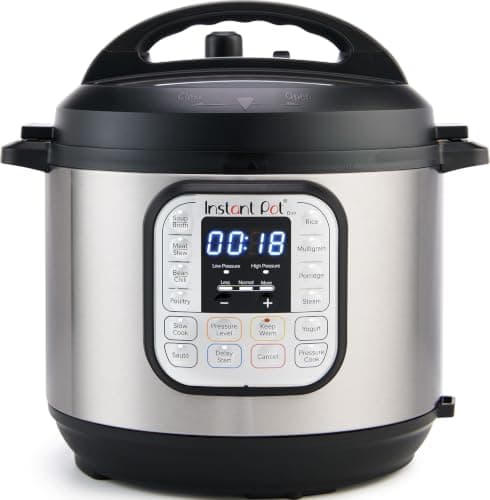
Instant Pot Duo 7-in-1 Electric Pressure Cooker, 6 Quart
The multicooker that made the category, and still the right default. Instant Brands publishes the wattage, the working pressure range and a stainless (not nonstick) inner pot, which is more than most of the field manages — and it costs less than almost all of them.
Wattage not published
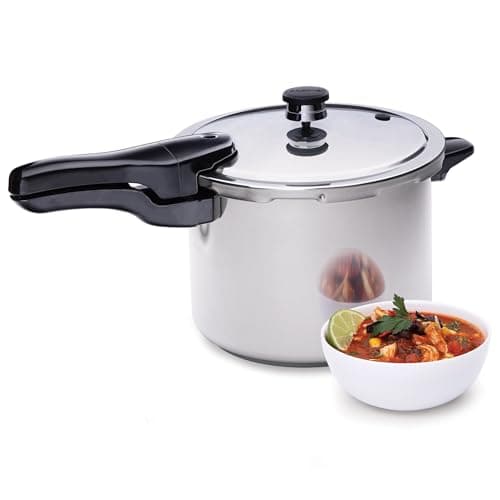
Presto 01362 6-Quart Stainless Steel Pressure Cooker
The one stovetop cooker here that gets everything right at a sane price: a tri-clad stainless body that works on induction, a 12-year warranty nobody else in its bracket matches, and a regulator that holds roughly 15 pounds — half again the pressure any electric cooker reaches.
1,200 W
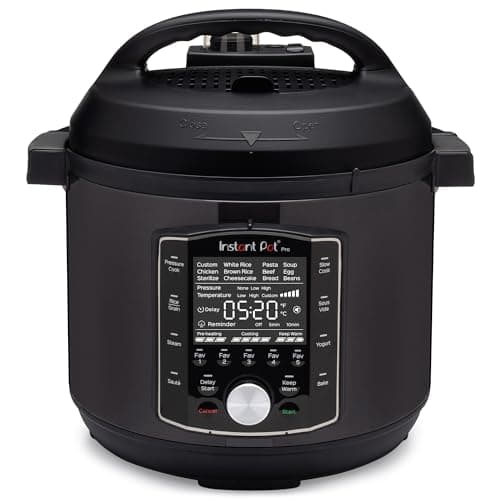
Instant Pot Pro 10-in-1 Pressure Cooker, 6 Quart
The Duo's mechanicals with the interface fixed: a genuine sous vide program, an auto-sealing lid, grab-and-go pot handles and five programmable buttons. It draws 1,200 W rather than the Duo's 1,000, and Instant Brands does not publish a working-pressure figure for it — the one gap in an otherwise well-documented cooker.
#ad · As an Amazon Associate we earn from qualifying purchases.
Questions
Frequently asked
What is the difference between a pressure cooker and a pressure canner?
Can I use a pressure canner as a pressure cooker?
Can you pressure can in an Instant Pot or other electric multicooker?
Which foods can be water-bath canned instead of pressure canned?
What size does a pressure canner have to be?
Dial gauge or weighted gauge?
Why must a pressure canner be vented for 10 minutes?
Keep reading
Related
- Can you pressure can in an Instant Pot?The same question about the machine you already own.
- The best stovetop pressure cookersFast, cheap cooking pots - and why none is a canner.
- Are Instant Pots safe?The cooking-side safety questions, answered.
- How to use a pressure cookerIf cooking, not canning, is what you are actually here for.
Receipts
Sources
- National Center for Home Food Preservation — Recommended Canners (boiling-water vs pressure canners, gauge types, canner size, venting)
- National Center for Home Food Preservation — “Can I Can in a Multi-Cooker?”
- National Center for Home Food Preservation — pressure canning guidance
- USDA Food Safety and Inspection Service — safe minimum internal cooking temperatures
- National Presto Industries — 6-Quart Stainless Steel Pressure Cooker (01362) product page
We have not tested these machines in a lab and we do not pretend to have. Specifications come from the manufacturer's own published documents; electricity rates come from the US Energy Information Administration; prices come from the live Amazon API. Where a figure is not published, the page says “not published” rather than guessing. Read the full method.