HUB 03 · Sous Vide
What Container to Use for Sous Vide
You do not need a special container to cook sous vide — a big pot from your cupboard is a perfectly good start. But if you cook often, or run long overnight cooks, a dedicated tub with a lid solves the two real problems: evaporation and capacity. Here's how to choose.
We earn a commission if you buy through our links. It does not change the price you pay, and it does not decide our picks — the scoring rubric is published in full, including what disqualifies a pick. How this works.
You already own a good enough container
Here is the reassuring part: you do not need to buy anything special to cook sous vide. A large stockpot from your own cupboardis a perfectly good vessel to start with, and plenty of people never use anything else. All a sous vide container has to do is hold enough water to cover your food, be deep enough for the circulator's minimum and maximum fill lines, and let the machine clip to the side. A tall stockpot ticks all three. So if you are wondering whether a missing tub is stopping you from starting — it is not. This is the same “you have what you need” message as sous vide without a vacuum sealer: the barriers to trying sous vide are mostly imagined.
Getting the size and depth right
Whatever you use, two dimensions matter. Depth is the one people get wrong: your circulator has a minimum and a maximum water line marked on it, and the container has to be deep enough that the water sits between them with your food submerged — a shallow pan often cannot hold enough water above the minimum line, and the machine will complain or run dry. A pot at least seven or eight inches deep is a safe bet for most circulators. Volume is the other: more water is more stable (it holds temperature better and rides out the lid opening) but takes longer to heat up and asks more of the element, so match the container to what you cook — a modest pot for a steak or two, a bigger vessel only if you cook in batches. A powerful machine like the 1,100 W Anova 3.0 handles a larger container more comfortably than a lower-wattage unit.
The two real problems a stockpot has
A pot works, but it has two genuine limitations that show up as you cook more. The first is evaporation. On a long cook — several hours, or an overnight one — an open pot loses a surprising amount of water to steam, and if the level drops below the circulator's minimum line the machine shuts off and your cook fails partway through. The second is capacity and shape: a round pot is not the most efficient shape for holding several bags flat and separated, and a tall-narrow pot can crowd them. Neither problem stops you starting, but both are exactly what a dedicated container is designed to solve, which is why regular sous vide cooks tend to graduate to one.
The upgrade: a polycarbonate tub with a lid
The standard upgrade is a polycarbonate tub — the clear, rectangular food-storage containers you have seen in restaurant kitchens — usually paired with a lid cut to fit the circulator. It solves both problems at once. The lid dramatically cuts evaporation, so long and overnight cooks run without the water dropping too low, and it also keeps heat in so the machine works less and the bath stays more stable. The rectangular shape holds more bags flat and separated, and the flat wall gives the circulator a clean place to clamp. Polycarbonate is rigid, food-safe and rated for the warm (not boiling) temperatures sous vide uses, and the clear walls let you see the food and the water line at a glance. If you cook sous vide often, a tub and lid is a cheap, worthwhile upgrade; if you cook occasionally, a stockpot with a bit of foil or plastic wrap over the top to slow evaporation gets you most of the way for free.
Small touches that help
A couple of extras round out a good setup, especially for long cooks. Insulation helps a lot: sitting the container on a wooden board or a towel rather than a cold stone countertop reduces heat loss through the base, and some cooks wrap the sides of a tub for very long cooks — the less heat the bath loses, the less the machine has to work and the steadier the temperature, which matters most for the tight control a machine like the quiet Greater Goods is built for. Floating lid balls (or even ping-pong balls) are another cheap way to cover the surface of an odd-shaped pot and cut evaporation. And remember the container is only half the setup — keeping the bags submerged and the water circulating is the other half, covered in how to keep a sous vide bag from floating.
The rule: start with a deep stockpot you already own— deep enough for the circulator's min/max lines, big enough to cover the food. Upgrade to a polycarbonate tub with a fitted lid if you cook often or run long cooks, because the lid cuts evaporation and holds heat, and the shape fits more bags. Insulate the base and cover the surface for long cooks to keep the temperature steady.
The hardware
The cookers this page is about
The cookers referred to above, with prices pulled live from Amazon and dated on every card. Full rankings live in the roundups linked from this page.
1,100 W
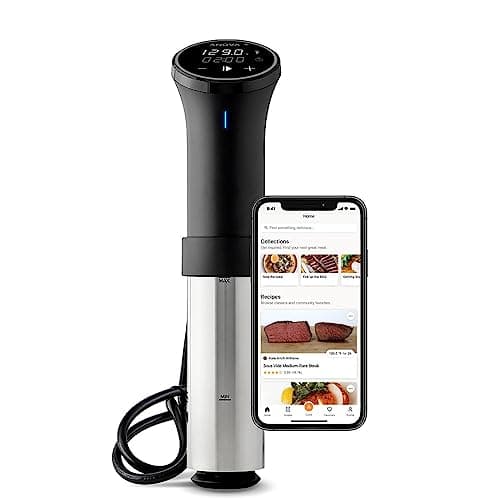
Anova Precision Cooker 3.0 (WiFi), 1100 W
The sous vide circulator most people should buy. Anova publishes the full specification — 1,100 W, a 0–92°C range, ±0.1°C accuracy, an 8 L/min pump — and backs it with a two-year warranty, the longest here. It has an on-device screen so it works without the app, which the Joule does not.
1,100 W
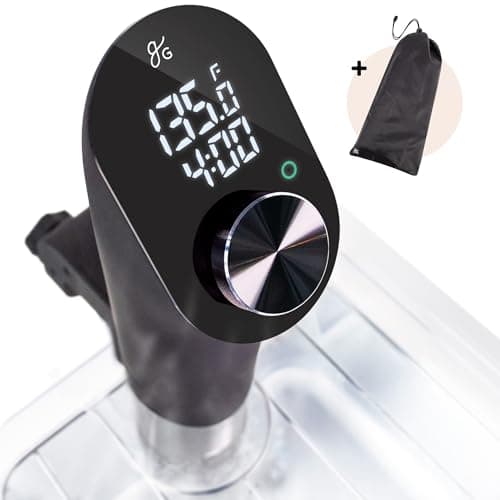
Greater Goods Sous Vide Precision Cooker, 1100 W
The circulator for people who want none of the connectivity. No WiFi, no app, no phone — a dial, a screen and a silent brushless motor rated to run 99 hours straight. 1,100 W, a 20–95°C range, and a build that is quieter than anything else here.
#ad · As an Amazon Associate we earn from qualifying purchases.
Questions
Frequently asked
What container should I use for sous vide?
Do you need a lid for sous vide?
How deep does a sous vide container need to be?
Keep reading
Related
Receipts
Sources
- Anova Culinary — Precision Cooker 3.0 product page
- Greater Goods — Sous Vide Precision Cooker (1100W) product page
We have not tested these machines in a lab and we do not pretend to have. Specifications come from the manufacturer's own published documents; electricity rates come from the US Energy Information Administration; prices come from the live Amazon API. Where a figure is not published, the page says “not published” rather than guessing. Read the full method.