The short answer
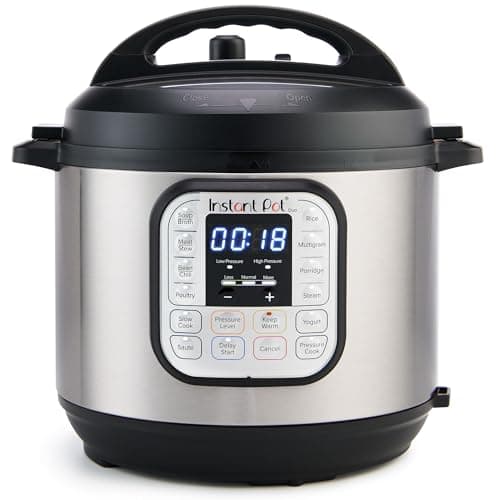
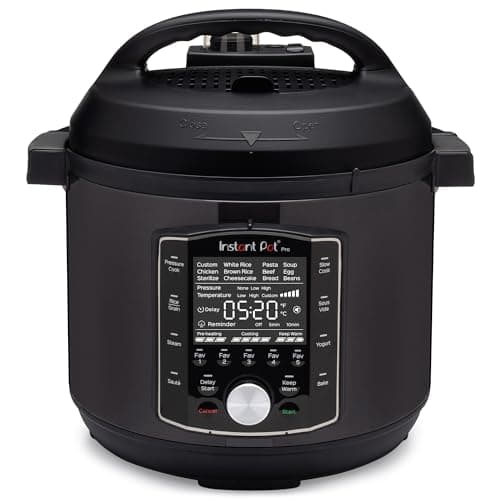
Buy the Instant Pot Pro.Its lid seals automatically, which removes the single most common mistake anyone makes with a pressure cooker — leaving the valve on Venting and then wondering why the pot will not come up to pressure, or worse, fiddling with it while it does. A machine that cannot be set up wrong is safer than a machine with a longer list of safety features. The budget pick is the Instant Pot Duo, and it earns the place on honesty rather than hardware: it is the only electric pressure cooker on this entire site whose maker publishes a working-pressure range (10.2–11.6 psi), which is the number you need if you ever want to check what your cooker is actually doing. Its release is a manual toggle, and we say so. For a household that cooks big, the 8-quart Pro adds a gentle steam-release switch with a diffusing cover, which is the feature aimed straight at the scald.
What actually goes wrong, and what does not
The useful starting point is that the thing people are afraid of is not the thing that happens. A modern electric pressure cooker has a lid that physically cannot be rotated open while there is pressure behind it, plus an over-pressure path if the main valve blocks. Our are Instant Pots safe page works through that in detail and the answer is yes.
What does happen, in roughly this order:
Steam burns at the valve. A quick release sends a jet of steam straight up at whatever is above it, which is often a hand, a cabinet or a face leaning in to look. This is the commonest injury in the category and it is entirely a design-and-habit problem. Our natural versus quick release page is the habit half; a diffused release switch is the design half.
Hot liquid thrown from the valve. Overfilling, or pressure-releasing a starchy soup fast, sprays liquid rather than steam. How much liquid goes in an Instant Pot is the rule, and it is the single most ignored one.
A lid forced after a failed seal.Not dangerous on a working cooker — the lock holds — but it is where people start levering, and the lid that will not open is one of the most-read pages on this site for that reason.
Home canning in the wrong vessel.This is the one genuine botulism risk in the category, and it is not about the machine being dangerous — it is about a cooker that cannot hold or show a verified process being used as though it could. The National Center for Home Food Preservation is explicit that a multi-cooker is not a canner, and we relay that in pressure canning in an Instant Pot.
How we ranked
Four criteria, in this order, all of them things a manufacturer document can settle.
1. Can the user set it up wrong? An auto-sealing lid is worth more than any number of listed safety systems, because the systems are there for faults and this is there for people. Only one cooker in this catalog has it.
2. Is the steam release diffused? A gentle release with a cover aims the jet somewhere other than straight up. A manual toggle does not.
3. Does the maker publish a working-pressure figure?This is the documentation criterion and it matters more than it sounds. If you do not know what pressure a cooker holds, you cannot reason about any process in it — you are trusting a button label. Instant Brands publishes a figure for the Duo and, notably, not for the Pro.
4. Are the safety systems counted in writing? Presto states ten built-in safety features including a cover locking system for its digital canner. That is a claim in a document, which is a different kind of thing from a marketing adjective.
We do not score on recall history, lawsuit counts or incident anecdotes. We have no verified data on any of those and our method does not permit inventing it.
The Pro wins on the mistake it deletes
The Instant Pot Pro's lid seals itself when you close it. That one change removes the failure that generates more questions than every error code on this site combined, and it removes it for every user on every cook, including the one who has not read the manual and the one who is distracted.
The honest counterweight is a documentation gap, and it is a real one: Instant Brands publishes no working-pressure figure for the Pro. The number is in the Duo's manual and not in the Pro's, which for the premium model in the range is a fair thing to be annoyed about. If what you want is a cooker whose pressure you can read in a document, the Duo is the machine and the trade is the manual valve. Our Duo versus Pro comparison sets the two side by side in full.
The 8-quart Pro is the same lid with a bigger pot, and Instant Brands documents a gentle steam-release switch with a diffusing cover on it. For a household cooking volume — which is also the household most likely to be releasing a full pot of starchy soup — that is the most directly safety-relevant feature in this list after the auto-seal.
Canning is a different question, and it has a different answer
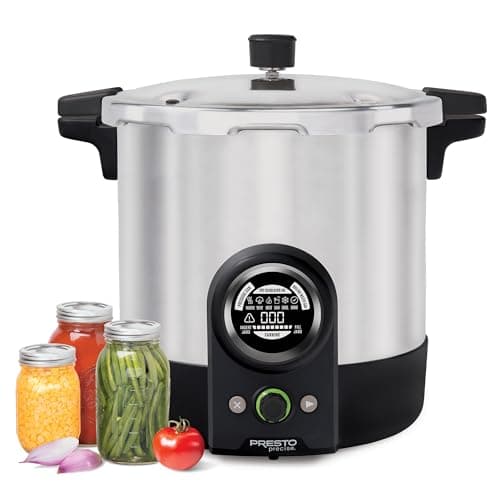
If what you mean by safety is preserving low-acid food, nothing above is the right machine and the Presto Precise digital canner is. Presto states ten built-in safety features including a cover locking system, publishes 120 V / 1,100 W, and sells it as a canner that holds the required temperature with no altitude adjustments needed— which is the part that matters, because altitude arithmetic is where home canners make their mistakes.
The caveat we always print with it: neither the USDA nor the National Center for Home Food Preservation certifies or approves home canning equipment, so “meets USDA guidelines” is the maker's claim about its own process control rather than a certification. The full treatment is in the best pressure cookers for canning and pressure cooker versus pressure canner.
Where the stovetop sits
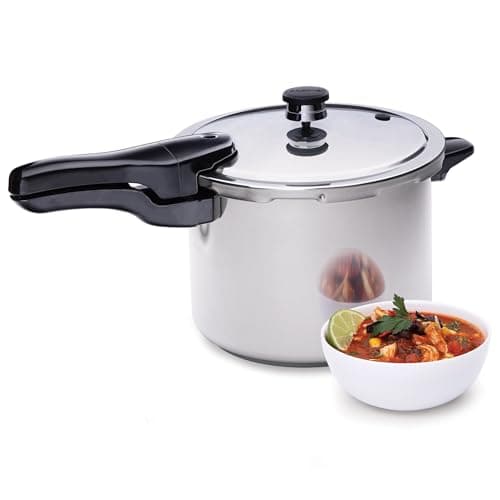
The Presto 01362 is last here and it is not a criticism of the pot. It has the longest warranty of anything in this list by a decade, Presto still sells its sealing ring and over-pressure plug as parts, and there is no electronics in it to drift or fail.
It is last because safety in this ranking means removing decisions from the user, and a stovetop cooker adds them. You hold pressure by watching the regulator and adjusting the burner; you cannot leave the kitchen; and at around 15 psi it is operating at a higher pressure than anything else here. In competent hands that is a better tool. In distracted hands it is the one machine on the page that needs your attention continuously, and a ranking about safety has to say so.
If you want the stovetop design with the quietest release, the spring-valve Kuhn Rikon holds pressure without venting steam across your cabinets, and we compare the two in Kuhn Rikon versus Presto.
Choosing in one minute
You want the fewest ways to get it wrong. Instant Pot Pro. The auto-sealing lid is the single most valuable safety feature in this catalog.
You want a published pressure figure you can reason about. Instant Pot Duo. The only electric cooker here with one, and the budget pick.
You cook big pots of soup. Instant Pot Pro 8-quart, for the gentle steam-release switch and diffusing cover.
You are canning low-acid food. Presto Precise digital canner. Ten counted safety features, a cover locking system, and no altitude table to get wrong.
You want nothing electronic and you will stay in the kitchen. Presto 01362 stainless.
Three habits that matter more than the machine
Use natural release for anything starchy or liquid. Never fill past the published maximum line. And run the water test on a new cooker before you cook in it — we walk through it here— because it tells you the sealing ring and the valve are right while the only thing at stake is water.