HUB 02
Rice Cookers
The category where the price gap is real and almost nobody explains why. A $40 cooker runs a timer; a $260 Zojirushi runs a microcomputer that adjusts the heat as it goes; a $420 induction model heats the whole pot at once. We say which difference you are actually paying for, and when the cheap one is the right buy.
We earn a commission if you buy through our links. It does not change the price you pay, and it does not decide our picks — the scoring rubric is published in full, including what disqualifies a pick. How this works.
Start here
The Best Rice Cookers
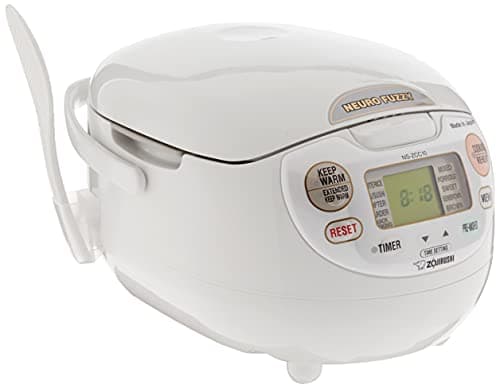
Our top pick: Zojirushi NS-ZCC10 Neuro Fuzzy Rice Cooker & Warmer, 5.5 Cup — The rice cooker every other one is measured against. Its Neuro Fuzzy microcomputer adjusts heat through the cook rather than running a fixed timer, which is the whole reason a $260 rice cooker cooks rice better than a $30 one. Made in Japan, 680 W, and the settings that matter are all there.
The one thing that separates a $40 cooker from a $260 one
Heat control, and nothing else. A cheap rice cooker has a single thermostat: it heats at full power until the water boils off and the temperature spikes, then it clicks to warm. A fuzzy-logic cooker — Zojirushi, Tiger, Cuckoo — has a microcomputer that reads the temperature continuously and adjusts the heat through soaking, boiling and steaming, which is why the rice comes out evenly cooked instead of wet on top and scorched on the bottom. Everything expensive in this category is a variation on better heat control. That is genuinely the whole story.
Fuzzy logic, induction, pressure
The three technologies stack, and each is a real step up. Micom / fuzzy logic is the first — the microcomputer adjusts heat as it goes. Induction heats the entire metal pot electromagnetically rather than from a plate underneath, so the heat is more even and more responsive still; it makes the best rice on this site and costs the most, up to the induction Zojirushi NW-QAC10. Pressure, the Korean approach, raises the boiling point for a distinctly fluffier, stickier grain, best on short-grain and mixed rice. Each improvement is genuine and each costs more; none of them is a gimmick.
What the price actually buys — and when it does not
The step from a $30 cooker to a $130 fuzzy-logic one is bigger than the step from $130 to $420. So if you cook rice a couple of times a week and are not chasing perfection, a budget Aroma makes genuinely good rice and adds a slow-cook and sauté-then-simmer function for around forty dollars. The daily rice eater who notices texture buys the Zojirushi; the twice-a-week cook buys the Aroma and spends the difference somewhere it matters. Both are correct answers to different questions. We spell out the split in full. The budget end of that argument is the Aroma ARC-994SG, and the ARC-954SBD it replaced is still in a lot of kitchens even though Amazon no longer stocks it.
The cup that is not a cup, and other capacity traps
Rice-cooker capacity is measured in a 180 ml “rice cup”, not a US cup. A “5.5-cup” cooker makes about 5.5 rice cups of uncooked rice, roughly 10–11 US-cup servings cooked — plenty for a family. The 3-cup mini is right for one or two people. The trap is buying too big: a large cooker makes a small batch of rice worse, because there is too much empty pot for the sensor to read accurately. Match the cooker to how much rice you actually eat, not to the biggest number you can afford.
Running cost, and keep-warm
A fuzzy-logic cooker at 680 watts costs about 9.6¢ for a 45-minute cook at the US average of 18.83¢ per kWh — and the keep-warm function that follows draws very little. The keep-warm is a genuinely refined function on a good cooker: a Zojirushi holds rice at a perfect serving texture for hours without drying it, which for a household that cooks rice in the morning and eats it through the day can justify the whole purchase on its own.
Everything in this section
All of Rice Cookers
Roundup
The Best Rice Cookers
Eight rice cookers ranked on the tech that makes better rice — fuzzy logic, induction, pressure. The Zojirushi Neuro Fuzzy is the benchmark; the Aroma is the honest budget pick.
Top pick: Zojirushi NS-ZCC10 Neuro Fuzzy Rice Cooker & Warmer, 5.5 Cup · 8 ranked, 8 with live prices
$223.98on AmazonHead to head
Zojirushi vs Tiger vs Cuckoo
The premium three-way: Zojirushi's fuzzy logic, Tiger's cook-two-dishes tacook tray, and Cuckoo's pressure cooking. Different strengths, a clear pick for each buyer.
Top pick: Zojirushi NS-ZCC10 Neuro Fuzzy Rice Cooker & Warmer, 5.5 Cup · 3 ranked, 3 with live prices
$223.98on Amazon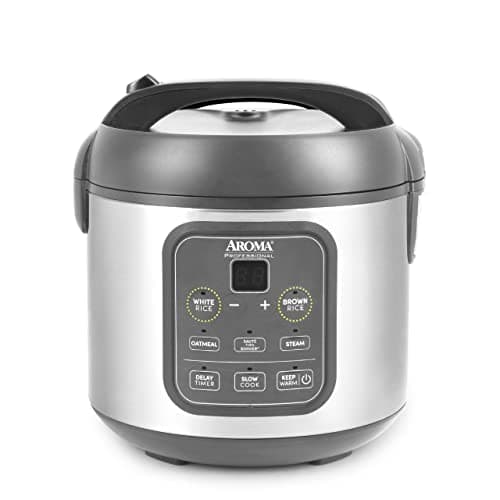
Roundup
The Best Budget Rice Cookers
Four rice cookers under about $100, ranked. The Aroma does the most for the least; the Toshiba mini keeps fuzzy logic in a small body; and the Cuckoo and Zojirushi Micom sit at the top of the budget band.
Top pick: Aroma Professional ARC-994SG Digital Rice Cooker & Multicooker · 4 ranked, 4 with live prices
$49.99on Amazon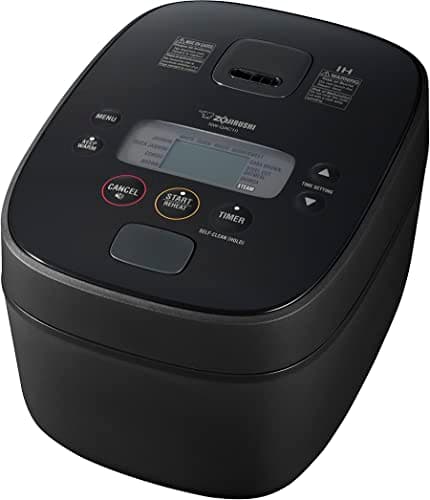
Roundup
The Best Japanese Rice Cookers
The genuinely made-in-Japan field, ranked: the Zojirushi induction NW-QAC10, the Neuro Fuzzy benchmark, and the Tiger JAX with its cook-a-dish-with-the-rice tacook tray. What the Japan label buys, and what it does not. The NP-HCC10 is still listed, and is still made in Japan, but no longer has a buyable Amazon listing.
Top pick: Zojirushi NW-QAC10 Induction Rice Cooker & Warmer, 5.5 Cup · 4 ranked, 3 with live prices
$340.60on AmazonReview
Zojirushi Neuro Fuzzy (NS-ZCC10) Review
The benchmark fuzzy-logic rice cooker, reviewed. Made in Japan, 680 W, and the microcomputer that adjusts heat through the cook — the value sweet spot in premium rice, beaten only by induction and by price.
Top pick: Zojirushi NS-ZCC10 Neuro Fuzzy Rice Cooker & Warmer, 5.5 Cup
$223.98on AmazonRoundup
The Best Rice Cookers for Brown Rice
The cookers that handle brown and whole-grain rice properly, ranked. Better heat control and a dedicated brown/GABA setting are what matter — the induction Zojirushi leads, the pressure Cuckoo is a close and different answer.
Top pick: Zojirushi NW-QAC10 Induction Rice Cooker & Warmer, 5.5 Cup · 5 ranked, 4 with live prices
$340.60on AmazonHead to head
Induction vs Fuzzy Logic Rice Cooker
The top two rungs compared: whole-pot induction heating vs a fuzzy-logic heating plate. What induction changes, how big the difference is, and whether the price jump is worth it — the NW-QAC10 vs the NS-ZCC10.
Top pick: Zojirushi NW-QAC10 Induction Rice Cooker & Warmer, 5.5 Cup · 2 ranked, 2 with live prices
$340.60on Amazon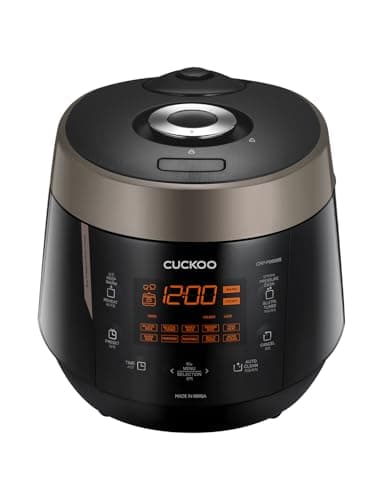
Review
Cuckoo CRP-P0609S Pressure Review
The 6-cup Cuckoo pressure rice cooker, reviewed. An 890 W, made-in-Korea cooker with a 304 stainless pot that cooks rice under pressure for a fluffier, stickier grain — the best texture on short-grain and sticky rice, with a sealing gasket to maintain and a talking interface not everyone loves.
Top pick: Cuckoo CRP-P0609S High-Pressure Rice Cooker, 6 Cup
$210.82on Amazon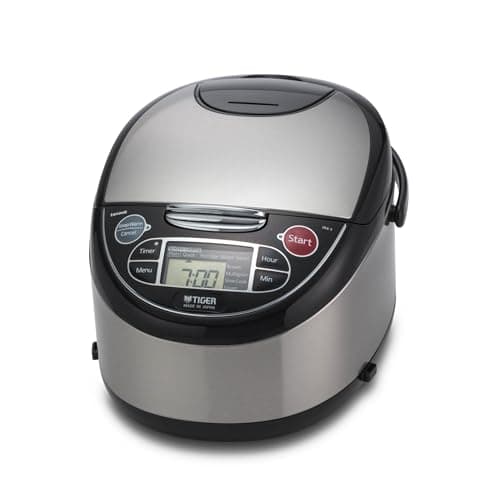
Review
Tiger JAX-T10U Review
The 5.5-cup Tiger tacook cooker, reviewed. A 641 W, made-in-Japan Micom cooker whose tacook tray genuinely cooks a main and the rice at once — a real weeknight shortcut. Very good rice, though Micom rather than the best, and thinner US documentation than Zojirushi.
Top pick: Tiger JAX-T10U Micom Rice Cooker & Warmer with tacook, 5.5 Cup
$184.99on AmazonHead to head
Zojirushi vs Cuckoo
Japanese fuzzy logic versus Korean pressure. The Zojirushi Neuro Fuzzy is the safer all-rounder with no gasket to maintain; the Cuckoo pressure cooker makes a fluffier, stickier short-grain but asks for upkeep. A rule for which suits your rice.
Top pick: Zojirushi NS-ZCC10 Neuro Fuzzy Rice Cooker & Warmer, 5.5 Cup · 2 ranked, 2 with live prices
$223.98on AmazonRoundup
The Best Rice Cookers for Sushi Rice
The cookers that make sushi and sticky short-grain rice properly, ranked. The pressure Cuckoo takes the top spot on texture; the Neuro Fuzzy and induction Zojirushis bring dedicated sushi programs; the Tiger rounds it out. Live prices, honest cons.
Top pick: Cuckoo CRP-P0609S High-Pressure Rice Cooker, 6 Cup · 4 ranked, 4 with live prices
$210.82on Amazon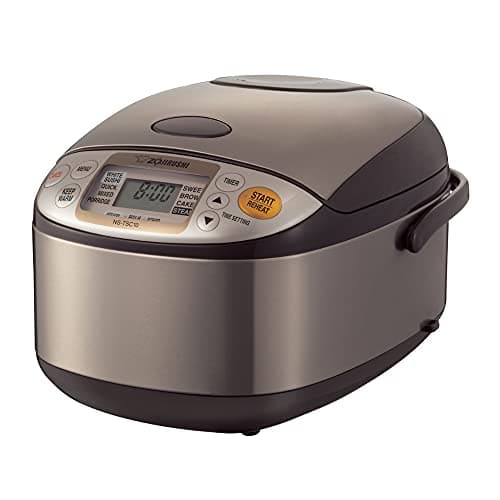
Review
Zojirushi NS-TSC10 Micom Review
The value Zojirushi, reviewed. A 610 W, 5.5-cup Micom fuzzy-logic cooker that adds steam and cake functions the Neuro Fuzzy lacks — but is made in China, not Japan. The same core advantage for less, with the trade stated plainly.
Top pick: Zojirushi NS-TSC10 Micom Rice Cooker & Warmer, 5.5 Cup
$229.99on Amazon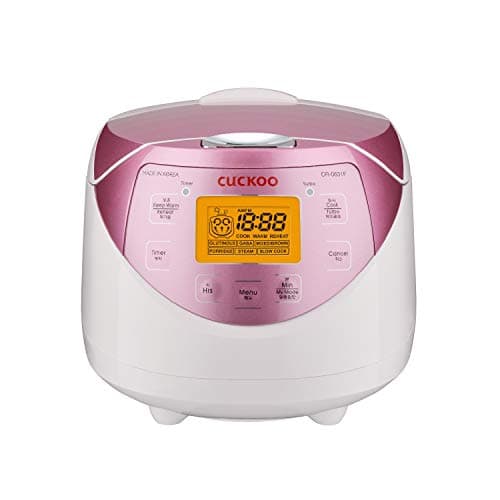
Review
Cuckoo CR-0631F Micom Review
The non-pressure Cuckoo, reviewed. A 580 W, 6-cup Micom cooker — the lowest draw of any full-size rice cooker here — with Korean build, GABA and brown-rice menus and a My Mode custom setting. Cuckoo quality without the pressure price.
Top pick: Cuckoo CR-0631F Micom Rice Cooker, 6 Cup
$149.99on Amazon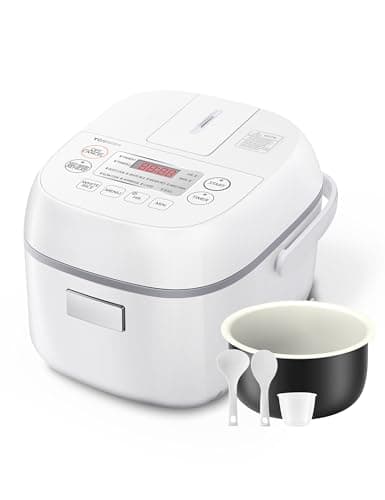
Review
Toshiba Mini Rice Cooker Review
The compact fuzzy-logic cooker, reviewed. Three cups uncooked, one-touch, with a 24-hour delay so rice is ready when you get home — and real fuzzy-logic heat control, which most mini cookers drop. Right-sized for one or two, with no published wattage.
Top pick: Toshiba Mini Rice Cooker, 3 Cups Uncooked, with Fuzzy Logic
$94.99on AmazonHead to head
Zojirushi Neuro Fuzzy vs Induction
Fuzzy logic (NS-ZCC10, 680 W) against induction (NW-QAC10, 1,080 W). Induction heats the whole pot for the best, most even rice here — but costs roughly double and draws the most of any rice cooker on the site. Which one fits how often you eat rice.
Top pick: Zojirushi NS-ZCC10 Neuro Fuzzy Rice Cooker & Warmer, 5.5 Cup · 2 ranked, 2 with live prices
$223.98on AmazonHead to head
Cuckoo vs Tiger
Korean pressure against a Japanese trick. The Cuckoo CRP-P0609S (890 W) cooks under pressure for fluffier short-grain rice; the Tiger JAX-T10U (641 W) steams a main dish above the rice with its tacook tray. Which fits how you actually cook dinner.
Top pick: Cuckoo CRP-P0609S High-Pressure Rice Cooker, 6 Cup · 2 ranked, 2 with live prices
$210.82on AmazonRoundup
The Best Large Rice Cookers
The largest-capacity cookers here, ranked for a household: the 6-cup pressure Cuckoo CRP-P0609S for the fluffiest full batch, the 6-cup value Cuckoo CR-0631F, the 5.5-cup induction Zojirushi for the best grain, and the Tiger tacook cooker that steams a dish above the rice. Live prices, honest cons.
Top pick: Cuckoo CRP-P0609S High-Pressure Rice Cooker, 6 Cup · 4 ranked, 4 with live prices
$210.82on AmazonHead to head
Zojirushi vs Tiger
The Zojirushi NS-ZCC10 Neuro Fuzzy (680 W) versus the Tiger JAX-T10U (641 W): two made-in-Japan Micom cookers. Zojirushi is the fuzzy-logic benchmark with the deepest menu; Tiger adds the tacook tray that steams a dish above the rice. A clear rule for which fits your kitchen.
Top pick: Zojirushi NS-ZCC10 Neuro Fuzzy Rice Cooker & Warmer, 5.5 Cup · 2 ranked, 2 with live prices
$223.98on AmazonRoundup
The Best Fuzzy-Logic Rice Cookers
The best fuzzy-logic (Micom) rice cookers, ranked on heat control and rice quality: the benchmark 680 W Zojirushi Neuro Fuzzy, the lower-draw 610 W Zojirushi NS-TSC10, the 641 W Tiger tacook cooker, the low-draw 580 W Cuckoo CR-0631F, and the Toshiba Mini that packs fuzzy logic into a 3-cup body. Live prices, honest cons.
Top pick: Zojirushi NS-ZCC10 Neuro Fuzzy Rice Cooker & Warmer, 5.5 Cup · 5 ranked, 5 with live prices
$223.98on AmazonHead to head
Cuckoo Pressure vs Micom
The pressurized Cuckoo CRP-P0609S against the non-pressure CR-0631F Micom: the same Korean build and fuzzy-logic control, with or without the pressure mechanism. Pressure gives a fluffier, stickier short-grain result but adds a sealing gasket to maintain and costs more. The Micom is the value pick for plain fuzzy-logic rice. What pressure actually changes, and which to buy.
Top pick: Cuckoo CRP-P0609S High-Pressure Rice Cooker, 6 Cup · 2 ranked, 2 with live prices
$210.82on AmazonReview
Aroma ARC-994SG Rice Cooker Review
The budget multicooker, reviewed. A roughly $40, 4-cup digital rice cooker with Sauté-then-Simmer, a 2–10 hour slow cook and a steam tray, and a published 450 W draw. Its honest limits: only white and brown rice programs, a 'Sensor Logic' Aroma never explains, a ceramic pot Aroma wants hand-washed, and a one-year warranty.
Top pick: Aroma Professional ARC-994SG Digital Rice Cooker & Multicooker
$49.99on AmazonHead to head
Aroma vs Zojirushi
Budget digital against premium fuzzy logic. The ~$40 Aroma ARC-994SG has two rice programs and a 'Sensor Logic' Aroma never explains, and adds sauté and slow-cook versatility; the ~$260 Zojirushi Neuro Fuzzy runs documented fuzzy logic and a full rice menu, made in Japan. What the roughly six-times price gap buys, and how to decide which side of it you are on.
Top pick: Aroma Professional ARC-994SG Digital Rice Cooker & Multicooker · 2 ranked, 2 with live prices
$49.99on AmazonRoundup
The Best Small Rice Cookers
The compact cookers that fit a one- or two-person kitchen, ranked: the 3-cup Toshiba Mini as the small cooker that still uses fuzzy logic, the 4-cup Aroma as the value multicooker that does more than rice, and the 5.5-cup Zojirushi Micom if you want a little more capacity without going full-size. Live prices, honest cons, no family-sized pots you don't need.
Top pick: Toshiba Mini Rice Cooker, 3 Cups Uncooked, with Fuzzy Logic · 3 ranked, 3 with live prices
$94.99on AmazonRoundup
The Best Gifts for Rice Lovers
Six rice-cooker gifts from our rankings, matched to the recipient: the made-in-Japan Zojirushi Neuro Fuzzy as the classic, the Cuckoo CRP-P0609S pressure cooker for a sticky-rice fan, the induction Zojirushi NW-QAC10 as the no-budget splurge, the Tiger JAX-T10U tacook for a weeknight cook, the Cuckoo CR-0631F Micom as the value pick, and the Toshiba fuzzy-logic mini for a one- or two-person kitchen.
Top pick: Zojirushi NS-ZCC10 Neuro Fuzzy Rice Cooker & Warmer, 5.5 Cup · 6 ranked, 6 with live prices
$223.98on AmazonRoundup
The best rice cooker brands
Zojirushi publishes the most and makes its best cookers in Japan; Cuckoo is the only brand here cooking rice under pressure and the only one documenting a 304 stainless pot; Tiger has the one feature nobody copied; Aroma is the honest budget floor at a published 450 W. Four picks, one per brand.
Top pick: Zojirushi NS-ZCC10 Neuro Fuzzy Rice Cooker & Warmer, 5.5 Cup · 4 ranked, 4 with live prices
$223.98on AmazonRoundup
The Best Rice Cookers for Meal Prep
Tiger's JAX-T10U wins because its tacook tray cooks a protein above the rice in the same run, which is what meal prep actually is. The induction Zojirushi is the pick if reheated texture is what you care about, the 450 W Aroma is the budget batch pot with a 2-to-10-hour slow cook, and the Neuro Fuzzy is the safe default.
Top pick: Tiger JAX-T10U Micom Rice Cooker & Warmer with tacook, 5.5 Cup · 4 ranked, 4 with live prices
$184.99on AmazonReview
Zojirushi NW-QAC10 Induction Review
1,080 W of whole-pot induction heating, 5.5 cups / 1.0 L, made in Japan, in a flat-top body nearly two inches shallower than the NP-HCC10 it replaces. Twelve published menu settings including quick Jasmine, congee, steel-cut oatmeal, quinoa and a real steam function. The trade: a double-nonstick-coated pan, and no triple heater.
Top pick: Zojirushi NW-QAC10 Induction Rice Cooker & Warmer, 5.5 Cup
$340.60on AmazonGuide
Are Rice Cookers Worth It?
Yes for hands-off, consistent rice — and a clean split on budget vs premium based on how often you cook rice. The honest, undramatic version.
Covered here: Aroma Professional ARC-994SG Digital Rice Cooker & Multicooker
$49.99on AmazonGuide
How to Use a Rice Cooker
Ratios by rice type, whether to rinse, why the rest matters, and how to fix mushy or crunchy rice. The habits that get great rice out of any cooker, budget or premium.
Covered here: Zojirushi NS-ZCC10 Neuro Fuzzy Rice Cooker & Warmer, 5.5 Cup
$223.98on AmazonGuide
Rice-to-Water Ratio, by Rice Type
Sensible starting rice-to-water ratios for white, jasmine, basmati, brown and sushi rice, why rinsing and the type of grain shift them, and the crucial catch: the cup that ships with your cooker is a 180 ml rice cup, not a US measuring cup.
Covered here: Zojirushi NS-ZCC10 Neuro Fuzzy Rice Cooker & Warmer, 5.5 Cup
$223.98on AmazonGuide
How to Clean a Rice Cooker
Clean the inner pot gently to protect the nonstick, then do the part people forget — the removable inner lid and steam vent, where starch and smells collect. How to deodorize, what never to do to a nonstick pot, and how to care for a pressure model's gasket.
Covered here: Zojirushi NS-ZCC10 Neuro Fuzzy Rice Cooker & Warmer, 5.5 Cup
$223.98on AmazonGuide
Are Expensive Rice Cookers Worth It?
What more money actually buys in a rice cooker: fuzzy-logic heat that senses and adjusts, then whole-pot induction heat. Both are real upgrades — but the value depends entirely on how often you eat rice and which grains. Where the diminishing returns kick in.
Covered here: Aroma Professional ARC-994SG Digital Rice Cooker & Multicooker
$49.99on AmazonGuide
How to Make Sushi Rice in a Rice Cooker
A step-by-step for sushi rice in a rice cooker: use short-grain Japanese rice, rinse until the water runs clear, cook on a Sushi or White setting at a short-grain water ratio, then fold in a warm rice-vinegar, sugar and salt seasoning and cool it. Which cookers have a dedicated sushi setting.
Covered here: Cuckoo CRP-P0609S High-Pressure Rice Cooker, 6 Cup
$210.82on AmazonGuide
How to Cook Brown Rice in a Rice Cooker
A walkthrough for brown rice in a rice cooker: it needs more water and longer than white because of the bran, a Brown Rice setting extends the soak and cook automatically, a soak helps, and resting after the cook matters. Honest note: a plain on/off cooker can scorch brown rice.
Covered here: Zojirushi NS-ZCC10 Neuro Fuzzy Rice Cooker & Warmer, 5.5 Cup
$223.98on AmazonGuide
What Is a Fuzzy-Logic Rice Cooker?
A plain-English explainer: a fuzzy-logic (Micom = microcomputer) rice cooker senses temperature and adjusts heat and timing through the cook, versus a basic cooker that runs one thermostat until the water boils off. Why it makes better, more consistent rice, how it differs from induction, and whether it is worth it.
Covered here: Zojirushi NS-ZCC10 Neuro Fuzzy Rice Cooker & Warmer, 5.5 Cup
$223.98on AmazonGuide
How to Choose a Rice Cooker
A buyer's-guide walkthrough: sizing capacity to your household (and the rice-cup gotcha), the heat-control tiers from basic on/off to fuzzy logic to induction to pressure, matching the cooker to the rice you actually eat, the extras worth paying for, and price sanity — ending with a clear decision rule.
Covered here: Zojirushi NS-ZCC10 Neuro Fuzzy Rice Cooker & Warmer, 5.5 Cup
$223.98on AmazonGuide
What Can You Cook in a Rice Cooker?
Beyond rice, a rice cooker steams vegetables and dumplings, makes oatmeal and porridge, cooks quinoa and other grains, simmers beans and lentils, cooks a one-pot rice-and-protein meal with a steam tray, and bakes a simple cake on cookers with a cake setting. Plus the honest limits: it is not a pressure cooker or a saute pan.
Covered here: Zojirushi NS-ZCC10 Neuro Fuzzy Rice Cooker & Warmer, 5.5 Cup
$223.98on AmazonGuide
How to Cook Quinoa in a Rice Cooker
A step-by-step for quinoa in a rice cooker: rinse well to wash off the bitter saponins, use roughly one part quinoa to a bit under two parts water, run the white-rice or plain-cook setting, let it rest on keep-warm, then fluff. Quinoa is a seed, not a grain, so watch cookers locked to a rice-only cycle.
Covered here: Zojirushi NS-TSC10 Micom Rice Cooker & Warmer, 5.5 Cup
$229.99on AmazonGuide
How Much Rice Per Person?
How much rice to cook per person: roughly a quarter to a third of a rice-cooker cup (the 180 mL cup) of uncooked rice for a side, more for a main, with uncooked rice roughly tripling in volume once cooked. Why the rice-cooker cup is smaller than a US cup, so a 5.5-cup cooker feeds more than it sounds.
Covered here: Zojirushi NS-ZCC10 Neuro Fuzzy Rice Cooker & Warmer, 5.5 Cup
$223.98on AmazonGuide
Why Does My Rice Cooker Boil Over?
A troubleshooting guide for a rice cooker that boils over: the four causes are too much water, not rinsing off surface starch, overfilling past the max line, and a dirty lid or steam vent, with a fix for each. Why starchy foam climbs, why a fuzzy-logic cooker manages it better than a cheap on/off cooker, and how to clean the vent.
Covered here: Zojirushi NS-ZCC10 Neuro Fuzzy Rice Cooker & Warmer, 5.5 Cup
$223.98on AmazonGuide
How to Cook Jasmine Rice in a Rice Cooker
A step-by-step for jasmine rice in a rice cooker: rinse until the water runs mostly clear, use slightly less water than medium or short-grain because jasmine is drier and fluffier, cook on the white-rice setting, then rest and fluff. How it contrasts with sticky sushi and short-grain rice, with the exact ratio kept on one page.
Covered here: Zojirushi NS-ZCC10 Neuro Fuzzy Rice Cooker & Warmer, 5.5 Cup
$223.98on AmazonGuide
What Is a Rice Cooker Cup?
A rice cooker cup is 180 ml — roughly three-quarters of a US measuring cup, the traditional Japanese 'go' — not a full US cup. Why the water lines inside the pot are matched to that smaller cup, what happens if you measure with a US cup instead, and how to get it right with or without the little plastic cup.
Covered here: Zojirushi NS-ZCC10 Neuro Fuzzy Rice Cooker & Warmer, 5.5 Cup
$223.98on AmazonGuide
How to Cook Basmati Rice in a Rice Cooker
Basmati is a long-grain aromatic rice that wants to cook up separate, not sticky — so it needs a thorough rinse, a little less water than short-grain, and optionally a short soak for extra length. The full method, why the ratio differs from plain white rice, and the rest-and-fluff step that keeps the grains distinct.
Covered here: Zojirushi NS-ZCC10 Neuro Fuzzy Rice Cooker & Warmer, 5.5 Cup
$223.98on AmazonGuide
Why Is My Rice Mushy?
Mushy rice is almost always fixable and rarely the cooker's fault. The usual causes — too much water, measuring with the wrong 'cup', skipping the rinse, the wrong setting, or no rest before serving — each with its fix, plus a couple of ways to rescue a batch that has already come out too wet.
Covered here: Zojirushi NS-ZCC10 Neuro Fuzzy Rice Cooker & Warmer, 5.5 Cup
$223.98on AmazonGuide
How to Steam Vegetables in a Rice Cooker
Your rice cooker is also a steamer. How to steam vegetables in it using the steam basket (or an improvised one), how much water to add, rough timing from firm root veg to delicate greens, and the one-machine trick of steaming vegetables above your rice while it cooks.
Covered here: Tiger JAX-T10U Micom Rice Cooker & Warmer with tacook, 5.5 Cup
$184.99on AmazonGuide
Rice Cooker vs Stovetop
You don't need a rice cooker to make good rice — a pot on the stove works. So what does a rice cooker actually buy you? An honest comparison of consistency, attention, cost and counter space between the stovetop and a dedicated cooker, and a clear rule for which one is right for how you cook.
Covered here: Zojirushi NS-ZCC10 Neuro Fuzzy Rice Cooker & Warmer, 5.5 Cup
$223.98on AmazonGuide
How to Cook Sticky Rice in a Rice Cooker
Sticky (glutinous) rice is its own grain, not just extra-sticky white rice, and it needs a soak plus a lower water ratio than everyday rice. Rinse it well, soak it for a few hours, cook it on the standard setting with less water than usual, and let it rest. The full method, and where the traditional bamboo steamer still wins.
Covered here: Zojirushi NS-ZCC10 Neuro Fuzzy Rice Cooker & Warmer, 5.5 Cup
$223.98on AmazonGuide
How to Cook Oatmeal in a Rice Cooker
Oatmeal is one of the easiest non-rice jobs a rice cooker does: combine oats and water (about 1:2 for rolled, 1:3 to 1:4 for steel-cut), run the Porridge setting if you have one or the standard cook cycle if you do not, and stir at the end. The ratios for both oat types, and the trick to stopping the foam from boiling over.
Covered here: Zojirushi NS-ZCC10 Neuro Fuzzy Rice Cooker & Warmer, 5.5 Cup
$223.98on AmazonGuide
Can You Cook Pasta in a Rice Cooker?
You can cook pasta in a rice cooker: add pasta, cover it with water, run the standard cook cycle and stir once or twice, keeping an eye out for boil-over. It shines in a dorm or a one-appliance kitchen. For big batches or a firm al dente it is a workaround rather than the ideal tool. The clean method, and when a pot or Instant Pot wins.
Covered here: Zojirushi NS-ZCC10 Neuro Fuzzy Rice Cooker & Warmer, 5.5 Cup
$223.98on AmazonGuide
How to Cook Wild Rice in a Rice Cooker
Wild rice is a chewy grass seed, not true rice, so it needs about three times its volume in water and a long cook, well beyond a white-rice cycle. Use roughly a 1:3 ratio, the brown-rice or longest setting, and expect to run a second cycle until the grains split open and turn tender. The full method, and why blends cook unevenly.
Covered here: Zojirushi NS-ZCC10 Neuro Fuzzy Rice Cooker & Warmer, 5.5 Cup
$223.98on AmazonGuide
How to Cook Congee in a Rice Cooker
The rice cooker is made for congee: it handles the long, gentle simmer that silky rice porridge needs. The one thing to change is the water — around 1 part rice to 6–8 parts liquid instead of the usual 1-to-1 — plus the porridge setting if your cooker has one. The ratio for thick or thin, and how to keep it from boiling over.
Covered here: Zojirushi NS-ZCC10 Neuro Fuzzy Rice Cooker & Warmer, 5.5 Cup
$223.98on AmazonGuide
Is It Safe to Leave Rice in a Rice Cooker?
Leaving rice on Keep Warm is safe for hours, because the setting holds rice above 140°F — above the USDA Danger Zone where bacteria multiply. The risk is not the cooker; it is turning it off and leaving rice to sit at room temperature. The rule: keep it hot on Keep Warm, or refrigerate within two hours. Grounded in USDA guidance.
Covered here: Zojirushi NS-ZCC10 Neuro Fuzzy Rice Cooker & Warmer, 5.5 Cup
$223.98on AmazonGuide
How Long Does a Rice Cooker Take?
White rice usually takes 25–35 minutes in a rice cooker; brown rice 45–70. A basic on/off cooker is quickest; a fuzzy-logic or induction cooker takes longer because it soaks and adjusts for better rice. Why the type of rice and the type of cooker both matter, and how to use the delay timer so timing stops being a problem.
Covered here: Zojirushi NS-ZCC10 Neuro Fuzzy Rice Cooker & Warmer, 5.5 Cup
$223.98on AmazonGuide
How to Make Rice Pudding in a Rice Cooker
Rice pudding works well in a rice cooker if you respect the milk: cook the rice soft in water first, then stir in warm milk, sugar and vanilla and finish on a porridge or Keep Warm setting, stirring, so the dairy thickens without foaming over or scorching. The method, the ratios, and why a fuzzy-logic porridge program handles it better than a basic on/off cooker.
Covered here: Zojirushi NS-ZCC10 Neuro Fuzzy Rice Cooker & Warmer, 5.5 Cup
$223.98on AmazonGuide
Why Is My Rice Cooker Not Working?
A rice cooker that won't work is usually a simple fault: no power (cord, outlet, a tripped thermal cutout), a dirty thermal sensor plate that can't read the pot, a warped or dented inner pot that won't sit flush, or a ratio problem that reads as under- or overcooking. What each symptom points to and what to check first, before you decide it is dead.
Covered here: Aroma Professional ARC-994SG Digital Rice Cooker & Multicooker
$49.99on AmazonGuide
Do Rice Cookers Turn Off Automatically?
Yes - a rice cooker turns its cook cycle off automatically by sensing the pot's temperature rise past boiling once all the water has been absorbed. What varies is the aftermath: a basic on/off cooker just switches off, a Keep Warm model drops to a low holding heat, and a fuzzy-logic cooker manages temperature throughout. How the shut-off works and what the three types do.
Covered here: Zojirushi NS-ZCC10 Neuro Fuzzy Rice Cooker & Warmer, 5.5 Cup
$223.98on AmazonGuide
Rice cooker vs rice steamer
Three different appliances get called a rice steamer, and only one cooks rice properly. The absorption method a rice cooker uses needs the grain sitting in measured water; true steam cooks above it. Which machines do both, and what to buy if you want one appliance.
Covered here: Tiger JAX-T10U Micom Rice Cooker & Warmer with tacook, 5.5 Cup
$184.99on AmazonGuide
Non-toxic rice cookers: what the inner pots are actually made of
The honest version. Every rice cooker here has a coated inner pot - the Cuckoo CRP is the only one documenting a 304 stainless pot body under the coating - and Zojirushi, Tiger and Toshiba publish no material for theirs. What each maker states, and where to go if an uncoated pot is non-negotiable.
Covered here: Cuckoo CRP-P0609S High-Pressure Rice Cooker, 6 Cup
$210.82on AmazonGuide
Do Rice Cookers Use a Lot of Electricity?
Every published rice-cooker draw we can cite, from the 450 W Aroma to the 1,230 W induction Zojirushi, converted to cents per cycle at the EIA's US average residential rate - computed at full rated draw and labelled a ceiling, because the element cycles off to hold temperature and nobody publishes a duty cycle.
Covered here: Aroma Professional ARC-994SG Digital Rice Cooker & Multicooker
$49.99on Amazon

Filed elsewhere, written for you
Also worth reading
These live under a different section of the site but answer the same question a rice cookers buyer is actually asking.
Buying Guides
Rice Cooker vs Instant Pot
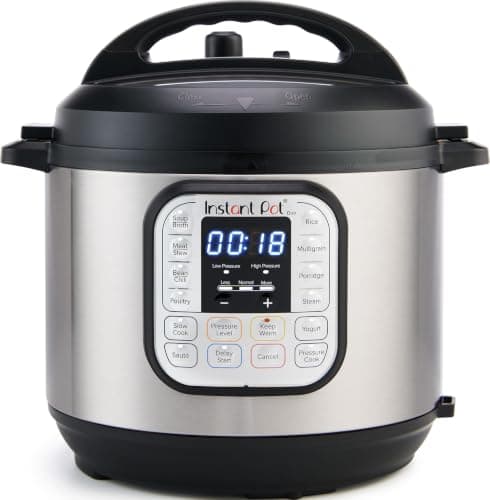
The Instant Pot is far more versatile; the rice cooker makes better rice, hands-off. Which to buy comes down to how much rice you actually eat.
Top pick: Instant Pot Duo 7-in-1 Electric Pressure Cooker, 6 Quart · 2 ranked, 2 with live prices
$71.89on AmazonBuying Guides
Which Countertop Cooker Do You Need?
The short decision guide: what a multicooker, rice cooker and sous vide machine are each best at, and which to buy first for how you cook.
Covered here: Instant Pot Duo 7-in-1 Electric Pressure Cooker, 6 Quart
$71.89on AmazonBuying Guides
Black Friday & Cyber Monday Kitchen Cooker Deals 2026: Multicookers, Rice Cookers & Sous Vide
The evergreen Black Friday and Cyber Monday hub for the cookers we rank: what has historically discounted (Instant Pot and Anova, reliably; Zojirushi, irregularly and not always at its lowest) and what has no public record, buy-now vs wait guidance by product class, and our current category winners with live prices. Verified deals are posted here when they go live in November 2026.
Top pick: Instant Pot Duo 7-in-1 Electric Pressure Cooker, 6 Quart · 8 ranked, 8 with live prices
$71.89on AmazonBuying Guides
The Best Splurge Kitchen Gifts for the Cook Who Has Everything
Five splurge-tier cooker gifts from our rankings, each with a mechanism that justifies the price: the induction-heating Zojirushi NW-QAC10 for the daily rice eater, the Cuckoo CRP-P0609S pressure cooker for sticky-rice fans, the Breville Joule Turbo for the design-minded sous vide cook, the made-in-Japan Zojirushi Neuro Fuzzy as the classic, and the Instant Pot Duo Crisp for pressure-and-air-fry under one lid.
Top pick: Zojirushi NW-QAC10 Induction Rice Cooker & Warmer, 5.5 Cup · 5 ranked, 5 with live prices
$340.60on Amazon