HUB 03 · Sous Vide
Can You Sous Vide Frozen Meat?
Yes — and sous vide is one of the best ways to cook meat straight from frozen, because the low, precise bath brings it up gently and holds it at a safe temperature. Here is how to do it: same temperature, roughly an extra hour, separate the pieces, and why a slow cooker can't do the same.
We earn a commission if you buy through our links. It does not change the price you pay, and it does not decide our picks — the scoring rubric is published in full, including what disqualifies a pick. How this works.
Yes — and it is one of the best ways to cook from frozen
You can absolutely sous vide meat straight from frozen, and it is not a compromise — it is arguably one of the best ways to cook a frozen steak, chop or chicken breast there is. The reason is the same thing that makes sous vide good at everything: the bath is a low, precise, gentle heatthat brings the meat up slowly and then holds it at your exact target, so a frozen center thaws and cooks in one continuous, even motion with no shocked, overcooked outer layer. This is genuinely useful in real life — forget to defrost, drop it in the bath frozen, and dinner is still on. We have not cooked these ourselves; this is the established method, grounded in USDA safety guidance.
Why frozen works so well in a water bath
Cooking from frozen usually goes wrong because the outside overcooks while the middle is still catching up — a frozen steak in a hot pan chars before the center thaws. Sous vide sidesteps that entirely. Because the water is never hotter than your target doneness, there is no hot surface to overshoot: the frozen meat simply warms from the outside in until the whole thing reaches the set temperature, and it cannot go past it. The gentle bath does the thawing and the cooking as a single step, and the result is indistinguishable from starting with thawed meat — same edge-to-edge doneness, same juiciness. It is one of the few cooking methods where “straight from the freezer” costs you nothing in quality.
Add roughly an extra hour
The one adjustment is time. Frozen meat starts far colder, so it needs longer in the bath to reach and hold the target temperature — a common rule of thumb is to add roughly an extra hourover the time you would give the same cut thawed, to be safe. That is a qualitative guide, not a precise figure: exact added times depend on the cut and its thickness, and the reliable numbers — including how long to holdat temperature once it is up to heat — live in the temperature guide. The temperature you set does not change because the meat is frozen; only the time does. When in doubt, give it the extra time rather than less — the wide sous vide window means a bit longer will not overcook it.
Separate the pieces so the water can flow
One practical trap: do not cook a frozen block of stuck-together pieces. If you froze two chicken breasts flat against each other, or a clump of meat in one lump, the water cannot circulate between them and the inner surfaces heat slowly and unevenly — the exact conditions you want to avoid for safety. Ideally freeze meat in a single flat layer or in individual portions in the first place, so each piece is surrounded by water in the bath and the circulation reaches every surface. If pieces are frozen together, pry them apart before they go in, or thaw just enough to separate them. Even, all-around water contact is what keeps the cook both fast and safe.
It still has to reach a pasteurizing time and temperature
Cooking from frozen changes the timing, not the safety rule. The meat must still reach and hold a pasteurizing combination of time and temperature— the same principle behind all sous vide safety, which the USDA describes for cooking safely with time and temperature. Frozen simply means it takes longer to get there, which is the whole reason for the extra time and for separating the pieces so every part comes up to temperature. As long as the entire piece reaches your target and holds long enough to pasteurize, cooking from frozen is exactly as safe as cooking from thawed. What you must not do is treat the extra-cold start casually — give it the time it needs, and confirm the holding times in the temperature guide.
Why a slow cooker cannot do this
It is worth contrasting sous vide with the appliance people most often assume is similar. You are widely and correctly warned not to cook frozen meat in a slow cooker, because a slow cooker heats so gradually that frozen food spends too long in the bacterial danger zone— the warm range where bacteria multiply — before it ever gets hot enough to be safe. Sous vide looks superficially similar (both are low-temperature, hands-off), but it differs in the way that matters: the water bath transfers heat far more efficiently than a slow cooker's air and crockery, so the meat moves up through the danger zone and reaches a pasteurizing temperature quickly enough to be safe. Same low temperatures, very different physics. For the fuller comparison, see sous vide vs a slow cooker.
The rule in one line:yes, sous vide meat from frozen — keep the same target temperature, add roughly an extra hour (defer exact times to the temperature guide), separate any stuck-together pieces so the water flows around each one, and make sure the whole thing reaches and holds a pasteurizing time and temperature. Do not try the same thing in a slow cooker, which heats too slowly to be safe from frozen. Safety here, as always in sous vide, is a function of bothtime and temperature — more on the logic in is sous vide safe?
The hardware
The cookers this page is about
The cookers referred to above, with prices pulled live from Amazon and dated on every card. Full rankings live in the roundups linked from this page.
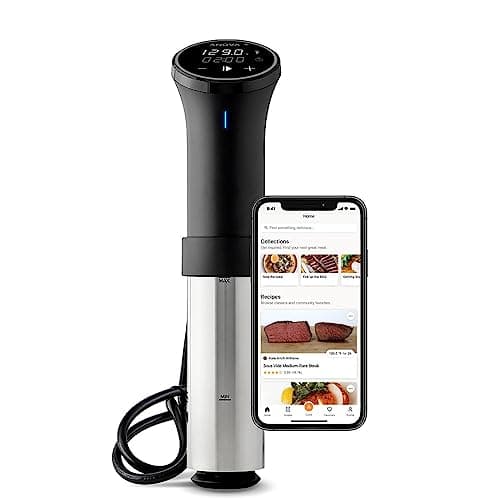
1,100 W
Anova Precision Cooker 3.0 (WiFi), 1100 W
The sous vide circulator most people should buy. Anova publishes the full specification — 1,100 W, a 0–92°C range, ±0.1°C accuracy, an 8 L/min pump — and backs it with a two-year warranty, the longest here. It has an on-device screen so it works without the app, which the Joule does not.
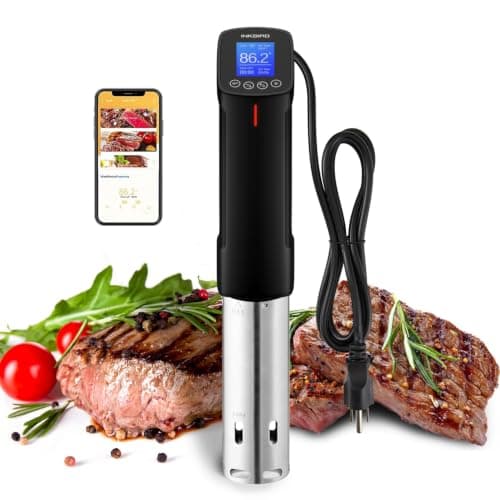
1,000 W
Inkbird ISV-100W WiFi Sous Vide, 1000 W
The value pick that does not feel like one. Under $100, and Inkbird still publishes the full specification: 1,000 W, a 25–99°C range, ±0.1°C accuracy, 15 L capacity, WiFi and an on-device dot-matrix screen. It undercuts the Anova by more than half and gives up remarkably little on paper.
#ad · As an Amazon Associate we earn from qualifying purchases.
Questions
Frequently asked
Can you sous vide meat straight from frozen?
How much longer does frozen meat take to sous vide?
Is it safe to sous vide frozen meat?
Keep reading
Related
Receipts
Sources
- USDA FSIS — cooking safely with time and temperature (pasteurization basics)
- USDA Food Safety and Inspection Service — safe minimum internal cooking temperatures
- Anova Culinary — Precision Cooker 3.0 product page
We have not tested these machines in a lab and we do not pretend to have. Specifications come from the manufacturer's own published documents; electricity rates come from the US Energy Information Administration; prices come from the live Amazon API. Where a figure is not published, the page says “not published” rather than guessing. Read the full method.