HUB 03 · Sous Vide
How to Sous Vide Without a Machine
You can approximate sous vide with a cooler of warm water or a pot on the lowest burner and a thermometer - and it genuinely works for a steak. But it can't hold a temperature for hours, which is where the technique's magic lives. Here is the honest version: how to do it, and when to just buy the cheap circulator.
We earn a commission if you buy through our links. It does not change the price you pay, and it does not decide our picks — the scoring rubric is published in full, including what disqualifies a pick. How this works.
What you're actually trying to do
Sous vide is just holding water at a precise temperaturewhile food cooks in a sealed bag — and you can approximate that without a circulator for a short cook. The catch is the word hold: a machine keeps the bath dead steady for hours, and the manual methods below cannot. So the no-machine approach is a fine way to try the technique or cook a quick steak, but it is not a real substitute for the long, low cooks (see what sous vide is). You do not need a vacuum sealer either — the water-displacement bag trick in sous vide without a vacuum sealer covers the sealing side.
The cooler method (best no-machine option)
An insulated beer cooler is the trick that actually works, because its whole job is holding a temperature. Heat water to a few degrees above your target (a thermometer is essential), pour it into the cooler, add the sealed bag, close the lid, and let insulation do the rest. A good cooler holds the temperature closely enough for an hour or two — plenty for a steakor chicken breast. Because it drifts slowly downward, start a touch high (say 5°F over target for a steak) to average out over the cook. It will not do a 6-hour roast, but for a single dinner it is genuinely good.
The pot-on-the-stove method (needs babysitting)
The other option is a pot of water on the lowest possible burnerwith a thermometer clipped to the side. It works, but it is fiddly: the burner constantly overshoots and undershoots, so you are forever nudging the heat up and down, adding cold water or moving the pot on and off to hold the number. It demands near-constant attention for the whole cook, which rather defeats the hands-off appeal — but in a pinch, for a short cook, it does the job.
The honest limits - and when to buy the machine
Two honest cautions. First, food safety: the manual methods drift, and if the water slips into the 40–130°F danger zonefor a long cook, that is a real risk — keep no-machine cooks short and the temperature up (see is sous vide safe). Second, what you give up: the long, low, walk-away cooks — 48-hour short ribs, precise eggs — simply aren't possible without a machine that holds temperature. The good news is the entry price is now tiny: an inexpensive circulator like the Monoprice Strata removes every one of these limits for about the cost of a couple of steak dinners, which is why our best budget sous videroundup exists. Use the cooler to try it; buy the machine when you're hooked.
The hardware
The cookers this page is about
The cookers referred to above, with prices pulled live from Amazon and dated on every card. Full rankings live in the roundups linked from this page.
- PickNo image
800 W
Monoprice Strata Home Sous Vide Immersion Cooker, 800 W
The cheapest way to find out whether you actually like sous vide. Physical controls only, an 800 W element, a factory-calibrated sensor you can recalibrate yourself, and a directional pump cap that is a genuinely thoughtful touch at the price. Monoprice publishes the full spec in the manual, which the price does not lead you to expect.
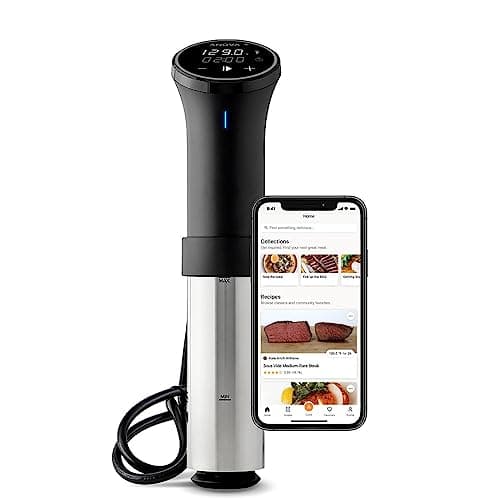
1,100 W
Anova Precision Cooker 3.0 (WiFi), 1100 W
The sous vide circulator most people should buy. Anova publishes the full specification — 1,100 W, a 0–92°C range, ±0.1°C accuracy, an 8 L/min pump — and backs it with a two-year warranty, the longest here. It has an on-device screen so it works without the app, which the Joule does not.
#ad · As an Amazon Associate we earn from qualifying purchases.
Questions
Frequently asked
Can you sous vide without a machine?
How do you keep the water temperature steady without a circulator?
Is it worth buying a sous vide machine?
Keep reading
Related
Receipts
Sources
We have not tested these machines in a lab and we do not pretend to have. Specifications come from the manufacturer's own published documents; electricity rates come from the US Energy Information Administration; prices come from the live Amazon API. Where a figure is not published, the page says “not published” rather than guessing. Read the full method.