HUB 02 · Rice Cookers
How to Cook Brown Rice in a Rice Cooker
Brown rice is white rice with the bran left on — and that bran is exactly why it needs more water, more time, and ideally a cooker that knows to give it both. Here is how to cook it so it comes out tender rather than chewy or scorched, and why a Brown Rice setting is the real advantage.
We earn a commission if you buy through our links. It does not change the price you pay, and it does not decide our picks — the scoring rubric is published in full, including what disqualifies a pick. How this works.
Why brown rice is harder than white
Brown rice is the whole grain with its bran and germ still on; white rice is the same grain with those layers polished off. That bran is nutritious and nutty, but it is also a tough, water-resistant coat — so brown rice takes more water and more time to cook through than white, and it is far less forgiving. Cook it like white rice and you get a chewy, half-done grain or a scorched pot bottom. Everything about cooking brown rice well comes down to giving the bran enough water and enough time to soften, which is exactly what a good rice cooker is built to manage for you.
Rinse, and consider a soak
Rinse brown rice a couple of times to wash off dust and loose bits, though it does not need the thorough rinse-until-clear that white and sushi rice do — there is far less surface starch to remove. A soak helps brown rice more than almost anything else: letting the rinsed grains sit in their cooking water for 30 minutes to an hour before you start softens the bran and gives you a more evenly tender result, and it can shorten the cook. It is optional, but if your brown rice has ever come out stubbornly chewy, a soak is the first fix to try. Drain and re-measure your water if you soak in a separate bowl.
Use more water than white — the exact figure lives on the ratio page
The one rule that never changes: brown rice needs meaningfully more water than white, because the bran absorbs it slowly and the longer cook boils more of it off. How much more depends on the rice and the cooker, so rather than repeat a number that might drift, we keep every rice type's figure in one place — the rice-to-water ratio guide has the brown-rice ratio alongside white, jasmine, basmati and sushi. As with any rice, the most reliable method is to measure the rice with the cup that came with the cooker and fill water to the pot's brown-rice line if it has one — the pot is calibrated, and it takes the guesswork out.
Why a Brown Rice setting is the real advantage
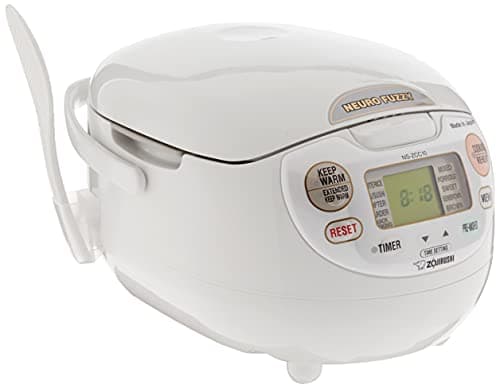
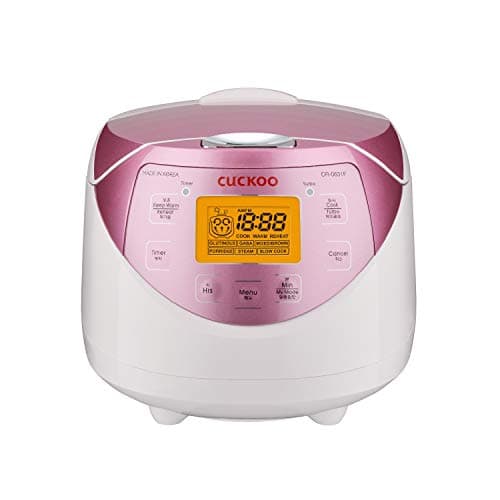
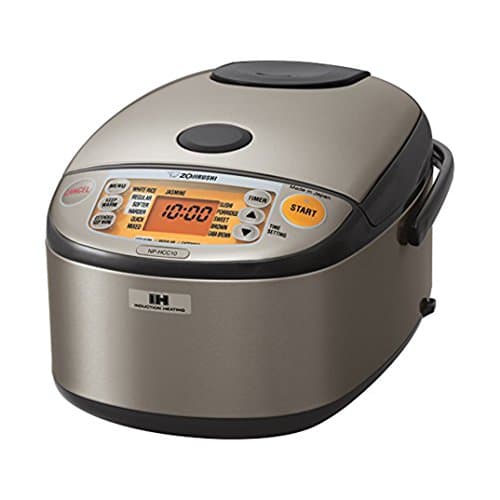
Here is the honest core of it: a Brown Rice program is the single biggest thing that makes brown rice easy. A fuzzy-logic or induction cooker with a dedicated brown setting automatically extends the soak and the cook time and manages the heat so the bran softens without the bottom scorching — it does the thinking a chewy or burnt result would otherwise punish you for. The Zojirushi NS-ZCC10 Neuro Fuzzy has a brown setting among its menu; the Cuckoo CR-0631F covers GABA and brown rice; and the induction Zojirushi NP-HCC10 adds a GABA brown program within the widest menu here, with whole-pot induction heat that cooks a batch especially evenly. Fuzzy logic — the microcomputer sensing and adjusting the heat — is what makes the difference, and it is worth understanding on its own: see what a fuzzy-logic rice cooker is.
Why a basic cooker struggles with brown rice
A plain on/off rice cooker — the $20 kind with a single thermostat and no brain — is the worst tool for brown rice, and it is worth being blunt about why. It runs one fixed heat until the water boils off, then clicks to warm; it has no way to give brown rice the longer, gentler cook the bran needs. The result is often a grain that is chewy on top and scorched on the bottom, because the cooker cannot extend the cook or ease the heat. You can improve it by soaking and adding extra water, but you are fighting the machine. If you eat brown rice regularly, a cooker with a real Brown Rice setting is not a luxury — it is the difference between reliable, tender brown rice and a gamble every time.
Not all brown rice cooks the same
“Brown rice” covers a range, and they do not all behave identically. Short-grain brown is a little stickier and more forgiving; long-grain brown and brown basmati cook drier and want the water kept toward the higher end. GABA (germinated) brown rice, which several cookers here have a dedicated program for, is soaked warm before cooking to sprout the grain slightly — the Cuckoo CR-0631F and the induction Zojirushi NP-HCC10 both include a GABA setting. And many bags are blends — brown mixed with wild or red rice, or with other whole grains — which cook longest of all. The practical upshot: read the package, and lean on a Brown or GABA program rather than trying to force every kind through a single white-rice cook.
How long brown rice takes
Expect brown rice to take meaningfully longer than white — the tough bran simply needs more time to soften and absorb — and a dedicated Brown Rice program builds that longer, gentler cook in automatically, which is most of what you are paying for. A soak beforehand can shorten the active cook and improve evenness. The exact time depends on the cooker and the rice, so rather than watch a clock, let the program run to its own finish and judge by texture. The one thing not to do is rush it: cutting the cook short on brown rice is what leaves the chewy, gritty center that puts people off it in the first place.
Troubleshooting brown rice
If your brown rice keeps coming out wrong, the fix usually follows the symptom. Chewy or gritty means it did not get enough water or enough time — add a little more water next batch, soak first, and use the Brown setting so the cook runs long enough. Mushy or blown-out grains mean too much water — ease it back. A scorched bottom is the classic sign of a basic on/off cooker running full heat with nowhere to go; a fuzzy-logic or induction cooker with a brown program manages the heat so this does not happen. And uneven rice — done on top, firm underneath — is what the 10-to-15-minute rest after the cook is for. Change one variable at a time and two or three batches will dial it in.
Can you cook brown and white rice together?
It is a common question, and the honest answer is that it is awkward: brown and white rice have different water needs and different cook times, so cooked together in a single pot on one setting, one of them comes out wrong — usually undercooked brown or overcooked white. Some fuzzy-logic cookers offer a mixed-riceprogram that splits the difference for blends designed to be cooked together, and pre-packaged brown-and-white blends are formulated for it. But if you are combining loose brown and white rice yourself, you will get a better result cooking them separately, or leaning on a cooker's mixed setting rather than improvising. When in doubt, treat brown rice as its own cook with its own longer program.
Why cook brown rice at all
Brown rice keeps the whole grain — the bran and germ that white rice has polished away — which is why it is a whole-grain food with more fiber and a nuttier, chewier character than white rice (USDA FoodData Central catalogs the nutritional difference). It also holds and reheats especially well, which makes it a natural for batch cooking a week of grains at once. The trade is the longer, fussier cook — which is exactly the trade a good rice cooker is designed to erase. If you have avoided brown rice because it always came out badly on a basic cooker, a fuzzy-logic or induction model with a real Brown setting is often the whole fix.
Holding and storing brown rice
Brown rice tolerates the keep-warm setting reasonably well for a couple of hours, but for anything longer it is better to cool it promptly and refrigerate, then reheat with a splash of water — the bran can take on a stale edge if it is held hot too long. Cooked brown rice keeps well for a few days chilled and reheats close to fresh, which is exactly why it suits cooking a big batch at the start of the week. Cool it reasonably quickly rather than leaving a full pot at room temperature for hours, and it will be nearly as good on day three as on day one.
Rest it, then fluff
When the cook finishes, leave brown rice on keep-warm with the lid closed for 10 to 15 minutesbefore you open it — the rest lets the remaining moisture redistribute through the dense grain and firm bran, which is what takes it from “nearly done” to properly tender. Then fluff it gently with a paddle to separate the grains and let the steam out. Brown rice also holds and reheats well, which makes it a natural for batch cooking — cook a big pot and keep it for the week. For the full routine from rinse to rest, see how to use a rice cooker, and to pick the right machine for it, the best rice cookers for brown rice.
The hardware
The cookers this page is about
The cookers referred to above, with prices pulled live from Amazon and dated on every card. Full rankings live in the roundups linked from this page.
680 W
Zojirushi NS-ZCC10 Neuro Fuzzy Rice Cooker & Warmer, 5.5 Cup
The rice cooker every other one is measured against. Its Neuro Fuzzy microcomputer adjusts heat through the cook rather than running a fixed timer, which is the whole reason a $260 rice cooker cooks rice better than a $30 one. Made in Japan, 680 W, and the settings that matter are all there.
580 W
Cuckoo CR-0631F Micom Rice Cooker, 6 Cup
Cuckoo's non-pressure Micom cooker: the same Korean build and fuzzy-logic control as the CRP, without the pressure mechanism or its price. 580 W, a 6-cup nonstick pot, and a menu set that still covers GABA and brown rice. The sensible Cuckoo if you do not need pressure.
1,230 W
Zojirushi NP-HCC10 Induction Heating Rice Cooker & Warmer, 5.5 Cup
The best rice cooker on this site, and it is not close — for people who eat rice daily. Induction heats the entire pot electromagnetically rather than from a plate underneath, so the heat is more even and more responsive. It draws 1,230 W to do that, roughly double the Micom models, and it costs $420.
#ad · As an Amazon Associate we earn from qualifying purchases.
Questions
Frequently asked
Do you use more water for brown rice in a rice cooker?
Why does my brown rice come out chewy or burnt?
Do I need a Brown Rice setting on my rice cooker?
Keep reading
Related
- How to cook wild rice in a rice cookerMore water, more time, and a second cycle.
- How to cook quinoa in a rice cookerRinse, ratio and setting for fluffy quinoa.
- The best rice cookers for brown riceThe cookers with a real Brown Rice setting, ranked.
- Rice-to-water ratioThe exact water figure for brown rice.
- How to use a rice cookerThe full rinse-soak-cook-rest routine.
Receipts
Sources
- Zojirushi — NS-ZCC10 Neuro Fuzzy Rice Cooker product page
- Cuckoo CR-0631F series manual (specification page)
- USDA FoodData Central — rice, cooked (nutrition reference)
We have not tested these machines in a lab and we do not pretend to have. Specifications come from the manufacturer's own published documents; electricity rates come from the US Energy Information Administration; prices come from the live Amazon API. Where a figure is not published, the page says “not published” rather than guessing. Read the full method.