The short answer
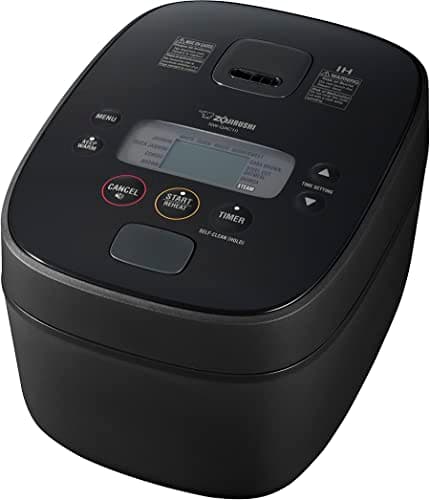
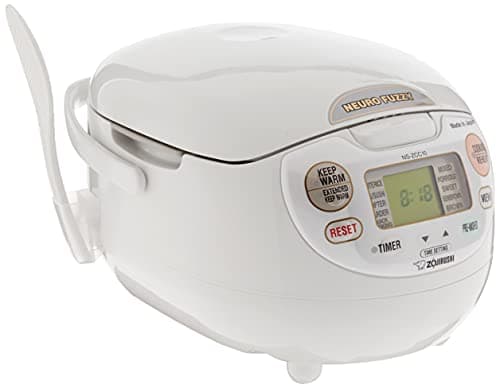
Buy the Zojirushi NS-ZCC10 Neuro Fuzzy. It is the alternative for the person who wants Cuckoo-grade rice without a pressure vessel: 680 W, 5.5 cups, made in Japan, Micom plus Neuro Fuzzy heat control that adjusts through the cook rather than running a timer — and no gasket, no pressure valve and no sealed lid to maintain. If your reason for leaving is the coated inner pot, the Cuchen CRH-TWS0610PWUS is the only cooker in this catalog with an uncoated 304Ti stainless pot, and it still has Korean dual pressure. If your reason is price, the budget pick is the Aroma ARC-994SG at 450 W — a fraction of any Cuckoo, with two published rice programs and no pretensions beyond them.
Prices come from our daily refresh and the Quick Picks table above prints the date of the most recent one. Treat the table as the authority over any sentence here.
The four published reasons people leave Cuckoo
This is not a brand complaint. Cuckoo publishes more about its machines than almost anyone in this catalog, and that is precisely why these four reasons are checkable rather than vibes.
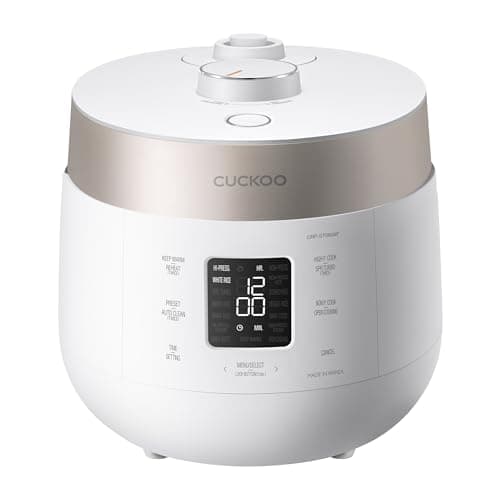
1. The programs hold less than the box.Cuckoo's own US operating instructions for the CRP-ST0609F publish a per-program capacity table: plain white rice runs 1–6 cups, while high heat, Super Turbo, mixed rice and GABA are each capped at 1–4 cups. On a cooker sold as a six, the programs you bought it for hold two thirds as much. No other rice-cooker maker here publishes a per-program figure at all, so Cuckoo is the only one telling you — but if you need six cups of mixed rice, that is still a reason to look elsewhere.
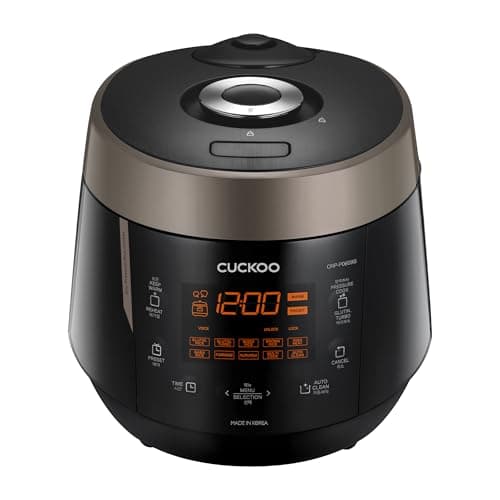
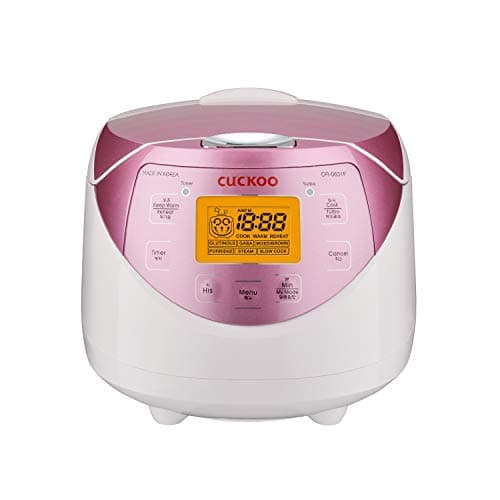
2. The pot is coated. Both the CRP-ST0609F and the CR-0631F have nonstick coatings; the CRP-P0609S has 304 stainless undera nonstick coating. Cuckoo's manual is explicit that coating damage from a metal scrubber is a chargeable repair. If your objection is a surface that can be ruined, that is a real objection.
3. Pressure is wrong for long-grain rice. Sealing the lid raises the boiling point, which is excellent for short-grain rice and tough grains and actively counterproductive for basmati and jasmine: pressure makes long-grain rice more cohesive, which is the texture you were trying to avoid. The CRP-P0609S cannot turn its pressure off.
4. Price. The pressure Cuckoos sit at the top of this catalog, and a 6-cup pressure machine costs more than most people expected a rice cooker to cost.
If none of those four is your situation, the honest answer is that you should buy the Cuckoo. Our Korean rice-cooker ranking is where the line-up is ranked on its own merits, and Cuckoo pressure versus Micom settles the choice within the brand.
How we ranked
Does it fix a specific one of the four reasons, rather than merely being a different rice cooker. A machine that solves the coated pot but reintroduces pressure is the right answer for reason 2 and the wrong answer for reason 3, and we say which is which on every pick.
Then published documentation, because a brand swap that trades a well-documented cooker for a badly documented one is a downgrade whatever the spec sheet implies. Zojirushi, Tiger and Cuchen all publish; the Aroma publishes a wattage and two program names and very little else.
Then mechanism, then price.
The winner: the Japanese benchmark instead
The Zojirushi NS-ZCC10 Neuro Fuzzyfixes three of the four reasons at once. There is no pressure, so nothing to do to long-grain rice and no gasket or valve to maintain. There is no per-program capacity cap published, and nothing in Zojirushi's documentation suggests the usable capacity changes by program. And it costs less than the pressure Cuckoos.
What it is: 680 W, 5.5 cups uncooked, Micom plus Neuro Fuzzy logic — a microcomputer adjusting heat through the cook rather than following a timer — made in Japan. It is the cooker the whole category is measured against, and it wins our fuzzy-logic ranking for the same reasons.
What it does not fix is reason 2: its pan is nonstick-coated too. If an uncoated surface is the thing you want, skip to the Cuchen below. The brand-level comparison is in Zojirushi versus Cuckoo, and our Zojirushi alternativespage is this page's mirror if you end up wanting to leave in the other direction.
The cheaper Japanese option, with a plate
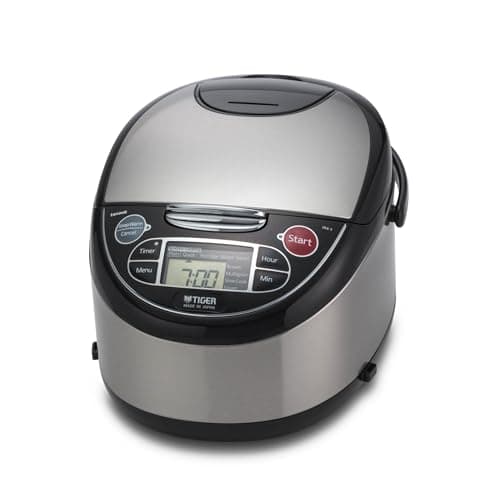
The Tiger JAX-T10Uis second: 641 W, 1.0 L / 5.5 cups, Micom plus heating, 10 published auto-cook settings, made in Japan, and the tacook synchro-cookingsystem that cooks a dish on a plate above the rice. It costs less than the Neuro Fuzzy and considerably less than any pressure Cuckoo, it has no pressure vessel, and it adds a capability no Cuckoo has — which makes it the pick if your reason for leaving was price and you would also like dinner.
It is a step down on rice: Micom heat control without Zojirushi's Neuro Fuzzy refinement, and no pressure or induction. The head-to-heads are in Cuckoo versus Tiger and Zojirushi versus Tiger.
If the coated pot is the problem
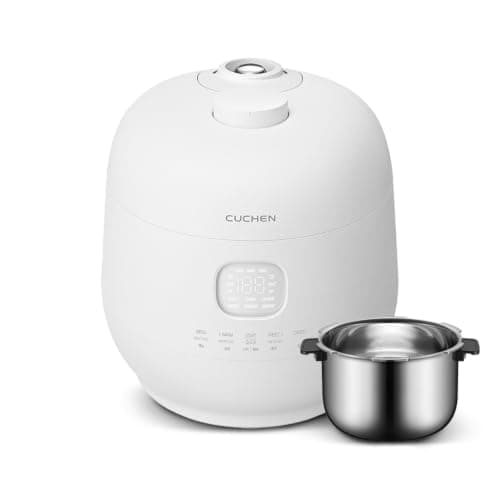
The Cuchen CRH-TWS0610PWUS is third and it is the only cooker in this entire catalog with an uncoated stainless inner pot— 304Ti stainless, with an optional coated pot available as an alternative rather than the other way round. It also keeps everything mechanical you would miss: IH induction heating, dual high-pressure and non-pressure modes, auto steam clean, 6 cups uncooked, made in Korea. For the Cuckoo owner whose only real complaint is the surface, this is the machine that fixes it without giving anything up.
Two honest marks against it. It is the most expensive rice cooker we cover, so it does not answer reason 4 at all. And Cuchen publishes no wattageanywhere we can reach, along with no per-program capacity and no menu list — its US documentation is one combined manual for two product lines with no specification table. Swapping a well-documented Cuckoo for it is a trade in documentation, and that is the opposite of what this site usually recommends.
If you want induction instead of pressure
The Zojirushi NW-QAC10 is fourth: 1,080 W of whole-pot induction heating, made in Japan, 5.5 cups, and twelve published menu settingsincluding quick white, quick Jasmine, congee, GABA brown, quinoa and steam — the only machine here whose maker names non-rice grains individually. It is the straight answer to reason 3: induction drives the pot itself rather than sealing it, so long-grain aromatic rice stays separate, and the published Jasmine program says Zojirushi tuned for it on purpose.
It is also roughly the price of a pressure Cuckoo, with a double-nonstick-coated aluminum pan, so it fixes reason 3 and neither 2 nor 4. The mechanism comparison is in induction versus fuzzy logic.
The budget pick
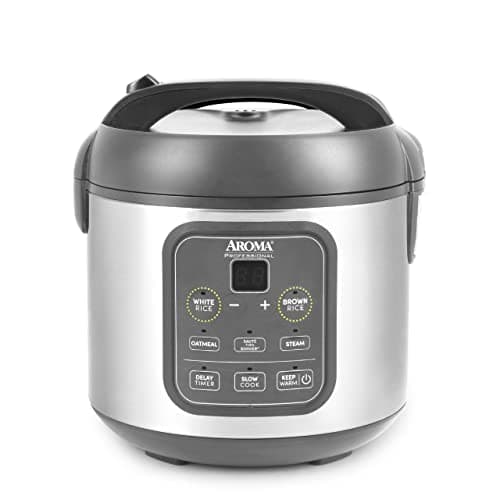
The Aroma ARC-994SGis the answer to reason 4 and nothing else, and it is an honest answer. 450 W, 4 cups uncooked / 8 cooked, Sensor Logic heat control, a ceramic-coated nonstick pot, a published 1-year US warranty, a Sauté-then-Simmer function and a Slow Cook program of 2 to 10 hours. It costs a small fraction of any Cuckoo.
What you are giving up is most of why you were looking at a Cuckoo in the first place: Aroma publishes exactly two rice programs, White Rice and Brown Rice, with no mixed, GABA, sushi or aromatic cycle, no pressure, no induction and a coated pot. If plain rice at a low price is the brief it does the job, and it is our standing pick in the budget rice ranking. If you wanted Cuckoo's GABA program, there is no cheap route to it.
The Cuckoo that is still the right answer for most people
Worth saying on a page about leaving. If your rice is short-grain, your batches are four cups or under, and you are willing to look after a coating, the CRP-P0609Sat 890 W with a 304 food-grade stainless pot under its coating is a better rice cooker than three of the five machines on this page, and the general ranking says so. The CR-0631Fat 580 W is the lowest-draw full-size cooker here and keeps Cuckoo's published GABA, mixed and porridge programs with no pressure mechanism to maintain — which is, for a lot of people, the alternative to a Cuckoo that is also a Cuckoo.