Skip to content
DD

HUB 01 · Multicookers

The best budget pressure cooker

Only two things separate a cheap pressure cooker worth owning from a cheap one that disappoints, and neither is the function count on the box. Here is the budget field — electric and stovetop — ranked on the pot it seals and the figures its maker is willing to publish.

By Stephen V.Updated How we rank
#ad

We earn a commission if you buy through our links. It does not change the price you pay, and it does not decide our picks — the scoring rubric is published in full, including what disqualifies a pick. How this works.

The short answer

Quick picks

#CookerBest forScorePrice
011,000 W
8.6
$69.99Amazon
02
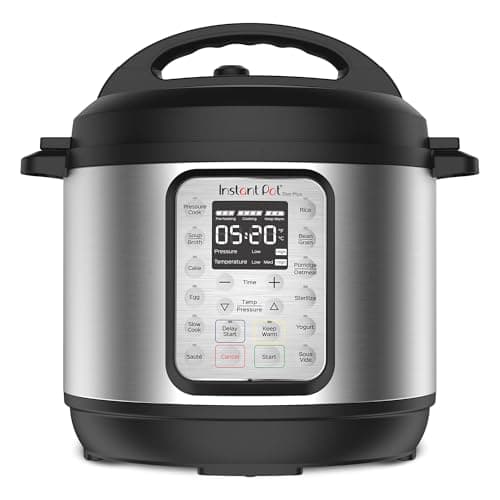
Instant Pot Instant Pot Duo Plus 9-in-1 Multicooker, 6 Quart
Instant Pot Duo Plus 9-in-1 Multicooker, 6 Quart

Sous vide and sterilize without stepping up to the Pro

1,000 W
8.1
$68.64Amazon
03
Cosori Cosori 6-Quart Electric Pressure Cooker
Cosori 6-Quart Electric Pressure Cooker

The non-Instant-Pot option with published pressure

1,100 W
7.8
$80.99Amazon
04
Instant Pot Instant Pot RIO 7-in-1 Multi-Cooker, 6 Quart
Instant Pot RIO 7-in-1 Multi-Cooker, 6 Quart

The current-generation entry Instant Pot

1,000 W
8.0
$109.99Amazon
05700 W
7.3
$70.00Amazon
06
Presto Presto 01264 6-Quart Aluminum Pressure Cooker
Presto 01264 6-Quart Aluminum Pressure Cooker

The cheapest way to pressure cook at all

Wattage not published
7.9
$53.99Amazon

#ad · Prices pulled live from the Amazon Product API, last checked October 8, 2026. Where we have no verified live price we show none — we would rather leave a gap than print a number that has gone stale. The wattage column is what the manufacturer publishes; “not published” means exactly that, and we have not estimated one. Scores are ours, compiled from published specifications, and are not test results.

The two specs that decide a budget pressure cooker

A pressure cooker is a simple machine with one job: seal a pot and hold it above boiling until the food is done. Every cooker on this page does that, and does it at broadly the same temperature. So the question is never which cheap cooker cooks better — it is which cheap cooker cut the part that matters to reach its price. Two specs answer that, and both are published figures you can check rather than impressions anyone has to trust us on.

First: what the inner pot is made of. This is where budget cookers overwhelmingly save money, and it is the one saving you will still be living with in year three. A bare 18/8 stainless pot has no coating to scratch, chip or wear through. A coated pot is cheaper to make, easier to wash for the first year, and then slowly stops being the surface you bought. Every Instant Pot on this page documents bare stainless with a tri-ply bottom. The Cosori documents a nonstick interior coating. That is the single biggest difference on this list and it is the reason the ranking looks the way it does.

Second: whether the maker publishes its numbers at all. This site has no test kitchen and does not pretend otherwise — our whole method is compiling what manufacturers put in writing. That turns out to be a surprisingly good proxy for build quality on cheap appliances, because a brand that prints its rated wattage, its working pressure and its pot material is a brand you can hold to those figures. A brand that prints a function count and a photograph is not. On this page Cosori publishes the most complete pressure documentation of anyone, including both its low and high bands in psi and kPa; Instant Brands publishes wattage, pot material and warranty everywhere but gives a working-pressure range only in its older Duo and Duo Plus manuals; and Presto publishes a 12-year warranty, which is more than ten times what any electric cooker here offers.

What “budget” actually means in this category

Pressure cooking is the rare kitchen category where the entry-level product is genuinely one of the best in the whole field. The plain Instant Pot Duo is not a compromise version of a better cooker — it is the cooker that made the category, it sits in the budget bracket, and it is also the winner of our overall electric pressure cooker roundup. Spending three or four times as much buys you an auto-sealing lid, a quieter steam release and an air-fry attachment. It does not buy you better-cooked food, because the pot reaches the same pressure either way.

That has a blunt practical consequence. In most categories the budget page is where you go to find the least-bad cheap option. Here it is where you go to find out that the cheap option is the right answer and you can stop shopping. Everything below the Duo on this list exists for a specific reason — a smaller household, a non-Instant-Pot preference, a hard price floor — not because it is a step up.

Why a stovetop pot is on a budget list

The cheapest way to pressure cook is not an electric appliance at all. A stovetop pressure cooker is a pot with a locking lid and a weighted regulator, and the Presto 01264 at the bottom of this list costs less than any electric cooker on this site while reaching roughly 15 pounds of pressure — meaningfully morethan the 10.2–11.6 psi Instant Brands publishes for its electrics. It cooks faster than every machine above it.

It also asks something of you that none of them do: you have to stand at the stove and adjust the burner by watching the regulator rock, for the whole cook. There is no timer, no program and no walking away. Whether that is a fair trade is a question about your kitchen habits rather than about the pot, and we lay the whole comparison out in stovetop vs electric pressure cookers. One hard constraint before you consider it: Presto's own range list for the aluminum models omits induction, and aluminum will not heat on an induction hob at all. If your range is induction, the aluminum Prestos are not an option at any price, and the stainless models in our stovetop roundup are where to look instead.

The size question, because it decides more than the model

Six quarts is the default for a reason: it fits a whole chicken, a pot roast or a large batch of beans, and it is the size almost every published recipe time assumes. Three quarts — the Duo Mini — is genuinely useful for one person or a couple who cook small, and genuinely frustrating the first time you try to cook for four in it. Eight quarts is a batch-cooking size and overkill for most households.

The trap is buying small to save money. The gap between a 3-quart and a 6-quart cooker is usually slim, and the 3-quart has a much smaller set of things it can do. If the only reason you are looking at a Mini is price, buy the 6-quart Duo. If the reason is counter space or a genuinely small household, the Mini is the right machine and not a concession.

Where the running cost lands

A budget pressure cooker is cheap to run, and the arithmetic is small enough to be worth stating plainly. The electrics here draw between 1,000 and 1,100 W, and they only pull full power while coming up to pressure — once sealed, the element cycles to hold it, so a 30-minute pressure cook is nothing like 30 minutes at full draw. Each card below computes the figure at the US average residential electricity rate so you can redo it against your own bill, and the full running-cost breakdown is here.

The stovetop Presto has no wattage at all, and its card says so rather than inventing one. It draws whatever the burner under it draws, which depends on your range and not on the pot — so any number we printed there would be a fabrication.

What we are not telling you

We have not cooked in these. Nobody on this site has a test kitchen, and the scores on each card are judgments compiled from published manufacturer documents — manuals, spec pages and warranty terms — not test results. Where a figure is not published, there is no figure: Instant Brands does not publish a working-pressure range for the RIO, Kuhn Rikon publishes no pressure figure at all, and both of those gaps appear as marks against those products rather than being quietly filled in with a plausible number.

What we can tell you is what each maker commits to in writing, what each one declines to say, and which of those silences should change your mind. On a budget cooker that is usually the more useful information anyway — at this price the failure modes are a coating that wears out and a warranty that runs out, and both of those are documented facts rather than matters of taste.

In detail

The picks, in full

01
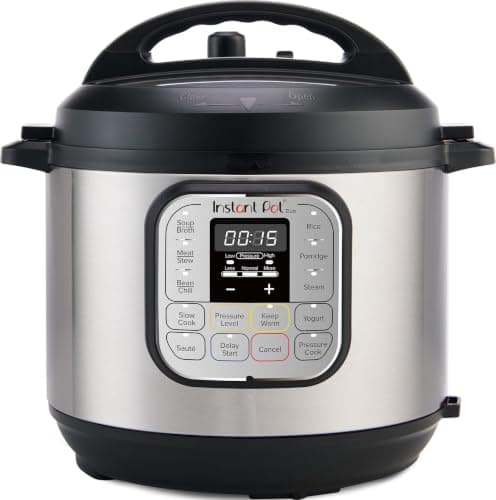
Instant Pot Instant Pot Duo 7-in-1 Electric Pressure Cooker, 6 Quart

The one to buy if you are not sure

Instant Pot Duo 7-in-1 Electric Pressure Cooker, 6 Quart

Stainless inner potWattage & pressure published
8.6/10

The multicooker that made the category, and still the right default. Instant Brands publishes the wattage, the working pressure range and a stainless (not nonstick) inner pot, which is more than most of the field manages — and it costs less than almost all of them.

Capability
7.5
Capacity
8
Documentation
9.5
Build
8.5
Value
9.5

What it gets right

  • Instant Brands publishes the wattage, the working-pressure range and the pot material — the full set, which most of the field does not
  • The 18/8 stainless inner pot has no coating to scratch off, so it outlives the nonstick pots in cookers costing more
  • At the current price it is the cheapest genuinely well-documented multicooker on this site

What it doesn't

  • No sous vide or air-fry program — this is the plain pressure-and-slow-cook model, by design
  • The steam release is a manual toggle, not the quiet auto-release of the Duo Plus or Pro
  • Seven functions is fewer than the sticker-count leaders, though most of those are the same element at different set points

What it costs to run

About 18.8¢ an hour at full rated draw, at the US average of 18.83¢ per kWh.

1,000 W ÷ 1000 × 1 h × 18.83¢ = 18.8¢

1000 W at 120 V / 60 Hz, published on the Instant Pot Duo product page and confirmed on the IP-DUO60 manual specification page. This is an upper bound: the element only draws full power while it is heating up or pressurizing, then cycles off to hold temperature, and no manufacturer publishes a duty cycle — so we compute at full rated draw rather than invent a correction factor. The full method is published.

Skip this if…

…you specifically want sous vide, a quieter steam release, or an air-fry lid — the Duo has none of those, and reaching for it and then wishing it did more is the most common Instant Pot regret. Step up to the Pro or Duo Crisp instead.

$69.99on Amazon

$109.9936% off

Price last checked October 8, 2026. Prices move constantly — Amazon's at checkout is the one that counts.

#ad · we may earn a commission from this link to Instant Pot Duo 7-in-1 Electric Pressure Cooker, 6 Quart

02
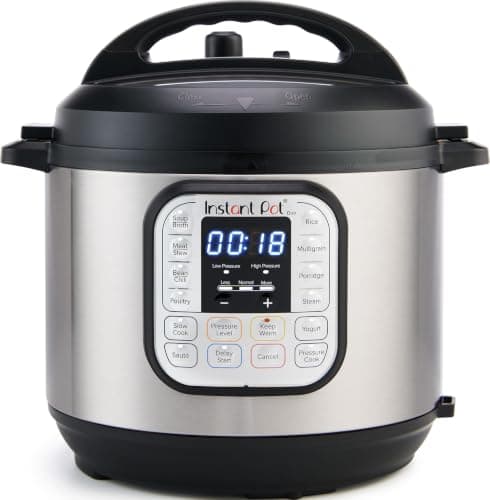
Instant Pot Instant Pot Duo Plus 9-in-1 Multicooker, 6 Quart

Sous vide and sterilize without stepping up to the Pro

Instant Pot Duo Plus 9-in-1 Multicooker, 6 Quart

Sous vide + sterilizeStainless inner pot
8.1/10

The Duo with two functions added that people genuinely use — sous vide and sterilize — plus a quieter WhisperQuiet steam release. Same 1,000 W, same stainless pot, same published working pressure, at a price between the Duo and the Pro.

Capability
8
Capacity
8
Documentation
9
Build
8
Value
7.5

What it gets right

  • Sous vide and sterilize on top of the Duo's core set, for meaningfully less than the Pro
  • The WhisperQuiet steam release is a real quality-of-life change if the kitchen is near a bedroom
  • Ships with a steam rack and two spare sealing rings, which is the accessory you always end up buying anyway

What it doesn't

  • The blue backlit LCD and button interface is dated next to the Pro's dial, and there is no auto-sealing lid
  • Sous vide on a pressure cooker holds temperature less tightly than a dedicated circulator with a pump
  • It sits in an awkward middle — close enough to the Pro's price that the Pro is often the better buy

What it costs to run

About 18.8¢ an hour at full rated draw, at the US average of 18.83¢ per kWh.

1,000 W ÷ 1000 × 1 h × 18.83¢ = 18.8¢

1000 W at 120 V / 60 Hz, published on the Duo Plus product page and confirmed on the Duo Plus manual specifications page 7. This is an upper bound: the element only draws full power while it is heating up or pressurizing, then cycles off to hold temperature, and no manufacturer publishes a duty cycle — so we compute at full rated draw rather than invent a correction factor. The full method is published.

Skip this if…

…the Pro is only a little more where you are shopping — the Pro's auto-sealing lid and programmable buttons are worth the gap, and the Duo Plus's one advantage over it is a lower list price that discounts often erase.

$68.64on Amazon

Price last checked October 8, 2026. Prices move constantly — Amazon's at checkout is the one that counts.

#ad · we may earn a commission from this link to Instant Pot Duo Plus 9-in-1 Multicooker, 6 Quart

03
Cosori Cosori 6-Quart Electric Pressure Cooker

The non-Instant-Pot option with published pressure

Cosori 6-Quart Electric Pressure Cooker

Both pressure bands publishedCoated inner pot
7.8/10

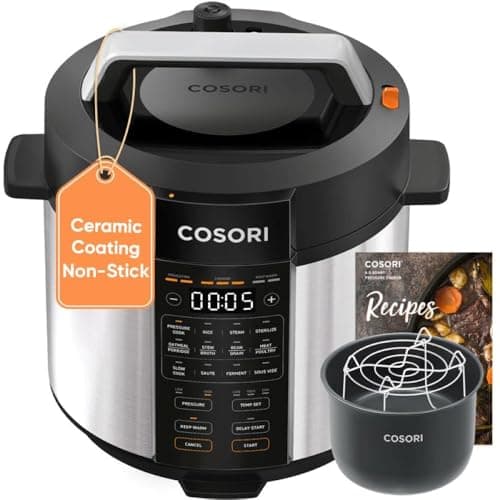
The one budget cooker here from outside Instant Brands that publishes a real working-pressure range — both the low and the high band, in psi and kPa, which not even Instant Pot does on its product pages. It loses to the Instant Pots on one spec that matters more than any of that: the pot is coated, not bare stainless.

Capability
8
Capacity
8
Documentation
8.5
Build
6.5
Value
8

What it gets right

  • Publishes both working-pressure bands in psi and kPa on its own product page — the most complete pressure documentation of any cooker on this list
  • Two years of warranty, double the one year Instant Brands gives, and the longest on any electric cooker here
  • Includes a sous vide and a ferment program the similarly-priced Instant Pot Duo does not have

What it doesn't

  • The inner pot has a nonstick interior coating rather than bare stainless — a surface that can scratch and will eventually wear, which is the one thing the Instant Pots do not compromise
  • Cosori's Amazon listing and its own product page do not agree on the function count, which is a documentation inconsistency the Instant Pot pages do not have
  • A smaller accessory and replacement-part ecosystem than Instant Pot, which matters in year three when a sealing ring perishes

What it costs to run

About 20.7¢ an hour at full rated draw, at the US average of 18.83¢ per kWh.

1,100 W ÷ 1000 × 1 h × 18.83¢ = 20.7¢

1100 W, published on Cosori's own 6.0-Quart Pressure Cooker product page alongside the working-pressure bands. This is an upper bound: the element only draws full power while it is heating up or pressurizing, then cycles off to hold temperature, and no manufacturer publishes a duty cycle — so we compute at full rated draw rather than invent a correction factor. The full method is published.

Skip this if…

…you want a pot with no coating on it. If an uncoated cooking surface is the reason you are buying a pressure cooker, this is the wrong one — buy a stainless-pot Instant Pot instead, for about the same money.

$80.99on Amazon

$89.9910% off

Price last checked October 8, 2026. Prices move constantly — Amazon's at checkout is the one that counts.

#ad · we may earn a commission from this link to Cosori 6-Quart Electric Pressure Cooker

04
Instant Pot Instant Pot RIO 7-in-1 Multi-Cooker, 6 Quart

The current-generation entry Instant Pot

Instant Pot RIO 7-in-1 Multi-Cooker, 6 Quart

Stainless inner potWattage published
8.0/10

Instant Brands' current entry-level 6-quart, and mechanically the Duo brought up to date: the same 1,000 W element and the same 18/8 stainless tri-ply pot, in the newer RIO body with a flat control panel. It costs more than the Duo it replaces, which is the only real argument against it.

Capability
7.5
Capacity
8
Documentation
8.5
Build
8.5
Value
7.5

What it gets right

  • The same published 1,000 W element and 18/8 stainless tri-ply pot as the Duo — nothing load-bearing was cheapened to make the newer body
  • Instant Brands publishes the wattage, the pot material and the warranty on its own product page, which is the full set
  • Thirteen one-touch programs on a flat panel that wipes clean, versus the Duo's raised buttons

What it doesn't

  • Costs meaningfully more than the plain Duo for the same element and the same pot
  • Instant Brands does not publish a working-pressure range for the RIO the way it does in the Duo and Duo Plus manuals
  • No sous vide, no air fry and no auto-sealing lid — it is the entry model, not a Pro

What it costs to run

About 18.8¢ an hour at full rated draw, at the US average of 18.83¢ per kWh.

1,000 W ÷ 1000 × 1 h × 18.83¢ = 18.8¢

1000 watts at 120 V / 60 Hz, UL & ULC Listed, published on Instant Brands' own RIO 6QT product page. This is an upper bound: the element only draws full power while it is heating up or pressurizing, then cycles off to hold temperature, and no manufacturer publishes a duty cycle — so we compute at full rated draw rather than invent a correction factor. The full method is published.

Skip this if…

…the Duo is in stock and cheaper, which it usually is. You are paying the difference for a newer control panel and nothing that touches the food — and on this site that is not a reason to spend more.

$109.99on Amazon

Price last checked October 8, 2026. Prices move constantly — Amazon's at checkout is the one that counts.

#ad · we may earn a commission from this link to Instant Pot RIO 7-in-1 Multi-Cooker, 6 Quart

05
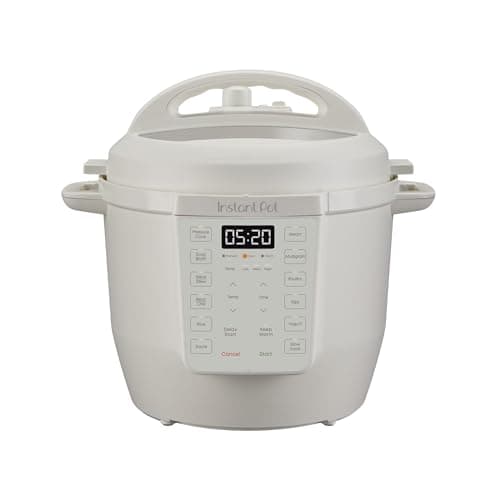
Instant Pot Instant Pot Duo Mini 7-in-1, 3 Quart Electric Pressure Cooker

One or two people, or a second pot

Instant Pot Duo Mini 7-in-1, 3 Quart Electric Pressure Cooker

Smallest footprintLowest-draw Instant Pot here
7.3/10

The Duo shrunk to 3 quarts. It is the right size for one or two people, for a dorm or an RV, or as a second pot for a side dish while the big one does the main. The same 7-in-1 function set, the same stainless pot, in a footprint that actually fits a small kitchen.

Capability
7
Capacity
4.5
Documentation
9
Build
8
Value
8

What it gets right

  • Three quarts is genuinely one-or-two-person sized — you are not heating a six-quart pot to cook a cup of rice
  • At 700 W it is the lowest-draw Instant Pot on this site, and small and light enough to live in a cupboard
  • The same 18/8 stainless inner pot and 7-in-1 set as the full Duo, so nothing about the cooking is compromised

What it doesn't

  • Three quarts is a hard ceiling — it will not cook for a family, and doubling a recipe means two rounds
  • The smaller pot pressurizes fast but the tight interior makes searing in batches fiddly
  • No sous vide or air fry — it is the plain Duo feature set, scaled down

What it costs to run

About 13.2¢ an hour at full rated draw, at the US average of 18.83¢ per kWh.

700 W ÷ 1000 × 1 h × 18.83¢ = 13.2¢

700 W at 120 V / 60 Hz, published on Instant Brands' own Duo Mini product page and confirmed in the Duo Mini user manual specification table. This is an upper bound: the element only draws full power while it is heating up or pressurizing, then cycles off to hold temperature, and no manufacturer publishes a duty cycle — so we compute at full rated draw rather than invent a correction factor. The full method is published.

Skip this if…

…you ever cook for more than two, or you batch-cook. The Mini's size is its whole point and also its whole limit; a 6-quart Duo is only a little more money and vastly more useful for a household.

$70.00on Amazon

$89.9922% off

Price last checked October 8, 2026. Prices move constantly — Amazon's at checkout is the one that counts.

#ad · we may earn a commission from this link to Instant Pot Duo Mini 7-in-1, 3 Quart Electric Pressure Cooker

06
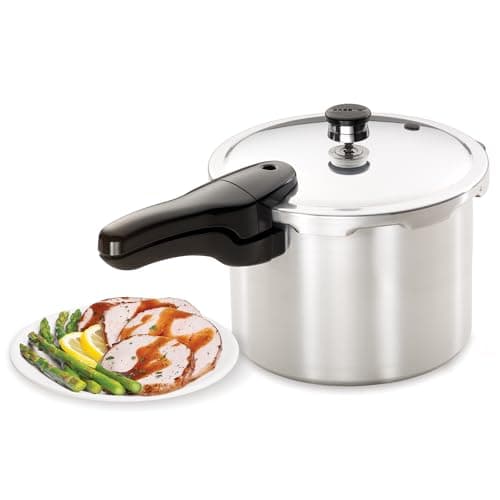
Presto Presto 01264 6-Quart Aluminum Pressure Cooker

The cheapest way to pressure cook at all

Presto 01264 6-Quart Aluminum Pressure Cooker

Cheapest pressure cooker hereNot induction compatible
7.9/10

The floor of the whole category, and a genuinely good buy if your range suits it. Six quarts, roughly 15 pounds of pressure and a 12-year warranty for less than any electric cooker on this site — on the explicit condition that your hob is not induction.

Capability
6
Capacity
8
Documentation
8.5
Build
7.5
Value
9.5

What it gets right

  • The lowest price of any pressure cooker on this site, by a clear margin, and it still carries the 12-year warranty
  • Roughly 15 pounds of pressure — the same as the stainless Presto and more than any electric cooker here reaches
  • Almost nothing to break: no circuit board, no display, no element. The sealing ring is the only wear part

What it doesn't

  • Presto's own range list omits induction, so on an induction hob it is unusable
  • Aluminum stains and discolors with use, and should not store acidic leftovers
  • No timer, no programs, and it needs watching at the stove for the whole cook

What it costs to run

Presto publishes no wattage for this cooker in any document we could find, so we do not show a running-cost figure for it. We are not going to estimate one from a similar model. Here is the method we would have used.

Skip this if…

…your range is induction, or you wanted an appliance rather than a pot. This is a pot. It does one thing extremely cheaply and asks you to stand there while it does it.

$53.99on Amazon

Price last checked October 8, 2026. Prices move constantly — Amazon's at checkout is the one that counts.

#ad · we may earn a commission from this link to Presto 01264 6-Quart Aluminum Pressure Cooker

How to buy a cheap pressure cooker without regretting it

Decide the pot material first, then the price. If you want an uncoated cooking surface, your budget list is Instant Pot only and it is a short, easy decision. Everything else is a preference; this one is a material fact about what touches your food for the next several years. Our uncoated-pot roundup goes deeper on what each maker publishes.

Ignore the function count. A 7-in-1 and a 13-in-1 are frequently the same element at different set points with different labels on the buttons. The functions that are genuinely distinct hardware are air frying (a second heating element and a fan) and sous vide (a precise low-temperature hold). Everything else — soup, stew, bean, rice, porridge, meat — is a preset. Count only the functions you can name a reason for.

Check the warranty, because it is the cheapest signal available. Every electric cooker on this list carries one year except the Cosori, which carries two. Both Prestos carry an extended 12-year limited warranty. That gap is not a rounding error, and on an appliance you intend to keep it is worth more than two extra preset buttons.

Confirm your range before you buy a stovetop pot. Presto lists the aluminum 01264 and 01282 for electric, smooth-top and gas ranges only. Induction is absent from that list because aluminum is not magnetic. This is a hard compatibility wall, not a performance note.

Buy the 6-quart unless you have a specific reason not to. It is the size published recipe times assume, and the price gap down to a 3-quart is usually small enough that buying small to save money is a false economy.
How we picked

Machines we claim to have tested: 0

Everyone in this category tells you they tested twenty cookers. We have tested none, and we say so. Here is what we do instead: read the manufacturer's manual and spec page, record the published wattage, capacity, pressure or temperature figure and warranty term, work out what the machine costs to run per hour, show the arithmetic so you can redo it with your own electricity rate, and cite all of it. Where a brand publishes no wattage, we print no running cost rather than borrowing a number from a similar model. Prices come live from Amazon's API and disappear rather than go stale.

The scores above are judgments from that documented research — not test results. One of the five metrics is Documentation: whether the manufacturer will tell you what its cooker draws at all. The full rubric, including what disqualifies a pick, is published in full.

Questions

Frequently asked

What is the cheapest pressure cooker that is actually good?
For an electric cooker, the plain Instant Pot Duo — it is the cheapest well-documented electric pressure cooker on this site and also the winner of our overall pressure cooker roundup, with a bare 18/8 stainless pot and a published wattage. For the lowest price of any kind, a stovetop Presto 01264 costs less and reaches higher pressure, but it needs you at the stove and will not work on an induction range.
Is a cheap pressure cooker safe?
Yes, with the caveat that you should buy one whose maker publishes its safety documentation. Every cooker on this page has a locking lid that cannot be opened under pressure, and the electrics add overheat protection and automatic pressure control. Cosori publishes a 9-point safety system; Presto publishes a cover-lock indicator that shows at a glance whether there is pressure inside. We go through the mechanisms in are Instant Pots safe.
What is the difference between a budget pressure cooker and an expensive one?
Almost entirely the lid, the interface and the extras — not the cooking. Spending more buys an auto-sealing lid (so you cannot forget to set the valve), a quieter steam release, a sous vide program or an air-fry attachment. The pot still reaches about the same pressure and the food still cooks the same way. Our model-by-model Instant Pot comparison lays out exactly what each step up adds.
Should I buy a budget pressure cooker or a budget multicooker?
They are now the same appliance — every electric pressure cooker sold today also slow cooks and sautés, and the terms have merged. The only real distinction is that a budget multicooker list can include machines that do not pressure cook at all, like a plain slow cooker, while this page admits only cookers that seal and hold pressure. If pressure is the reason you are buying, this is the right list.
Do cheap pressure cookers cook more slowly?
No — and the cheapest one here is the fastest. Cook time is set by pressure, and the stovetop Presto holds roughly 15 pounds against the 10.2–11.6 psi Instant Brands publishes for its electric cookers. Among the electrics, all of them hold a similar pressure and all of them take a similar time; a more expensive Instant Pot comes up to pressure slightly faster because of the lid, not because of the element.

Keep reading

Receipts

Sources

We have not tested these machines in a lab and we do not pretend to have. Specifications come from the manufacturer's own published documents; electricity rates come from the US Energy Information Administration; prices come from the live Amazon API. Where a figure is not published, the page says “not published” rather than guessing. Read the full method.