HUB 02 · Rice Cookers
How to Clean a Rice Cooker
A rice cooker looks simple to clean until you discover the part nobody mentions: the removable inner lid, where starchy steam collects and smells develop. Here is how to clean every part properly, protect the nonstick pot, and keep a fuzzy-logic or pressure cooker running for years.
We earn a commission if you buy through our links. It does not change the price you pay, and it does not decide our picks — the scoring rubric is published in full, including what disqualifies a pick. How this works.
The part everyone forgets: the inner lid
Most people wash the pot and stop, and that is why rice cookers develop a smell. On a good fuzzy-logic cooker like a Zojirushi or a Tiger, the inner lid detaches — it is the metal or plastic plate on the underside of the main lid — and starchy steam collects behind it every cook. Pop it off after cooking, wash it in warm soapy water, and dry it before clicking it back. Doing this every few uses is the single biggest thing that keeps a rice cooker from smelling, and it is the step the manual mentions and most owners skip.
The inner pot: gentle, always
The inner pot is almost always nonstick, and how you treat it decides how long it lasts. Let it cool, then wash by hand with a soft sponge and warm soapy water — never a metal scourer, steel wool or an abrasive powder, which scratch the coating and start it flaking. For stuck-on rice, soak it for 15–20 minutes rather than scrubbing hard; the starch softens and lifts. Skip the dishwasher unless the manufacturer specifically says the pot is dishwasher-safe, and use wooden or silicone utensils in the pot during cooking so you are not gouging the coating in the first place. A nonstick pot treated gently lasts years; scrubbed with metal it wears in months.
The steam vent and collection cup
Many cookers have a steam vent on the lid and, on some models, a small collection cupor reservoir that catches condensation. Both need rinsing — a clogged vent affects how the cooker manages steam, and a full collection cup overflows and drips. Check your model's manual for whether the vent cap lifts off (most do); rinse it under the tap and clear any trapped grains. It is a 20-second job that most people never do until something goes wrong.
Smells and deodorizing
If a smell has already set in, the fix is a vinegar steam: add a cup or two of water with a couple of tablespoons of white vinegar to the pot, run a short cook or the steam cycle, then let it cool, discard, and wash the pot and inner lid as usual. The acidic steam lifts odors from the seals and vent that plain washing misses. A slice of lemon in the water works similarly. Do this occasionally and the inner lid every few cooks, and a rice cooker simply does not develop the musty smell people associate with old ones.
The exterior and the heating plate
Wipe the outer body with a damp cloth — never submerge the base, which houses the electronics and the heating element. On a Micom or induction cooker, the heating plate (the metal disc the pot sits on) should be wiped clean and kept free of stuck grains, because debris there affects how evenly heat reaches the pot; a grain of rice welded to the plate is a small hot spot. Let everything dry fully before you reassemble, so no moisture is trapped against the electronics.
Pressure models: mind the gasket
A pressurized rice cooker like the Cuckoo CRP has one extra part: a sealing gasket, the same idea as the ring on an Instant Pot. Remove and wash it regularly, because it absorbs odors and its condition determines whether the cooker seals properly, and replace it when it stiffens, cracks or stops sealing cleanly — it is a wear part, not a permanent one. A plain Micom cooker has no gasket to worry about, which is one of the quiet advantages of the non-pressure models.
The routine, in short
After each cook: wash the inner pot gently by hand, and pop off and rinse the inner lid every few uses. Occasionally: rinse the steam vent and collection cup, wipe the heating plate, and run a vinegar steam if any smell appears. Never: metal scourers on the nonstick, or submerging the base. On a pressure model, wash and periodically replace the gasket. Do that and a good rice cooker keeps making good rice for many years — the same care that keeps your multicooker running.
The hardware
The cookers this page is about
The cookers referred to above, with prices pulled live from Amazon and dated on every card. Full rankings live in the roundups linked from this page.
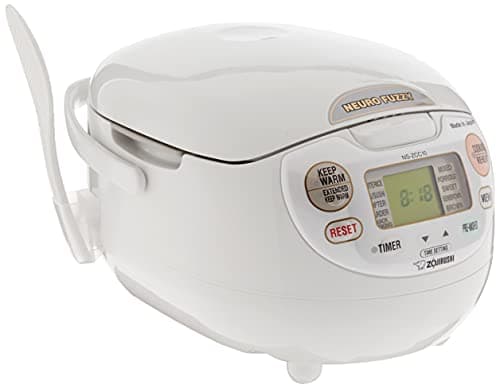
680 W
Zojirushi NS-ZCC10 Neuro Fuzzy Rice Cooker & Warmer, 5.5 Cup
The rice cooker every other one is measured against. Its Neuro Fuzzy microcomputer adjusts heat through the cook rather than running a fixed timer, which is the whole reason a $260 rice cooker cooks rice better than a $30 one. Made in Japan, 680 W, and the settings that matter are all there.
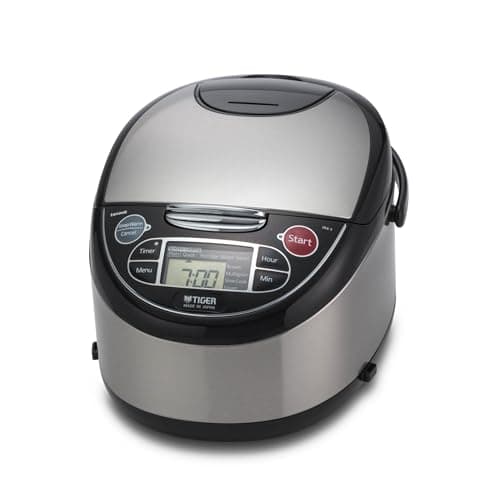
641 W
Tiger JAX-T10U Micom Rice Cooker & Warmer with tacook, 5.5 Cup
Tiger's answer to Zojirushi, with one trick the Zojirushis do not have: the tacook synchronous-cooking tray steams a dish above the rice while it cooks below, from the same 641 W. A Micom fuzzy-logic cooker made in Japan, with a genuinely useful feature the marketing did not invent.
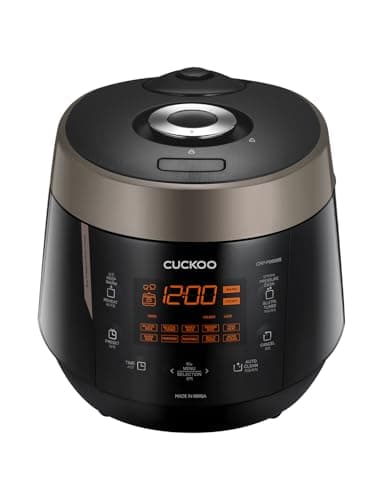
890 W
Cuckoo CRP-P0609S High-Pressure Rice Cooker, 6 Cup
A pressurized rice cooker, which is the Korean approach and a genuinely different one: cooking rice under pressure raises the boiling point and produces a distinctly fluffier, stickier grain, especially for short-grain and mixed rice. 890 W, a 304 stainless pot, and Cuckoo's signature talking interface.
#ad · As an Amazon Associate we earn from qualifying purchases.
Questions
Frequently asked
How do I clean the inner lid of a rice cooker?
How do I get rid of the smell in my rice cooker?
Can I put a rice cooker pot in the dishwasher?
Keep reading
Related
Receipts
Sources
- Zojirushi — NS-ZCC10 Neuro Fuzzy Rice Cooker product page
- Cuckoo America — CRP-P0609S pressure rice cooker product page
We have not tested these machines in a lab and we do not pretend to have. Specifications come from the manufacturer's own published documents; electricity rates come from the US Energy Information Administration; prices come from the live Amazon API. Where a figure is not published, the page says “not published” rather than guessing. Read the full method.