HUB 01 · Multicookers
How to Cook Dried Beans in an Instant Pot
The single best trick a pressure cooker has is turning dried beans tender with no overnight soak. Here is the method — rinse, cover with water, high pressure, natural release — plus why you add salt and acid only after the beans soften, why you must never fill past the max line with foaming legumes, and why a bigger pot pays off for batch beans.
We earn a commission if you buy through our links. It does not change the price you pay, and it does not decide our picks — the scoring rubric is published in full, including what disqualifies a pick. How this works.
The pressure cooker's best trick
If there is one thing a pressure cooker does that will change how you cook, it is dried beans. On the stove, dried beans are an all-day affair — an overnight soak followed by an hour or more of simmering. In an Instant Pot they go from a bag to tender, creamy beans in a fraction of the time, with no soaking required. Home-cooked beans taste better than canned, cost a fraction as much, and let you control the salt — and the pressure cooker removes the only real barrier, which was always the time. The method is simple and forgiving, with a couple of rules that matter for safety and texture. Get those right and dried beans become a weeknight staple instead of a weekend project.
Do you need to soak? No
The headache-saving fact first: you do not need to soak dried beans before pressure cooking. Soaking exists to shorten stovetop cook time and soften beans evenly, but the high, wet heat of a pressure cooker does that job on its own — it drives water into the beans fast enough that an unsoaked bean cooks through perfectly well. This is the pressure-cooker advantage in one sentence: no planning ahead, no overnight step. If you do soak, that is fine too — soaked beans simply need less time under pressure, and some people find soaked beans a touch gentler on digestion — but it is optional, not required. Skip it and you lose nothing essential. That single fact is why people who get a pressure cooker suddenly start cooking beans from scratch.
The method
The technique is short. Rinse and sort the dried beans, picking out any stones or shriveled ones. Add them to the inner pot and cover generously with water — beans swell as they cook, so you want them well submerged with plenty of headroom below the max line (more on that below). Add aromatics if you like — onion, garlic, a bay leaf — but hold the salt and acid for now. Seat the lid, set the valve to Sealing, and cook on high pressure. When it finishes, use a natural release — beans foam, and a quick release on a full, starchy pot tends to spit hot, frothy liquid through the valve, so letting the pressure fall on its own is both safer and better for texture. Keep the times qualitative and start on the low side: it is easy to return an under-done pot to pressure for a few more minutes, and impossible to un-cook mush.
Salt and acid: add them after the beans soften
This is the rule that saves a pot of stubbornly hard beans. Salt, and especially acidic ingredients — tomatoes, vinegar, citrus, wine — slow beans from softening if they are added at the start; acid in particular toughens the skins and can leave beans crunchy no matter how long you cook them. So cook the beans in plain water (aromatics are fine) until they are fully tender, and only then stir in salt, tomatoes, vinegar or anything acidic, simmering on Sauté to bring the flavors together. If your beans came out oddly firm despite a long cook, an acidic ingredient added too early is the usual culprit — that, or genuinely old dried beans, which can resist softening no matter what you do. Season at the end and this problem disappears.
Never overfill — beans foam
Beans are exactly the food the max fill line exists for. As they cook they foam and expand, and that froth can climb toward the steam-release valve and clog the path pressure needs to escape. So the rule is firm: fill the pot no more than half full for beans and other foaming, starchy legumes — well under the two-thirds line used for most foods. Count the beans andthe water toward that limit, since both rise. Overfilling a bean pot is both a reliability problem — a blocked vent is what triggers the cooker's safety systems — and a messy one, with foam spitting out during release. If a recipe would put you over the half-full line, split it into two batches or step up to a bigger pot. This is the one rule you should never bend with legumes, and it maps onto the same overfill guidance that helps avoid the Burn message.
Cook them fully — softness matters
Beans should be cooked until they are genuinely soft all the way through, not just heated. This is partly about texture and digestibility — undercooked beans are chalky and hard to digest — and partly a food-safety habit worth keeping: dried beans, red kidney beans especially, are meant to be cooked thoroughly to a full softness rather than left firm or barely warmed. The good news is that a pressure cooker makes full doneness easy, because the whole point of the high, wet heat is to drive beans to tender reliably. Test a few beans before you call them done — they should crush easily against the roof of your mouth or between two fingers — and if they are still firm, return the pot to pressure for a few more minutes. Cooking beans fully soft is the goal every time, and it is exactly what this method is built to deliver.
Batch beans want a bigger pot
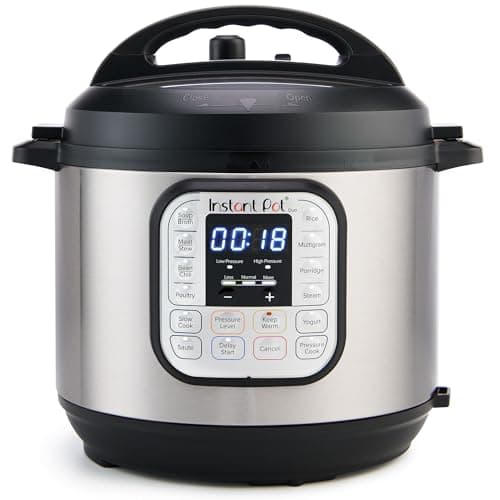
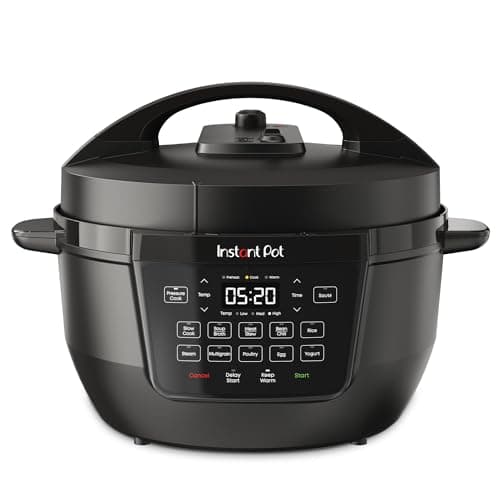
Because you can only fill a bean pot half full, capacity translates directly into how many beans you can cook at once — and beans are the classic thing to batch-cook and freeze in portions. In a 6-quart Duo, the half-full rule caps a single batch at a modest amount. If you cook beans often, or for a household, the wider, larger RIO Wideat 7.5 quarts gives you more usable room under the same half-full ceiling, so you get more cooked beans per run without ever crowding the pot. Its wider base is also handy if you like to sauté onions or bacon before the beans go in. For a single person cooking a small pot now and then, the Duo is plenty; for a batch-cooking habit, the extra capacity pays off directly. Sizing the pot to your batch is covered in what size Instant Pot to buy.
The hardware
The cookers this page is about
The cookers referred to above, with prices pulled live from Amazon and dated on every card. Full rankings live in the roundups linked from this page.
1,000 W
Instant Pot Duo 7-in-1 Electric Pressure Cooker, 6 Quart
The multicooker that made the category, and still the right default. Instant Brands publishes the wattage, the working pressure range and a stainless (not nonstick) inner pot, which is more than most of the field manages — and it costs less than almost all of them.
1,200 W
Instant Pot RIO Wide 7-in-1, 7.5 Quart Multi-Cooker
The Duo, rebranded RIO and widened. The 7.5-quart Wide has a larger searing base than the tall 6-quart pots, which is the one real ergonomic improvement in the line — more of the pot bottom touches the element, so browning is more even before you pressurize.
#ad · As an Amazon Associate we earn from qualifying purchases.
Questions
Frequently asked
Do you need to soak beans before cooking them in an Instant Pot?
Why are my Instant Pot beans still hard?
Can you overfill an Instant Pot with beans?
Keep reading
Related
- How to use a pressure cookerThe valve, ring and workflow the method builds on.
- Instant Pot RIO Wide reviewThe bigger 7.5-quart pot for batch beans.
- Natural vs quick releaseWhy foaming beans want a natural release.
- How to make bone brothOvernight stock in about two hours.
- How to cook chiliDried beans cooked right in the chili.
Receipts
Sources
- Instant Brands — Instant Pot Duo 6qt product page
- Instant Brands — Instant Pot RIO Wide 7.5qt product page
We have not tested these machines in a lab and we do not pretend to have. Specifications come from the manufacturer's own published documents; electricity rates come from the US Energy Information Administration; prices come from the live Amazon API. Where a figure is not published, the page says “not published” rather than guessing. Read the full method.