HUB 04 · Buying Guides
How to Convert Slow Cooker Recipes to an Instant Pot
A favorite slow cooker recipe translates to the Instant Pot beautifully once you know three things change: the time collapses from hours to minutes, the liquid has to come down because none boils off, and delicate ingredients go in at the end. Here are the conversion rules, so your Crock-Pot classics work under pressure.
We earn a commission if you buy through our links. It does not change the price you pay, and it does not decide our picks — the scoring rubric is published in full, including what disqualifies a pick. How this works.
Why a slow cooker recipe needs converting at all
A slow cooker and a pressure cooker reach a similar tender result by opposite routes, so most slow cooker recipes translate to an Instant Pot well — but you cannot just dump the ingredients in and press a button. Three things genuinely change under pressure: the time, the liquid, and when some ingredients go in. Get those right and your favorite Crock-Pot chili or pot roast works beautifully; get them wrong and it comes out watery or mushy. If your Instant Pot has a Slow Cook button (most do), you can always just use it as a slow cooker— but converting to pressure is where the speed payoff lives.
Rule 1 — cut the time dramatically
The obvious change: pressure cooking is far faster, so the hours collapse to minutes. As a rough guide, a recipe that slow-cooks 8 hours on low often needs only 25–40 minutes under pressure, depending on the ingredient — a tough roast or dried beans at the longer end, softer things much less. There is no exact formula because the two methods are so different, so lean on a per-food reference like our Instant Pot cooking times rather than scaling the slow-cook hours. When in doubt, undershoot: you can always seal it back up for a few more minutes, but you cannot un-cook it.
Rule 2 — reduce the liquid
This is the rule people miss, and it is the most important. In a slow cooker, liquid evaporates over hours, so recipes are written with extra to compensate. Under a sealed pressure lid, almost nothing evaporates— so if you use the full slow-cooker amount of liquid, the result is watery and thin. Reduce the added liquid, keeping just enough to build steam and cover the base (the pot needs a minimum to come to pressure). Remember, too, that vegetables and meat release their own liquid under pressure. If the finished dish is thinner than you want, simmer it down on Sauté afterward with the lid off.
Rule 3 — time the delicate ingredients
A slow cooker's gentle heat lets everything go in at once; pressure is more aggressive, so stagger the additions. Tender vegetables that would turn to mush (peas, zucchini, fresh herbs) go in afterthe pressure cook, stirred through on Sauté for a few minutes. Dairy— cream, milk, cheese — should also be added at the end, since it can curdle or scorch under pressure. And watch for the Burn message: thick sauces and tomato go on top, not stirred to the bottom, and always deglaze after browning so nothing is stuck to the base.
Putting it together
The conversion in one line:keep the ingredients, slash the time to a fraction of the slow-cook hours, cut the liquid because none boils off, and add delicate vegetables and dairy at the end. Brown meat first on Sauté for the flavor the long slow cook used to build, and use a natural release for roasts and beans. Do that and a slow cooker recipe becomes an Instant Pot recipe you can make on a weeknight. The reverse trip — a stovetop recipe to pressure — follows similar logic in how to convert recipes for a pressure cooker, and the Instant Pot Duo is the machine most of these conversions assume.
The hardware
The cookers this page is about
The cookers referred to above, with prices pulled live from Amazon and dated on every card. Full rankings live in the roundups linked from this page.
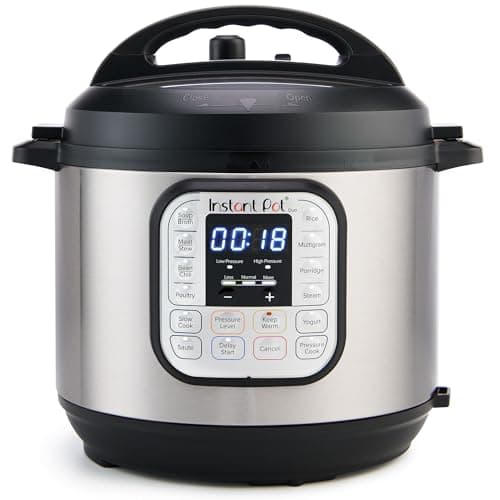
1,000 W
Instant Pot Duo 7-in-1 Electric Pressure Cooker, 6 Quart
The multicooker that made the category, and still the right default. Instant Brands publishes the wattage, the working pressure range and a stainless (not nonstick) inner pot, which is more than most of the field manages — and it costs less than almost all of them.
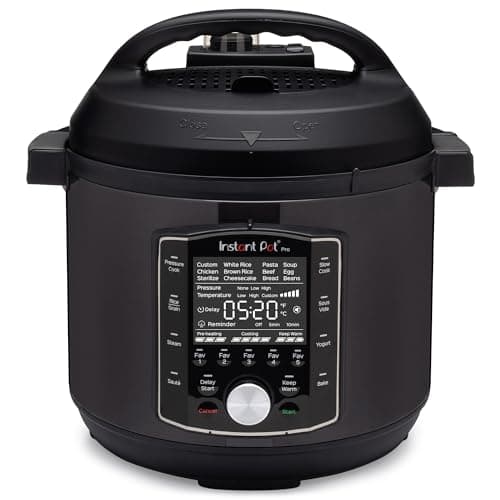
1,200 W
Instant Pot Pro 10-in-1 Pressure Cooker, 6 Quart
The Duo's mechanicals with the interface fixed: a genuine sous vide program, an auto-sealing lid, grab-and-go pot handles and five programmable buttons. It draws 1,200 W rather than the Duo's 1,000, and Instant Brands does not publish a working-pressure figure for it — the one gap in an otherwise well-documented cooker.
#ad · As an Amazon Associate we earn from qualifying purchases.
Questions
Frequently asked
How do you convert a slow cooker recipe to an Instant Pot?
Do you use less liquid in an Instant Pot than a slow cooker?
How much faster is an Instant Pot than a slow cooker?
Keep reading