HUB 01 · Multicookers
How Much Liquid Does an Instant Pot Need?
An electric pressure cooker cannot work without enough thin liquid to turn into steam, which is why almost every recipe starts with a cup of water or broth. Here is the minimum by pot size, why the number is what it is, and the two situations that change it.
We earn a commission if you buy through our links. It does not change the price you pay, and it does not decide our picks — the scoring rubric is published in full, including what disqualifies a pick. How this works.
Why a pressure cooker needs liquid at all
Pressure cooking is steam under a sealed lid. The pot heats a thin liquid until it boils, the trapped steam raises the pressure and with it the boiling point to around 250°F, and that is what cooks food so fast. No liquid, no steam, no pressure — and a dry pot just heats its base until the overheat sensor trips the Burn message. So the “minimum liquid” is not a suggestion; it is the fuel the whole method runs on. This is one of the first things covered in how to use a pressure cooker.
The minimum by pot size
Instant Brands gives a floor that scales with the pot, because a bigger pot needs more steam to fill and pressurize. As a working rule:
- 3-quart (Mini): about 1 cup of thin liquid.
- 6-quart (standard Duo, Pro): about 1.5 cups(many recipes just say “at least 1 cup,” and 1.5 is the safe habit).
- 8-quart: about 2 cups.
“Thin liquid” means water, broth, stock, wine or thin juice — something that readily turns to steam. Meeting the minimum is what lets a smaller pot like the Duo Mini come up to pressure with a cup, while an 8-quart wants two.
What does NOT count as liquid
This is where most Burn messages come from. Thick things do not count: tomato sauce, canned soup, barbecue sauce, cheese, cream and purees are too thick to make steam freely, and they sink and scorch on the hot base. If a recipe is sauce-heavy, add the required water or broth first, then layer the thick sauce on top without stirring it down — the trick that keeps pasta and chili from catching. Fat (oil, butter) does not count either. And food that releases water as it cooks— frozen vegetables, a big cut of meat — will give up liquid, but you still need the base minimum in the pot to reach pressure in the first place.
The minimum vs. the rice exception
One thing trips people up: the minimum-liquid rule is about steam, not about the food absorbing the water. Most of that cup of water is still in the pot at the end — you drain it off potatoes, for instance. Rice is the exception: there the water is measured to be absorbed(roughly 1 cup water to 1 cup white rice), and that absorbed water also happens to be enough to reach pressure, so you do not add a separate cup on top — see how to cook rice in an Instant Pot. For everything else, think of the minimum as the steam budget, and the cooking-times reference for the rest.
The hardware
The cookers this page is about
The cookers referred to above, with prices pulled live from Amazon and dated on every card. Full rankings live in the roundups linked from this page.
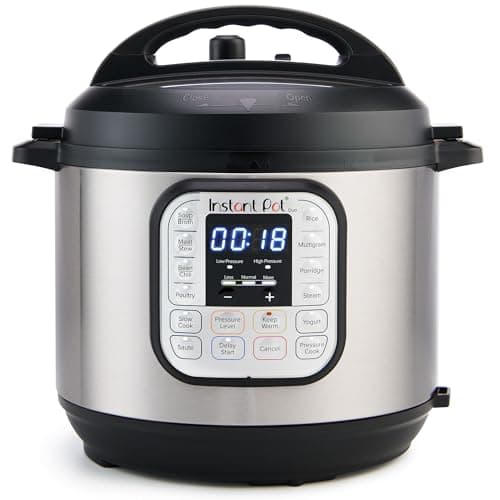
1,000 W
Instant Pot Duo 7-in-1 Electric Pressure Cooker, 6 Quart
The multicooker that made the category, and still the right default. Instant Brands publishes the wattage, the working pressure range and a stainless (not nonstick) inner pot, which is more than most of the field manages — and it costs less than almost all of them.
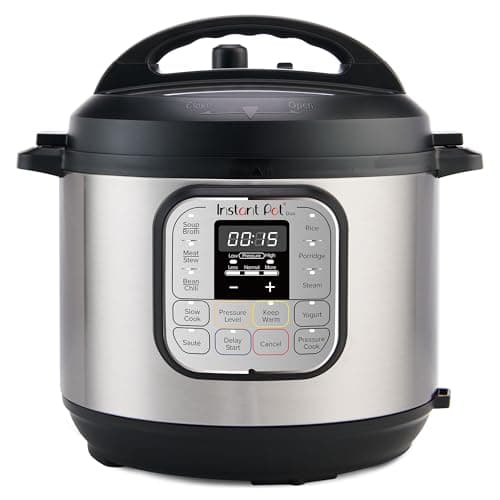
700 W
Instant Pot Duo Mini 7-in-1, 3 Quart Electric Pressure Cooker
The Duo shrunk to 3 quarts. It is the right size for one or two people, for a dorm or an RV, or as a second pot for a side dish while the big one does the main. The same 7-in-1 function set, the same stainless pot, in a footprint that actually fits a small kitchen.
#ad · As an Amazon Associate we earn from qualifying purchases.
Questions
Frequently asked
What is the minimum liquid for an Instant Pot?
Does tomato sauce count as liquid in an Instant Pot?
Why does rice not need extra liquid on top of the minimum?
Keep reading