The short answer
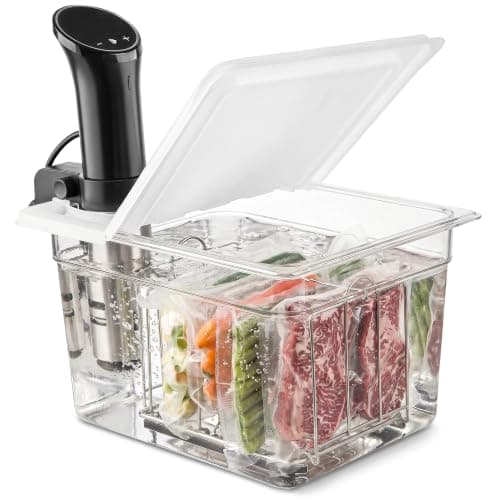
Buy the EVERIE 12-Quart Sous Vide Container. It is for the person who wants to stop thinking about the hardware: 12 quarts, and it arrives as a container, a universal collapsible hinged lid and a rack in one box, with the listing naming Anova, Inkbird, Breville Joule and Wancle among the clip-on cookers it fits. Buying those three pieces separately costs more and risks a lid that does not match your circulator. The budget pick is the Rubbermaid Commercial 12-Quart square tub— polycarbonate, rated −40°F to 212°F, with graduated measurements on the side, for under a third of the winner. It has no lid and no rack, and for a lot of people that is fine. If you cook for a crowd, the LIPAVI C20 is a 26-quart bath and the best-documented container here.
Prices come from our daily refresh and the Quick Picks table above prints the date of the most recent one. Treat the table as the authority over any sentence here.
The three things that actually go wrong, in order
This is why the list is ordered the way it is. Rank matches how likely each failure is, not how much the thing costs.
1. The pot is too small. A stockpot that holds a bag of steaks will not hold the water andthe circulator's minimum depth. Wancle publishes a minimum water depth of 4.5 cm and a maximum bath of 20 L for its 820; Inkbird publishes a 15 L water capacity; Breville publishes vessel capacity up to 10 gallonsfor the Joule. A 12-quart container is the size that clears every circulator's minimum and fits on a normal counter.
2. The water evaporates.This is the failure that ruins long cooks and nothing else fixes it. An uncovered bath at 135°F loses enough water over twelve hours to drop below the circulator's minimum depth and trip its low-water cutout, which means a 24-hour chuck roast stops cooking at hour nine. A fitted lid is the single highest-value accessory on this page, and it is the reason the winner is the one that comes with one. The long version is in can you sous vide overnight.
3. The bag floats. Air trapped in a bag lifts food out of the water, and the part above the water line is not cooking at the temperature you set. A rack holds bags down and apart so water circulates between them. A vacuum sealer removes the air in the first place, which is the better fix and the more expensive one. Both routes are covered in how to keep a sous vide bag from floating.
The finding: a sealer is the last thing to buy, not the first
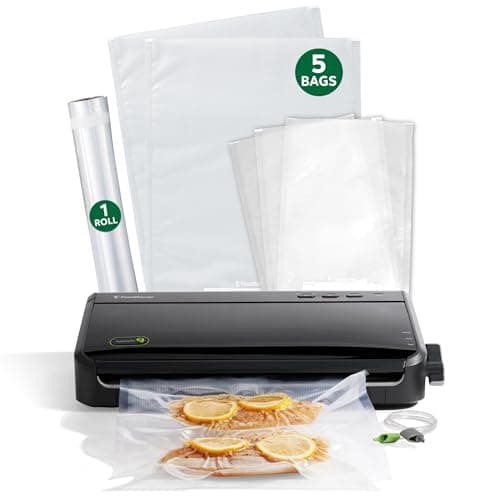
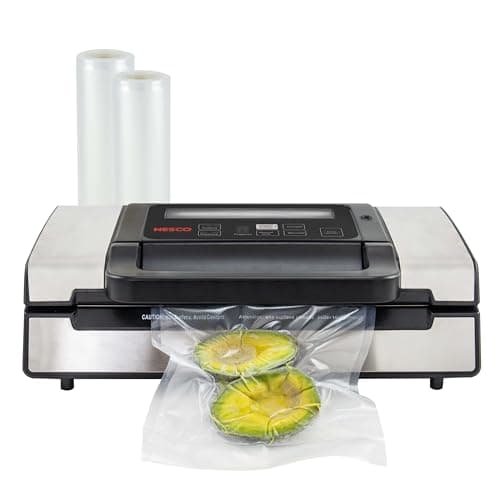
Sealers are the accessory the category sells hardest and they are fourth on this list behind two tubs, which is a deliberate ranking rather than an oversight.
The water-displacement method — a zip-top bag lowered into the bath so the water pushes the air out before you seal the last corner — removes enough air for almost every home cook, costs nothing, and is covered in sous vide without a vacuum sealer. A lid and a rack fix problems that displacement cannot. So if you have one budget and three things to buy, the sealer is the one to defer.
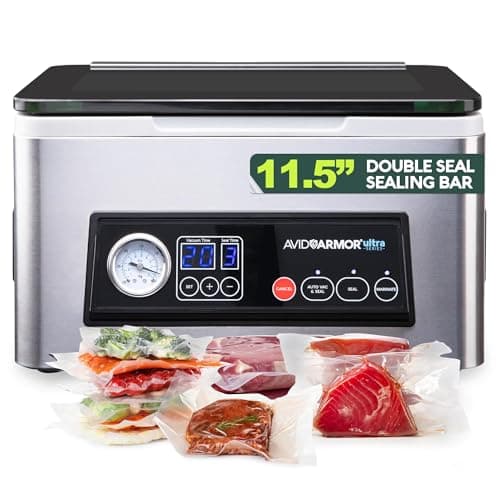
Where a sealer genuinely earns its place: freezing portions for later, long cooks where a partial seal will leak, and anything wet. The published distinction that matters is mechanism — an edge sealer pulls air through the bag mouth and will suck liquid into itself, while a chamber sealer evacuates the whole chamber and can seal standing liquid. That is the Avid Armor USV20's entire reason to exist and it is why it is in the related hardware rather than the ranking: it is a specialist, not a first buy.
How we ranked
Which failure it fixes, in the order above. Container first, lid and rack next, sealer last.
Then published material and temperature rating.A sous vide bath sits at 130–190°F for hours and a tub that is not rated for it will craze, cloud or warp. Cambro publishes −40°F to 210°F for the CamSquare and an NSF listing; Rubbermaid publishes −40°F to 212°F; LIPAVI publishes temperature-resistant polycarbonate. EVERIE publishes no material at all for its container, which is the one real gap in the winner and it sits on its card.
Then what comes in the box, because a lid and rack bought separately cost more than a set and may not fit. Cambro's cover is sold separately, Rubbermaid's lid is sold separately, and LIPAVI's rack and lid are both sold separately — LIPAVI publishes that its universal lid fits cylindrical circulators up to 70 mm in diameter and that custom-cut lids are made for specific machines.
Then documentation, then price.
The winner
The EVERIE 12-Quartwins on completeness. One purchase gets the container, a universal collapsible hinged lid and a rack, and the listing names the circulators it fits — Anova, Inkbird, Breville Joule, Wancle and most clip-on cookers. Twelve quarts clears every circulator minimum in this catalog and still fits a standard counter and most sinks.
The honest gap: EVERIE publishes no material and no temperature rating anywhere we can find, so unlike the Cambro and the Rubbermaid there is no document to check the thing you would most want to check about a plastic tub you intend to hold at 150°F for a day. We would still buy it, and we would rather say the gap exists than fill it in with a plausible number.
The big bath, and the best paperwork
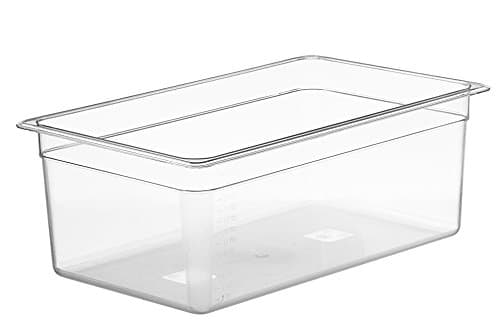
The LIPAVI C20 is second: a nominal 24 L (26 qt) polycarbonate container with published external dimensions of 530 × 325 × 200 mm, and LIPAVI states plainly that the usable water volume is smaller than the nominal figure — which is the kind of disclosure almost nobody in this category makes. It is the container for a brisket, a turkey breast, or six bags at once. The rack and lid are extra and LIPAVI publishes exactly which ones fit, including the 70 mm diameter limit on its universal lid.
It is also big enough to be a problem: measure your counter and your circulator's clamp depth before ordering, and remember that 24 L of water takes a long time to come up to temperature on an 850–1,100 W circulator. If a crowd is the use case, our sous-vide-for-a-crowd ranking pairs the machine with the bath.
The sealer worth owning
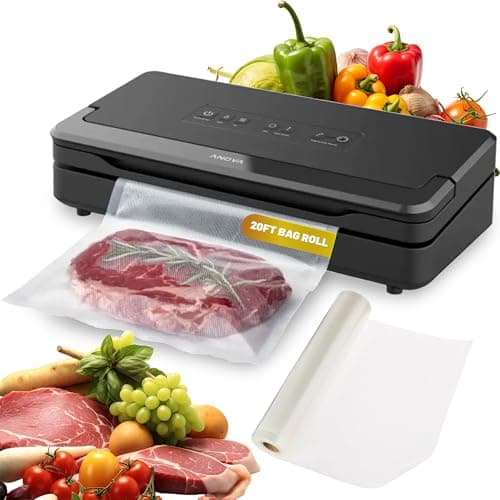
The Anova Precision Vacuum Sealer Pro is third and it is the sealer we would buy for a bath specifically. It publishes what almost no sealer does: a rated power of 110 W, an extraction rate of 12 L/min, external dimensions, an included accessory port with a vacuum hose and a two-year warranty. A published extraction rate is the only way to compare sealers on anything but adjectives.
Its gap is on its card too: Anova publishes no seal-bar width, which decides the widest bag you can use. The three dedicated sealer rankings go deeper — for sous vide, for meat and under $200.
Two tubs, and the budget pick
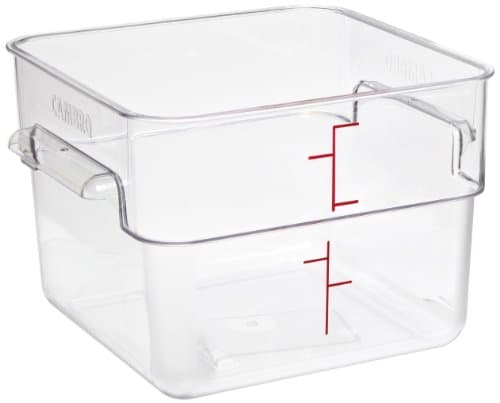
The Cambro 12SFSCW CamSquareis fourth and it is the best-documented 12-quart tub here: clear Camwear polycarbonate, published dimensions of 11⅔ × 12¼ × 8¼ inches with the cover, a −40°F to 210°F range and an NSF listing. If you want a commercial-kitchen tub with a paper trail, this is it. The cover is sold separately, which is the only reason it sits below the EVERIE set.
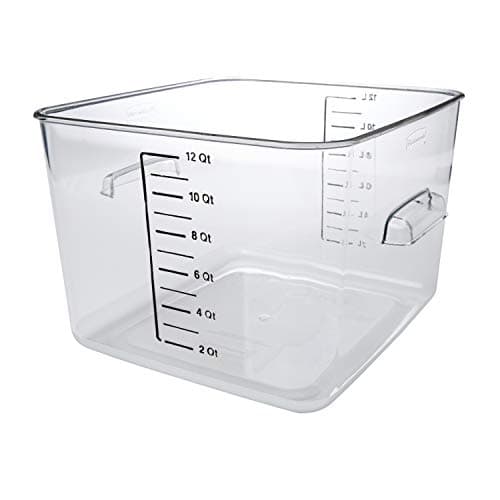
The Rubbermaid Commercial 12-Quart is the budget pick and a completely legitimate one. Polycarbonate, published −40°F to 212°F— two degrees better than the Cambro and above boiling — published dimensions of 11.30 × 10.50 × 7.75 inches, and graduated measurements moulded into the side, which are genuinely useful for repeatable water volumes. No lid, no rack, both sold separately. For a first bath, this tub plus a sheet of foil over the top and water displacement instead of a sealer is a complete sous vide setup for very little money.
Container sizing in general, including what fits what, is in what container to use for sous vide, and the dedicated container ranking is here.
What we are not going to sell you
Weights, balls and clips. Plastic balls to cut evaporation and magnetic weights to sink bags both exist and neither is in this catalog, because we have not found a version whose maker publishes a material or a temperature rating. A lid does the evaporation job better and a rack does the sinking job better.
Branded bags at a premium. Any bag rated for the temperature works, and whether a zip-top bag is appropriate is a real question answered in can you use Ziploc bags for sous vide.
A chamber sealer as a first purchase. The Avid Armor USV20 seals standing liquid properly, which an edge sealer cannot, and it needs chamber pouches and costs more than most circulators. It is the right machine for soups and marinades and the wrong first accessory.
The order to buy in
First, a container big enough. 12 quarts clears every circulator minimum in this catalog. Rubbermaid if money is tight, Cambro if you want the NSF paperwork, EVERIE if you want the lid and rack in the same box.
Second, a lid. The highest-value item on this page and the only fix for evaporation on a long cook. Check it fits YOUR circulator - LIPAVI publishes a 70 mm diameter limit on its universal lid, and EVERIE names the machines its hinged lid fits.
Third, a rack. Holds bags under water and apart so water circulates.
Fourth, and only then, a sealer. Water displacement is free and good enough for most cooking. Buy a sealer when you start freezing portions or cooking wet things.
Choosing in one minute
You want one box and no decisions. EVERIE 12-Quart set.
You cook for a crowd or do briskets. LIPAVI C20, 26 quarts, best documentation here, rack and lid extra.
You want the cheapest working setup. Rubbermaid Commercial 12-quart, rated to 212F, plus foil and water displacement.
You are ready for a sealer. Anova Precision Vacuum Sealer Pro, 110 W, a published 12 L/min extraction rate and a two-year warranty.