Skip to content
DD

HUB 04 · Buying Guides

Sous Vide vs Pressure Cooker

Two of the most-hyped ways to cook, aimed at opposite goals. A sous vide circulator is about precision — an exact doneness, edge to edge. A pressure cooker is about speed — tough cuts and dried beans done fast. Here is what each is genuinely for, and which belongs on your counter.

By Stephen V.Updated How we rank
#ad

We earn a commission if you buy through our links. It does not change the price you pay, and it does not decide our picks — the scoring rubric is published in full, including what disqualifies a pick. How this works.

The short answer

Quick picks

#CookerBest forScorePrice
01
Anova Anova Precision Cooker 3.0 (WiFi), 1100 W
Anova Precision Cooker 3.0 (WiFi), 1100 W

The default, and it earned it

1,100 W
9.0
$169.99Amazon
021,000 W
8.6
$104.67Amazon

#ad · Prices pulled live from the Amazon Product API, last checked Aug 5, 2026. Where we have no verified live price we show none — we would rather leave a gap than print a number that has gone stale. The wattage column is what the manufacturer publishes; “not published” means exactly that, and we have not estimated one. Scores are ours, compiled from published specifications, and are not test results.

Opposite goals, not rivals

These two get cross-shopped because both are trendy “better ways to cook,” but they aim at opposite things. A sous vide circulator holds a water bath at an exact temperature for precise, gentle results. A pressure cooker raises the boiling point for fast, forceful tenderizing. Precision versus speed — that single distinction decides which one you actually want.

What sous vide does best

Precision and texture. Because you set the exact final temperature, sous vide is unbeatable for steak, chicken breast, fish and eggs — foods where a few degrees is the difference between perfect and ruined, cooked edge to edge with no grey band. It is slow and gentle, and it does not brown, so you finish with a quick sear. What it is not is fast: a tough roast still takes hours (done superbly), and it needs bags and a container.

What a pressure cooker does best

Speed on the tough stuff. A pressure cooker turns a chuck roast tender in about 40 minutes, dried beans in under an hour with no soak, stock in a fraction of the stovetop time. It is forceful, forgiving heat — the opposite of gentle — and it is the wrong tool for a precise medium-rare steak or a delicate fillet, which it will overshoot. Where sous vide gives you exactness, the pressure cooker gives you a weeknight dinner from a cheap cut, fast.

Where they overlap

They meet on tough cuts cooked long: both turn a chuck roast tender, sous vide with more control over the final texture, a pressure cooker in a fraction of the time. If that overlap is most of what you cook, the pressure cooker wins on sheer speed. If you care about the precise doneness of steaks, chicken and fish, only sous vide delivers it. Many kitchens end up with both because they genuinely do different jobs — see also sous vide vs slow cooker.

The decision rule

Buy a sous vide circulator if you care about cooking steak, chicken or fish to an exact doneness and you like cooking ahead — precision is its whole reason to exist, and the Anova is the default. Buy a pressure cooker if you want fast weeknight dinners from tough cuts, beans and stews, and versatility beyond one technique — the Instant Pot is our overall pick. If you can justify only one and you cook a mix, the pressure cooker is the more broadly useful single appliance; add sous vide when precise doneness becomes the thing you chase.

In detail

The picks, in full

01
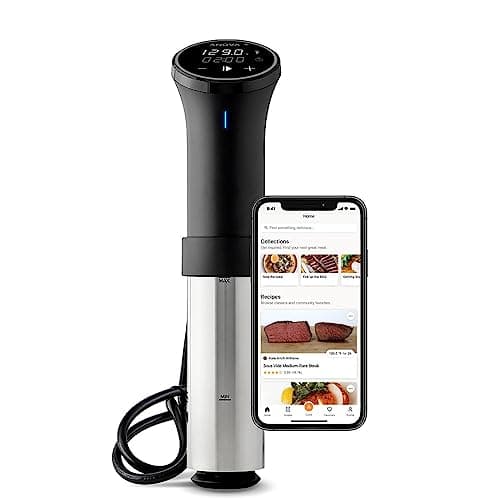
Anova Anova Precision Cooker 3.0 (WiFi), 1100 W

The default, and it earned it

Anova Precision Cooker 3.0 (WiFi), 1100 W

Fully specifiedWorks without the app
9.0/10

The sous vide circulator most people should buy. Anova publishes the full specification — 1,100 W, a 0–92°C range, ±0.1°C accuracy, an 8 L/min pump — and backs it with a two-year warranty, the longest here. It has an on-device screen so it works without the app, which the Joule does not.

Capability
9.5
Capacity
8.5
Documentation
10
Build
8.5
Value
8.5

What it gets right

  • Anova publishes the complete specification — wattage, temperature range, accuracy and pump flow — which almost nobody else in this class does
  • An on-device touchscreen means it works fully without a phone, unlike the app-only Joule
  • A two-year warranty, the longest of any sous vide machine on this site

What it doesn't

  • At 325 mm tall it is a large device to store next to the slimmer Nano or Joule
  • The clamp-and-skirt design is bulkier than the Joule's magnetic foot
  • 1,100 W is a real draw — powerful, but the most per hour of the sub-premium circulators here alongside the Joule and Greater Goods

What it costs to run

About 20.7¢ an hour at full rated draw, at the US average of 18.83¢ per kWh.

1,100 W ÷ 1000 × 1 h × 18.83¢ = 20.7¢

1100 W, published on Anova Culinary's own Precision Cooker 3.0 product page alongside the temperature range, accuracy and pump rate. This is an upper bound: the element only draws full power while it is heating up or pressurizing, then cycles off to hold temperature, and no manufacturer publishes a duty cycle — so we compute at full rated draw rather than invent a correction factor. The full method is published.

Skip this if…

you want the smallest possible device or you cook small portions in shallow water — the slimmer Nano is cheaper, lighter and enough for a single steak, and this is the one to buy only if you want the full power and the longer range.

$169.99on Amazon

$229.0026% off

Price last checked Aug 5, 2026. Prices move constantly — Amazon's at checkout is the one that counts.

#ad · we may earn a commission from this link to Anova Precision Cooker 3.0 (WiFi), 1100 W

02
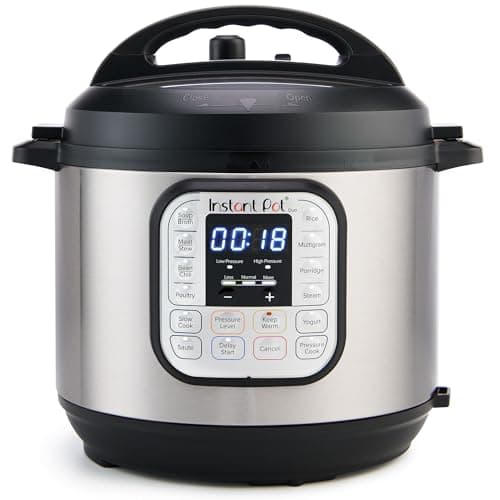
Instant Pot Instant Pot Duo 7-in-1 Electric Pressure Cooker, 6 Quart

The one to buy if you are not sure

Instant Pot Duo 7-in-1 Electric Pressure Cooker, 6 Quart

Stainless inner potWattage & pressure published
8.6/10

The multicooker that made the category, and still the right default. Instant Brands publishes the wattage, the working pressure range and a stainless (not nonstick) inner pot, which is more than most of the field manages — and it costs less than almost all of them.

Capability
7.5
Capacity
8
Documentation
9.5
Build
8.5
Value
9.5

What it gets right

  • Instant Brands publishes the wattage, the working-pressure range and the pot material — the full set, which most of the field does not
  • The 18/8 stainless inner pot has no coating to scratch off, so it outlives the nonstick pots in cookers costing more
  • At the current price it is the cheapest genuinely well-documented multicooker on this site

What it doesn't

  • No sous vide or air-fry program — this is the plain pressure-and-slow-cook model, by design
  • The steam release is a manual toggle, not the quiet auto-release of the Duo Plus or Pro
  • Seven functions is fewer than the sticker-count leaders, though most of those are the same element at different set points

What it costs to run

About 18.8¢ an hour at full rated draw, at the US average of 18.83¢ per kWh.

1,000 W ÷ 1000 × 1 h × 18.83¢ = 18.8¢

1000 W at 120 V / 60 Hz, published on the Instant Pot Duo product page and confirmed on the IP-DUO60 manual specification page. This is an upper bound: the element only draws full power while it is heating up or pressurizing, then cycles off to hold temperature, and no manufacturer publishes a duty cycle — so we compute at full rated draw rather than invent a correction factor. The full method is published.

Skip this if…

you specifically want sous vide, a quieter steam release, or an air-fry lid — the Duo has none of those, and reaching for it and then wishing it did more is the most common Instant Pot regret. Step up to the Pro or Duo Crisp instead.

$104.67on Amazon

$109.995% off

Price last checked Aug 5, 2026. Prices move constantly — Amazon's at checkout is the one that counts.

#ad · we may earn a commission from this link to Instant Pot Duo 7-in-1 Electric Pressure Cooker, 6 Quart

How we picked

Machines we claim to have tested: 0

Everyone in this category tells you they tested twenty cookers. We have tested none, and we say so. Here is what we do instead: read the manufacturer's manual and spec page, record the published wattage, capacity, pressure or temperature figure and warranty term, work out what the machine costs to run per hour, show the arithmetic so you can redo it with your own electricity rate, and cite all of it. Where a brand publishes no wattage, we print no running cost rather than borrowing a number from a similar model. Prices come live from Amazon's API and disappear rather than go stale.

The scores above are judgments from that documented research — not test results. One of the five metrics is Documentation: whether the manufacturer will tell you what its cooker draws at all. The full rubric, including what disqualifies a pick, is published in full.

Questions

Frequently asked

What is the difference between sous vide and a pressure cooker?
A sous vide circulator holds an exact temperature for precise, edge-to-edge doneness on foods like steak, chicken and fish, and is slow and gentle. A pressure cooker uses fast, high-pressure heat to tenderize tough cuts and cook beans quickly. Precision versus speed.
Can a pressure cooker do sous vide?
Some multicookers include a sous vide program, but it holds temperature less tightly than a dedicated circulator with a pump, so it is a bonus rather than a replacement. A plain pressure cooker cannot do sous vide at all. The Instant Pot Pro has a sous vide mode.
Should I buy a sous vide or a pressure cooker first?
If you want one broadly useful appliance for fast weeknight cooking, buy the pressure cooker first — it handles more of everyday cooking. Add a sous vide circulator when precise doneness on steaks, chicken and fish becomes the result you care about most.

Keep reading

Receipts

Sources

We have not tested these machines in a lab and we do not pretend to have. Specifications come from the manufacturer's own published documents; electricity rates come from the US Energy Information Administration; prices come from the live Amazon API. Where a figure is not published, the page says “not published” rather than guessing. Read the full method.