The verdict
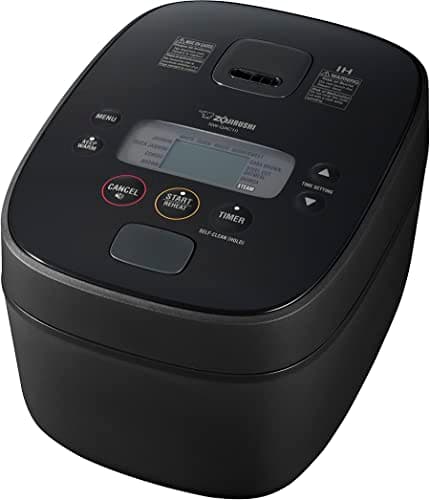
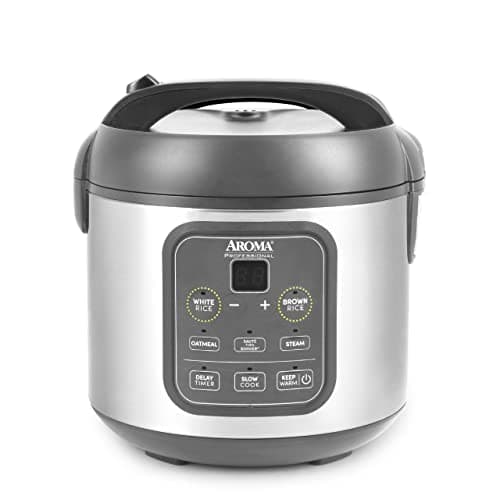
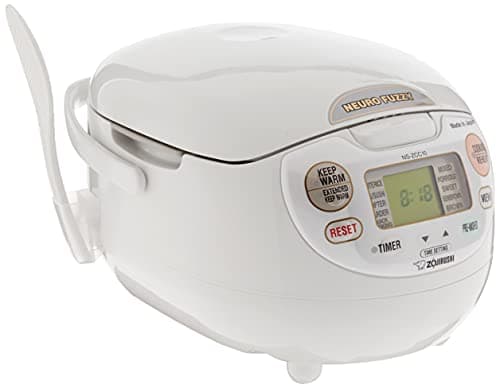
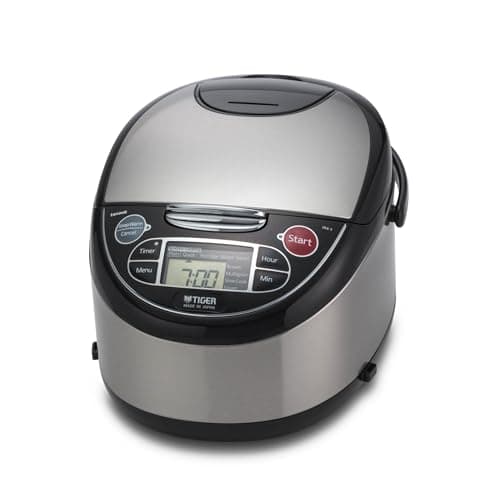
Buy the Tiger JAX-T10U. Meal prep is not really a rice problem — any competent cooker makes a batch of rice — it is a “how many things can I cook in one unattended run” problem, and the Tiger is the only cooker on this site that answers it. Its tacook synchronous-cooking tray steams a dish above the rice while the rice cooks below, from the same published 641 W, which turns one cycle into two components of five lunches. It is 5.5 cups uncooked (1.0 L), Micom fuzzy-logic and made in Japan. Buy the induction Zojirushi NW-QAC10 if what you care about is how the rice eats on day three, because it is the best-cooking machine here and good rice reheats better than mediocre rice. Buy the Aroma ARC-994SG if you want the cheapest honest batch pot: 450 W, a 2-to-10-hour slow cook and a 15-hour delay timer for about forty dollars. Buy the Zojirushi Neuro Fuzzy if you want the benchmark and none of the above arguments move you.
Read this before you buy anything: Keep Warm is not storage
Almost every page you will find on this query ranks cookers by how long they will hold rice warm. That is the wrong axis, and it is worth being blunt about why.
Cooked rice is a known vehicle for Bacillus cereus, whose spores survive cooking and whose toxin is produced as the rice sits in the temperature range between refrigeration and hot-holding. The USDA's guidance on leftovers is the two-hour rule and the 40–140 °F danger zone: food should not sit between those temperatures for long, and cooked food that is going to be stored should be cooled and refrigerated promptly rather than left to drift down. A rice cooker's Keep Warm function is designed to hold rice at a serving temperature for the rest of a meal — hours, not days — and our page on leaving rice in the cooker works through what the guidance actually says.
So the meal-prep method this page is ranked for is: cook the batch, portion it out while it is hot, get it into the fridge inside the two-hour window, and reheat each portion. Keep Warm's role is the twenty minutes between the cycle finishing and you getting to the kitchen. Once you accept that, the specifications that matter change completely — and none of them is the length of the keep-warm timer.
What actually matters: one run, more than one thing
If the goal is five lunches, the bottleneck is attention rather than rice. This is the whole case for the Tiger. Tiger publishes the tacook tray as a synchronous-cooking feature: the tray sits above the rice and steams a dish while the rice cooks underneath, on the same 641 W and the same cycle. Chicken thighs, fish, a tray of vegetables — a protein and a starch out of one unattended run.
The honest limit, which our catalog entry records: the tray's capacity is small. It steams a portion of protein or vegetables, not a full second course for four. For one or two people prepping lunches it is genuinely transformative; for a family of five it is a side dish. Our Tiger review goes through the rest of the machine, and what else a rice cooker cooks is the page for the broader question.
The Aroma makes a different version of the same argument from the other end of the price ladder. Aroma publishes a Sauté-then-Simmer function and a slow cook of 2 to 10 hours, which means the same pot that batches your rice on Sunday can also be the pot that batches a braise — and its 15-hour delay timer plus automatic Keep Warm means you can load it before bed. At a published 450 W it is the lowest-draw rice cooker on this site. What it is not is a rice-quality machine: Aroma gives you two rice programs, White and Brown, and a “Sensor Logic” it describes nowhere.
Batch size, in actual cups of cooked rice
Rice-cooker capacity is published in uncooked cups using the cooker's own cup, which is not a US cup — our rice-cooker cup page explains the difference, and getting it wrong is the most common reason a batch comes out wrong. Roughly, uncooked doubles: a 5.5-cup cooker makes about 11 cups cooked, and a 4-cup Aroma makes 8, which is the figure Aroma itself publishes.
Manufacturer-published figures only. Price is deliberately absent — see the live figures on the cards above. | Tiger JAX-T10U | Zojirushi NW-QAC10 | Aroma ARC-994SG | Zojirushi NS-ZCC10 |
|---|
| Capacity, uncooked | 5.5 cup / 1.0 L | 5.5 cup / 1.0 L | 4 cup (8 cooked) | 5.5 cup / 1.0 L |
|---|
| Rated power | 641 W | 1,080 W | 450 W | 680 W |
|---|
| Heating | Micom + heating | Induction (IH) | “Sensor Logic”, unexplained | Micom + Neuro Fuzzy |
|---|
| Cooks a second dish in the same run | Yes — tacook tray | No | Slow cook, separately | No |
|---|
| Delay timer | Not published | Not published | 15 hours | Not published |
|---|
| Origin | Made in Japan | Made in Japan | Not published | Made in Japan |
|---|
Two of those rows say “not published” where you would expect a number, and that is the finding rather than a gap in our research. Zojirushi and Tiger both ship delay timers on these machines and neither publishes the maximum delay in the specification material we can cite, so we do not print one. Aroma does, which is why the only timer figure in the table belongs to the cheapest cooker on it.
Why the induction model earns second place
The one real quality variable in prepped rice is what happens on day three. Rice retrogrades in the fridge — the starch recrystallizes and the grain goes firm — and how well it comes back under a splash of water in the microwave depends on how evenly it was cooked in the first place. Grains that were cooked unevenly reheat unevenly.
That is the argument for the NW-QAC10. Induction heats the whole pot electromagnetically rather than from a plate underneath — Zojirushi calls it “superior induction heating” and does not break the heaters out the way it did on the older NP-HCC10 — and the result is the most even cook available in a domestic machine. It draws 1,080 W to do it, which is the highest of any rice cooker here and about 60% more than the Micom models — relevant if the cooker runs most days, and worked through in full on our rice-cooker electricity page. Our induction versus fuzzy logic comparison is where that difference is sized honestly: it is real and it is incremental.
What we would skip, and why
The pressurized Cuckoo CRP-P0609S is the best cooker on this site for short-grain and mixed rice and we would not buy it for meal prep, because pressurized rice is at its best immediately and the texture it is prized for is the one most altered by a night in the fridge. It wins the large-capacity roundup on 6 cups and 12 cooked, and if volume is genuinely your constraint rather than the one-run-two-dishes thing, buy it there instead.
We would also skip the mini cookers outright. A 3-cup pot cannot batch, and the small-cooker roundup exists for the opposite buyer.
The method, in four lines
Cook the batch on the appropriate program — white, brown or mixed, not Quick, because Quick skips the soak and the rice goes firmer, which is worse after refrigeration. Portion it out while it is hot, into shallow containers rather than one deep tub, because a deep tub of hot rice cools from the outside in and spends too long in the danger zone. Lid them and refrigerate inside two hours. Reheat each portion with a tablespoon of water and a cover, so the grain rehydrates as it warms through.
Our rice cooker guide covers the programs, the rice-to-water ratio reference is the table to get right before you scale a batch up, and how much rice per person is how you work out how big a batch you actually need. If the real question is which appliance should be doing your meal prep at all, the cross-category meal-prep roundup takes it from the top.