HUB 03 · Sous Vide
Is Sous Vide Safe?
Cooking food in a sealed bag at 130 degrees sounds like it should be risky, and the honest answer is that sous vide is safe — but only because safety comes from time and temperature together, not from temperature alone. Here is how pasteurization actually works, what the danger zone means, and whether the bags are a problem.
We earn a commission if you buy through our links. It does not change the price you pay, and it does not decide our picks — the scoring rubric is published in full, including what disqualifies a pick. How this works.
The short answer, and the catch in it
Yes, sous vide is safe — and the reason is the single most important thing to understand about the technique: safety comes from time and temperature together, not temperature alone. A steak cooked to 130°F on a grill is only briefly at that temperature; a steak held at 130°F in a water bath for an hour or more is pasteurized, because holding food at a given temperature for long enough kills bacteria just as surely as a higher, faster heat does. The USDA recognizes this time-and-temperature relationship explicitly. Get both right and sous vide is as safe as any cooking method; get only the temperature right and hold it too briefly, and you have not finished the job.
The danger zone, and why holding matters
Bacteria multiply fastest in the danger zone, roughly 40–140°F (4–60°C). Conventional cooking races food through that band quickly. Sous vide often cooks within the upper part of it— a chicken breast at 145°F, say — which is exactly why the hold timeis not optional. At 145°F, food is not in the dangerous part of the zone; it is at a temperature that pasteurizes, given enough time. The rule that keeps this safe is simple: do not hold food for long periods belowabout 130°F, and when you cook at the lower end of the safe range, hold it for the time the pasteurization tables specify. A quick sous vide at 120°F for hours is the one genuinely unsafe pattern, and it is the one to avoid.
Are the plastic bags safe?
This is the most common worry, and the answer is reassuring with one condition. Use food-grade bags — purpose-made sous vide pouches, or reputable freezer-grade zip-top bags — and you are fine, because sous vide temperatures are far below the point where these plastics break down. Sous vide tops out around 90–95°C (under boiling), well beneath the temperatures at which food-grade polyethylene bags are a concern; you are not melting or degrading a proper bag at 60°C. What you should not use is a random plastic bag of unknown grade, or a thin bag that could fail at a seam. Food-grade in, and the bag is a non-issue. You can also skip bags entirely with the water-displacement method and a zip-top pouch.
The practical safety rules
Four habits cover almost everything. One: follow a time-and-temperature reference — our temperature guideand the USDA's own pasteurization guidance — rather than eyeballing it, especially for chicken and pork. Two:for anything held below about 130°F, do not cook for extended periods — that band is for short cooks only. Three: use food-grade bags and a clean bath. Four: chill promptly if you are cooking ahead — cool the sealed bag in ice water and refrigerate, rather than leaving cooked food to drift down through the danger zone on the counter. None of this is onerous; it is the same food-safety logic as any cooking, applied to a method that happens to cook lower and slower.
Cooking ahead and reheating
One of sous vide's best tricks — cooking proteins ahead and finishing later — is safe done right. Pasteurize the food fully at temperature, then chill it rapidly in ice water and refrigerate; to serve, reheat in the bath and sear. The thing to avoid is the in-between state: food cooked to a low temperature and then left sitting warm for hours, or cooled slowly. Cook it, chill it fast, and either eat it or refrigerate it — the same discipline that makes any make-ahead cooking safe.
The bottom line
Sous vide is safe, and its safety is not magic — it is time and temperature working together, exactly as the USDA describes pasteurization. Follow a reference for time and temperature, do not hold food long below about 130°F, use food-grade bags, and chill promptly when cooking ahead. Do that and cooking a steak to a precise 130°F is not a risk; it is one of the safest, most controlled ways to cook there is. For the practical numbers, see the temperature guide and, for poultry specifically, how long to sous vide chicken.
The hardware
The cookers this page is about
The cookers referred to above, with prices pulled live from Amazon and dated on every card. Full rankings live in the roundups linked from this page.
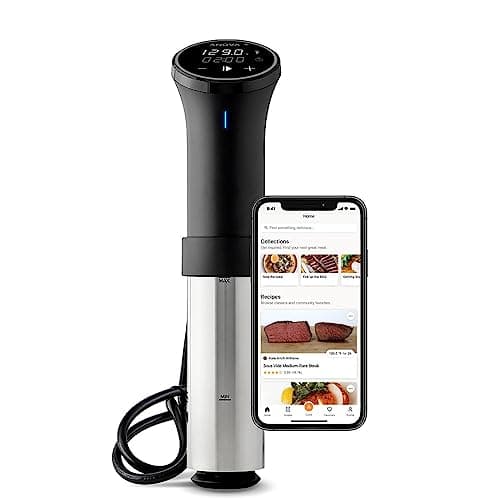
1,100 W
Anova Precision Cooker 3.0 (WiFi), 1100 W
The sous vide circulator most people should buy. Anova publishes the full specification — 1,100 W, a 0–92°C range, ±0.1°C accuracy, an 8 L/min pump — and backs it with a two-year warranty, the longest here. It has an on-device screen so it works without the app, which the Joule does not.
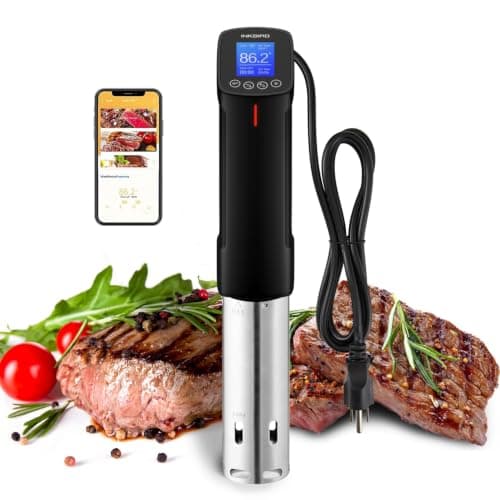
1,000 W
Inkbird ISV-100W WiFi Sous Vide, 1000 W
The value pick that does not feel like one. Under $100, and Inkbird still publishes the full specification: 1,000 W, a 25–99°C range, ±0.1°C accuracy, 15 L capacity, WiFi and an on-device dot-matrix screen. It undercuts the Anova by more than half and gives up remarkably little on paper.
#ad · As an Amazon Associate we earn from qualifying purchases.
Questions
Frequently asked
Is sous vide cooking safe?
Are the plastic bags used for sous vide safe?
Why is sous vide safe at such low temperatures?
Keep reading
Related
- How to keep a sous vide bag from floatingWhy a floating bag cooks unevenly.
- Sous vide temperature guideThe time-and-temperature reference tables.
- How long to sous vide chickenPoultry times and temperatures, done safely.
- What is sous vide?The technique, start to finish.
- Can you sous vide overnight?Why long cooks are safe above 130 F.
Receipts
Sources
- USDA FSIS — cooking safely with time and temperature (pasteurization basics)
- USDA Food Safety and Inspection Service — safe minimum internal cooking temperatures
We have not tested these machines in a lab and we do not pretend to have. Specifications come from the manufacturer's own published documents; electricity rates come from the US Energy Information Administration; prices come from the live Amazon API. Where a figure is not published, the page says “not published” rather than guessing. Read the full method.