HUB 03 · Sous Vide
How to Sous Vide Salmon
Sous vide is the most reliable way to cook salmon to a silky, even doneness without the dry edge and the leaking white that a hot pan gives you. Here is how to bag it, the doneness ranges most cooks use, how long it takes, the finish, and the honest safety line about cooking fish below the USDA's 145 degrees.
We earn a commission if you buy through our links. It does not change the price you pay, and it does not decide our picks — the scoring rubric is published in full, including what disqualifies a pick. How this works.
Why sous vide salmon is worth it
Salmon is easy to ruin and easy to perfect, and sous vide pushes hard toward perfect. A hot pan cooks the fish from the outside in, so the edges are firm and dry by the time the center is done, and it drives out that unappetizing white stuff— albumin, a protein the fish squeezes out when it is heated fast and hard. Sous vide holds the whole fillet at one gentle, exact temperature, so it cooks evenly edge to edge and dramatically reduces the albumin, because the low, even heat never shocks the protein out the way a screaming skillet does. The result is a fillet that looks clean and cuts like silk — the single most visible win sous vide gives you on fish.
Pick your doneness
As with a steak, the water temperature is the doneness, and salmon has a wider useful range than people expect. Cooks commonly aim silky and translucent at the lower end, a tender, just-set medium in the middle, and a firmer, more traditional flake toward the top. Lower temperatures give that buttery, almost sashimi-adjacent texture many people love; higher temperatures give the flaky, opaque fish most of us grew up with. Because the exact numbers matter and the safe-handling caveats below scale with them, treat these as commonly-used ranges and set your target from the full chart in the sous vide temperature guide rather than guessing. The lower you go, the more the safety notes further down this page apply.
Brine and bag
Two small steps make a real difference. First, an optional quick brine— a ten-minute soak in a light salt solution before cooking — firms the surface slightly and further reduces any albumin, so the fillet finishes even cleaner. Pat it dry afterward. Then bag it gently: salmon is delicate, so lay the fillet flat, add a little oil or butter and an aromatic or two (a slice of lemon, a sprig of dill), and seal with the water-displacement method rather than a hard vacuum, which can crush the flesh. A film of fat in the bag helps the heat transfer evenly and keeps the surface from drying at the edges.
How long it takes
Fish cooks faster than meat and rewards a lighter touch. For a typical fillet, plan on roughly 30 to 45 minutes— long enough to bring the center up to the water temperature and hold it briefly. Unlike a tough cut of beef, salmon does not benefit from long holds: keep it in too long and the delicate texture turns soft and mushy as the proteins over-relax. There is a comfortable window of a few minutes either side, but this is a food you cook and serve, not one you park in the bath for hours. A thicker center-cut piece wants the upper end of that range; a thin tail-end fillet, the lower.
The finish
Salmon out of the bag is perfectly cooked but pale, and skin-on pieces have flabby skin, so most people finish it. If you want crisp skin, dry the fillet thoroughly, then press it skin-side down in a hot, lightly oiled pan for a minute or two — just the skin, quickly, since the flesh is already at temperature and you do not want to overcook it from the outside. A kitchen torch works too. If you are after the pure silky texture and do not care about crisp skin, you can skip the sear entirely and serve it straight from the bag with a squeeze of lemon. Either way, be gentler than you would with a steak: the whole point of the low, even cook is easily undone by an aggressive finish.
Fresh, frozen, and skin-on
A few choices at the counter make the cook easier and safer. Buy the freshest salmon you can, and do not rule out previously-frozenfish — it is often frozen at sea within hours of the catch, and freezing is also what handles the parasite risk that matters when you cook fish to the lower, raw-style temperatures. Skin-on fillets hold together better in the bag and give you the option of crisp skin at the finish, so leave the skin on even if you plan to remove it later. Run a finger along the fillet and pull any pin bones with tweezers before bagging, and try to cook even-thickness piecestogether so they finish at the same time — a thin tail-end next to a thick center-cut is the one thing that trips up an otherwise foolproof method. None of this is fussy; it is the same habit of buying well and prepping a little that makes any fish dish better.
The safety line
Here is the honest part. The USDA safe minimum internal temperature for fish is 145°F, and most sous vide salmon is cooked belowthat on purpose — that lower temperature is exactly what gives the silky texture. When you cook below 145°F you are relying on time-and-temperature pasteurization and fresh, well-handled fish rather than a single high endpoint, the same principle behind is sous vide safe?That is a real trade, not a free lunch: use fresh, high-quality fish from a source you trust, keep it cold until it goes in the bath, and chill it promptly if you are cooking ahead. Anyone pregnant, very young, older or immunocompromised should cook salmon to the full 145°F rather than the lower silky range. Cooking fish for raw-style low temperatures is also where previously-frozen fish, which handles parasite risk, is the safer choice. Get the fish and the handling right and low-temperature salmon is a genuine pleasure — just go in knowing the tradeoff.
The hardware
The cookers this page is about
The cookers referred to above, with prices pulled live from Amazon and dated on every card. Full rankings live in the roundups linked from this page.
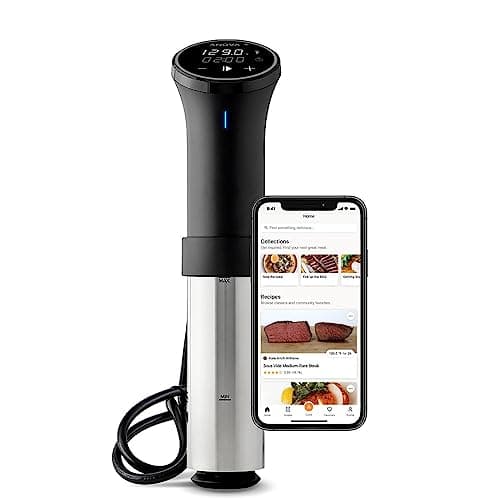
1,100 W
Anova Precision Cooker 3.0 (WiFi), 1100 W
The sous vide circulator most people should buy. Anova publishes the full specification — 1,100 W, a 0–92°C range, ±0.1°C accuracy, an 8 L/min pump — and backs it with a two-year warranty, the longest here. It has an on-device screen so it works without the app, which the Joule does not.
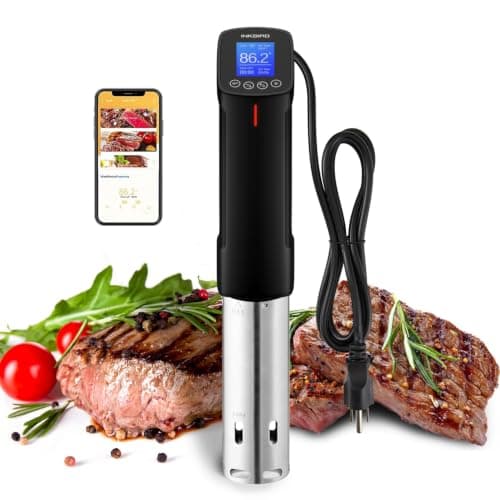
1,000 W
Inkbird ISV-100W WiFi Sous Vide, 1000 W
The value pick that does not feel like one. Under $100, and Inkbird still publishes the full specification: 1,000 W, a 25–99°C range, ±0.1°C accuracy, 15 L capacity, WiFi and an on-device dot-matrix screen. It undercuts the Anova by more than half and gives up remarkably little on paper.
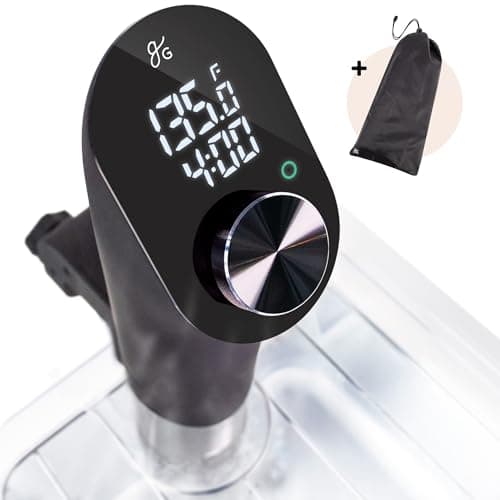
1,100 W
Greater Goods Sous Vide Precision Cooker, 1100 W
The circulator for people who want none of the connectivity. No WiFi, no app, no phone — a dial, a screen and a silent brushless motor rated to run 99 hours straight. 1,100 W, a 20–95°C range, and a build that is quieter than anything else here.
#ad · As an Amazon Associate we earn from qualifying purchases.
Questions
Frequently asked
What temperature do you sous vide salmon?
Why does sous vide salmon have less of the white stuff?
Is it safe to sous vide salmon below 145°F?
Keep reading
Related
Receipts
Sources
- Anova Culinary — Precision Cooker 3.0 product page
- USDA Food Safety and Inspection Service — safe minimum internal cooking temperatures
- USDA FSIS — cooking safely with time and temperature (pasteurization basics)
We have not tested these machines in a lab and we do not pretend to have. Specifications come from the manufacturer's own published documents; electricity rates come from the US Energy Information Administration; prices come from the live Amazon API. Where a figure is not published, the page says “not published” rather than guessing. Read the full method.