HUB 03 · Sous Vide
What Is Sous Vide?
Sous vide is cooking food, sealed in a bag, in a water bath held at a precise temperature — so it reaches exactly the doneness you set and cannot overcook. Here is the mechanism in plain terms, what it is genuinely good at, and what it is not.
We earn a commission if you buy through our links. It does not change the price you pay, and it does not decide our picks — the scoring rubric is published in full, including what disqualifies a pick. How this works.
The one-paragraph definition
Sous vide (French for “under vacuum”) means cooking food sealed in a bag, submerged in water that a circulator holds at a precise, low temperature — often for an hour or more. Because the water can never be hotter than the doneness you want, the food cooks to exactly that temperature and then stops changing. A steak set to 54°C becomes a perfect medium-rare all the way through and stays that way whether you pull it at one hour or three. That is the whole idea: precision and forgiveness. If the method still sounds like boiling food in a bag, sous vide against boiling is the page that separates them — most circulators cannot even reach boiling, and their makers publish it.
Why it works
Conventional cooking uses heat far above your target — a 200°C pan on a steak you want at 54°C inside — so timing is everything, and a minute too long overcooks it. Sous vide removes the guesswork by cooking at the target temperature. The trade is time and texture: it is slower, and it does not brown, because browning needs heat well above boiling. So almost every sous vide steak gets a quick, hot sear in a pan afterward — the water bath does the inside perfectly, the sear does the crust.
What it is genuinely good at
- Steak and other proteins cooked edge-to-edge to an exact doneness, then seared
- Eggs, where a single degree changes the texture — the classic 63°C egg
- Chicken breast that stays juicy because it cannot dry out past its set temperature
- Tough cuts held for many hours to break down collagen without drying
- Cooking ahead — food holds at temperature for hours, ready when you are
What it is not
It is not fast, it does not brown, and it will not save a cheap cut the way pressure cooking does — it perfects texture, it does not tenderize dramatically. It is also not the right tool for most vegetables or anything you want crisp. Think of it as the most precise way to bring a protein to temperature, paired with a sear — not a replacement for the whole kitchen. The machines that do it are ranked here, and a good one starts under $100.
Three follow-ups. Immersion circulator vs sous vide is the vocabulary problem that costs people money — one of those words is a method and the other is a machine. Sous vide without a machine is how to try the method for nothing, and is sous vide healthy answers the question the plastic bag raises.
The hardware
The cookers this page is about
The cookers referred to above, with prices pulled live from Amazon and dated on every card. Full rankings live in the roundups linked from this page.
1,100 W
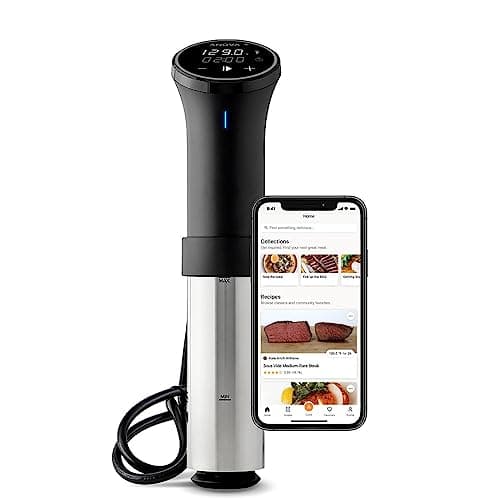
Anova Precision Cooker 3.0 (WiFi), 1100 W
The sous vide circulator most people should buy. Anova publishes the full specification — 1,100 W, a 0–92°C range, ±0.1°C accuracy, an 8 L/min pump — and backs it with a two-year warranty, the longest here. It has an on-device screen so it works without the app, which the Joule does not.
1,000 W
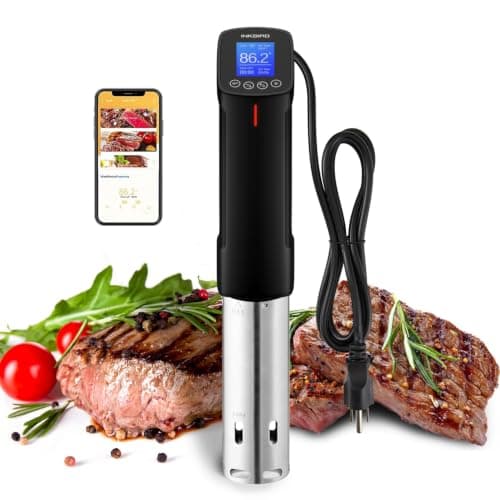
Inkbird ISV-100W WiFi Sous Vide, 1000 W
The value pick that does not feel like one. Under $100, and Inkbird still publishes the full specification: 1,000 W, a 25–99°C range, ±0.1°C accuracy, 15 L capacity, WiFi and an on-device dot-matrix screen. It undercuts the Anova by more than half and gives up remarkably little on paper.
#ad · As an Amazon Associate we earn from qualifying purchases.
Questions
Frequently asked
Is sous vide worth it?
Do you have to sear meat after sous vide?
Can you overcook food with sous vide?
Keep reading
Related
- What can you cook sous vide?From steak and eggs to vegetables and custards.
- Best sous vide machinesThe gear to start with.
- Best value immersion circulatorsIf you want to start cheap.
- Which appliance do you need?Where sous vide fits against a multicooker.
- Is sous vide worth it?The honest case, and the limits.
- Sous vide temperature guideThe doneness temperatures to actually set.
- Can you overcook sous vide?Why time, not temperature, is the real risk.
Receipts
Sources
- USDA FSIS — cooking safely with time and temperature (pasteurization basics)
- USDA Food Safety and Inspection Service — safe minimum internal cooking temperatures
- Anova Culinary — Precision Cooker 3.0 product page
We have not tested these machines in a lab and we do not pretend to have. Specifications come from the manufacturer's own published documents; electricity rates come from the US Energy Information Administration; prices come from the live Amazon API. Where a figure is not published, the page says “not published” rather than guessing. Read the full method.