What matters when you are cooking for a family
Feeding a family changes the math. A cooker that is perfect for one or two becomes a bottleneck the moment you are making dinner for four, five or six, because the constraint stops being what it can cook and becomes how much it can cook at once. The best family cooker is the one that turns a single load into a full meal — a pot of beans that feeds everyone, a roast that stretches to leftovers, a batch of rice that covers the week — without you standing over it reloading and re-running. So capacity leads, feed-a-crowd usefulness comes second, and everything else follows from there. These four are the picks that scale up honestly across the categories, each the one to reach for when the table is full.
How we ranked them
We ranked on usable capacity first — how much real food comes out of one load — then on feed-a-crowd usefulness: whether that capacity is fast, hands-off and genuinely suited to family cooking rather than just a bigger number on the box. Documentation and live price break the ties, as they do everywhere on this site. Every pick is a real recommendation on its own merits, chosen here specifically for a household rather than a single cook. Where a manufacturer publishes no wattage or a price is intermittent, we say so plainly. The full rubric, including what disqualifies a pick, is in our methodology. If you are not sure which category you want before you size it up, start with which cooker do you need and come back to size the winner.
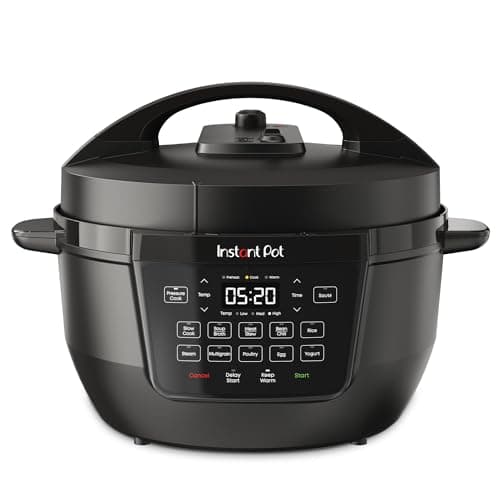
1. Instant Pot RIO Wide — the family workhorse
For a family, a big pressure cooker is the single most useful machine you can own, and the Instant Pot RIO Wide is the one to pick for volume. It is a 7.5-quartpressure cooker — a pot of dried beans in under an hour with no overnight soak, a double batch of chili or stew, a whole chicken and stock, a big pot roast from a cheap cut — all fast and hands-off, drawing 1,200 W on an 18/8 stainless inner pot with no coating to scratch away. The “Wide” is the meaningful part: Instant Brands gives it a larger searing base than the tall 6-quart pots, so more of the meat for a family-sized batch actually touches the element and browns evenly before you seal and pressurize. Pressure is what makes it a family machine rather than just a big one — it turns the slow, expensive cuts that feed a crowd cheaply into dinner on a weeknight instead of an all-day project. The honest con: the wide footprint takes more counter than a tall pot for the same 7-in-1 feature set, and at 1,200 W it costs marginally more per cook than the standard 1,000 W Duo. There is also no sous vide and no air fry here — this is the plain, big, fast pressure cooker, and that focus is exactly why it earns the top spot for a family. If your household is smaller or your counter is tight, the standard Duo is the same idea, narrower.
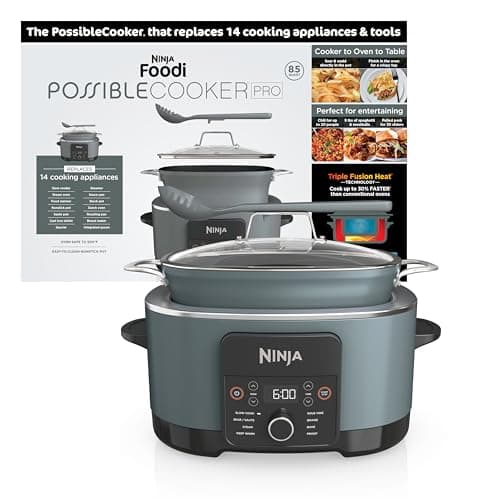
2. Ninja PossibleCooker PRO — the biggest pot here
When sheer capacity is the whole point, the Ninja PossibleCooker PRO is the largest pot on this site at 8.5 quarts, with an oven-safe pot rated to 500°F so a family casserole, a big pot of soup or a slow-cooked braise can go from a stovetop-style sear straight to a browned finish under the broiler in one vessel, all at 1,200 W. For the family meals that are big and low-and-slow — a Sunday chili for a crowd, a batch of pulled pork, a soup that becomes three nights of leftovers — the extra volume over even the RIO Wide is genuinely useful, and SharkNinja publishes the wattage plainly, which a surprising number of multicookers do not. Dropping the pressure mechanism also means one less seal and gasket to maintain over years of heavy family use. The honest con: it does not pressure-cook at all, so it will not turn dried beans or a tough roast around in 40 minutes the way the RIO Wide does — it is slow-and-large, not fast-and-large, and if you buy it expecting a quick weeknight roast for a hungry family you will be disappointed. Ninja's own copy also describes the pot material inconsistently, stainless in one place and nonstick in another. Buy this one when capacity for slow cooking is the constraint and you have the afternoon; buy the RIO Wide when speed matters as much as size. The two of them together — one fast, one huge — cover almost every big-cooking situation a family runs into, which is why so many households that cook in volume end up owning a pressure cooker and a large slow-cooking pot rather than asking one machine to do both jobs at once.
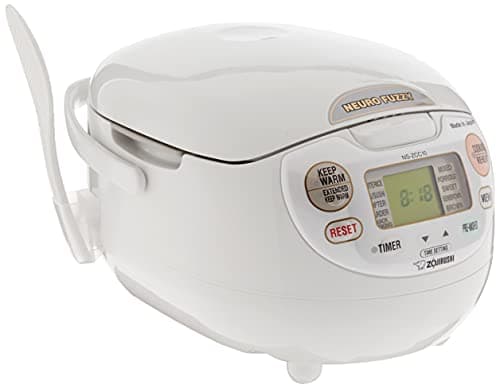
3. Zojirushi Neuro Fuzzy — the week's rice
Rice is the quiet backbone of family cooking — the side that stretches a meal, the base of a dozen weeknight dinners — and a proper rice cooker is what makes a big, consistent batch of it and then holds it warm through a staggered family dinner. The Zojirushi Neuro Fuzzy is the benchmark: its Micom fuzzy-logic microcomputer adjusts the heat throughthe cook rather than running a fixed timer, which is why it turns out reliable, repeatable rice across white, brown, sushi and mixed settings, at 680 W and genuinely made in Japan. One point worth knowing so the 5.5-cup rating does not mislead you: a rice cooker's “cup” is the 180 mL cup that ships in the box, not the larger US measuring cup — so 5.5 rice cupsof uncooked rice (about 1.0 L) cooks up to enough finished rice for a family dinner with leftovers, not the smaller amount “5.5 cups” sounds like. It comfortably covers a family meal, and its extended keep-warm holds the batch for hours without drying it out. The honest con:at its price you are paying for the logic, not the build — the pot and body are ordinary — and it is a Micom cooker rather than induction, so a household that eats rice every single day and wants the outright best could look higher up the range. For most families cooking rice several nights a week, this is the reliable engine of the routine, and the fact that it frees the big pressure cooker for the main dish is half its value — on a busy family night, the rice cooking itself on the counter while the RIO Wide handles the curry or the chili is the difference between one pot's worth of waiting and two dishes finishing together.
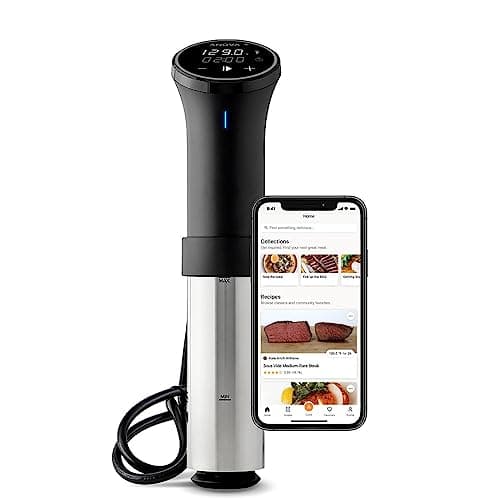
4. Anova Precision Cooker 3.0 — batch proteins for busy nights
The hardest part of feeding a family is not the weekend cook — it is the Tuesday when everyone is home at a different time and hungry now. That is exactly what a sous vide circulator is built to solve, and the Anova Precision Cooker 3.0is the default pick. Drop several chicken breasts or a rack of pork chops into a big container of water on Sunday, cook them fully at an exact temperature, chill them in their sealed bags, and reheat-and-sear one portion or six through the week with no loss of quality — cooked-to-order food on a weeknight with minutes of active work. Anova publishes the complete specification — 1,100 W, a 0–92°C range, ±0.1°C accuracy, an 8 L/min pump — and backs it with a two-year warranty, the longest of any sous vide machine here, plus an on-device screen so it works without a phone. The honest con: you must chill promptly after cooking for the make-ahead to be safe, so it asks a little more food-handling care than a set-and-forget pot, and at 325 mm tall it is a large device to store. It is also the one pick here that does not, by itself, produce a whole family meal in one vessel — it is the protein specialist that pairs with the pots above. For a busy household that wants weeknight dinners to feel effortless, that trade is worth making, and it is the one machine here that turns the hardest night of the family week — everyone home late and hungry at once — into a ten-minute job of reheating something that already tastes cooked to order.
The size rule of thumb for a family: a 6-quart pot fills up fast once you are cooking for four or more, so a family that batch-cooks or wants leftovers is usually better served by the 7.5-quart RIO Wide or the 8.5-quart Ninja than by the standard 6-quart models. If you are choosing between capacities on the Instant Pot side specifically, the what size Instant Pot guide walks through household size against pot size.
Which cooker for which family
Most families end up with two of these rather than one, because they cover different halves of the week. The most useful single machine is the Instant Pot RIO Wide — 7.5 quarts, fast, and versatile enough to be the pot you reach for most nights, turning cheap cuts and dried beans into a family meal in an afternoon. If your family cooking leans toward big, slow-cooked meals — chilis, soups, braises, casseroles for a crowd — and you would rather have the most capacity than the most speed, the 8.5-quart Ninja PossibleCooker PRO is the bigger pot, at the cost of the pressure function that makes weeknight roasts quick. Add the Zojirushi Neuro Fuzzy if rice is a fixture of your table and you want it cooked well and held warm without tying up the main pot, and the Anova Precision Cooker 3.0 if the real pain point is feeding people at different times, because batch-cooked, chilled proteins reheat like new. If counter and budget allow only one, buy the RIO Wide first; if they allow two, the RIO Wide plus the Neuro Fuzzy is the classic family pairing — a big pot for the main and a rice cooker for the side, running at the same time. When you have picked, size it against your household with the sizing guide, and lean on the large rice cooker roundup if your family eats more rice than a 5.5-cup pot can keep up with. And do not overlook the running-cost side of a household that cooks in volume: the bigger pressure cookers here draw 1,200 W and the largest Ninja the same, so the fastest machine is often the cheapest to run per meal simply because it finishes sooner, which is worth remembering when you are feeding a full table several nights a week. Prices are pulled live from Amazon and dated on each card.