HUB 01 · Multicookers
What Size Instant Pot Should I Buy?
The size question trips up more first-time buyers than the model question, and the instinct — buy the biggest, to be safe — is usually wrong. Here is how the three common sizes map to real households, and the reason a too-big pot actually cooks small meals worse.
We earn a commission if you buy through our links. It does not change the price you pay, and it does not decide our picks — the scoring rubric is published in full, including what disqualifies a pick. How this works.
The short answer
For most households, the 6-quart is the right size and the reason it is the default — it cooks for a family of four, fits a standard pot roast or a whole chicken, and is not so large that a small meal struggles. Buy the 3-quart mini if you cook for one or two, live somewhere small, or want a second pot for a side dish. Buy a 7.5- or 8-quart only if you genuinely batch-cook, feed more than four, or make stock in volume. When in doubt, six.
How the sizes map to real life
- 3-quart (Duo Mini): one or two people, a dorm, an RV, or a second pot to run alongside a big one. It draws the least of any Instant Pot here and lives happily in a cupboard. Its ceiling is firm — doubling a recipe means two rounds.
- 6-quart (Duo, Pro, Duo Crisp): the default. Families of three to five, most recipes as written, and the size nearly all Instant Pot recipes are scaled to. If you buy one Instant Pot and cook normal dinners, this is it.
- 7.5- to 8.5-quart (RIO Wide, PossibleCooker): big households, weekly batch cooking, large cuts and stock. The RIO Wide adds a wider searing base, which helps if you brown a lot before pressurizing.
The small-batch trap
Here is the counter-intuitive part that argues against buying big “to be safe.” A pressure cooker needs a minimum amount of liquid to build steam, and it heats the whole pot whether it is full or not. Cook a small meal in an 8-quart pot and it comes to pressure slowly, uses more energy to do it, and can leave a small batch overcooked at the edges. A too-big pot does not just waste capacity — it cooks small portions worse. That is why matching the size to your typical meal, not your largest, is the right call.
Size vs model
Size and model are separate choices. Once you know your size, pick the model on features — Duo, Duo Plus, Pro or Duo Crisp — and the budget on price. If you want the most pot for the least money, the large-capacity roundup ranks the big pots; if price leads, the budget field is here.
The hardware
The cookers this page is about
The cookers referred to above, with prices pulled live from Amazon and dated on every card. Full rankings live in the roundups linked from this page.
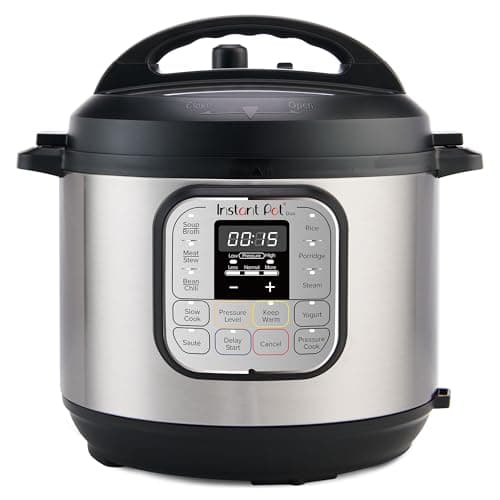
700 W
Instant Pot Duo Mini 7-in-1, 3 Quart Electric Pressure Cooker
The Duo shrunk to 3 quarts. It is the right size for one or two people, for a dorm or an RV, or as a second pot for a side dish while the big one does the main. The same 7-in-1 function set, the same stainless pot, in a footprint that actually fits a small kitchen.
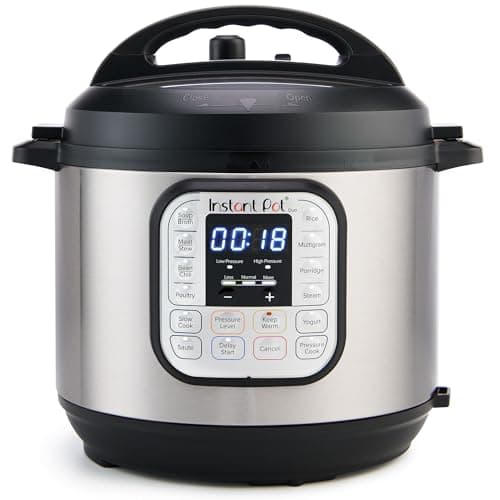
1,000 W
Instant Pot Duo 7-in-1 Electric Pressure Cooker, 6 Quart
The multicooker that made the category, and still the right default. Instant Brands publishes the wattage, the working pressure range and a stainless (not nonstick) inner pot, which is more than most of the field manages — and it costs less than almost all of them.
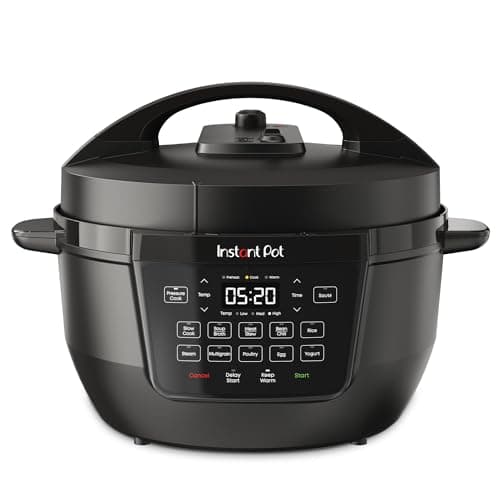
1,200 W
Instant Pot RIO Wide 7-in-1, 7.5 Quart Multi-Cooker
The Duo, rebranded RIO and widened. The 7.5-quart Wide has a larger searing base than the tall 6-quart pots, which is the one real ergonomic improvement in the line — more of the pot bottom touches the element, so browning is more even before you pressurize.
#ad · As an Amazon Associate we earn from qualifying purchases.
Questions
Frequently asked
Is a 6-quart or 8-quart Instant Pot better?
Is a 3-quart Instant Pot too small?
Does the size of an Instant Pot affect cooking?
Keep reading
Related
Receipts
Sources
- Instant Brands — Instant Pot Duo Mini 3qt product page
- Instant Brands — Instant Pot RIO Wide 7.5qt product page
- US Energy Information Administration — Electric Power Monthly, Table 5.3 (average residential price)
We have not tested these machines in a lab and we do not pretend to have. Specifications come from the manufacturer's own published documents; electricity rates come from the US Energy Information Administration; prices come from the live Amazon API. Where a figure is not published, the page says “not published” rather than guessing. Read the full method.