The short answer
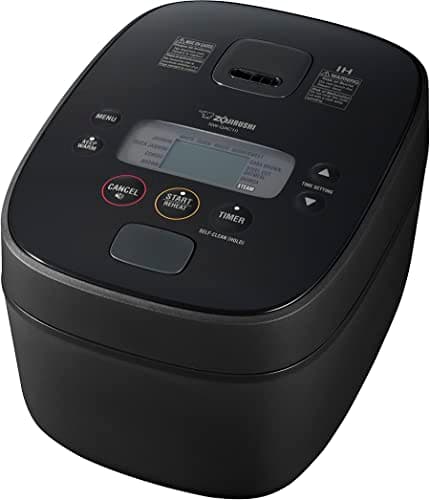
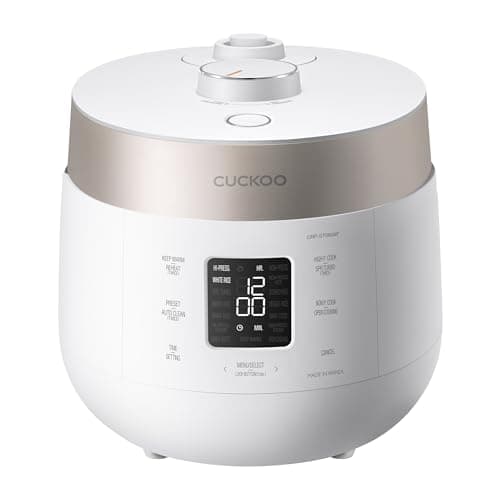
Buy the Cuckoo CRP-ST0609F Twin Pressure. It is the only cooker in our catalog whose maker publishes a Mixed Rice program, a GABAprogram and the capacity limit on both — and the only one that lets you switch the pressure off when the mix is mostly long-grain. If you want the longest published program list, buy the Zojirushi NW-QAC10 instead: twelve menu settings including GABA brown, quinoa, congee and steel-cut oatmeal, which is the only cooker here whose maker names non-rice grains individually. The budget pick is the Cuckoo CR-0631F— 580 W, no pressure mechanism at all, and Cuckoo still lists GABA brown, mixed and porridge on it, which makes it the cheapest cooker on this site that is documented to do the job.
Every price on this page comes from our daily refresh and the Quick Picks table above prints the date of the most recent one. Treat the table as the authority over any sentence here.
What “mixed grains” actually asks of a rice cooker
Three things, and none of them is heat.
A grain mix does not absorb water at one rate. Pearl barley, hulled millet, quinoa and brown rice all sit in the same pot and all want a different amount of time in contact with water before the starch gelatinizes. A white-rice program is tuned for one absorption curve and finishes when the free water is gone, which on a mixed pot arrives before the toughest grain in it is done.
A named program is the only evidence that the cooker was tuned for it. This is the criterion that does the work on this page. Every cooker on this site will heat a pot of mixed grains; the question is whether the manufacturer wrote a cycle for the job and published it. Cuckoo publishes Mixed Rice and GABA by name. Zojirushi publishes mixedon the NS-ZCC10 and a twelve-item menu list on the NW-QAC10 that names GABA brown, quinoa and steel-cut oatmeal. Most of the field publishes neither, and we rank on what makers print rather than on what a listing implies — that is the whole of our method.
And the pot has to hold the batch you actually cook. Mixed grains are a batch-cooking food: people cook them for the week, not for one bowl. This is where the page found something, and it is the next section.
The finding: the mixed-grain program is the one with the cap
Cuckoo's own US operating instructions for the CRP-ST0609F publish a per-program capacity table, and it says that plain white rice runs from one to six cups — while high heat, Super Turbo, mixed rice and GABA are each capped at one to four cups. On a cooker sold as a six, the two programs you would buy it for hold two thirds as much.
That looks like a mark against the Cuckoo and it is the reason the Cuckoo wins. No other rice-cooker maker in this catalog publishes a per-program capacity at all: not Zojirushi, not Tiger, not Cuchen, not Aroma. The physics does not care which brand is on the lid — a grain mix that swells more than white rice does will approach the maximum fill line sooner in any cooker — so the honest reading is not that Cuckoo's mixed program is unusually small. It is that Cuckoo is the only maker telling you where the limit is.
The practical consequence: if you are cooking mixed grains for a household, size up. A 6-cup cooker is a 4-cup cooker on the mixed program, and we work through the general version of that arithmetic in what size rice cooker to buy.
How we ranked
A published, named mixed-grain or multigrain program first.Not a “grain mode” in a listing bullet — a program the manufacturer names in its own document. Two brands clear this, which is why the list is short.
Then the mechanism. Pressure raises the boiling point inside a sealed pot, and induction drives the pot itself rather than a plate underneath it. Both help a tough bran layer, which is most of what a grain mix is made of. We rank pressure first here for the same reason our brown-rice ranking leans on mechanism: on dense grains it changes the result rather than refining it.
Then published per-program capacity— and a cooker that publishes a limit scores above one that is silent about it, which is the opposite of how most roundups treat a restriction.
Then the pot surface, then price. Mixed grains are starchy and they stick, so the surface you have to scrub matters more here than on a white-rice page. Price is last, which is why the cheapest cooker on this site is not ranked on this page at all.
The winner, and the switch that matters
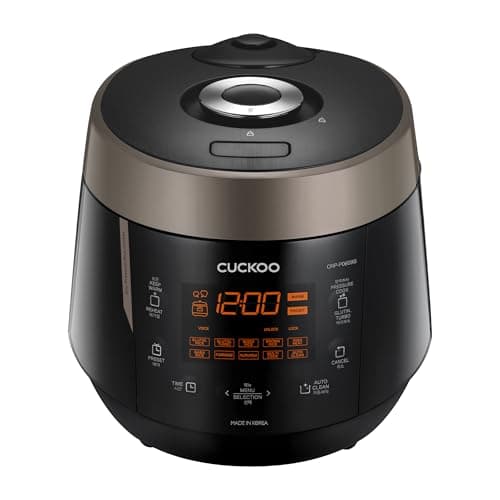
The CRP-ST0609F Twin Pressureis 880 W at AC120V, a published 78.4 kPa (0.8 kgf/cm²) of working pressure, made in Korea, with named Mixed Rice and GABA programs and a genuine non-pressure side for white and veggie rice.
The twin part is the argument. A mix that is mostly short-grain rice, barley and millet wants pressure: hotter water gets through a bran layer faster and more completely. A mix that is mostly basmati with a handful of quinoa in it does not — pressure makes long-grain rice cohesive, which is the texture you were trying to avoid. Every other pressure cooker here forces the choice at purchase. This one puts it on the panel.
Two honest limits, both from Cuckoo's own documents. The 1–4 cup cap above is the first. The second is the pot: this is a nonstick-coated inner pot, not the 304-stainless-backed pot of the cheaper CRP-P0609S, and Cuckoo's manual is blunt that coating damage from a metal scrubber is a chargeable repair. On a starchy grain mix that is a real consideration, and our page on rice-cooker pot materials is where that question gets its own treatment.
The longest published program list
The Zojirushi NW-QAC10 is second, and for one reader it should be first. Zojirushi publishes twelve menu settings for it, and the list is the only one in this catalog that names grains other than rice individually: quick white, quick Jasmine, congee, GABA brown, quinoa and steel cut oatmeal, plus a real steam function with a tray. If your “mixed grains” is actually a rotation — quinoa on Monday, steel-cut oats on Tuesday, a barley-and-brown-rice pot on Wednesday — this is the machine whose maker has written a cycle for each of them.
It is also whole-pot induction at 1,080 W and made in Japan, which is why it wins our Japanese ranking and the general one. What it does not do is pressure, and it does not publish a capacity for any individual program — so the 5.5-cup figure is the white-rice number and the mixed-grain number is unknown. It is also roughly double the Cuckoo, with a double-nonstick-coated aluminum pan rather than an uncoated surface.
The Japanese benchmark, cheaper
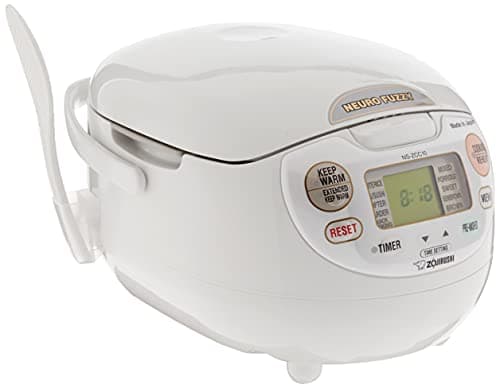
The Zojirushi NS-ZCC10 Neuro Fuzzyis third: 680 W, made in Japan, and its published settings are white, sushi, softer, harder, mixed, porridge, brown and rinse-free. The mixed setting is the one that puts it on this page, and the Neuro Fuzzy heat control behind it — a microcomputer adjusting heat through the cook rather than running a timer — is the reason this cooker is the benchmark the category is measured against.
Against the two above it: no pressure, no induction, and a program list that names mixed rice but no individual non-rice grain. For a household whose mix is mostly rice with some barley in it, that is plenty, and it costs meaningfully less than the induction model. The long version of that trade is in Neuro Fuzzy versus induction.
Pressure without the switch, and the budget pick
The Cuckoo CRP-P0609Sis the pressure-only machine: 890 W, a 304 food-grade stainless pot under the nonstick, made in South Korea, with a menu set that includes GABA rice, porridge and a scorched-rice mode. If a grain mix is what you cook and you never want the pressure off, this is the cheaper way to the same mechanism, and the better pot of the two Cuckoos. It places fourth only because it cannot turn the pressure off — and on a long-grain-heavy mix, that is the whole problem.
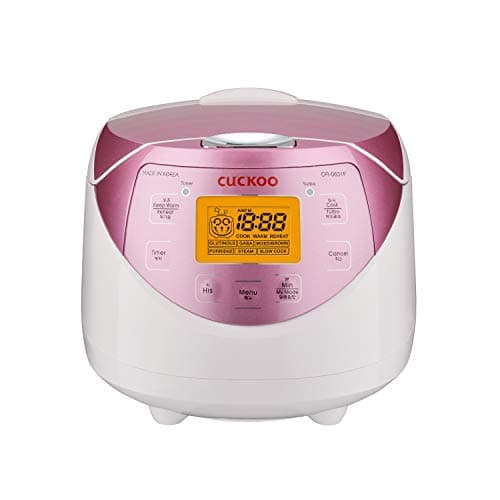
The Cuckoo CR-0631Fis the budget pick, and it is a real one rather than a concession. 580 W — the lowest draw of any full-size cooker on this site — no pressure mechanism and therefore no gasket to maintain, and Cuckoo still lists GABA brown, mixed and porridge for it, plus a My Mode custom setting you can point at a mix the presets do not cover. It leaves a lot of money unspent and it is documented to do the job. What you give up is the mechanism: no pressure means the toughest grain in the pot is relying on time rather than on hotter water.
Two cookers we deliberately did not rank
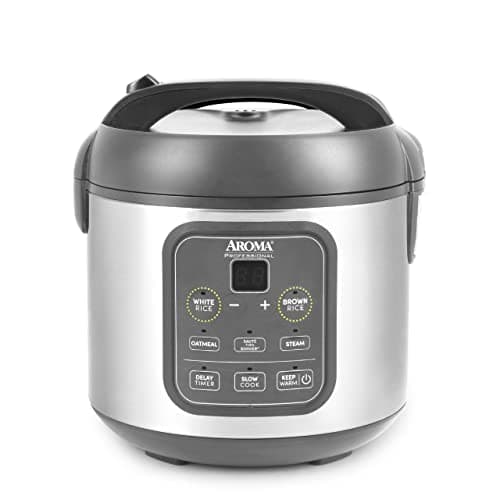
The Aroma ARC-994SG is the usual budget pick on this site and it is not on this list. Aroma publishes exactly two rice programs for it, White Rice and Brown Rice, plus Oatmeal — no mixed, multigrain or GABA cycle of any kind. At around a quarter of the Cuckoo CR-0631F it is the better buy for plain rice and we say so in the budget ranking. For a grain mix there is no program to use, and we are not going to rank a cooker for a job its maker never documented.
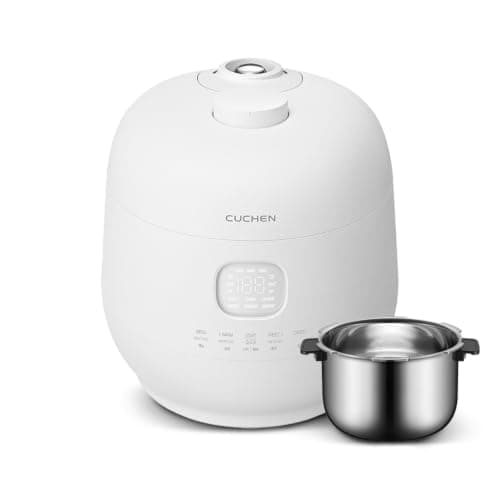
The Cuchen CRH-TWS0610PWUSis the most interesting omission. It is the only rice cooker in this catalog with an uncoated 304Ti stainless inner pot, which on a starchy grain mix is exactly the surface you want, and it has induction heating and a dual high/non-pressure lid — mechanically it has everything this page ranks on. What Cuchen does not publish is a menu list: its US documentation is one combined manual for two product lines with no specification table, no per-program capacity and no named multigrain cycle we could cite. It is also the most expensive rice cooker we cover. If the pot surface is your reason, it is covered in the Korean rice-cooker ranking.
What none of them publish
Both Cuckoo and Zojirushi publish a GABA program by name. Neither publishes, in any document we can reach, the hold temperature or the soak duration that program runs — so we are not going to print one. If a page tells you a GABA cycle germinates brown rice for a specific number of hours at a specific temperature on a specific cooker, ask where the figure came from.
The same applies to grain ratios. No maker here publishes a water ratio for a mixed-grain pot, because the ratio depends on what you put in it. Our rice-to-water ratio reference is the starting point, and a mix with barley or farro in it will want more water than any rice line in that table.
Choosing in one minute
Your mix is mostly short-grain rice, barley and millet.Cuckoo CRP-ST0609F. Pressure at a published 78.4 kPa, a named Mixed Rice program, and the pressure switches off for the weeks it is mostly basmati.
You rotate grains rather than mixing them— quinoa, then oats, then a brown-rice pot. Zojirushi NW-QAC10. Twelve published menus, and it is the only cooker here whose maker names quinoa and steel-cut oatmeal as separate programs.
You want the Japanese benchmark and your mix is rice-led. Zojirushi NS-ZCC10. A published mixed setting, Neuro Fuzzy heat control, made in Japan, and far less money than the induction model.
You want pressure and the better pot for less.Cuckoo CRP-P0609S, with the 304-stainless-backed pot — as long as you never need the pressure off.
You want to spend as little as possible and still have the program.Cuckoo CR-0631F, 580 W, nothing to maintain.
Size it for the program, not for the box
The one piece of real advice on this page: buy a size up from what the white-rice number suggests. Cuckoo publishes a 1–4 cup limit on its mixed and GABA programs against 1–6 cups for plain white rice, and nobody else publishes the equivalent figure at all. A grain mix swells more than white rice and reaches the maximum fill line sooner, so a 6-cup cooker is realistically a 4-cup mixed-grain cooker whatever the lid says.
The two mistakes
Buying on a listing bullet that says “multigrain” without checking whether the manufacturer names the program anywhere in its own documents — a generic grain button and a tuned mixed-rice cycle are not the same thing, and only one of them is verifiable. And buying pressure for a mix that is mostly long-grain rice, where the extra cohesion pressure produces is the defect rather than the goal.