The short answer
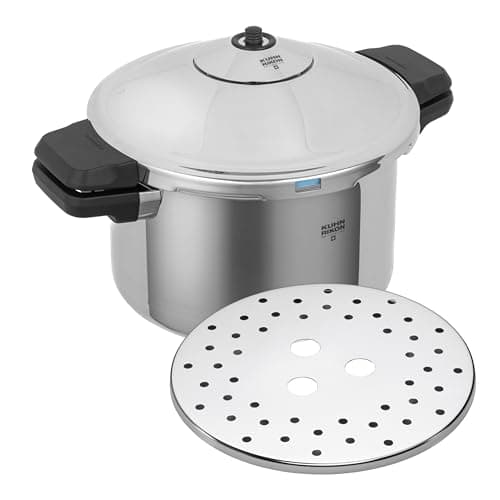
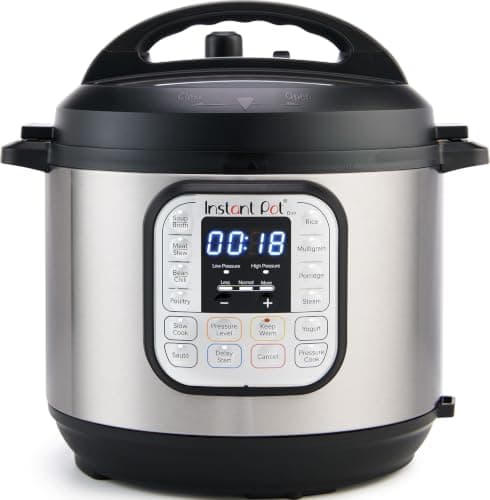
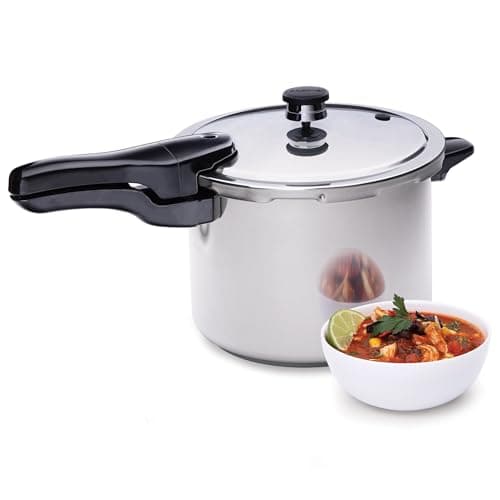
Buy the Presto 01362. It is the only Presto the manufacturer lists as working on gas, electric, smooth-top and induction ranges, because the body is stainless steel where the cheaper Prestos are aluminum — and it carries an extended 12-year limited warranty, more than ten times what any electric multicooker on this site offers. If you want the quiet premium version, the Kuhn Rikon Duromatic 5.0 L lists every hob type including induction and is Swiss-made 18/10 stainless, at around three times the price and with no published pressure figure at all. And if you would rather the question never came up, an electric pressure cooker like the Instant Pot Duo has its own heating element and sits on a counter, so your hob is irrelevant — which is the honest answer for a lot of people who search this.
Why aluminum pots simply do not work
An induction hob does not get hot. It generates a changing magnetic field, and that field induces a current in ferromagnetic metal placed on top of it — the pan itself becomes the heating element. Cast iron and most stainless steel respond. Aluminum, copper and plain glass do not. There is no partial version of this: an aluminum pot on an induction hob does not heat slowly, it does not heat inefficiently, it sits there while the hob beeps and reports no pan.
That is why Presto's own documentation matters more than the price here. Presto lists the 01362 for “gas, electric, smooth-top, and induction ranges”. For the aluminum 01264 and 01282 it lists “electric, smooth-top, and gas ranges” — induction is absent, and that absence is the specification, not an oversight. Both of those cookers are excellent buys on any other hob and are genuinely the cheapest way to pressure cook at all; on induction they are unusable.
What each manufacturer publishes
Hob compatibility, body material and warranty exactly as each manufacturer states it. Stovetop cookers carry no wattage figure because they have no element of their own.| Cooker | Body | Ranges the maker lists | Warranty |
|---|
| Presto 01362, 6 qt | Stainless steel, tri-clad base | Gas, electric, smooth-top, induction | 12-year limited |
|---|
| Kuhn Rikon Duromatic, 5.0 L | 18/10 stainless, made in Switzerland | All hobs (induction, gas, Ceran, cast, electric, halogen) | 10-year guarantee |
|---|
| Presto 01282, 8 qt | Heavy-gauge aluminum | Electric, smooth-top, gas — not induction | 12-year limited |
|---|
| Presto 01264, 6 qt | Heavy-gauge aluminum | Electric, smooth-top, gas — not induction | 12-year limited |
|---|
| Instant Pot Duo, 6 qt | 18/8 stainless inner pot, own 1,000 W element | None — it is a countertop appliance | 1 year |
|---|
The stovetop pressure cooker roundup ranks all four stovetop pots on the full specification; this page is only about which ones your hob will actually heat.
The test you can run in ten seconds
If you already own a pressure cooker and want to know whether it will work on a new induction hob, put a fridge magnet on the underside of the base. If it sticks firmly, the base is ferromagnetic and the hob will heat it. If it slides off or holds weakly, it will not work — or will work badly and unevenly, which on a pressure cooker is worse than not working, because you are trying to hold a steady pressure rather than just get something hot.
Watch for a second detail the magnet test catches and the spec sheet sometimes does not: base diameter. Induction hobs have a minimum pan size per zone, usually around 12 cm, and an undersized base can fail to register even when it is magnetic. The Kuhn Rikon publishes a 22 cm (8.66 in) diameter, comfortably within range of any domestic zone.
Why induction and pressure cooking suit each other
Better than you might expect, and this is the genuine upside. The hardest part of using a stovetop pressure cooker is holding the pressure steady once it is up: too much heat and the regulator vents hard, wasting water and energy; too little and the pressure drops below the cooking band. Gas and radiant electric both respond slowly, so you spend the cook nudging the knob. Induction changes power almost instantly, which makes “bring it up hard, then drop to a level that just keeps the regulator rocking gently” far easier to hit and hold. If you have an induction hob, a stovetop pressure cooker is a better machine in your kitchen than it is in most.
You also get the thing electrics cannot match: roughly 15 pounds of pressure against the 10.2–11.6 psi Instant Brands publishes for its own cookers, which is where the genuinely faster cook times come from. Our how to use a pressure cooker guide covers the technique, and converting recipes covers the timing adjustment between the two pressure bands.
The case for sidestepping the question
An electric pressure cooker has its own element inside its own housing. It does not care what your hob is, it frees the hob up while it works, and it will hold pressure for an hour without anyone in the room. That is a real advantage, and it is why the Instant Pot Duo is third on this list rather than absent from it: for a lot of people typing “pressure cooker for induction stove”, the actual problem is that they bought an induction hob and discovered their old aluminum pot was dead, and the easiest fix is a counter appliance rather than a new pot.
The trade is pressure and warranty. You lose the 15-pound band, which costs you a few minutes on long cooks, and you go from a 12-year Presto warranty to a one-year Instant Brands one. You gain a timer, a dozen programs, a slow-cook mode and the ability to walk away. If you want that comparison in full, it is Presto versus Instant Pot, and which Instant Pot to buy sorts the electric range if you go that way. If your hob is gas or radiant electric, ignore all of this and read the budget bracket instead — the aluminum Prestos are the cheapest pressure cooking there is and they are fine on your stove.