Why a small rice cooker is its own category
Cooking rice for one or two is a different problem from cooking for a family, and most rice cookers are built for the family. A full 5.5-cup pot to make a single portion wastes energy and counter space, and the cooker is too big to leave out and too much hassle to dig from a cupboard. The best small rice cookers match small-batch cooking: right-sized, low-fuss, quick to pull out and put away. This roundup ranks three from about 3 to 5.5 cups. It overlaps with our small-kitchen roundup and best cookers for two, but it is tuned specifically to a compact rice cooker rather than a whole kitchen.
How we ranked them
We ranked on how well each cooker suits a small household: right-sized capacity first, then rice quality, versatility and value. As everywhere on this site, we have tested none of these— every figure comes from the manufacturer's own documents, cited on each card, and every pick carries a real, disqualifying con, because a roundup where everything is perfect helps nobody choose. The full rubric is in our methodology. Prices move, so we do not print them in prose — the live price sits on each card. One of these cookers, the Toshiba, publishes no wattage, so it carries no running-cost figure; that gap is the finding, not an omission.
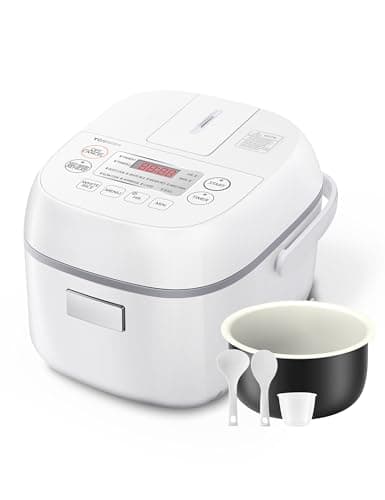
1. Toshiba Mini — the small cooker that still senses
The Toshiba Mini is the best small rice cooker because it does the one thing nearly every compact cooker gives up: it keeps fuzzy-logic heat control in a genuinely small, 3-cup-uncookedbody. Most mini cookers drop to a dumb on/off thermostat — boil until dry, then click off — which is exactly the timer-and-hope cooking a good rice cooker is meant to replace. The Toshiba senses and adjusts, so it makes genuinely better rice than the flood of look-alike cheap minis, and a 24-hour delay timer means rice is ready when you walk in. The honest con: Toshiba publishes no wattage for this mini SKU, so it earns no running-cost figure from us, and 3 cups is a hard ceiling — do not confuse it with Toshiba's larger 6-cup models. For one or two people who want good rice from a small machine, though, it is the standout.
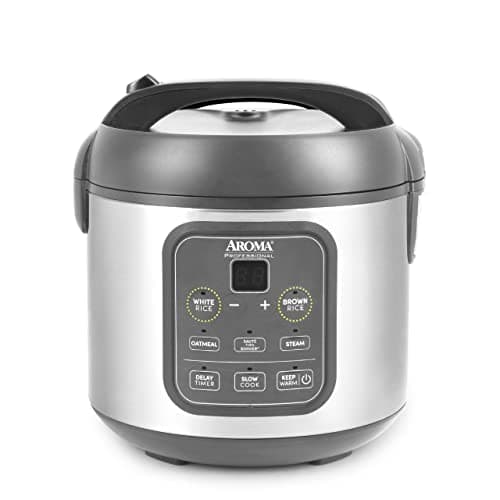
2. Aroma ARC-994SG — the small cooker that does more than rice
If you want a compact cooker that is also a little multicooker, the Aroma ARC-994SG is the value pick. At 4 cups uncooked it is right-sized for one or two, and for around forty dollars it adds a Sauté-then-Simmer and a 2-to-10-hour slow-cook function — so it browns, simmers and slow-cooks, not just boils rice. Aroma publishes its 450 W draw, so unlike the Toshiba it gets a running-cost figure, and a low one. The honest con: it has only two rice programs, White and Brown, and a “Sensor Logic” Aroma never explains or calls fuzzy logic — the rice is good, not Zojirushi-good — and Aroma recommends hand-washing its ceramic-coated pot to make it last. Choose it over the Toshiba if versatility and price matter more to you than the best small-batch rice; choose the Toshiba if rice quality is the point. It took this slot when the Aroma ARC-954SBD that used to hold it was discontinued, and it anchors our budget roundup too.
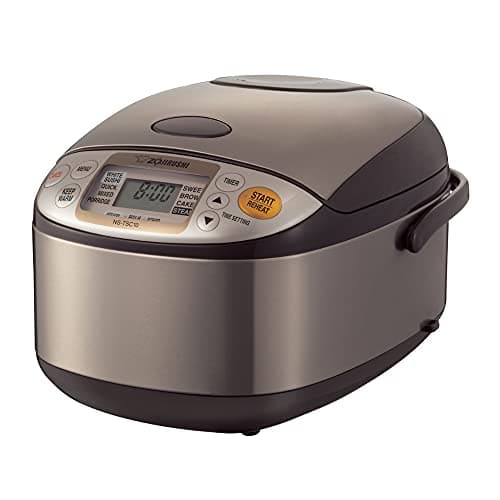
3. Zojirushi NS-TSC10 Micom — if you want a little more
Some “small” kitchens still want room to cook for a guest, and for them the Zojirushi NS-TSC10 Micom is the smallest genuinely premium option. At 5.5 cups uncooked it is the largest here, but it is still a compact single-cooker footprint, and it brings real fuzzy-logic rice with a fuller menu, plus steam and cake functions the pricier Neuro Fuzzy lacks. It draws just 610 W — the lowest of any Zojirushi on this site, and with the Aroma one of two cookers here with a documented, verifiable running cost. The honest con: it is made in China, not Japan, which matters to buyers who want Zojirushi specifically for its Japanese manufacturing, and 5.5 cups is more than a true solo cook needs. Choose it if you want the best rice of the three and can use the extra capacity; choose the Toshiba or Aroma if the smallest possible footprint is the goal.
The rule for a small kitchen: start with the Toshiba Mini if you cook for one or two and want the best small-batch rice, step to the Aroma if you want a versatile little multicooker for the least money, or size up to the Zojirushi Micomif you want premium fuzzy-logic rice and can use 5.5 cups. Buy for how much you actually cook — not the family-sized pot the store pushes. If a rice cooker is not even the right tool, our best cookers for two compares it against multicookers and sous vide.
Choosing a small rice cooker
Two questions decide it. First, capacity: a rice cooker's cup rating is uncooked, and roughly doubles cooked, so a 3-cup cooker makes about 6 cups of rice — plenty for one or two, tight for three. Do not oversize “just in case”; a half-empty pot cooks less well and wastes the compactness you bought it for. Second, how much you care about the rice: fuzzy logic (the Toshiba, the Zojirushi) senses and adjusts for better, more consistent grain, while the Aroma is a two-program digital cooker — its “Sensor Logic” is Aroma's own, unexplained term, not fuzzy logic — that is good enough for everyday white and brown rice. If rice is central, pay for fuzzy logic; if versatility or price is the point, the Aroma's sauté and slow-cook functions are worth more than a texture upgrade you may not chase. And note the rice-cooker cupis 180 ml, not a US measuring cup — use the one that came with the machine and match it with the right water ratio.
How we picked
Machines we claim to have tested: 0
Everyone in this category tells you they tested twenty cookers. We have tested none, and we say so. Here is what we do instead: read the manufacturer's manual and spec page, record the published wattage, capacity, pressure or temperature figure and warranty term, work out what the machine costs to run per hour, show the arithmetic so you can redo it with your own electricity rate, and cite all of it. Where a brand publishes no wattage, we print no running cost rather than borrowing a number from a similar model. Prices come live from Amazon's API and disappear rather than go stale.
The scores above are judgments from that documented research — not test results. One of the five metrics is Documentation: whether the manufacturer will tell you what its cooker draws at all. The full rubric, including what disqualifies a pick, is published in full.