HUB 01 · Multicookers
How to Cook Frozen Meat in an Instant Pot
One of the Instant Pot's genuine conveniences is cooking meat straight from the freezer. Unlike a slow cooker, a pressure cooker is safe from frozen because it drives the food through the danger zone to a safe temperature quickly. Here is how to do it — add time, separate pieces where you can, and always check the internal temperature against USDA safe minimums.
We earn a commission if you buy through our links. It does not change the price you pay, and it does not decide our picks — the scoring rubric is published in full, including what disqualifies a pick. How this works.
Yes, you can cook meat straight from frozen
Forgot to thaw dinner? An Instant Pot is one of the few appliances that handles frozen meat safely and well. You can drop a frozen chicken breast, a block of ground beef, or a frozen roast into the pot and pressure-cook it through — no defrosting step required. This is a real, everyday convenience, and it is one of the reasons a pressure cooker earns its counter space. There are a few things to get right so the meat comes out safe and evenly cooked rather than raw in the middle, and the most important one is a food-safety point that separates the pressure cooker cleanly from the slow cooker sitting next to it. Understand that difference and cooking from frozen becomes routine.
Why it's safe under pressure but risky in a slow cooker
The reason comes down to how fast the food gets hot. There is a temperature range — roughly between refrigerator-cold and hot — where bacteria multiply quickly, and the food-safety goal is to move food through that range fast. A pressure cooker does exactly that: it heats aggressively and drives frozen meat up to a safe temperature quickly, so the food spends little time in the risky middle. A slow cooker does the opposite — it warms food gently over hours, and starting from frozen it can leave the meat sitting in that bacteria-friendly range for far too long, which is why cooking frozen meat in a slow cooker is generally advised against. This is the key distinction: the same frozen roast that is a bad idea in a Crock-Pot is fine in an Instant Pot precisely because the pressure cooker gets it hot fast. It is one of the clearest practical differences between the two machines.
Cook to a safe internal temperature
Speed to temperature is what makes it safe, but you still have to confirm the meat actually reached a safe temperature — do not judge frozen meat by time or color alone, because a piece that started as a solid block can look done outside while lagging in the center. The reliable move is an instant-read thermometer in the thickest part. Cook to the USDA safe minimum internal temperatures: 165°F for all poultry, 160°F for ground meats like ground beef and pork, and 145°F with a three-minute rest for whole cuts of beef, pork, lamb and veal, and for fish. These are the published USDA Food Safety and Inspection Service figures, cited below — not numbers we invented — and they are the same targets regardless of whether the meat started frozen or fresh. If a piece is under temperature, return the pot to pressure for a few more minutes and check again. The thermometer is the whole safety net when cooking from frozen.
Add time, and separate the pieces where you can
Frozen meat needs more cook time than thawed — the pot spends longer coming to pressure because it is melting and heating a frozen mass, and the meat itself needs longer under pressure to cook through. Exact times depend on the cut, the thickness and how solidly it is frozen, so this guide keeps them qualitative on purpose and points you to a trusted recipe for the specific cut rather than guessing; the safe rule is to err long and confirm with the thermometer. The single most useful habit is to freeze meat in a way that separates it before you ever need it: freeze chicken breasts or chops in a single layer, or portion ground meat flat, so they are not fused into one brick. Separated pieces cook far more evenly from frozen than a solid clump does, because steam and heat can reach every surface. A little planning at freezing time pays off directly at cooking time.
Block-frozen meat cooks unevenly
The honest limitation is a solid frozen block — a pound of ground beef frozen in a brick, or breasts frozen stuck together. Under pressure the outside comes up to temperature while the center is still thawing, so a block can finish with a safely cooked exterior and an under-done middle if you go by the clock. Two fixes: whenever possible, break or pry the block apart before cooking, or plan to pressure-cook it partway, open, break it up, and return it to pressure to finish evenly — this works well for ground meat, which you can crumble once the outside softens. And always check the coldest, thickest part with the thermometer, because that is where a block will lag. Blocks are not off-limits; they just need this extra care, and they are the main reason freezing meat in separated portions is worth the small effort up front.
Where precision and crisp finishes belong
Two things a pressure cooker deliberately does not do from frozen are worth naming so you reach for the right tool. If you want edge-to-edge precision— a steak or chicken breast cooked to an exact doneness and no further — that is sous vide's job, not pressure cooking's, and it can be done from frozen by simply adding time; the trade-off between the two methods is laid out in sous vide vs pressure cooker. And if you want a browned, crisp exterior, pressure cooking is a wet, sealed process that will not sear — you would finish under a broiler, in a pan, or with an air-fry lid afterward, and a model with a real sous vide program and a polished interface like the Pro gives you the most flexibility across methods. For the everyday job — getting safe, tender, thawed-and-cooked meat out of a frozen start — the Instant Pot is hard to beat, and the rules above are all it takes to do it safely.
The hardware
The cookers this page is about
The cookers referred to above, with prices pulled live from Amazon and dated on every card. Full rankings live in the roundups linked from this page.
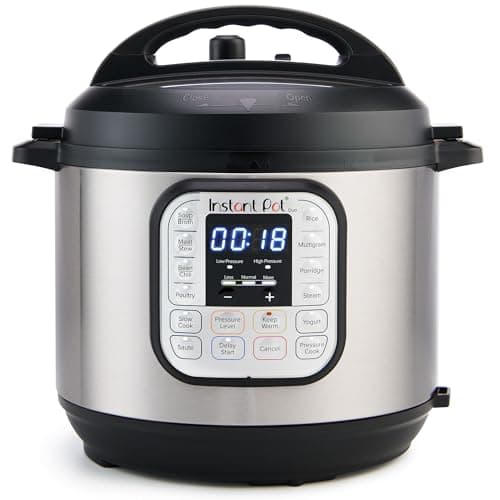
1,000 W
Instant Pot Duo 7-in-1 Electric Pressure Cooker, 6 Quart
The multicooker that made the category, and still the right default. Instant Brands publishes the wattage, the working pressure range and a stainless (not nonstick) inner pot, which is more than most of the field manages — and it costs less than almost all of them.
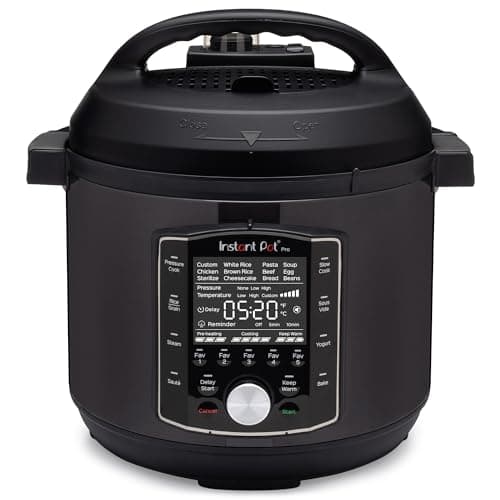
1,200 W
Instant Pot Pro 10-in-1 Pressure Cooker, 6 Quart
The Duo's mechanicals with the interface fixed: a genuine sous vide program, an auto-sealing lid, grab-and-go pot handles and five programmable buttons. It draws 1,200 W rather than the Duo's 1,000, and Instant Brands does not publish a working-pressure figure for it — the one gap in an otherwise well-documented cooker.
#ad · As an Amazon Associate we earn from qualifying purchases.
Questions
Frequently asked
Is it safe to cook frozen meat in an Instant Pot?
How much longer does frozen meat take in an Instant Pot?
Why can you cook frozen meat in an Instant Pot but not a slow cooker?
Keep reading
Related
Receipts
Sources
- Instant Brands — Instant Pot Duo 6qt product page
- USDA Food Safety and Inspection Service — safe minimum internal cooking temperatures
We have not tested these machines in a lab and we do not pretend to have. Specifications come from the manufacturer's own published documents; electricity rates come from the US Energy Information Administration; prices come from the live Amazon API. Where a figure is not published, the page says “not published” rather than guessing. Read the full method.