The short answer
Buy the 6-quart Instant Pot Pro for most meat cooking. It draws 1,200 W into a dishwasher-safe stainless inner pot, which is the combination that matters: the most sauté power of any 6-quart cooker here, delivered onto a bare metal floor with no coating to wreck while you brown. Its auto-sealing lid also removes the mistake that ruins the most pot roasts — leaving the valve on Venting. Buy the Presto 01362 if you cook genuinely tough cuts and will stand at the stove: its regulator holds roughly 15 pounds of pressureagainst an electric cooker's 10.2–11.6 psi, it browns on a tri-clad base over a live burner rather than an element, and Presto warranties it for twelve years. Buy the 8-quart Proif the cut is a whole pork shoulder or a brisket flat — 8 quarts and 1,400 W, and the only pot here with real room for a bone-in roast. Buy the Duo if you want the same 18/8 stainless tri-ply pot and a published working pressure for the least money. The Ninja HyperHeatis here with an honest caveat: SharkNinja names a Sear/Sauté function and publishes 1,200 W, but the pot is ceramic-coated aluminum rather than bare stainless, and browning is the job that wears a coating out.
Why meat ranks this field differently
Our general pressure-cooker roundup ranks on the lid, the pot and whether the manufacturer publishes its numbers, and the 6-quart Pro wins it. None of that is wrong for meat. But three criteria that barely move the general ranking become the whole argument once the thing in the pot is a chuck roast.
- What you brown on. Nearly every pressure-cooked meat recipe starts with a hard sear, and a sear is the most abusive thing you will ever do to an inner pot: dry metal, maximum element, food stuck down on purpose, then a metal spatula to deglaze. A bare 18/8 stainless pot does not care. A nonstick or ceramic coating is a wear item doing the one job most likely to wear it. This is the criterion that reorders the list.
- How much pressure it actually holds.Tough cuts are tough because of connective tissue, and the reason a pressure cooker turns a chuck roast tender in an hour is that it holds the pot well above boiling so that tissue breaks down into gelatin faster. More pressure means a higher pot temperature, which means that happens sooner. Electric cookers sit at a published 10.2–11.6 psi; a stovetop Presto holds roughly 15. On lean meat that difference is irrelevant. On a shoulder it is the whole point, and it is why a $99 pot with no electronics ranks second here and nowhere else on this site.
- Whether the cut physically fits. The pressure max-fill line is two-thirds of the pot, and a bone-in roast is an awkward solid rather than a liquid that settles. A 6-quart pot gives you about four quarts of usable space, which is a 3–4 lb chuck roast with liquid and no more. An 8-quart gives you about five and a third, which is where a whole pork shoulder starts to work. Quarts matter more for meat than for anything else this category cooks.
How we ranked them
Pot surface first, then published working pressure, then usable capacity for a roast, then sauté power, then documentation and price. As everywhere on this site, we have cooked in none of these machines— every figure comes from the manufacturer's own product page or manual, cited on each card, and every pick carries a real disqualifying con. The full rubric is in our methodology. Prices move, so we do not print them in prose; the live price sits on each card.
The specs that decide it
Published pot material, rated power, working pressure and capacity. Every cell is the manufacturer's own figure; “Not published” means exactly that.| Cooker | Inner pot | Rated power | Working pressure | Capacity |
|---|
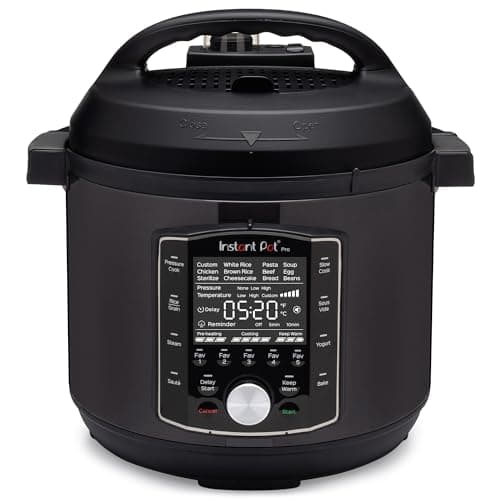
| Instant Pot Pro 6 Qt | Dishwasher-safe stainless | 1,200 W | Not published | 6 Qt / 5.7 L |
|---|
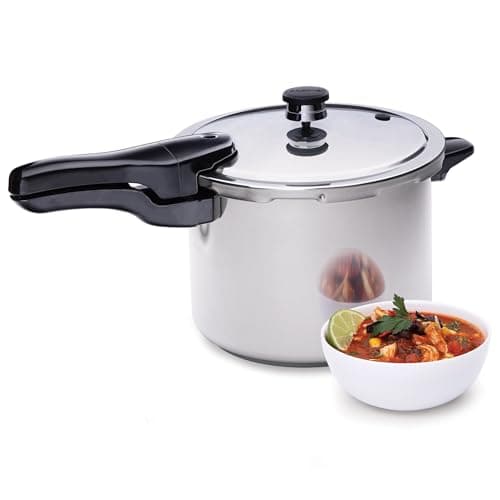
| Presto 01362 (stovetop) | Stainless, tri-clad base | No element — your burner | ~15 lbs | 6 Qt / 5.7 L |
|---|
| Instant Pot Pro 8 Qt | Dishwasher-safe stainless | 1,400 W | Not published | 8.0 Qt |
|---|
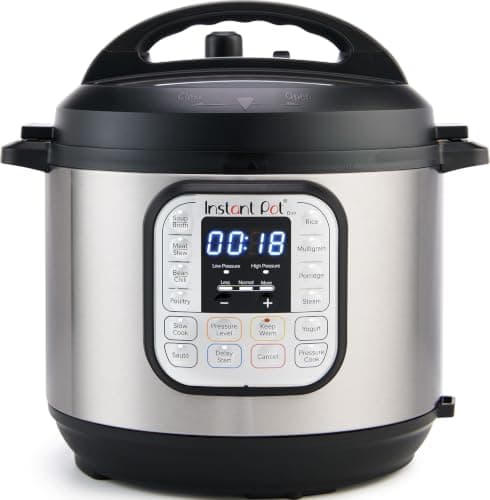
| Instant Pot Duo 6 Qt | 18/8 stainless, tri-ply base | 1,000 W | 10.2–11.6 psi high | 6 Qt / 5.7 L |
|---|
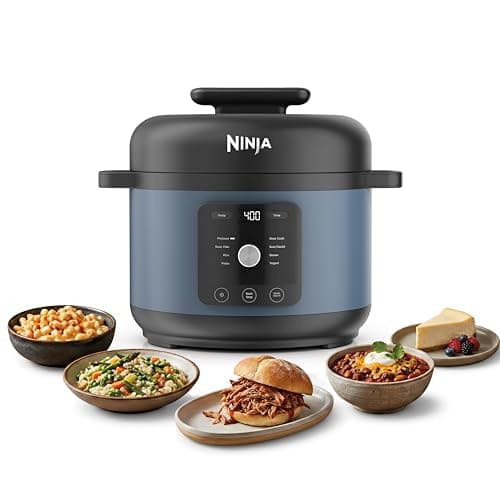
| Ninja HyperHeat 6.5 Qt | Ceramic-coated aluminum, PFAS-free | 1,200 W | Not published | 6.5 Qt |
|---|
Two things stand out reading across. First, only the Duo publishes a working-pressure figure at all — Instant Brands prints 10.2–11.6 psi on the Duo manual and then does not repeat it for the Pro or the Pro 8qt, which for the premium models is a fair thing to want. We do not assume the Pro matches the Duo, because the manufacturer has not said so. Second, the only cooker on this page with a published pressure figure higher than that band is the one with no electronics in it.
1. Instant Pot Pro 6 Qt — the most sear onto bare metal
The Instant Pot Prowins because it puts the most power of any 6-quart cooker here — 1,200 W, published and confirmed on page 51 of its own manual — into a stainless inner pot with nothing on it to damage. For meat that is the right pairing in the right order. The sauté step is where a pressure-cooked braise either gets its flavor or doesn't, and it needs real heat into dry metal; everything after that is the machine holding pressure, which every cooker here does competently.
Three further things it does for meat specifically. The auto-sealing lid closes the valve for you, which matters most on exactly these recipes — a pot roast that spent forty minutes steaming because the valve was on Venting is the most common Instant Pot failure there is. The pot has grab-and-go handles, which is a small thing until you are lifting four quarts of hot braise out of a cooker. And the five programmable Fav buttons let you save the one or two meat timings you actually repeat.
The honest cons: Instant Brands publishes no working-pressure figurefor the Pro, so the single number most relevant to tough cuts is missing from the premium model's documentation. At 1,200 W it costs marginally more per minute to run than the Duo. And you are paying for the lid and the interface, not for better cooking — the pot and the heating element are the Duo's.
2. Presto 01362 — 15 pounds, and a burner under it
The Presto 01362is second on this page and would not place at all on most of our others, and that gap is the most useful thing here. Presto's own pressure-regulator explainer states the regulator holds “the ideal cooking pressure — usually 15 pounds,” half again what any electric cooker on this page reaches. On a lean chicken breast that buys you nothing. On a beef shoulder, oxtail, shank or a stewing hen it is a genuinely faster conversion of connective tissue to gelatin, which is the entire mechanism that makes a cheap cut worth cooking this way.
It also browns better, for a reason that has nothing to do with pressure: you are searing over a live burner through a tri-clad base— aluminum sandwiched between two layers of stainless — rather than over a single flat element under a pot. You get more heat, you get it more evenly, and you can turn it down instantly. Presto lists it as working on gas, electric, smooth-top and induction, and warranties it for twelve years against the one year every electric multicooker here offers.
The price is attention, and it is a real price. There is no timer, no program and nothing automatic: you hold pressure by watching the regulator rock and adjusting the burner, and you cannot leave the kitchen. Presto also does not print the psi on the product page itself — the figure comes from a separate explainer — and the sealing ring and over-pressure plug need hand washing. Stovetop versus electric argues the whole trade out, and the best stovetop pressure cookers has the wider field if this is the direction you are heading.
3. Instant Pot Pro 8 Qt — the one a whole roast fits in
If the cut is big, capacity stops being a preference and becomes the gate. The 8-quart Instant Pot Pro is the largest pressure-capable pot on this site, rated by Instant Brands for up to eight servings, with the same ten functions and stainless pot as the 6-quart and 1,400 W— the joint highest draw of any Instant Pot we cover, and useful when you are browning in batches. Two-thirds of eight quarts is about five and a third quarts of usable room, which is where a whole bone-in pork shoulder or a brisket flat starts to be realistic rather than aspirational. The steam release is a gentle switch under a diffusing cover, which is pleasanter on a pot this full.
The cons are specific and they matter for meat. There is no wide searing base: this is a conventional tall pot, so browning a big batch means doing it in rounds, which is slow and is exactly the problem the discontinued wide-base RIO was built to solve. At 1,400 W it draws 200 W more than the 8-quart Duo Plus it replaces. The body is tall and takes real cupboard space. And if you cook for fewer than four it is simply the wrong machine — a half-full pressure cooker is a bigger thing to preheat for no benefit. What size Instant Pot to buy works the sizing through properly.
4. Instant Pot Duo 6 Qt — the same pot, the published pressure, less money
The Instant Pot Duo is the value answer and it is a strong one for meat, because the two things that matter most here are both on it: an 18/8 stainless tri-ply pot with no coating, and a published high working pressure of 10.2–11.6 psi (70–80 kPa) — the only electric cooker on this page where you can read the number rather than infer it. It sautés at 1,000 W and it is the cheapest genuinely well-documented multicooker on this site.
What you give up for meat specifically: 200 W of sauté power against the Pro, which shows up as a slightly slower, less aggressive sear; and the manual steam-release toggle, which means remembering to set it to Sealing. That second one is not a small thing on a long braise. There is no sous vide program either, which is relevant if you were weighing sous vide against pressure cooking for steak rather than for pot roast — two techniques that do almost opposite things to meat.
5. Ninja HyperHeat — a named sear function on a coated pot
The Ninja HyperHeatis the only non-Instant-Pot electric on this page and it is here on merit: SharkNinja publishes 1,200 W at 120 volts, 6.5 quarts, and explicitly names sear/sautéamong the functions it itemizes — along with pressure cook, slow cook, rice, sous vide, steam and yogurt. It is also the Ninja pressure cooker you can actually buy, the Foodi pressure line having gone, and it is half a quart larger than the 6-quart Instant Pots.
It ranks last for one reason, and it is the page's central criterion. The pot is ceramic-coated aluminum— PFAS-free, which SharkNinja publishes and which is a genuine point in its favor on health grounds (see the non-toxic multicooker roundup) — but a coating is still a coating, and searing meat is the single thing most likely to take it off. Bare stainless has nothing to lose. SharkNinja also markets nine functions while itemizing seven, and publishes no working-pressure figure. If a PFAS-free pot matters more to you than a bare one, this is the pick and the trade is reasonable; if you sear hard and often, buy stainless.
Which cuts actually belong in a pressure cooker
The category is not good at all meat, and the machines are not the variable — the cut is. Pressure cooking is a wet, high-temperature method, so it is excellent at exactly the cuts that need one and poor at the cuts that don't.
Where it is unbeatable: chuck, brisket, short rib, shoulder, shank, oxtail, pork butt, lamb neck, stewing hens, anything with visible connective tissue running through it. These are the cheap cuts, and the pressure cooker is the appliance that makes them a weeknight option instead of a Sunday project. Pot roast, corned beef and ribs are the three we would start with, and the cooking-times reference has the per-cut timings.
Where it is the wrong tool:steak, chops, chicken breast, duck breast, anything you want pink in the middle or crisp on the outside. Pressure cooking takes meat straight past medium on its way to tender, which is fine for a shoulder and ruinous for a ribeye. For those cuts the honest recommendation is a different machine — a sous vide circulatorholds a steak at exactly the temperature you asked for, which is the opposite approach and the right one — and if the reason you are pressure-cooking is that twelve people are coming, the best sous vide for a crowd is the version of that argument at scale. Chicken in an Instant Pot is worth reading before you pressure-cook a breast, because the answer involves thighs.
One thing to get right regardless:doneness is a temperature, not a time, and pressure cooking makes it tempting to go by the panel. The USDA publishes safe minimum internal temperatures — and for whole cuts of beef, pork, lamb and veal a rest period after cooking is part of the requirement. Tough cuts cooked to tender land far above those minimums anyway, so the chart matters most when you are pressure-cooking poultry or a leaner cut quickly. Cooking frozen meat in an Instant Pot is the case where it matters most, because the center lags the edge badly.
Searing: the step that decides whether it tastes like anything
Pressure cookers brown badly compared with a skillet, and pretending otherwise is how people end up with gray pot roast. The physics is simple: you are searing over one flat element through the bottom of a tall narrow pot, which is both less heat and less area than a frying pan over a burner. Three practical consequences, all of which the specs above predict.
- Sear in batches, and dry the meat first. Crowding the pot drops the surface temperature and the meat steams in its own juice instead of browning. Two pieces at a time in a 6-quart is not pedantry, it is the difference between brown and gray.
- More watts genuinely helps here and almost nowhere else.Once a cooker is sealed and up to pressure, wattage barely matters — the element cycles to hold pressure, which is why running costs are pennies per meal on all of them. On the sauté step it matters a lot, which is the honest case for the Pro's 1,200 W and the Pro 8qt's 1,400 W over the Duo's 1,000.
- Deglaze before you seal, every time. The browned fond on the bottom is the flavor, and it is also the most common cause of the Burn message— scrape it up into the liquid and both problems solve at once.
Natural release is not optional for meat
This is the one technique point that changes results more than any purchase on this page. When you quick-release a pot of meat, the liquid inside flash-boils as the pressure drops and drives moisture out of the muscle fibers you just spent an hour relaxing. The meat comes out tougher and drier than the identical cook released slowly. A natural release takes fifteen to twenty-five minutes and the pot keeps cooking gently through it, which is why most braise recipes are written around it.
The practical upshot: for tough cuts, always natural release, and budget the time in your plan rather than treating it as a delay. For a quick chicken-thigh cook, a quick release is fine. Natural versus quick release covers which recipes need which. On the Pro and Pro 8qt the release is a switch under a diffusing cover rather than a toggle, which makes a slow controlled release easier to manage, and the lid-will-not-open fix is the page to have bookmarked the first time you try it.
What we would buy, by cut
Weeknight braises, chuck and thighs: the 6-quart Instant Pot Pro. Twelve hundred watts of sear onto bare stainless, and a lid that seals itself. Genuinely tough cuts — shank, oxtail, stewing hen — and you enjoy cooking: the Presto 01362, for 15 pounds of pressure and twelve years of warranty. A whole shoulder, a brisket flat, or batch-cooking for four plus: the 8-quart Pro, accepting that you brown in rounds. Everything the Pro does for meat, for the least money:the Duo — same stainless pot, published pressure, and you remember to set the valve yourself. A PFAS-free pot matters more to you than a bare one: the Ninja HyperHeat, with eyes open about searing on a coating.