HUB 03 · Sous Vide
Can You Sous Vide Overnight?
Long, unattended cooks are one of sous vide's real advantages - a chuck roast or short ribs that need a day are exactly the point. It is safe to leave running overnight, with two caveats: keep the bath above 130F, and stop it losing its water. Here is why, and how to set it up.
We earn a commission if you buy through our links. It does not change the price you pay, and it does not decide our picks — the scoring rubric is published in full, including what disqualifies a pick. How this works.
Yes - long cooks are the whole point
Leaving a circulator running overnight or for a full day is normal and safe, and it is one of the things sous vide does that nothing else can: a chuck roastor short ribs that need 24–48 hours to turn tender simply require an unattended cook. A good circulator is built to run for days; it holds temperature, and it will not boil dry the way a pot on the stove would. The two things to get right are food safety and water level — and both are simple.
Safety: stay above 130°F
The rule that makes long cooks safe is the 130°F line. The bacterial “danger zone” runs roughly 40–130°F; above about 130°F bacteria stop multiplying and slowly die off, so holding food there for hours doesn't spoil it — it pasteurizes it, making a long cook safer, not riskier. Every standard sous vide temperature for meat — a 131°F steak, a 135°F roast, 165°F pork — is above that line. The one thing you must not do is run a low temperature for a long time: a fish held at 120°F for hours sits in the danger zone and is not safe. Long cook, higher temperature; the two go together. This is the same principle behind is sous vide safe.
Water: stop it evaporating away
The real practical risk of an overnight cook is not the food, it is the water. Over 8–48 hours a lot evaporates, and if the level drops below the circulator's minimum line it will shut off (or alarm), and your cook stalls. The fix is to cover the bath: a lid, plastic wrap over the top, or a scatter of ping-pong balls or a container with a lid that floats a barrier on the surface all cut evaporation dramatically. A well-covered bath can run for days on one fill; an open pot might need a top-up with hot water partway through.
Setting it up to leave
Before you go to bed: use a tall, insulated or covered container and fill it well above the minimum; cover the top to slow evaporation; make sure the bags are fully submerged and won't float into the air; and set a temperature that is at or above 130°Ffor the whole cook. Do that and you can genuinely start short ribs on Saturday and pull them Sunday night. Every circulator on this site — from the Inkbird up — is designed for exactly this kind of long, hands-off run.
The hardware
The cookers this page is about
The cookers referred to above, with prices pulled live from Amazon and dated on every card. Full rankings live in the roundups linked from this page.
1,100 W
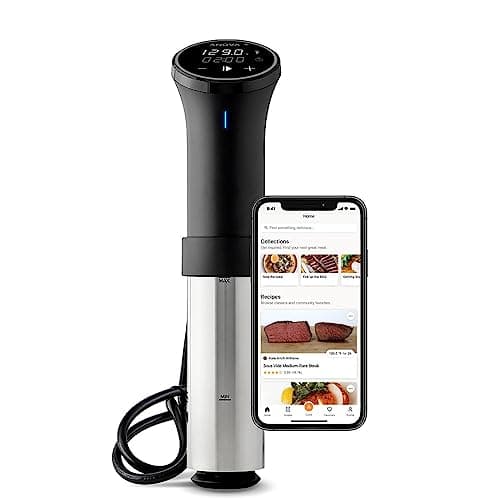
Anova Precision Cooker 3.0 (WiFi), 1100 W
The sous vide circulator most people should buy. Anova publishes the full specification — 1,100 W, a 0–92°C range, ±0.1°C accuracy, an 8 L/min pump — and backs it with a two-year warranty, the longest here. It has an on-device screen so it works without the app, which the Joule does not.
1,100 W
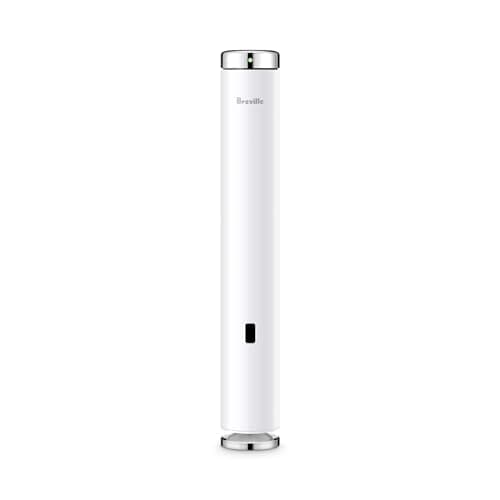
Breville Joule Turbo Sous Vide (BSV600), 1100 W
The smallest, cleverest and most divisive circulator here. It is app-only — there are no buttons and no screen, so your phone is the interface, full stop. In return you get the most compact body, a magnetic foot, IPX7 waterproofing, and a Turbo mode Breville claims can halve the time. 1,100 W.
#ad · As an Amazon Associate we earn from qualifying purchases.
Questions
Frequently asked
Is it safe to sous vide overnight?
Will the water run out during a long sous vide cook?
Can you leave a sous vide unattended?
Keep reading
Related
Receipts
Sources
- USDA FSIS — cooking safely with time and temperature (pasteurization basics)
- USDA Food Safety and Inspection Service — safe minimum internal cooking temperatures
We have not tested these machines in a lab and we do not pretend to have. Specifications come from the manufacturer's own published documents; electricity rates come from the US Energy Information Administration; prices come from the live Amazon API. Where a figure is not published, the page says “not published” rather than guessing. Read the full method.