Why the road changes what to buy
Cooking in an RV or at a powered campsite is a power-and-space problem first. Space is tight, weight matters, and above all your electrical system is limited— an RV on a 30-amp hookup, or running off an inverter and battery, cannot casually spare the 1,500 watts a full-size appliance wants. So the right cooker for the road is not the most capable one; it is the lowest-draw, most compact, simplest one that still cooks what you want. This roundup ranks three across the catalog on exactly those terms. As everywhere on this site, we have tested none of these— every figure comes from the manufacturer's own documents, cited on each card, and every pick carries a real, disqualifying con. The full rubric is in our methodology; prices move, so the live price sits on each card rather than in the text. It overlaps our small-kitchen and solo roundups but is tuned for the road.
How we ranked them
We ranked on what actually matters off-grid: power drawfirst (a lower wattage is easier on an RV's electrical system and cheaper on battery), then size and weight, then versatility and simplicity. One honest scoping note up front: a sous videcirculator, though small, needs a big tub of water held for hours — awkward and power-hungry for a campsite — so it sits this one out. The picks below are the machines that genuinely earn their place in a galley.
1. Instant Pot Duo Mini — the do-everything pick
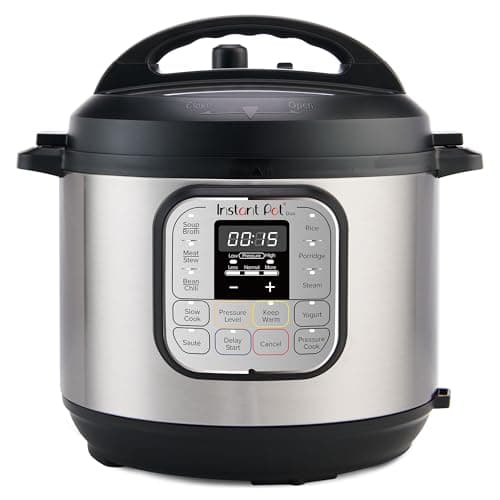
If you take one cooker on the road, make it the Instant Pot Duo Mini. At 3 quarts and 700 W it is the lowest-draw Instant Poton this site — gentle on an RV's electrical system and quick to come to pressure — and it keeps the full 7-in-1 function set, so a single small machine covers pressure cooking, rice, soup, a small braise, steaming and even yogurt. That versatility is the whole argument off-grid: one appliance replaces several, and pressure cooking uses less energy and water than boiling things for a long time, which matters when both are finite. It stows in a cupboard and pulls out when needed. The honest con:3 quarts is a hard ceiling — it will not cook for a big group — and 700 W is still a real load, so on battery-and-inverter power (rather than a shore hookup) you need to check your system can supply it. For most RVers on hookups, it is the standout single buy.
2. Aroma ARC-994SG — light, cheap and versatile
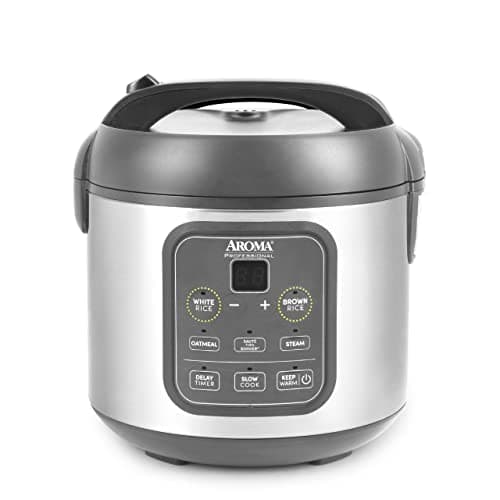
The Aroma ARC-994SG is the light, inexpensive all-rounder: a compact digital cooker that makes rice and, via its Sauté-then-Simmer, slow-cook and steam functions, one-pot meals, soups and steamed sides — without the Instant Pot's pressure complexity. It is easy to lift and stow, and cheap enough that a knock on a rough road is not a disaster. It is also easy on the electrical system: Aroma publishes a 450 W draw, lower than the Duo Mini's 700 W, so it is the gentler of the two on an inverter. For a couple who mostly want rice plus the occasional simple simmered meal, it is a sensible, low-stress choice. The honest con: it has no pressure function, so it is slower and less flexible than the Duo Mini; it has only two rice programs; and 4 cups uncooked is its ceiling. It is the light-and-simple pick, not the do-everything one. (It took this slot when the Aroma ARC-954SBD that used to hold it was discontinued.)
3. Crock-Pot Cook & Carry — low-draw, all-day, made to travel
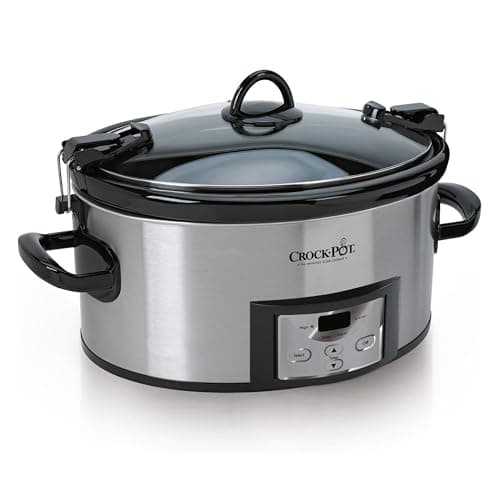
For genuinely low-power, all-day cooking, the Crock-Pot Cook & Carry is purpose-built for the road in one respect no other pick is: its locking, gasketed “Cook & Carry” lid is designed to travel without spilling, so a stew can literally cook while you drive to the next site. At 240 W it is by far the lowest-draw appliance on this site— the friendliest of all to a modest RV electrical setup or a long day on the hookup — and it is dead simple: add ingredients, set low or high, and come back to dinner. Slow, forgiving cooking is also hard to get wrong (see are slow cookers worth it). The honest con: the stoneware crock is heavy and breakable, which is a real drawback on bumpy roads and in tight storage, and it onlyslow-cooks — no rice, no sauté, no speed. If low power and hands-off all-day meals are your priority, though, nothing here sips less electricity.
The rule for the road: take the Instant Pot Duo Miniif you want one versatile, reasonably low-draw machine that does nearly everything — the best single buy for most RVers on hookups. Add or substitute the Aroma if you want something lighter, cheaper and simpler and mostly cook rice and easy meals, and the Crock-Pot Cook & Carry if all-day, ultra-low-draw, travel-safe cooking is the point. Above all, check your electrical system first— match the cooker's wattage to what your hookup, inverter or battery can actually deliver — and then buy for how you really cook on the road.
Matching a cooker to your power setup
The one thing that decides an off-grid cooker before any cooking feature is watts. A standard RV shore hookup is either 30-amp (about 3,600 watts total for the wholerig — air conditioner, fridge, water heater and all) or 50-amp; a cooker pulling 700–1,000 W is fine on a hookup as long as you are mindful of what else is running, but it can trip a 30-amp system if the A/C kicks in at the same time. Off the hookup— on battery through an inverter — the math is stricter: a 700 W cooker drawing for even 20 minutes is a meaningful chunk of a modest battery bank, and many small inverters are not rated to run a 1,000–1,500 W appliance at all. That is why a lower-wattage machine (the 240 W Crock-Pot, the 450 W Aroma, the 700 W Duo Mini) is the safer road choice than a full-size 8-quart cooker. All three picks publish their figures, so you can plan a tight battery budget around them. Pressure cooking also has a quiet off-grid advantage: because it cooks faster and in less water, it draws power for less time and uses less of your fresh-water tank than long boiling or simmering — the running-cost logic is in are electric pressure cookers cheap to run. For neighbouring situations, our student and solo roundups land on the same compact, forgiving machines from different angles.
How we picked
Machines we claim to have tested: 0
Everyone in this category tells you they tested twenty cookers. We have tested none, and we say so. Here is what we do instead: read the manufacturer's manual and spec page, record the published wattage, capacity, pressure or temperature figure and warranty term, work out what the machine costs to run per hour, show the arithmetic so you can redo it with your own electricity rate, and cite all of it. Where a brand publishes no wattage, we print no running cost rather than borrowing a number from a similar model. Prices come live from Amazon's API and disappear rather than go stale.
The scores above are judgments from that documented research — not test results. One of the five metrics is Documentation: whether the manufacturer will tell you what its cooker draws at all. The full rubric, including what disqualifies a pick, is published in full.