Skip to content
DD

HUB 01 · Multicookers

The best pressure canners for home canning

Most of what gets sold as a "pressure cooker for canning" cannot legally be used to can low-acid food, and the gap is not a technicality - it is botulism. These four can. Ranked on published jar capacity, on whether you can read the processing pressure, and on whether the manufacturer documents the process, with every number traced to Presto, All American or the National Center for Home Food Preservation.

By Stephen V.Updated How we rank
#ad

We earn a commission if you buy through our links. It does not change the price you pay, and it does not decide our picks — the scoring rubric is published in full, including what disqualifies a pick. How this works.

The short answer

Quick picks

#CookerBest forScorePrice
01
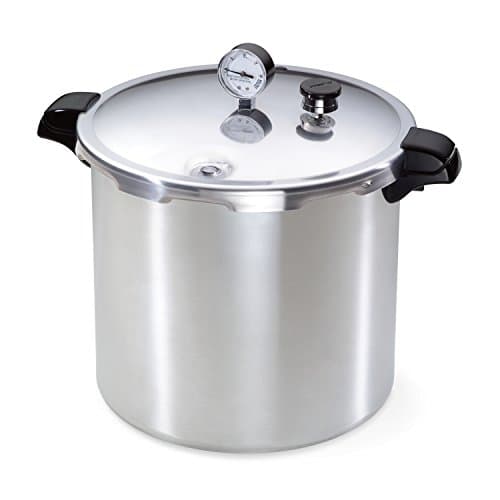
Presto Presto 01781 23-Quart Pressure Canner and Cooker
Presto 01781 23-Quart Pressure Canner and Cooker

The default home pressure canner

Wattage not published
8.8
$179.99Amazon
02Wattage not published
8.8
$449.95Amazon
03
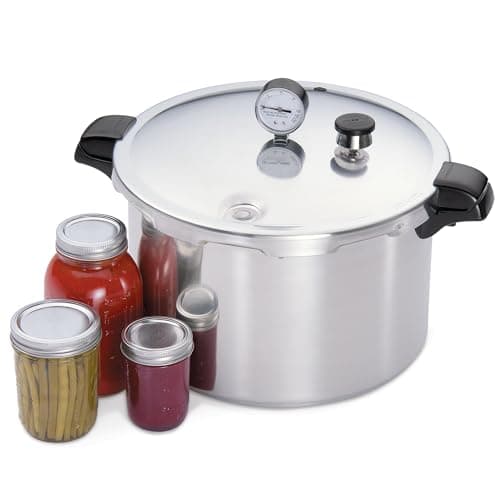
Presto Presto 01755 16-Quart Aluminum Pressure Canner and Cooker
Presto 01755 16-Quart Aluminum Pressure Canner and Cooker

A smaller kitchen, same USDA processes

Wattage not published
8.1
$151.63Amazon
04
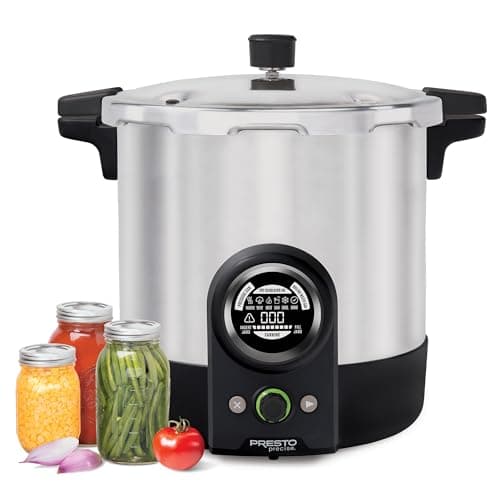
Presto Presto Precise 23-Quart Digital Pressure Canner
Presto Precise 23-Quart Digital Pressure Canner

Canning without a stove or an altitude table

1,100 W
7.7
$397.82Amazon

#ad· Prices pulled live from Amazon's official Creators API, last checked October 29, 2026. Where we have no verified live price we show none — we would rather leave a gap than print a number that has gone stale. The wattage column is what the manufacturer publishes; “not published” means exactly that, and we have not estimated one. Scores are ours, compiled from published specifications, and are not test results.

The short answer

Buy the Presto 01781. It is 23 quarts, it takes 7 quart jars or 20 pintsin a load, Presto publishes a 12-year limited warranty on it, and its gauge reads the full range of processing pressures — so you can follow a USDA process by the number instead of by feel. It is also a working boiling-water canner, which saves you a second pot. Buy the All American 921 if you intend to can for decades: it is cast in Wisconsin and sealed metal-to-metal with no gasket, so the one part that perishes on every other canner does not exist on this one. Buy the Presto 01755if the 23-quart pot will not fit your cupboard or your back burner — it still takes 7 quart jars, and nothing about the process changes. Buy the Presto Precise digital canner only if you have no usable cooktop or no confidence with an altitude table: it holds the processing temperature with a sensor and needs no altitude adjustment, and it costs that convenience in warranty, from twelve years down to one.

And the pick that is not on this page: your multicooker. If you came here looking for an Instant Pot that cans, read why you should not use one for low-acid food before you buy anything at all.

Why this category gets its own rules

Every other roundup on this site is about whether dinner comes out well. This one is about Clostridium botulinum, and that changes how a page like this has to be written. Presto puts the position on its own canner pages in one sentence: Pressure canning is the only method recommended safe by the U.S.D.A. for low-acid foods such as vegetables, meats and fish. Low-acid food held in a sealed jar at the wrong temperature is the textbook environment for botulinum toxin, and the only domestic equipment that reliably destroys the spores is a pressure canner running a validated process. Boiling water will not do it. A hot oven will not do it. A pressure cooker that cannot be vented and cannot show you its pressure will not reliably do it either.

The number everything turns on is published by the National Center for Home Food Preservation, the USDA-funded body whose processes every canning recipe in the United States is written against: At sea level, a canner operated at a gauge pressure of 10.5 lbs provides an internal temperature of 240°F.That is the target. Reaching 240°F is what a canner is for, and the three structural requirements below are what make reaching it verifiable rather than hopeful.

How we ranked them

Entry requirement, applied before price or brand was looked at: the pot must satisfy the NCHFP description of a pressure canner. That rules out almost everything the search engines will show you alongside this page.

  1. Enough volume to hold real jars. NCHFP describes canners as units that hold seven quart jars or eight to nine pints, with small canners holding four quart jars, and then states the exclusion plainly: Pressure saucepans with smaller volume capacities are not recommended for use in canning. A four-quart-jar load is the floor. All four canners here publish 7 quart jars per load, which clears it comfortably.
  2. A processing pressure you can actually hold and read. Either a dial gauge that shows you the pressure, or a weighted regulator that jiggles or rocks at a known pressure. NCHFP's rules differ by type, and both rules are real work: dial gauges need to be check[ed] for accuracy before use each year and replaced if they are more than 2 pounds out, while weighted gauges cannot correct precisely for higher elevations and must be run at 10 psi instead of 5, or 15 instead of 10, above 1,000 feet.
  3. A vent you can hold open for ten minutes. NCHFP: To be safe, all types of pressure canners must be vented 10 minutes before they are pressurized. Ten minutes of steam out of an open vent purges the air, because trapped air makes the gauge read a pressure the food inside is not actually at. A cooker that seals automatically and vents on its own schedule cannot be made to do this.
  4. Then, and only then: documentation quality, build, serviceability, and price. Which is why the cheapest canner on this page is third and the dearest is second.

As everywhere on this site, we have canned nothing in these pots. Every figure below is quoted from Presto's or All American's own product pages or from NCHFP, cited on each card, and every pick carries a real disqualifying reason to skip it. The full rubric is in our methodology. Prices move, so they are not printed in prose — the live price sits on each card.

What each canner actually holds

Reproduced from each manufacturer's own published figures. Jar capacity is the specification that decides how long a canning season takes, and it is the one buyers look at last.

Published liquid capacity, Mason jar capacity, regulator type and warranty. Every cell is the manufacturer's own statement; the 240°F figure is NCHFP's.
CannerLiquid capacityQuart / pint jars per loadHow you hold pressureWarranty
Presto 0178123 qt (21.8 L)7 quarts / 20 pintsDial gauge12 years limited
All American 92121.5 qt7 quarts / 18 pintsWeight (5/10/15 psi) + geared steam gauge1 year limited
Presto 0175516 qt (15.1 L)7 quarts / 10 pintsDial gauge12 years limited
Presto Precise 0215323 qt (21.8 L)Published only as a chart imageTemperature sensor, no altitude table1 year limited
Target process condition240°F internal, from a gauge pressure of 10.5 lbs at sea level (NCHFP), after a 10-minute vent

1. Presto 01781 — the default, and the right first canner

There is a reason this is the canner in most American basements. Presto publishes everything that matters on one page: 23 quarts of liquid capacity, a Mason jar capacity of 26 half-pints, 20 pints, or 7 quarts, a body of extra-strong, warp-resistant aluminum, a design limit of household range burners of 12,000 BTUs or less, and an extended 12-year limited warranty. The gauge reads the full range of processing pressures, the air vent and cover lock keep the lid shut until pressure has safely dropped, and the pot doubles as a boiling water canner for fruits, jams, jellies, pickles and salsas. For most people that last line quietly replaces a second large pot.

Twenty pints per load is the specification that earns it first place. A canning session is not a 90-minute wait, it is 90 minutes of attention — vent, pressurize, hold, cool, check seals — so halving the number of sessions is worth more than any price difference on this page. Against the All American, the Presto holds two more pint jars for roughly 40% of the money.

Three honest limits, and the first one costs people real money. Presto lists this canner for regular and smooth-top ranges, not induction. The induction-compatible version is a different stock number (01784) with a stainless-clad base, and buying the 01781 for an induction hob leaves you with a pot that will not heat — if your cooktop is induction, start from which pressure cookers work on induction and buy the 01784 instead. Second, it is a dial gauge, so NCHFP's annual accuracy check applies: an errand, every year, forever. Third, aluminum discolors, and some glass-top manufacturers advise against heavy aluminum canners on their surfaces — check your own cooktop manual, not ours.

2. All American 921 — no gasket, no consumable, no argument

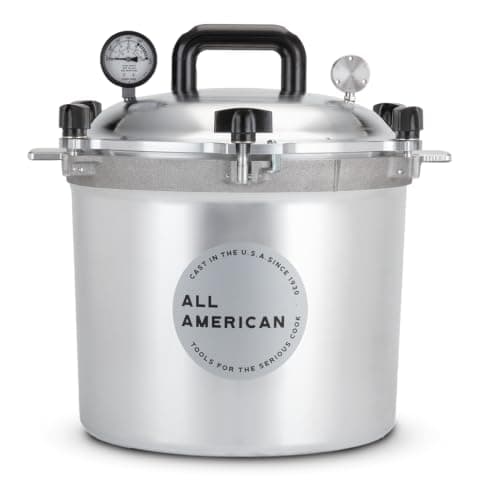
The All American is here for one engineering decision. Where every other canner on this page squeezes a rubber gasket between lid and pot, the 921 uses a precision machined metal-to-metal seal and no gasket at all. The part that dries out, stretches, and goes missing in the drawer between seasons simply does not exist. It is cast aluminum, made in USA (Wisconsin), it holds 21.5 quarts and 18 pint jars or 7 quart jars, and it carries both a regulator weight set to 5, 10, or 15 PSI and a geared steam gauge— the only lid here that gives you the weight's self-regulation and a readable pressure at the same time. All American publishes the interior diameter (12 1/4 in), the interior depth (10 1/2 in) and the 24-pound empty weight, and keeps a parts compatibility table reaching back to units sold before 1978.

That dual regulator is genuinely useful rather than a spec-sheet flourish. Run the weight and the canner holds its own pressure mechanically, which is the failure mode that matters when the phone rings mid-process; glance at the gauge and you can still see what it is holding. If you live above 1,000 feet, NCHFP's weighted-gauge rule — 10 psi instead of 5, 15 instead of 10 — applies here, and this is the one canner where you can watch the gauge confirm that the weight is doing what the table says.

Now the reasons it is second and not first. The warranty is 1 year limited, against Presto's twelve, on the most expensive pot here — a genuinely strange specification to publish on a product sold as buy-it-for-life. It is 24 pounds empty, and All American itself says to add 20 to 30 pounds for water and jars, which is a two-handed lift onto a back burner that some buyers simply will not manage. It holds two fewerpints per load than the cheaper Presto. It is not induction compatible. And the machined lid wants a film of oil on the sealing faces with the clamps tightened in sequence — a ritual, not a hardship, but real. Note too that the manufacturer's own store page has shown this model on backorder with a late-November 2026 ETA even while Amazon has had stock; the card above prices the Amazon listing, which is the one we verified.

3. Presto 01755 — the same process in a smaller pot

The 16-quart Presto exists for a specific and very common problem: the 23-quart canner is too tall for the cupboard, too heavy at the sink, or too wide for the only burner that can take it. Presto publishes 16 quarts (15.1 liters), a jar capacity of 13 half-pints, 10 pints, or 7 quarts, the same extra-strong aluminum body, the same 12,000-BTU burner limit, and the same extended 12-year limited warranty. The important thing about that jar table is what is unchanged: 7 quart jars, exactly as many as the 23-quart canner. If you can quarts — tomatoes, stock, soup, whole chicken — this pot has the same throughput as the big one.

It is third rather than first because of the other half of that table. Ten pints a load against twenty means double the sessionsfor pint and half-pint work, which is most of what most people actually can: beans, carrots, jams, salsa. Presto also notes that the pint and half-pint counts apply to the boiling water method, so read the jar table against the method you are running rather than assuming it transfers. Beyond that it inherits every limitation of its larger sibling — dial gauge and its annual check, aluminum body, regular and smooth-top ranges only, no induction.

Buy it for its height and weight, not for its price. The saving over the 01781 is small, and the difference in how many evenings a harvest takes is not.

4. Presto Precise 23-quart digital canner — for people without a burner

This machine takes the two steps home canners get wrong — holding the pressure steady and adjusting the process for altitude — and moves them into software. Presto publishes 23 quarts (21.8 liters), 120 Volts AC, 1100 Watts, both pressure canning and boiling water canning, a sensor that holds the required temperature automatically, with no altitude adjustments needed, jar preheating, and ten built-in safety features including a cover locking system. It runs off a countertop outlet, which makes canning possible on an induction hob, on a burner that exceeds Presto's own 12,000-BTU stovetop limit, or in a kitchen with no stove at all.

It also contains the most honest sentence any canner manufacturer publishes, and it is worth quoting properly. Presto calls these the first digital pressure canners that meet USDA home canning guidelinesand prints standard USDA processing times in the instruction book — and then states in its own footnote that neither the USDA nor the National Center for Home Food Preservation certifies or approves home canning equipment.So “meets USDA guidelines” is Presto's claim about Presto's processes, not an agency approval of the hardware. That distinction is exactly why this machine is on this page and a multicooker with a “canning” button is not: Presto designed to the published processes and says so in writing, and then tells you who did and did not bless it.

The costs are real. The warranty drops from twelve years to one, on a machine that costs roughly twice the stovetop 01781. It is electronics inside a steam appliance: a failed sensor or control board ends your season, where the worst failure on a stovetop Presto is a gasket you order for pocket change. Presto publishes no body material for it, where both stovetop canners state theirs. And the 1,100 W element is fixed, so you cannot turn the heat up to shorten the come-to-pressure stage. If you own a working gas or smooth-top burner, the stovetop canner is the better buy on every axis except convenience.

The pressure cooker you already own

The query that brings most people to this page is “best pressure cooker for canning,” and the honest answer is that the two phrases describe different machines. We wrote pressure cooker vs pressure canner to lay out the equipment difference in full, and pressure canning in an Instant Pot to answer the specific question about electric multicookers against NCHFP's own position. The short version: NCHFP's recommended-canner guidance excludes smaller-volume pressure saucepans outright, requires a ten-minute vent that a self-sealing electric cooker cannot be made to perform, and requires a pressure you can verify. An appliance that cannot do those three things is not made safe by a button labeled “canning.”

None of which makes a multicooker useless here. It is excellent at everything canning is not — stock and bone broth to freeze rather than shelf-store, dried beans in 40 minutes instead of a day, and tough cuts made tender. If you want a cooker rather than a canner, the ranked list is the best electric pressure cookers, and the stovetop equivalents are in the best stovetop pressure cookers — where the Presto 01362 and the Kuhn Rikon Duromatic are the same engineering tradition as the canners above, at a fraction of the volume.

What we would buy

First canner, any household: the Presto 01781, for 20 pints a load and a 12-year warranty. Canning for the next thirty years: the All American 921, for the gasket that does not exist. Small kitchen, quart jars: the Presto 01755, which gives up pints and nothing else. Induction hob, or no stove at all: the Presto Precise 02153, accepting one year of warranty in exchange for never reading an altitude table.

In detail

The picks, in full

01
Presto Presto 01781 23-Quart Pressure Canner and Cooker

The default home pressure canner

Presto 01781 23-Quart Pressure Canner and Cooker

7 quart jars per load12-year limited warrantyDial gauge — test it yearly
8.8/10

The canner most American home canners own, and the right first one for almost everybody. Presto publishes the figures that decide a purchase — 23 quarts of liquid capacity, 7 quart jars or 20 pints per load, extra-strong warp-resistant aluminum, a 12-year limited warranty — and the gauge reads the whole range of processing pressures, so you can follow a USDA process by the number rather than by guesswork. It is also a working boiling-water canner for jams and pickles, which is the second appliance you would otherwise buy.

Capability
9
Capacity
9
Documentation
9
Build
7.5
Value
9.5

What it gets right

  • Holds 7 quart jars or 20 pints in a load, which is well clear of the four-quart-jar floor that separates a canner from a pressure saucepan
  • Presto publishes the capacity, the jar counts, the body material, the burner BTU limit and the warranty — the full set, on one page
  • Doubles as a boiling water canner for fruits, jams, jellies, pickles and salsas, so one pot covers both USDA methods
  • An extended 12-year limited warranty, which is twelve times what either electric canner on this page carries
  • Replacement gaskets, gauges and overpressure plugs are stocked by Presto and by every canning supplier, so a 20-year-old unit stays serviceable

What it doesn't

  • The gauge is a dial, and NCHFP says to check dial gauges for accuracy before use each year — a service you have to remember and usually drive somewhere for
  • Presto lists it for regular and smooth-top ranges, NOT induction: the 01784 is the induction-compatible model, and buying this one for an induction hob is the most common mistake in this category
  • Aluminum, not stainless, so it will discolor and some glass-top manufacturers advise against heavy aluminum canners on their surfaces
  • At 23 quarts it is a tall, heavy pot to store and a full load is awkward to lift
  • There is a rubber sealing gasket and an overpressure plug to replace periodically, unlike the gasket-free All American

What it costs to run

Presto publishes no wattage for this cooker in any document we could find, so we do not show a running-cost figure for it. We are not going to estimate one from a similar model. Here is the method we would have used.

Skip this if…

…your cooktop is induction. Presto lists this canner for regular and smooth-top ranges only, and the induction version is a different stock number (01784) at a higher price — buying the 01781 for an induction hob leaves you with a canner that will not heat. Check the hob before you check the price.

$179.99on Amazon

$199.9910% off

Price last checked October 29, 2026. Prices move constantly — Amazon's at checkout is the one that counts.

#ad · we may earn a commission from this link to Presto 01781 23-Quart Pressure Canner and Cooker

02
All American All American 921 Pressure Cooker/Canner, 21.5 Quart

The canner you buy once

All American 921 Pressure Cooker/Canner, 21.5 Quart

No gasket to replaceMade in USA1-year warranty only
8.8/10

Cast aluminum, made in Wisconsin, and sealed metal-to-metal with no gasket at all — which is the whole argument for it. The part that perishes on every other canner here simply does not exist on this one, so there is nothing to replace and nothing to fail on a cold morning in September. It carries both a weighted regulator set to 5, 10 or 15 psi and a geared steam gauge, so you can run a USDA process by weight and read the pressure at the same time. The price is roughly two and a half Prestos, and the only honest reason to pay it is that you intend to can for thirty years.

Capability
9.5
Capacity
8.5
Documentation
9.5
Build
10
Value
6.5

What it gets right

  • The metal-to-metal seal removes the one consumable part every other canner depends on — there is no gasket to dry out, stretch or go missing
  • Carries BOTH a weighted regulator (5, 10, 15 psi) and a geared steam gauge, so you get the weight's self-regulation and the gauge's reading in one lid
  • Cast aluminum and made in Wisconsin, with the interior diameter, interior depth, overall dimensions and 24 lb empty weight all published
  • All American publishes a parts compatibility table going back to units sold before 1978, which is a serviceability claim almost nothing else in the kitchen can make
  • Listed by the maker for gas, electric and glass-top cooktops

What it doesn't

  • A 1-year limited manufacturer warranty against Presto's 12 years, which reads strangely on the most expensive canner here
  • 24 pounds empty, before water and jars — All American itself says to add 20 to 30 lbs, and that is a two-handed lift onto a back burner
  • Holds 18 pints where the 23-quart Presto holds 20, so the extra money does not buy extra jars
  • Not induction compatible, and the manufacturer's own store page has shown it on backorder with a late-November 2026 ETA even while Amazon has stock
  • The machined lid needs a thin film of oil on the sealing faces and the clamps tightened in sequence — more ritual than a gasketed canner

What it costs to run

All American publishes no wattage for this cooker in any document we could find, so we do not show a running-cost figure for it. We are not going to estimate one from a similar model. Here is the method we would have used.

Skip this if…

…you are not sure yet whether you will keep canning. This is a thirty-year purchase at roughly two and a half times the price of the Presto 01781, and the Presto cans identically — same USDA processes, same 10.5 lbs gauge pressure, two more pint jars per load. Buy the Presto, can for two seasons, and buy this if the hobby sticks.

$449.95on Amazon

Price last checked October 29, 2026. Prices move constantly — Amazon's at checkout is the one that counts.

#ad · we may earn a commission from this link to All American 921 Pressure Cooker/Canner, 21.5 Quart

03
Presto Presto 01755 16-Quart Aluminum Pressure Canner and Cooker

A smaller kitchen, same USDA processes

Presto 01755 16-Quart Aluminum Pressure Canner and Cooker

Fits a smaller cupboard12-year limited warrantyHalf the pint capacity
8.1/10

The 23-quart canner's shorter sibling, and the one to buy if the big Presto will not fit your cupboard or your burner. Presto publishes 16 quarts of liquid capacity and the same 7 quart jars per load, with the pint and half-pint counts dropping to 10 and 13 — and the same extra-strong aluminum body, the same 12,000-BTU burner limit and the same 12-year limited warranty. Nothing about the canning changes; you are buying less pot, not a lesser process.

Capability
8.5
Capacity
7
Documentation
9
Build
7.5
Value
8.5

What it gets right

  • Shorter and lighter than the 23-quart canner while still taking 7 quart jars per load, so the big-jar throughput is unchanged
  • The same extra-strong aluminum body, 12,000-BTU burner limit and extended 12-year limited warranty as its larger sibling
  • Also works as a boiling water canner for fruits, jams, jellies, pickles and salsas
  • Easier to lift, store and fill at a sink than a 23-quart pot, which is the real reason people abandon canning after one season
  • Usually the cheapest genuine canner in the category, and well clear of the four-quart-jar floor

What it doesn't

  • 10 pints per load against the 23-quart canner's 20 — if you can pints or half-pints in volume, you will run twice as many cycles for a small saving
  • Presto notes that the pint and half-pint counts apply to the boiling water method, so read the jar table against the method you are actually using
  • Same dial gauge, same annual accuracy check as the 01781
  • Regular and smooth-top ranges only, not induction
  • Aluminum body: it discolors, and heavy aluminum is discouraged by some glass-top makers

What it costs to run

Presto publishes no wattage for this cooker in any document we could find, so we do not show a running-cost figure for it. We are not going to estimate one from a similar model. Here is the method we would have used.

Skip this if…

…you can pints or half-pints in any quantity. At 10 pints a load against 20 in the 23-quart Presto, this canner doubles your processing sessions for a modest saving — and a canning session is 90 minutes of attention, not 90 minutes of waiting. Buy this one for its height and weight, not for its price.

$151.63on Amazon

$179.9916% off

Price last checked October 29, 2026. Prices move constantly — Amazon's at checkout is the one that counts.

#ad · we may earn a commission from this link to Presto 01755 16-Quart Aluminum Pressure Canner and Cooker

04
Presto Presto Precise 23-Quart Digital Pressure Canner

Canning without a stove or an altitude table

Presto Precise 23-Quart Digital Pressure Canner

No altitude table neededNeeds no cooktop1-year warranty only
7.7/10

An electric canner that takes the two steps people get wrong — holding pressure and adjusting for altitude — and does them in software. Presto calls these "the first digital pressure canners that meet USDA home canning guidelines", prints the standard USDA processing times in the instruction book, and states plainly in its own footnote that neither the USDA nor the National Center for Home Food Preservation certifies or approves canning equipment. That footnote is the most honest sentence any canner maker publishes, and it is why this machine is on this page while an Instant Pot is not. It draws 1,100 W, needs no burner, and carries a 1-year warranty.

Capability
8.5
Capacity
9
Documentation
8
Build
6.5
Value
6.5

What it gets right

  • The temperature sensor holds the required processing temperature automatically, so no altitude adjustment table is involved — the single most common home-canning error, removed
  • Runs on a countertop outlet, which makes canning possible on an induction hob, a 12,000-BTU-plus commercial burner, or no stove at all
  • Preheats jars and holds them hot until they are filled, and the display walks each step with a built-in timer
  • Does boiling water canning as well as pressure canning, and is tall enough for quart jars in both
  • Presto publishes the voltage and wattage, so unlike every stovetop canner the energy cost is actually computable

What it doesn't

  • A 1-year limited warranty against 12 years on the stovetop Prestos, on a machine that costs roughly twice as much
  • It is electronics in a steam appliance: a failed sensor or board ends the season, where a stovetop canner's worst failure is a $10 gasket
  • Presto's own footnote is explicit that neither USDA nor NCHFP certifies canning equipment, so "meets USDA guidelines" is the manufacturer's claim about its own processes, not an agency approval
  • No published body material on the product page, where the stovetop canners state theirs
  • A fixed 1,100 W element means you cannot turn the heat up to shorten the come-to-pressure stage

What it costs to run

About 20.7¢ an hour at full rated draw, at the US average of 18.83¢ per kWh.

1,100 W ÷ 1000 × 1 h × 18.83¢ = 20.7¢

120 Volts AC, 1100 Watts, published on Presto's own product page for the Precise 23-Quart Digital Pressure Canner (02153). This is the only canner on this page with a wattage, because it is the only one that heats itself. This is an upper bound: the element only draws full power while it is heating up or pressurizing, then cycles off to hold temperature, and no manufacturer publishes a duty cycle — so we compute at full rated draw rather than invent a correction factor. The full method is published.

Skip this if…

…you have a working gas or smooth-top burner and you want the canner to outlive you. This machine exists to solve two specific problems — no usable cooktop, or no confidence with an altitude table — and it solves them well. If neither is your problem, the 23-quart stovetop Presto cans the same food to the same USDA processes for roughly half the money and twelve times the warranty.

$397.82on Amazon

$459.9914% off

Price last checked October 29, 2026. Prices move constantly — Amazon's at checkout is the one that counts.

#ad · we may earn a commission from this link to Presto Precise 23-Quart Digital Pressure Canner

Five questions to settle before you buy a canner

What is under the pot? This is the first question, not the last, and it eliminates options faster than price does. Presto designs its stovetop canners for household range burners of 12,000 BTUs or lessand lists them for regular and smooth-top ranges. If your hob is induction, you need the 01784 rather than the 01781, or an electric canner. If you have a high-output gas burner, you are above Presto's design limit and will be running it turned down. If your cooktop is glass, read your cooktop manual: several makers discourage heavy aluminum canners on their surfaces.

Quarts or pints? The jar tables diverge far more than the liquid capacities suggest. All three 7-quart-jar canners here are identical for quart work. For pints, the 23-quart Presto takes 20, the All American 18, the 16-quart Presto 10. Count the jars you filled last season, divide, and you have the number of evenings each option costs you.

Dial or weight? A dial gauge shows you a number and NCHFP wants it checked for accuracy annually, replaced if it is more than 2 pounds out. A weighted regulator cannot drift, because it is a lump of metal, but NCHFP warns it cannot correct precisely for higher elevationsand must be run a step up — 10 psi instead of 5, 15 instead of 10 — above 1,000 feet. Neither is better in the abstract. The dial suits someone near sea level who will keep the appointment; the weight suits someone at altitude, or someone who will not.

How high do you live?Altitude is not a footnote in canning, it is the process. Water boils cooler as you climb, so the same gauge pressure delivers a lower internal temperature, and the whole point is 240°F. Look up your elevation before you choose a gauge type, and if the answer is well above 1,000 feet, either commit to the altitude table or buy the canner that handles it for you.

Where will the recipe come from?The pot is the cheap part. Every process you run should come from a tested source — the NCHFP process tables, your state extension service, or the instruction and recipe book Presto and All American ship in the box. A canner running an untested family recipe for a low-acid food is not safer than no canner at all, and no amount of hardware fixes that. If you are starting out, how to use a pressure cooker covers the mechanics of venting and pressure that canning then builds on.
How we picked

Machines we claim to have tested: 0

Everyone in this category tells you they tested twenty cookers. We have tested none, and we say so. Here is what we do instead: read the manufacturer's manual and spec page, record the published wattage, capacity, pressure or temperature figure and warranty term, work out what the machine costs to run per hour, show the arithmetic so you can redo it with your own electricity rate, and cite all of it. Where a brand publishes no wattage, we print no running cost rather than borrowing a number from a similar model. Prices come live from Amazon's API and disappear rather than go stale.

The scores above are judgments from that documented research — not test results. One of the five metrics is Documentation: whether the manufacturer will tell you what its cooker draws at all. The full rubric, including what disqualifies a pick, is published in full.

Questions

Frequently asked

Can you use a pressure cooker as a pressure canner?
Not for low-acid foods, which is the whole reason to pressure can. NCHFP's recommended-canner guidance describes canners as units holding seven quart jars or eight to nine pints and states that pressure saucepans with smaller volume capacities are not recommended for use in canning. It also requires that all types of pressure canners be vented 10 minutes before they are pressurized - something a self-sealing electric cooker cannot be made to do. A large stovetop pressure cooker with a readable gauge and enough volume for four quart jars is a different case from a 6-quart electric multicooker, but check it against those published requirements rather than against the word pressure on the box.
What pressure and temperature does canning actually need?
NCHFP publishes the relationship directly: at sea level, a canner operated at a gauge pressure of 10.5 lbs provides an internal temperature of 240 degrees F. Higher elevations need increased pressure to reach the same temperature. The process you follow - which pressure, how long - comes from a tested recipe source for the specific food, not from the canner's manufacturer and not from us.
Do I have to get the dial gauge tested every year?
NCHFP says to check dial gauges for accuracy before use each year, and to replace gauges that differ by more than 2 pounds. Gauges reading up to 2 pounds off can be adjusted for. County extension offices and canning suppliers commonly do the test. This is the strongest practical argument for a weighted regulator like the All American's: a weight cannot drift out of calibration, though NCHFP notes a weight cannot correct precisely for higher elevations either and must be run at 10 psi instead of 5, or 15 instead of 10, above 1,000 feet.
Is the Presto digital canner USDA approved?
No, and Presto says so itself. Presto describes these as the first digital pressure canners that meet USDA home canning guidelines and prints standard USDA processing times in the instruction book - then adds a footnote stating that neither the USDA nor the National Center for Home Preservation certifies or approves home canning equipment. So the machine is designed to published USDA processes, as the manufacturer's own claim, and no agency certifies any canner on this page or anywhere else.
How many jars will each of these hold?
From each manufacturer's own published figures: the Presto 01781 takes 26 half-pints, 20 pints, or 7 quarts; the All American 921 takes 18 pint jars or 7 quart jars; the Presto 01755 takes 13 half-pints, 10 pints, or 7 quarts, with Presto noting the pint and half-pint figures apply to the boiling water method. Presto publishes the digital 02153's jar capacity only inside a chart image, so we do not print a number for it.
Can these canners do boiling water canning too?
Presto states that both stovetop canners double as boiling water canners for fruits, jams, jellies, pickles and salsas, and the Precise 02153 is listed for both pressure canning and boiling water canning. That matters for high-acid foods, which do not need pressure, and it means one pot covers both USDA methods instead of two.
Why is the most expensive canner here only second?
Because warranty and jar capacity both go the other way. The All American 921 carries a 1-year limited manufacturer warranty against Presto's extended 12-year limited warranty, holds 18 pints per load against the 23-quart Presto's 20, and weighs 24 pounds empty before water and jars. What the money buys is the gasket-free metal-to-metal seal and cast-in-Wisconsin construction with a parts table going back decades - a genuinely buy-once pot, but not a better canner for a first season.
Will a pressure canner work on an induction cooktop?
Not these ones, with one exception. Presto lists the 01781 and 01755 for regular and smooth-top ranges, and its induction-compatible canner is a separate stock number, the 01784, with a stainless steel-clad base. All American's 921 is listed for gas, electric and glass-top. The electric Presto Precise 02153 sidesteps the question entirely because it plugs into an outlet and does not use your cooktop at all.

Keep reading

Receipts

Sources

We have not tested these machines in a lab and we do not pretend to have. Specifications come from the manufacturer's own published documents; electricity rates come from the US Energy Information Administration; prices come from the live Amazon API. Where a figure is not published, the page says “not published” rather than guessing. Read the full method.