What under $100 actually buys you
The sub-$100 bracket is a genuine constraint, and the honest way to shop it is to be clear about what you are trading away. Under $100 you generally give up some capacity — the biggest pots and the flagship rice cookers live above the line — some connectivity and interface, and some build, because the premium pots and the induction rice cookers put their money into materials and heating you can feel over years. What you do not have to give up is the actual cooking. The single most useful thing to understand before you spend is that a cheap cooker chosen well beats an expensive one chosen wrong — an inexpensive machine that matches how you really cook will get used every week, and a costly one that does not fit your kitchen or your habits will live in a cupboard. So this roundup is criteria-first and cross-category: rather than ranking one format, it names the best cooker you can get under $100 in each of the formats this site covers, so you can buy the one that fits the way you eat rather than the most impressive box on the shelf.
A quick note on price, because it is the whole premise of the page: we do not print a number in this prose, and we would not want you to trust one if we did. Prices on these machines move week to week, and a pick that is comfortably under $100 today can drift just over it on a bad week or slide well under it in a sale. The live price is shown on each product card, pulled fresh and dated, and that card is the number to trust — not a figure baked into an article that went stale the day after it published. If a pick has crept over the line when you look, the buy button will tell you, and one of the others here will still be under it.
How we ranked them
We ranked on how much genuine capability you get per dollarunder the $100 ceiling — how many real jobs the machine does well, how completely the manufacturer documents it, and how honestly it fits a budget kitchen — rather than on which category is “best,” because these four do different jobs and a reader wants the best in the format they actually need. Documentation matters more here than anywhere, because the budget end of every category is where brands quietly stop publishing a wattage or a warranty, and a cooker that tells you exactly what it draws and how tightly it holds temperature has earned a place a vaguer rival has not. As everywhere on this site, we have tested none of these— every figure below comes from the manufacturer's own documents, and every pick gets a real, disqualifying con. The full rubric, including what knocks a pick out, is in our methodology. If you already know which category you want, each has its own budget roundup: budget multicookers, budget rice cookers and budget sous vide.
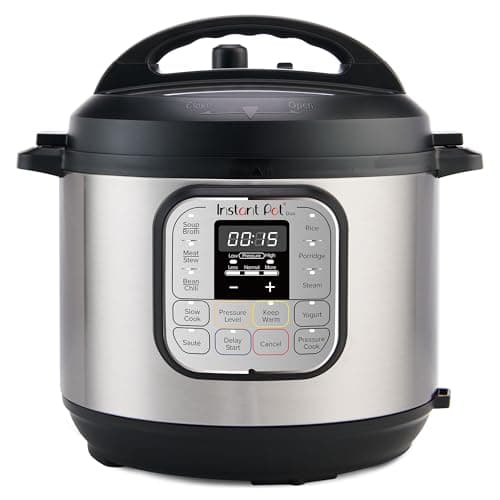
1. Instant Pot Duo Mini — the most versatile pick under $100
If you want the most cooking for the least money, the Instant Pot Duo Mini is the clear number one, because it is the only pick here that is a whole kitchen in one pot. It is the full Duo shrunk to 3 quarts — the right size for one person or a couple of roommates — with the same 7-in-1function set and eleven one-touch programs as the big model: it pressure-cooks, slow-cooks, sautés, steams, makes rice and yogurt, all from one enclosed pot on an 18/8 stainless tri-ply inner pot with no coating to scratch away. That versatility is the entire argument for spending a budget on it: one box under $100 replaces a small slow cooker, a steamer, a rice pot and more, so it earns its counter space several times over. At 700 W it is the lowest-draw Instant Pot on this site, cheap to run and light enough to live in a cupboard between uses. The honest con: three quarts is a hard ceiling — it cooks for one or two, not a family, and doubling a recipe means two rounds — and the tight interior makes searing in batches fiddly. If you cook for more than two, the full 6-quart Duo is the better buy even though it can nudge past the budget line, and the budget multicooker roundup covers that call. But for a solo cook or a couple, no other single machine under $100 does as many jobs as well, which is exactly why it tops a cross-category list: versatility is what a tight budget rewards most.
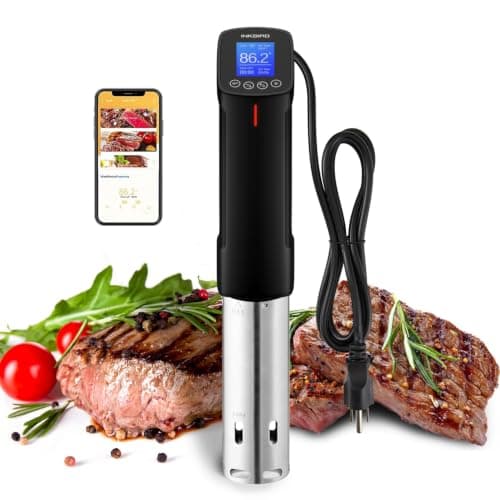
2. Inkbird ISV-100W — a fully-specified circulator under $100
The best value in sous vide, and the pick that most upends the idea that under $100 means underspecified, is the Inkbird ISV-100W. Sous vide is one of the most forgiving ways to cook a perfect steak, chicken breast or batch of eggs — you heat water in any pot you own, drop the food in a sealed bag, set a temperature and walk away — and the barrier used to be price. The Inkbird removes it: under $100, and Inkbird still publishes the complete specification — 1,000 W, a 25–99°C range, ±0.1°C accuracy, 15 Lof water capacity, WiFi and an on-device dot-matrix screen — where most rivals at this price publish almost nothing. The ±0.1°C figure on paper matches the premium Anova for less than half the money, and the on-device screen plus WiFi means it works with or without the app, so your dinner is not gated behind a phone. The honest con:the warranty is one year against the two years the flagship Anova carries, the app is functional rather than polished, its WiFi is 2.4 GHz only, and Inkbird's own page lists its weight inconsistently — small signs the documentation is a tier less refined than the premium machines. None of that shows up in the water, and on the specification that governs the cooking it gives up remarkably little, which is why it is the sous vide to buy on a budget. The wider field is in the budget sous vide roundup.
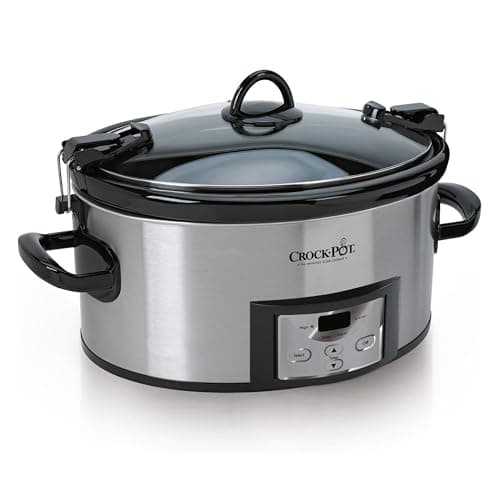
3. Crock-Pot Cook & Carry — the cheapest way to cook all day
If the only thing you actually want is to throw ingredients in a pot in the morning and come home to dinner, you do not need a multicooker at all, and the Crock-Pot 6-Quart Cook & Carry is the honest, cheapest way to do it. It is a plain 6-quart programmable slow cooker — not a pressure cooker, not a multicooker — and at 240 W it is the lowest-draw appliance on this site, which makes it a genuinely cheap way to cook all day; a long braise on a slow cooker sips power in a way a hungry countertop unit does not. Its signature is the locking Cook & Carry lid that clamps down so the whole pot travels to a potluck, a tailgate or a family dinner without sloshing, and its removable oval stoneware crock is the classic slow-cooker shape. There is almost nothing to fail here — no pressure seal, no gasket to replace, no electronics beyond a timer. The honest con:it only slow-cooks. There is no pressure, no sauté in the pot, no rice program and no sous vide, and it is slow by design— a pot roast is a six- to eight-hour job here rather than the forty minutes it takes under pressure, and the stoneware crock is heavy and breakable. If you would ever reach for a sauté, rice or pressure function, the Duo Mini above is the smarter budget buy and this becomes redundant. But if slow, hands-off, cook-all-day food is genuinely all you want, nothing here does it for less money or less power, and whether that one job is enough for you is exactly the question we work through in are slow cookers worth it.
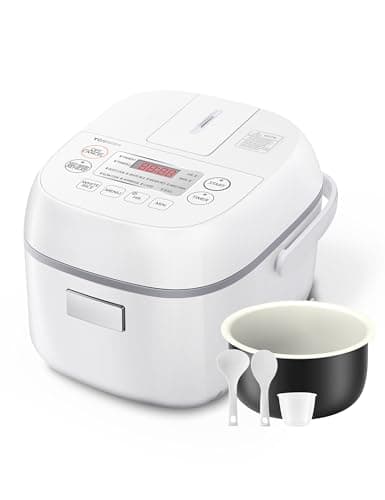
4. Toshiba Mini — the simplest good rice under $100
If rice, grains and one-pot rice bowls are the core of how you actually eat, a dedicated cooker is one-touch cooking at its simplest, and the Toshiba Mini is the budget pick that does not cut the corner that matters most. It is a 3-cup cooker that, unusually for something this small and this cheap, still uses fuzzy logic — it senses and adjusts the heat through the cook rather than running a dumb on/off timer, which most budget minis drop — so you add rice and water, press one button, and it handles the rest, with a 24-hour delay timer so rice is ready when you get home. For simple, reliable rice for one or two people, it is about as foolproof as a cooker gets. The honest con: Toshiba does not publish a wattagefor this mini SKU that we could verify, so we show no running-cost figure for it and will not invent one — do not confuse it with Toshiba's larger 6-cup models, which are a different product. It is also genuinely small, so like the Duo Mini it cooks for one or two and not a group, and its nonstick pot is thin and budget-tier. It sits fourth because it does one job where the Duo Mini does several — pick it when rice specifically is your priority and you want the simplest possible path to a good bowl of it. The rest of the value field is in the budget rice cooker roundup.
The rule for shopping under $100: buy the machine that matches how you actually cook, not the most impressive one you can afford. A cheap cooker chosen well beats an expensive one chosen wrong, because the one that fits your habits gets used every week and the one that does not lives in a cupboard. And do not trust a price printed in an article — these move constantly, and a pick can drift just over $100 on a bad week. The live price on each card is the number that is current; that is the one to check before you buy.
Why these four and not a bigger pot
It is worth being explicit about what the budget ceiling keeps off this list, because it is the same trade in every category. In multicookers, the $100 line generally buys you the smaller 3-quart pot rather than the 6- or 8-quart flagships, so the Duo Mini is the versatile pick and the larger pots ask for more money. In sous vide, it buys a fully-specified circulator like the Inkbird but not the longest warranty or the most polished app. In slow cookers, it buys a genuinely capable pot — the Crock-Pot does its one job as well as any — because slow cookers are a cheap category to begin with. And in rice, it buys fuzzy-logic control in a small body but not the induction heating or the Japanese build of the flagships. None of those omissions changes the cooking each machine actually does; they change the capacity, longevity and convenience around it. That is the honest shape of the sub-$100 bracket: you are not buying a worse cook, you are buying a smaller, simpler, less connected one — and if that is the machine that fits your kitchen, it is money far better spent than a flagship you will not use.
Which under-$100 cooker for you
Pick by how you actually eat, not by the biggest number on the box. If you want one machine to do the most jobs — a small stew one night, steamed vegetables and rice the next, oatmeal and hard-boiled eggs for breakfast — the Instant Pot Duo Mini is the answer, because under $100 the machine that replaces three others is worth more than any specialist, and its 3-quart, 700 W footprint suits a small kitchen or a solo cook. If you are curious about sous vide and want restaurant-quality proteins with almost no risk of ruining them, the Inkbird ISV-100W is the fully-specified way in — WiFi, a screen and ±0.1°C on paper for less than half a flagship's price. If all you want is cook-all-day, hands-off food — soups, braises, a pot that travels to a potluck — the Crock-Pot Cook & Carry is the cheapest and lowest-draw way to do it, as long as you are happy that slow-cooking is the only thing it does. And if rice and rice bowls are your staple, the Toshiba Mini gives you real fuzzy-logic control in a tiny, cheap package — just remember it is a rice cooker, not a whole kitchen, and that Toshiba publishes no wattage for it. For most people on a budget the Duo Mini is the single-cooker answer, and everything else here is an addition to it rather than a replacement. If your real constraint is space rather than money, the small-kitchen roundup covers the same picks from that angle, and if this is your first cooker of any kind, the beginner roundup overlaps heavily and leads with the most forgiving machines. Whichever you choose, the live price is on the card — check it there, since a pick can drift over the $100 line between sales.