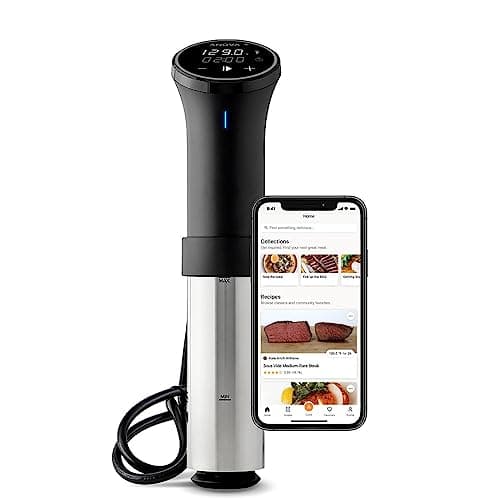
The verdict, first
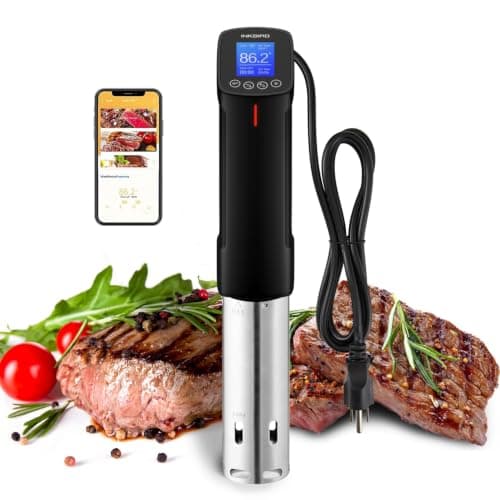
Buy the Anova Precision Cooker 3.0 — for the person who cooks steak often enough to want the machine that does it without qualification. Anova publishes the complete specification, which almost nobody else in this class does: 1,100 W, a 0–92 °C range, ±0.1 °C accuracy and an 8 L/min pump, behind a two-year warranty — the longest here. The power and the pump flow are exactly what steak asks for, and the on-device screen means it works with a dead phone. If the price is the obstacle, the Inkbird ISV-100Wpublishes the same ±0.1 °C accuracy figure at 1,000 W for well under half the money, and for a single steak at a time that is all the machine you need.
Why steak is its own buying question
Sous vide steak is the technique's best trick: hold beef at the exact temperature you want the center to reach, and the whole cut arrives there edge to edge with no gray band, then sear it hard for crust. Nothing about that is hard. But three things about it load different specs than, say, cooking eggs or a long brisket does:
- Recovery.You drop a cold, dense, thick piece of beef into a bath at temperature and the bath temperature falls. Wattage is what pulls it back up, and it is why the 800–850 W machines are more of a compromise for two thick ribeyes than they are for a chicken breast. The 1,000–1,100 W machines here recover faster.
- Vessel size and circulation. Two or four steaks need room to sit apart — bags touching each other or the vessel wall cook unevenly because water cannot pass between them. Published bath capacity and pump flow are the two figures that bear on this, and they are the two most makers leave out.
- Accuracy in a narrow band.Beef doneness lives roughly between 125 °F and 140 °F. Across that 15-degree window, a degree or two is genuinely visible on the plate — which is not true of a chuck roast held at 165 °F for a day. A machine that holds ±0.1 °C and one that quotes ±1% stability are not doing the same job here.
Note what is not on that list: WiFi, apps and recipe libraries. They are pleasant and they are irrelevant to the steak. We rank them last.
The published specs that matter for beef
Manufacturer-published figures only, cited on each product card below. “Not published” means the maker does not state it — we do not fill those in.| Circulator | Rated power | Accuracy, as published | Bath / pump | Warranty |
|---|
| Anova Precision Cooker 3.0 | 1100 W | ±0.1 °C | 8 L/min pump | 2 years |
|---|
| Inkbird ISV-100W | 1000 W | ±0.1 °C | 15 L capacity | 1 year |
|---|
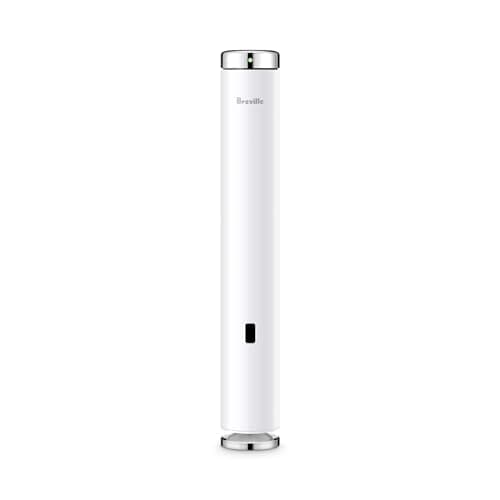
| Breville Joule Turbo | 1100 W | Not published | Up to 10 gallons | 1 year |
|---|
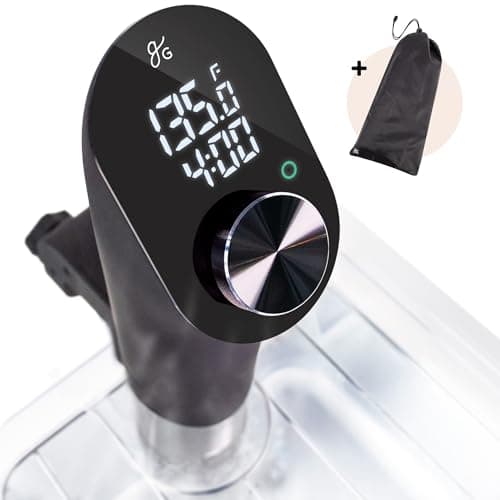
| Greater Goods 1100 W | 1100 W | Not published | Silent brushless, 99 hr run | Not published |
|---|
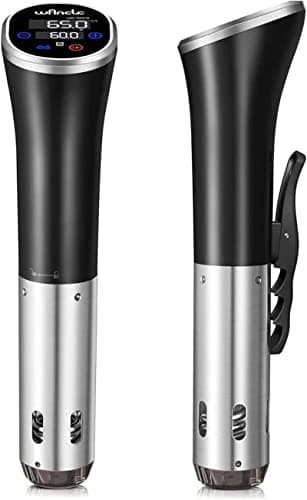
| Wancle 820 | 1100 W | ±0.1 °C (maker's own claim) | 20 L max, 4.5 cm min depth | Not published |
|---|
Two rows deserve a note. The Jouleis the one premium machine here with no published temperature range or accuracy figure anywhere in Breville's own materials we could find — for a precision device that is a real documentation gap, and it is why it sits third rather than first despite being the nicest object in the group. The Wancle's±0.1 °C is the manufacturer's own number with no third-party verification behind it; at this price we treat that as a claim rather than a measurement, and the entry says so.
Who each pick is for
- Anova Precision Cooker 3.0 — for anyone cooking steak regularly, or more than two at a time. Full published spec, the strongest pump here, two-year warranty, and it works without a phone.
- Inkbird ISV-100W — for the cook who wants the same published accuracy and an on-device screen for a fraction of the money, and will mostly cook one or two steaks.
- Breville Joule Turbo— for someone who wants the smallest machine and genuinely lives in their phone; the app's visual doneness guide is the best steak-beginner tool in the category.
- Greater Goods — for the cook who wants no app, no WiFi and the quietest machine here, and does not mind that the accuracy and warranty are unpublished.
- Wancle 820 — for finding out whether you like sous vide at all before spending real money. The floor of the category, honestly labeled.
Power is the spec steak actually spends
It is worth being concrete about why wattage keeps coming up. A 1⁄2-pound steak at fridge temperature carries a lot of cold into the bath, and in a small vessel it can pull the water down several degrees in a minute. A 1,100 W element restores that quickly; an 800 W element takes noticeably longer, and during that recovery the meat is below your target. For one steak in a stockpot, nobody notices. For four thick steaks in a 12-quart container on a Saturday, the difference is the whole reason the Anova and Inkbird are above the lower-powered machines on this page. If you only ever cook one portion in a small pot, the lower-wattage Anova Nano is genuinely enough — we rank it in the general roundup for that reason, and leave it off this one.
The part the machine cannot do: the sear
A sous vide steak is finished, not cooked, by the sear, and no circulator helps with that step. Two things decide it. Dry the surface — pat it hard with paper towel, because water on the surface has to boil off before browning can start and you will overcook the edge waiting. Get the pan or grill hotter than you think and keep the contact time short: 45–60 seconds a side in a smoking cast-iron pan is the target, not three minutes. We work the whole sequence through in how to sous vide a steak, and the question of sear order — which is not actually obvious — in do you sear before or after sous vide. For target temperatures by doneness and thickness, use the sous vide temperature guide, which is the one page on this site that holds those numbers so they cannot drift out of agreement with each other.
What you still need besides the circulator
A circulator alone does not cook anything. You need a vessel — a stockpot works, a polycarbonate container with a lid holds temperature better on long cooks, and both beat anything fancier for the money; see what container to use. You need bags, and a vacuum sealer is optional rather than required — the water-displacement method with a zip bag is fine for steak, as sous vide without a vacuum sealer explains, with the bag-safety question handled separately in can you use Ziploc bags. And you need something to keep bags down, because a floating bag has air in it and air does not conduct — the floating-bag fix is a two-minute read that saves a ruined steak.
One honesty note on temperature and safety
Sous vide steak is normally held well below the USDA's single-temperature guidance for beef, because pasteurization is a function of time at temperature rather than peak temperature alone — which is exactly how sous vide works and why long holds at lower temperatures are a recognized method. We are not going to pretend that is a non-issue for every reader: if you are cooking for someone pregnant, elderly, very young or immunocompromised, read is sous vide safefirst, where we set out the USDA's own position and the time-and-temperature logic rather than summarizing it into a slogan. We have not run any microbiological test ourselves and we cite the people who have.
Which one to buy
Buy the Anova Precision Cooker 3.0 if steak is why you are buying a circulator and you would rather not think about it again. It is the only machine here with the full specification published — power, range, accuracy and pump flow — the only one with a two-year warranty, and it has an on-device screen so a flat phone battery does not stop dinner. For multiple thick steaks in a large container, nothing else on this page is a better tool.
Buy the Inkbird ISV-100Wif the gap in price matters more to you than the second warranty year. It publishes the same ±0.1 °C accuracy, 1,000 W, a 15 L capacity and WiFi, with a screen on the device — for a cook doing one or two steaks at a time it gives up very little that shows on the plate.
Buy the Joule only if you are certain you are happy being app-only; there are no buttons, so a phone outage means no cook. Buy the Greater Goods if you want the opposite — a dial, a screen, silence and no connectivity at all. And buy the Wancle if you are testing whether the technique is for you, with eyes open: no published warranty, and an accuracy figure nobody independent has checked. No price appears in this paragraph on purpose — these discount independently and any number here would be stale within the week. The live, dated price is on each card above, and a card showing no number means the listing had no buyable offer when we last checked.
How we picked
Machines we claim to have tested: 0
Everyone in this category tells you they tested twenty cookers. We have tested none, and we say so. Here is what we do instead: read the manufacturer's manual and spec page, record the published wattage, capacity, pressure or temperature figure and warranty term, work out what the machine costs to run per hour, show the arithmetic so you can redo it with your own electricity rate, and cite all of it. Where a brand publishes no wattage, we print no running cost rather than borrowing a number from a similar model. Prices come live from Amazon's API and disappear rather than go stale.
The scores above are judgments from that documented research — not test results. One of the five metrics is Documentation: whether the manufacturer will tell you what its cooker draws at all. The full rubric, including what disqualifies a pick, is published in full.