HUB 03 · Sous Vide
Is Sous Vide Healthy?
Sous vide has a genuine health case: no added fat, more of the nutrients boiling leaches out, gentle even cooking, and built-in food safety. But two fair questions come up every time — the plastic, and whether it can turn an unhealthy food healthy. Here is the honest version of both.
We earn a commission if you buy through our links. It does not change the price you pay, and it does not decide our picks — the scoring rubric is published in full, including what disqualifies a pick. How this works.
The short answer
Sous vide is a healthy way to cook, with a couple of genuine advantages over boiling and frying — but it is a cooking method, and a method cannot make an unhealthy food healthy. Hold both of those ideas at once and you have the honest picture. The technique earns its health reputation through no added fat, better nutrient retention and gentle, even cooking; it does not earn a claim to transform what you put in the bag. Below is the case for it, and the two fair questions people always raise.
No added fat needed
Because the food cooks sealed in its own moisture at a precise temperature, sous vide needs no oil or butter to keep it from drying out or sticking. A chicken breast or a piece of fish comes out moist on its own, where a pan would need fat to get the same result and a deep-fry adds a great deal of it. You can still add a little fat for flavor if you want, but you are not requiredto, and that is a real, if modest, health edge over frying and sautéing. It also means you control exactly what goes in — nothing is added by the method itself.
It keeps the nutrients boiling washes away
This is the strongest nutritional point in sous vide's favor. When you boil vegetables, a good share of the water-soluble vitamins— vitamin C, many of the B vitamins — leach out into the cooking water and go down the drain. Sous vide cooks the food sealed in a bag, so those nutrients have nowhere to escape to; they stay with the food. The generally lower cooking temperatureshelp too, since some nutrients degrade with high heat. It is not a dramatic, health-transforming effect, but “more of the vitamins stay in the food” is a real and fair thing to say about the method, especially for vegetables.
Gentle, even, and easy to portion
Two smaller points round out the case. The cooking is gentle and even, with none of the intense high-heat searing that can create the charred compounds people worry about with grilling and pan-frying — and while most people still add a quick sear at the end, it is brief and optional rather than the whole cook. And because sous vide is naturally cooked in individual bagged portions, it lends itself to portion control and make-ahead meal prep, which is as much a part of eating well as the cooking method itself. None of this is revolutionary, but it all points the same, sensible direction.
You control exactly what goes in
One underrated point is what sous vide does not add. Because you cook plain food sealed in a bag, nothing enters it that you did not put there— no cooking oil absorbed from a fryer, no mystery restaurant butter, and only the salt and seasoning you choose. There are also none of the breakdown products that come from oil heated hard and used again and again, because there is no hot oil in the method at all. That control cuts both ways, and it is worth being honest about: it makes it easy to keep a dish clean and lightly seasoned, but it does not stop you adding as much butter or salt as you like once it comes out of the bag. The method hands you the dial; what you do with it is still up to you, which is really the whole theme of the health question.
Safety is built in
A healthy meal is also a safe one, and sous vide has a real strength here: done properly it pasteurizes food through time and temperature together, which the USDA recognizes as a valid way to make food safe. Holding a food at a precise temperature long enough kills bacteria just as a higher, faster heat does, so a correctly cooked sous vide chicken breast is as safe as one cooked to 165°F — the logic laid out in is sous vide safe? The catch is that safety depends on following time and temperature, not eyeballing it, and on chilling promptly when cooking ahead. Get that right and the method is not a risk to manage but a genuinely controlled, safe way to cook.
The real question: is cooking in plastic safe?
This is the worry people raise most, and the answer is reassuring with one condition. Use food-grade, BPA-free bagsrated for the temperature — purpose-made sous vide pouches, reputable freezer-grade zip-top bags, or reusable food-grade silicone — and you are fine, because sous vide runs well below boiling. Most cooks sit far under the point at which food-grade plastics break down; you are not melting or degrading a proper bag at these temperatures. What you should avoid is a random plastic bag of unknown grade, or a thin one that could fail. If plastic still bothers you, you can sidestep it: cook eggs in the shell, use glass jars for custards and yogurt, or choose silicone bags. The full breakdown is in is sous vide safe?
The honest caveat: it can't fix the food
Here is the balance. Sous vide is a healthy cooking method — no added fat, better nutrient retention, gentle heat, safe pasteurization — but it cannot make an unhealthy food healthy. A fatty cut of meat cooked sous vide is still a fatty cut of meat; a rich dessert is still a rich dessert. The health of a meal comes far more from what you cook than how, and no method changes that. So the honest verdict is: sous vide is a good, clean way to cook, and a fine part of eating well, as long as you do not expect the technique to do the work that the ingredients have to. If you are weighing it up on other grounds too, see is sous vide worth it? and what sous vide is.
The hardware
The cookers this page is about
The cookers referred to above, with prices pulled live from Amazon and dated on every card. Full rankings live in the roundups linked from this page.
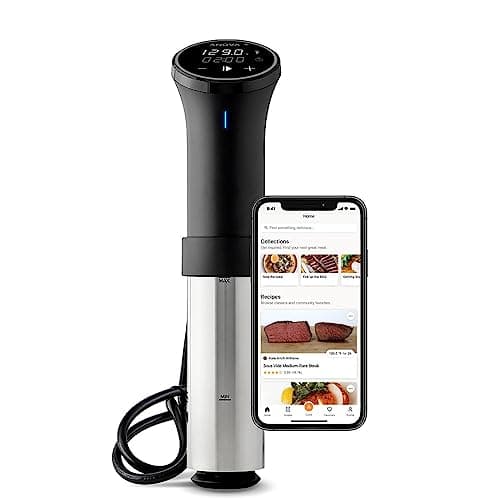
1,100 W
Anova Precision Cooker 3.0 (WiFi), 1100 W
The sous vide circulator most people should buy. Anova publishes the full specification — 1,100 W, a 0–92°C range, ±0.1°C accuracy, an 8 L/min pump — and backs it with a two-year warranty, the longest here. It has an on-device screen so it works without the app, which the Joule does not.
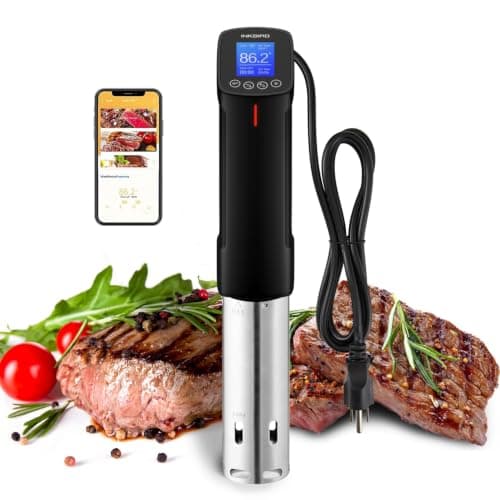
1,000 W
Inkbird ISV-100W WiFi Sous Vide, 1000 W
The value pick that does not feel like one. Under $100, and Inkbird still publishes the full specification: 1,000 W, a 25–99°C range, ±0.1°C accuracy, 15 L capacity, WiFi and an on-device dot-matrix screen. It undercuts the Anova by more than half and gives up remarkably little on paper.
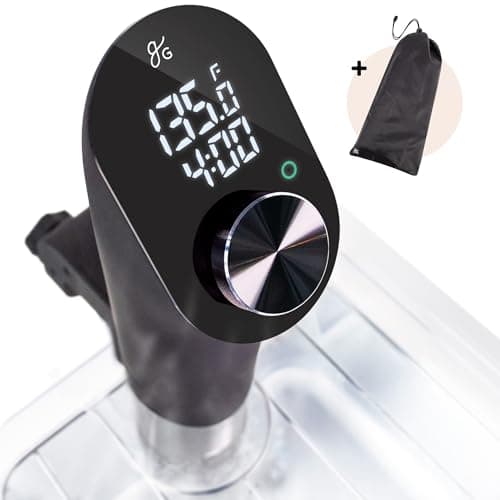
1,100 W
Greater Goods Sous Vide Precision Cooker, 1100 W
The circulator for people who want none of the connectivity. No WiFi, no app, no phone — a dial, a screen and a silent brushless motor rated to run 99 hours straight. 1,100 W, a 20–95°C range, and a build that is quieter than anything else here.
#ad · As an Amazon Associate we earn from qualifying purchases.
Questions
Frequently asked
Is sous vide a healthy way to cook?
Is cooking food in plastic bags for sous vide safe?
Does sous vide keep more nutrients than boiling?
Keep reading
Related
Receipts
Sources
- USDA FSIS — cooking safely with time and temperature (pasteurization basics)
- USDA Food Safety and Inspection Service — safe minimum internal cooking temperatures
We have not tested these machines in a lab and we do not pretend to have. Specifications come from the manufacturer's own published documents; electricity rates come from the US Energy Information Administration; prices come from the live Amazon API. Where a figure is not published, the page says “not published” rather than guessing. Read the full method.