What makes a cooker good for a beginner
A first cooker earns its place by being forgiving and simple, not by having the longest function list — the machine with thirteen programs you never learn is the one that ends up in a cupboard. The best beginner cooker is the one you can use confidently the first week: clear controls, a hard-to-ruin result, honest documentation so you know what it does, and a price low enough that learning on it is not a gamble. These four are the picks that reward a beginner across the categories, each the friendliest way into what it does.
How we ranked them
We ranked on forgiveness first — how hard it is to get a bad result — then on simplicity of controls, quality of documentation, and price. Every pick is a genuine recommendation on its own merits, chosen here specifically for someone buying their first cooker rather than their third. Where a manufacturer publishes no wattage or a price is intermittent, we say so plainly. The full rubric, including what disqualifies a pick, is in our methodology. If you are not yet sure which category you want, start with which cooker do you need and come back.
1. Instant Pot Duo — the best all-around first cooker
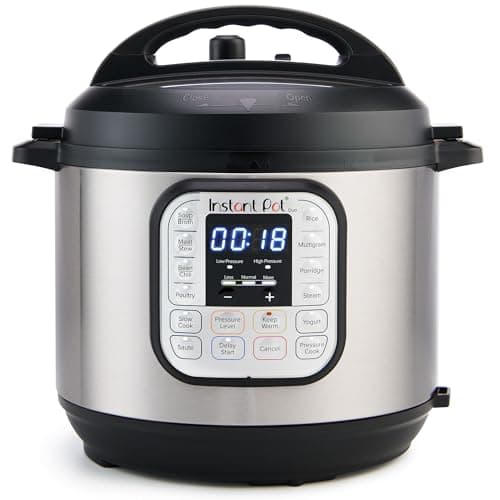
If you buy one cooker to learn on, make it the Instant Pot Duo. It is the most proven, best-documented and cheapest genuinely good multicooker on this site — pressure, slow cook, sauté, rice, steam and yogurt in one box, drawing 1,000 W on an 18/8 stainless pot that will not scratch away like the nonstick pots in pricier machines. Instant Brands publishes the wattage and even the working pressure, so nothing about it is a mystery. The honest con: the manual steam valve is the source of the classic beginner mistake — leaving it on Venting so the pot never pressurizes — and there is a genuine first-week learning curve around releasing pressure and the Burn message. It is forgiving once it clicks, but it does ask you to learn a couple of habits.
2. Crock-Pot Cook & Carry — the no-learning-curve pick
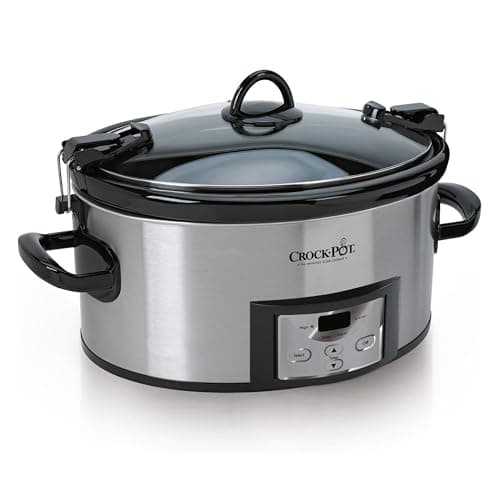
If “forgiving” is your only criterion, nothing beats a slow cooker. The Crock-Pot Cook & Carry is dump-and-go: add ingredients in the morning, set low or high, and come home to dinner, with almost nothing to fail — no pressure seal, no gasket, no electronics beyond a timer. At 240 W it is the lowest-draw appliance on this site, a genuinely cheap way to cook all day, and the locking lid even travels to a potluck. The honest con:it only slow-cooks — no pressure, sauté or rice — so a pot roast is a 6-to-8-hour job rather than 40 minutes, and if you would ever use those other functions, an Instant Pot makes this redundant. But as a first, unintimidating cooker, it is the one you literally cannot get wrong.
3. Toshiba Mini — the best first rice cooker
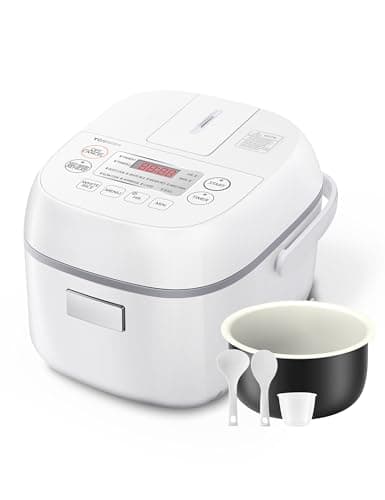
A dedicated rice cooker is one-touch cooking at its simplest, and the Toshiba Mini is the friendliest way in: real fuzzy-logic heat control — which most cheap minis drop — in a small, affordable 3-cup body, with a 24-hour delay so rice is ready when you get home. You add rice and water, press one button, and it senses and adjusts the rest. The honest con: three cups is a firm ceiling that cooks for one or two, not a family, and Toshiba publishes no wattage for this SKU so we show no running cost. If you cook rice for a household, a full-size 5.5-cup cooker is the better first buy — see the budget rice field — but for a solo cook or a couple, this is the simplest good rice there is.
4. Monoprice Strata — the cheapest way to try sous vide
Sous vide sounds advanced and is actually one of the most forgiving techniques once you have the gear, and the Monoprice Strata is the low-stakes way to learn it: the cheapest circulator here, with simple physical controls, an 800 W element, and a clever directional pump cap that helps with delicate first cooks like fish and eggs. Set a temperature, drop it in, walk away — it is genuinely hard to overcook. The honest con:it quotes ±1% stability rather than the ±0.1°C of the pricier machines, which matters on long, low cooks, and it is the try-it-first circulator rather than the keep-it-forever one. But at this price, finding out whether you love sous vide costs almost nothing.
How we picked
Machines we claim to have tested: 0
Everyone in this category tells you they tested twenty cookers. We have tested none, and we say so. Here is what we do instead: read the manufacturer's manual and spec page, record the published wattage, capacity, pressure or temperature figure and warranty term, work out what the machine costs to run per hour, show the arithmetic so you can redo it with your own electricity rate, and cite all of it. Where a brand publishes no wattage, we print no running cost rather than borrowing a number from a similar model. Prices come live from Amazon's API and disappear rather than go stale.
The scores above are judgments from that documented research — not test results. One of the five metrics is Documentation: whether the manufacturer will tell you what its cooker draws at all. The full rubric, including what disqualifies a pick, is published in full.