The short answer
Buy the Instant Pot Duo Crisp with Ultimate Lid if what you wanted was the Foodi itself. It is the only machine still sold that pressure-cooks and air-fries from one lid, Instant Brands publishes 1,500 W and a stainless inner pot for it, and its thirteen functions include sous vide, dehydrate and proof. Buy the Ninja HyperHeat PC201if staying with Ninja matters more than crisping: 1,200 W, 6.5 quarts — the same capacity as the Foodi — sous vide and yogurt programs the Foodi never had, and a PFAS-free ceramic pot. It does not air fry. Buy the Ninja PossibleCooker PRO if you want the bigger pot and never really used the pressure: 8.5 quarts, oven-safe to 500 °F, and no pressure mechanism at all. The budget pick is the 6-quart Instant Pot Duo, which costs a fraction of the rest and is the best-documented electric pressure cooker on this site.
Read the next section before you buy any of them, because it changes what you should be shopping for.
What happened to the Ninja Foodi
Plainly, with no spin: the Foodi OS300 is discontinued and there is no new stock to buy. Its last Amazon listing was a certified-renewed unit and even that no longer returns a buyable offer, which is why this site carries the Foodi review with a discontinuation notice on it and no buy button at all.
The more useful half of the news is what replaced it, and the answer is two machines that each took one half of the job. Ninja still sells pressure cookers and Ninja still sells multicookers that crisp — but not the same machine. The HyperHeat PC201 pressure-cooks and has no crisping lid. The PossibleCooker PROhas an oven-safe pot that browns beautifully and deliberately does not pressure-cook. Ninja's one-lid Foodi SmartLid machines, which do both, are listed on Ninja's own site but are not stocked on Amazon, so this site does not rank them — we only rank what you can actually buy through the links we earn on, and we say so.
So the uncomfortable answer to “what is the Ninja version of a Foodi” is that there is not one on Amazon today. The machine that does what a Foodi did is an Instant Pot, and that is why it is first on this page.
What the Foodi was actually good at
Worth stating precisely rather than dismissing, because these are published figures and because anyone whose Foodi still works should keep it.
Two lids, two jobs, no compromise on either.The TenderCrisp system paired a pressure lid with a separate crisping lid, so a pot roast pressurized and then crisped without changing pots — and the crisping element ran to 500 °F, a genuine high-heat finish rather than the same element turned up. Ninja published 1,460 W and 6.5 quartsin the OS300 owner's guide.
The separate lid is the part the single-lid designs gave up.On the Instant Pot Duo Crisp, going from pressure to air fry means removing a protective cover from over the air-fry element, and Instant Brands' own instructions warn that it will be hot — an oven-mitt step in the middle of a recipe. The Foodi's answer was to put the crisping element in its own lid. That was a good idea, and nothing in stock today uses it.
What it was not good at: 1,460 W made it one of the most power-hungry multicookers in this catalog, it never offered sous vide or yogurt programs, and two lids meant two bulky things to store. The replacements each fix one of those.
How we ranked these
By the reason someone searches for a Foodi alternative, not by an overall score, because the four reasons point at four different machines and a single league table would bury three of them.
- Does it do both jobs in one pot? This is first because it is what the Foodi was for. Exactly one machine in stock does: the Duo Crisp.
- Does it keep pressure cooking? Pressure is the reason a multicooker beats a slow cooker on a weeknight, and three of the four picks have it.
- How completely does the maker document it? This site has no test kitchen, so a published wattage, capacity and pot material is the whole basis on which we can compare anything. It is also where the cheapest pick wins outright.
- Then capacity, then the pot material, then price.
As everywhere on this site, we have cooked nothing in these machines.Every figure below is quoted from the manufacturer's own product page or manual, cited on each card, and every pick carries a real disqualifying reason to skip it. The full rubric is in our methodology. Prices move, so none is printed in this prose — the live price sits on each card with the date of the last refresh next to it.
What each one replaces
Published wattage, capacity, pressure and crisping for the discontinued Foodi and the four machines you can buy. Every cell is the manufacturer's own statement.| Machine | Power | Capacity | Pressure | Crisps / air fries |
|---|
| Ninja Foodi OS300 (discontinued) | 1,460 W | 6.5 qt | Yes | Yes, separate lid to 500 °F |
|---|
| Instant Pot Duo Crisp, Ultimate Lid | 1,500 W | 6.5 qt / 6.2 L | Yes | Yes, same lid |
|---|
| Ninja HyperHeat PC201 | 1,200 W | 6.5 qt | Yes | No |
|---|
| Ninja PossibleCooker PRO | 1,200 W | 8.5 qt | No | Oven-safe pot to 500 °F |
|---|
| Instant Pot Duo 6 Qt | 1,000 W | 6 qt / 5.7 L | Yes, 10.2–11.6 psi published | No |
|---|
1. Instant Pot Duo Crisp with Ultimate Lid — the one that does both jobs
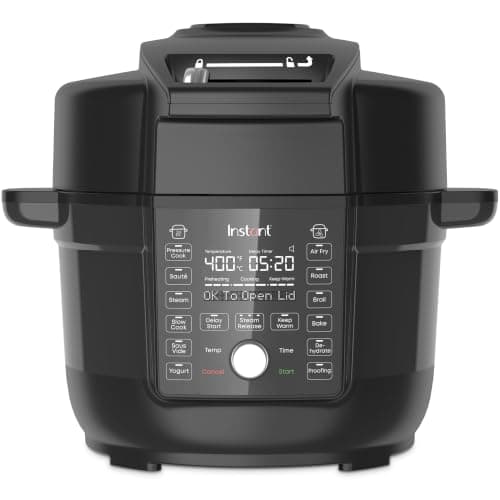
If you wanted a Foodi because it pressure-cooked and crisped, this is the replacement and it is not close, because it is the only machine still in stock that does both from one lid. Instant Brands publishes 1,500 W, 6.5 quarts (6.2 L), a stainless steel inner pot and a 13-in-1 function set in its own product page and the SLCO65000 manual. Three of those thirteen are things the Foodi never offered at all: sous vide, dehydrate and proof.
The capacity match is exact — 6.5 quarts, the same as the OS300 — so a recipe you cooked in the Foodi fits here without rescaling. And the pot is bare 18/8-class stainless with no coating on it, where the Foodi's was coated: one fewer surface with a finite life.
Two honest costs.The first is the one Foodi owners will notice immediately: going from pressure to air fry means taking out the protective pressure-cooking cover from over the air-fry element, and Instant Brands' own instructions warn it will be hot. The Foodi solved that with a second lid; this machine asks for an oven mitt mid-recipe. The second is power: at 1,500 W it draws more than the Foodi did and is the most expensive machine on this page to run per minute. If crisping is already handled by an air fryer you own and like, skip this and read the air-fryer multicooker ranking for the full argument, or drop to the Duo below.
2. Ninja HyperHeat PC201 — the Ninja you can actually buy
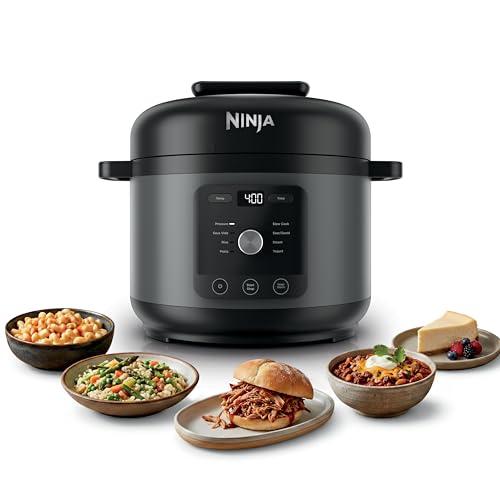
If what you liked was Ninja — the interface, the build, the badge — this is the pressure cooker the brand sells today, and on paper it is a better pressure cooker than the Foodi was. SharkNinja publishes 1,200 W at 120 volts, 6.5 quarts (again, the Foodi's capacity exactly), a 9-in-1function set that names pressure cook, slow cook, rice, sous vide, steam, sear/sauté and yogurt, and an aluminum pot with a PFAS-free nonstick ceramic coating.
Two of those functions are genuine upgrades over the machine it replaces: the Foodi had no sous vide program and no yogurt program. It also draws 260 W less than the Foodi did, which is the one place the simplification pays you back.
And then the thing that puts it second.It does not air fry. There is no crisping lid, no 500 °F element, nothing. The single feature that made a Foodi worth choosing over an Instant Pot is not on this machine, and the Ninja badge on the front should not be allowed to suggest otherwise — this is the Foodi's successor in the catalog, not in the kitchen. Two smaller marks: SharkNinja calls it 9-in-1 but itemizes only seven functions on its own spec page, and the pot is ceramic-coated aluminum rather than bare stainless, so there is a coating with a finite life on it. The head-to-head is Instant Pot vs Ninja HyperHeat.
3. Ninja PossibleCooker PRO — the bigger pot, and no pressure at all
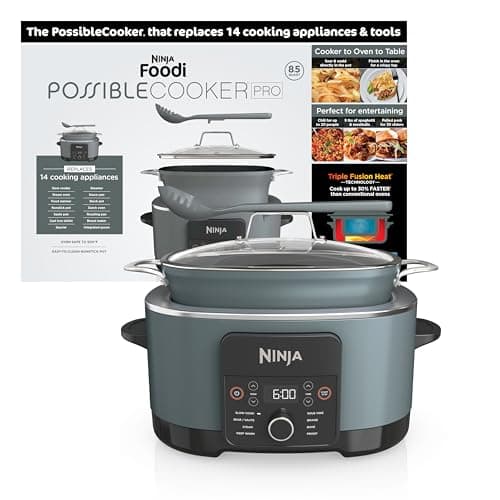
This is the pick for the Foodi owner who is honest about which lid they actually used. If the crisping, searing and slow-cooking got the work and the pressure lid lived in a cupboard, the PossibleCooker PRO is the machine that matches how you cook. SharkNinja publishes 1,200 W, 8.5 quarts— two quarts more than the Foodi — a 14-in-1 badge resting on 8 real cooking modes, and a pot that is oven-safe to 500 °F. That last figure is the interesting one: it is the same temperature the Foodi's crisping lid reached, except you get it by moving the pot to an oven or under a broiler rather than by storing a second lid.
The disqualifier is explicit and it is the whole point of the machine:it does not pressure-cook. Dried beans will not turn around in 40 minutes, and a tough roast is an afternoon again. The “14-in-1” count also needs reading carefully — the extra six are appliances Ninja claims it replaces rather than separate modes — and Ninja's own copy describes the pot material inconsistently, stainless in one place and nonstick in another, which on a site that ranks by documentation is a real mark against it. If the 8.5 quarts is what drew you here, the fuller argument is in the large multicooker ranking.
4. Instant Pot Duo 6 Qt — the cheapest way back to pressure cooking
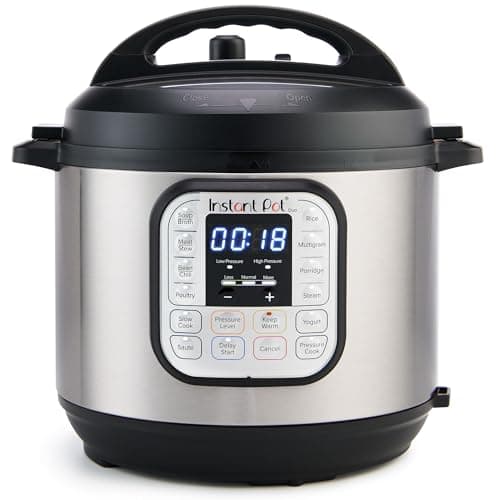
The budget pick, and the one to take if the Foodi's death is an annoyance rather than a project. It costs a fraction of everything above it and it is the best-documented electric pressure cooker on this site: Instant Brands publishes 1,000 W, 6 quarts (5.7 L), an 18/8 stainless tri-ply inner pot, a 7-in-1function set with 13 programs, and — uniquely among the electric cookers here — an actual working pressure range of 10.2–11.6 psi in the IP-DUO60 manual. No other machine on this page publishes a pressure figure at all, including the two Ninjas.
It is also the lowest draw on the page at 1,000 W, and its pot has no coating to fail. For a household that used the Foodi mostly as a pressure cooker, this recovers the function that mattered for the least money.
What it does not do is anything else.No air fry, no sous vide, no yogurt-free complaint to make — it has yogurt, but there is no crisping and no air-frying of any kind, and the steam release is a manual toggle rather than a quiet auto-release. Seven functions against the Foodi's ten is a real reduction, not just a smaller sticker. Buy it knowing you are replacing one half of the machine you had, cheaply and well. The full Duo review has the detail, and the budget multicooker ranking puts it against the other cheap options.
What we would buy
You wanted the Foodi for what it did:the Instant Pot Duo Crisp with Ultimate Lid — one lid, both jobs, the same 6.5 quarts, and three programs the Foodi never had. You wanted a Ninja: the HyperHeat PC201, accepting that the crisping is gone and gaining sous vide and yogurt. You never used the pressure lid: the PossibleCooker PRO, for 8.5 quarts and an oven-safe pot. You just want pressure cooking back: the 6-quart Duo, for a fraction of the money and the only published psi figure on the page.
And if your Foodi still works, the answer is to keep it. Nothing here is an upgrade on the machine you own; they are replacements for a machine you can no longer buy.
The same question from the other side
This page starts from a cooker that cannot be bought and ends up recommending the Duo Crisp. The mirror case - you can buy the Duo Crisp and would rather not, because of the price, the 1,500 W rating or the missing 8-quart size - is Instant Pot Duo Crisp alternatives, which reaches a different answer for the simple reason that replacing a dead cooker and declining a live one are different problems.