HUB 03 · Sous Vide
How to Sous Vide Turkey Breast
Turkey breast is lean and unforgiving, which is why the oven so often turns it dry. Sous vide holds it at one exact temperature so it stays juicy edge to edge, and you crisp the skin separately at the end. It is a genuinely great make-ahead move for a holiday. Here is the method and the food-safety line.
We earn a commission if you buy through our links. It does not change the price you pay, and it does not decide our picks — the scoring rubric is published in full, including what disqualifies a pick. How this works.
Why sous vide turkey breast
Turkey breast is lean and has almost no fat to protect it, so a few degrees past done and it turns dry and stringy — the classic holiday disappointment. Sous vide fixes exactly that: it holds the breast at one precise temperatureso it stays juicy all the way through, with none of the oven's guesswork. It follows the same logic as sous vide chicken, and for a holiday it has a real bonus: it is a great make-ahead that frees the oven for everything else.
Bag it, and cook to a juicy set point
Season the breast (salt, herbs, butter under the skin if it is bone-in and skin-on) and seal it. Sous vide turkey breast is cooked to a juicy set pointand then held long enough to pasteurize — commonly a few hours depending on thickness. A boneless breast cooks faster and more evenly; a bone-in one takes longer. Because the exact temperature and time decide both juiciness and safety, this is a cook to run off a proper chart — the temperature guide has the numbers. A well-specified circulator that holds a tight set point, like the Anova or the value Inkbird, is what makes the result repeatable.
Crisp the skin at the end
Sous vide will not crisp skin — the breast comes out juicy but pale — so the finish is a separate, fast step. Dry the surface thoroughly, then crisp it under a hot broiler, in a very hot oven, or with a torch until the skin is golden, just a few minutes. The interior is already at temperature, so you are only browning the outside, the same principle as searing after sous vide. This is also why it works as a make-ahead: cook the breast in the bath earlier, then crisp and slice it just before serving.
The food-safety line on poultry
Poultry safety is where precision matters most. The USDA lists 165°F as the instant-safe temperature for turkey, but sous vide works differently: it pasteurizes by time and temperature together, so a lower set point held long enough can be made safe according to the USDA time-and-temperature guidance — which is exactly why you must follow a trusted chart and not improvise. Keep the bath at a proper temperature the whole cook, hold long enough to pasteurize, and chill leftovers promptly. The USDA references are linked below, and is sous vide safe explains the pasteurization rule in full.
The hardware
The cookers this page is about
The cookers referred to above, with prices pulled live from Amazon and dated on every card. Full rankings live in the roundups linked from this page.
1,100 W
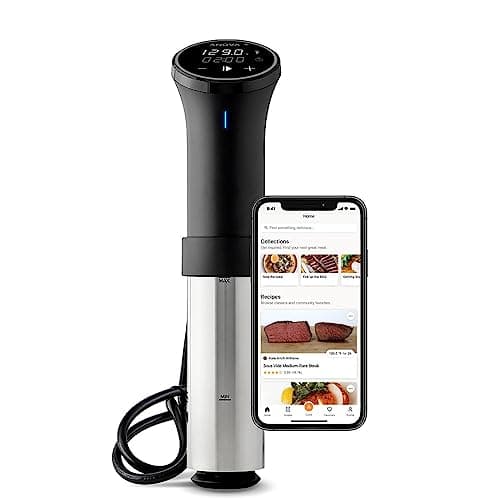
Anova Precision Cooker 3.0 (WiFi), 1100 W
The sous vide circulator most people should buy. Anova publishes the full specification — 1,100 W, a 0–92°C range, ±0.1°C accuracy, an 8 L/min pump — and backs it with a two-year warranty, the longest here. It has an on-device screen so it works without the app, which the Joule does not.
1,000 W
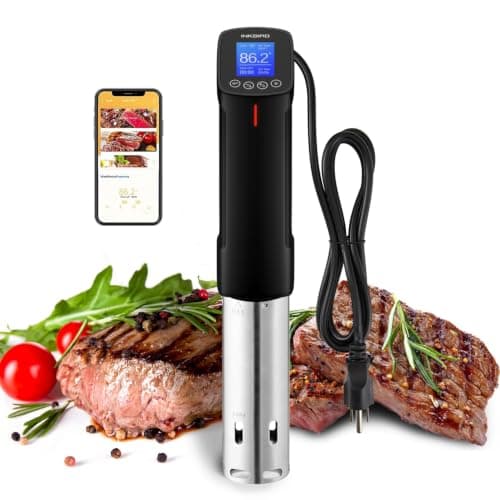
Inkbird ISV-100W WiFi Sous Vide, 1000 W
The value pick that does not feel like one. Under $100, and Inkbird still publishes the full specification: 1,000 W, a 25–99°C range, ±0.1°C accuracy, 15 L capacity, WiFi and an on-device dot-matrix screen. It undercuts the Anova by more than half and gives up remarkably little on paper.
#ad · As an Amazon Associate we earn from qualifying purchases.
Questions
Frequently asked
How long does it take to sous vide a turkey breast?
Is sous vide turkey safe below 165F?
How do you crisp the skin on sous vide turkey?
Keep reading
Related
Receipts
Sources
- USDA Food Safety and Inspection Service — safe minimum internal cooking temperatures
- USDA FSIS — cooking safely with time and temperature (pasteurization basics)
We have not tested these machines in a lab and we do not pretend to have. Specifications come from the manufacturer's own published documents; electricity rates come from the US Energy Information Administration; prices come from the live Amazon API. Where a figure is not published, the page says “not published” rather than guessing. Read the full method.