HUB 01 · Multicookers
Can You Slow Cook in an Instant Pot?
Short answer: yes — every Instant Pot has a Slow Cook program built in. But it heats differently from a dedicated Crock-Pot, and there are a couple of habits worth knowing so your slow-cooked meal comes out the way you expect. Here is how to do it well, and whether you still need a separate slow cooker at all.
We earn a commission if you buy through our links. It does not change the price you pay, and it does not decide our picks — the scoring rubric is published in full, including what disqualifies a pick. How this works.
Yes — it is a built-in program
Every Instant Pot has a Slow Cook program, including the plain Duo. It is one of the seven core functions the “7-in-1” badge refers to, alongside pressure cook, sauté, rice, steam, yogurt and keep-warm. So if you already own an Instant Pot, you do not need to buy a Crock-Pot to make a low-and-slow braise, a pot of chili that simmers all day, or a dump-and-go weeknight dinner — the pot on your counter already does it. What is worth understanding is how it slow-cooks, because it is not mechanically identical to a purpose-built slow cooker, and a couple of small habits make the difference between a good result and a slightly uneven one.
How it heats — and why that matters
The key difference is where the heat comes from. A dedicated Crock-Pot is built around a stoneware crock with heating elements that wrap around the sides, so warmth surrounds the food gently and evenly from all around. An Instant Pot slow-cooks off its bottom heating element— the same disc that drives pressure and sauté — so the heat comes up mainly from underneath. In practice that means an Instant Pot on Slow Cook can run a touch hotter and less evenly at the base than a Crock-Pot, and it pays to give a thick stew or a pot of beans an occasional stir. It is a real difference, but a manageable one: it changes the technique slightly, not the fact that the function works.
Which lid to use, and how to set it
This is the habit that trips people up. On Slow Cook you do not want the pot sealed the way you would for pressure. If you use the pressure lid, turn the steam-release valve to Venting so steam can escape and the pot does not try to build pressure — otherwise you are effectively half-sealing a slow cook. Better still, many owners buy the optional glass lid made for exactly this: it lets you see the food, vents naturally, and behaves like a Crock-Pot lid. Either works. What you must not do is run Slow Cook with the pressure lid locked and the valve on Sealing, which is neither one thing nor the other.
What Less, Normal and More mean
Instant Pot's Slow Cook levels do not read “Low / Medium / High” the way a Crock-Pot dial does — they read Less, Normal and More, and roughly speaking those map to a Crock-Pot's low, medium and high. If a recipe is written for a slow cooker on Low, start at Less or Normal; if it calls for High, use More. Because the Instant Pot heats from the base rather than the sides, treat these as a starting point and check doneness a little early the first time you convert a favorite recipe — you will quickly learn how your pot behaves. The broader logic of adapting a recipe between cookers is in how to convert recipes for a pressure cooker, and food-safety timing follows the same what an Instant Pot cooks well guidance.
Getting the timing and result right
Because the Instant Pot heats from its base rather than wrapping warmth around the crock, treat a slow-cooker recipe's stated time as a guide rather than gospel on your first run. A dish that needs eight hours on Low in a Crock-Pot will usually get there on the Instant Pot's Less or Normal setting, but check it a little early the first time so you learn how your pot behaves — some run a touch faster at the base. Keep enough liquid in the pot, since even a vented slow cook loses a little moisture over a long stretch, and resist lifting the lid to peek, which drops the temperature and stretches the time. Give thick stews, chilis and bean dishes an occasional stir so nothing sitting against the hot base scorches. For food safety on long, low cooks, start with refrigerator-cold ingredients rather than frozen, so the pot spends less time in the range where bacteria multiply, and cook everything to the same safe internal temperatures you would use in any other method. Do those few things and an Instant Pot slow cook is genuinely hard to tell apart from a dedicated slow cooker for the vast majority of recipes.
Do you still need a dedicated slow cooker?
Honestly, for most people who own an Instant Pot, no. But a true Crock-Pot still has a couple of genuine advantages worth naming. Its wrap-around stoneware heat is a little more gentle and even for long, unattended cooks, which some people prefer for delicate braises. At 240 Wit draws far less power than an Instant Pot, so an all-day cook is genuinely cheap. And a Cook & Carry-style locking lid actually travels— to a potluck, a tailgate, a family dinner — which no Instant Pot does. So if you slow-cook constantly, entertain, or love the set-and-forget simplicity, a dedicated slow cooker is not redundant. For everyone else, the Instant Pot's built-in program covers it, and the fuller trade-off is laid out in multicooker vs slow cooker.
The bottom line
Yes, your Instant Pot slow-cooks— vent the lid (or use the glass lid), pick Less, Normal or More to match a Crock-Pot's low, medium or high, and give thick dishes an occasional stir because the heat comes from the base. If you already own an Instant Pot, you almost certainly do not need a separate slow cooker. Buy a dedicated Crock-Pot only if you slow-cook daily, want the lowest possible running cost, or need a lid that travels. And note that a no-pressure multicooker like the Ninja PossibleCooker is essentially a large slow cooker with an oven-safe pot — the opposite trade from an Instant Pot.
The hardware
The cookers this page is about
The cookers referred to above, with prices pulled live from Amazon and dated on every card. Full rankings live in the roundups linked from this page.
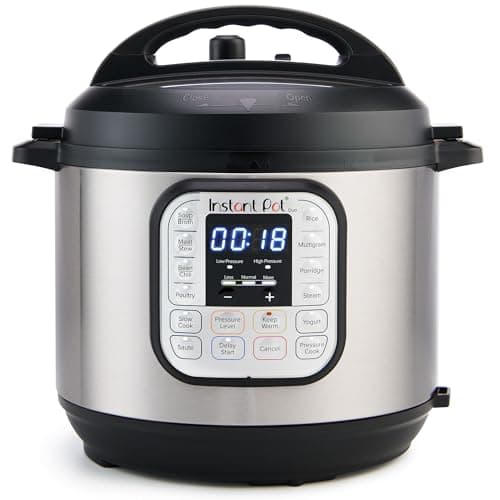
1,000 W
Instant Pot Duo 7-in-1 Electric Pressure Cooker, 6 Quart
The multicooker that made the category, and still the right default. Instant Brands publishes the wattage, the working pressure range and a stainless (not nonstick) inner pot, which is more than most of the field manages — and it costs less than almost all of them.
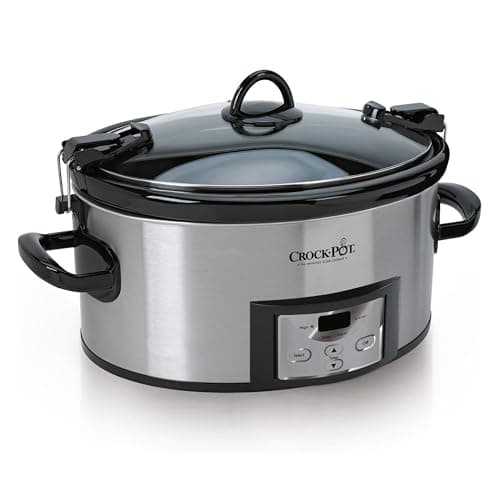
240 W
Crock-Pot 6-Quart Cook & Carry Programmable Slow Cooker
Not a multicooker and not a pressure cooker — a plain 6-quart programmable slow cooker with a locking Cook & Carry lid. It is here as the honest counterweight to the whole category: if the only function you ever used on a multicooker was Slow Cook, this does that one job for a fraction of the price.
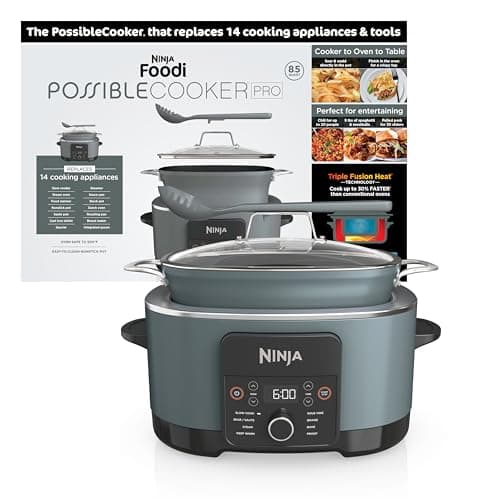
1,200 W
Ninja 14-in-1 PossibleCooker PRO, 8.5-Quart Multicooker (MC1001)
Ninja's current multicooker, and pointedly NOT a pressure cooker. It is an 8.5-quart pot that sears, slow-cooks, steams and goes in the oven to 500°F, at 1,200 W. If you never used the pressure function on your old Instant Pot, this is the more honest machine for how you actually cook.
#ad · As an Amazon Associate we earn from qualifying purchases.
Questions
Frequently asked
Can you slow cook in an Instant Pot?
Is an Instant Pot as good as a Crock-Pot for slow cooking?
What lid do you use to slow cook in an Instant Pot?
Keep reading
Related
Receipts
Sources
- Instant Brands — Instant Pot Duo 6qt product page
- Crock-Pot — 6-Quart Cook & Carry Programmable Slow Cooker product page
- USDA Food Safety and Inspection Service — safe minimum internal cooking temperatures
We have not tested these machines in a lab and we do not pretend to have. Specifications come from the manufacturer's own published documents; electricity rates come from the US Energy Information Administration; prices come from the live Amazon API. Where a figure is not published, the page says “not published” rather than guessing. Read the full method.