Skip to content
DD

HUB 01 · Multicookers

Crock-Pot alternatives

A Crock-Pot does one job and does it for 240 watts, which is why most people replace it for a reason rather than because it stopped working. There are five good reasons and each one points at a different machine - so this page is organized by the reason, not by rank.

By Stephen V.Updated How we rank
#ad

We earn a commission if you buy through our links. It does not change the price you pay, and it does not decide our picks — the scoring rubric is published in full, including what disqualifies a pick. How this works.

The short answer

Quick picks

#CookerBest forScorePrice
011,000 W
8.6
$100.32Amazon
021,200 W
8.2
$169.95Amazon
031,500 W
8.4
$219.99Amazon
041,200 W
7.7
$169.99Amazon
05
Cosori Cosori 6-Quart Electric Pressure Cooker
Cosori 6-Quart Electric Pressure Cooker

The non-Instant-Pot option with published pressure

1,100 W
7.8
$89.99Amazon

#ad· Prices pulled live from Amazon's official Creators API, last checked November 13, 2026. Where we have no verified live price we show none — we would rather leave a gap than print a number that has gone stale. The wattage column is what the manufacturer publishes; “not published” means exactly that, and we have not estimated one. Scores are ours, compiled from published specifications, and are not test results.

The short answer

Buy the Instant Pot Duo 6-quartif your reason is time. It keeps the Slow Cook function you are replacing and adds pressure cooking on top of it, so the same pot roast is a 40-minute job instead of an eight-hour one — and it has an 18/8 stainless inner pot with no coating on it at all. Buy the Ninja PossibleCooker PROif your reason is the pot: 8.5 quarts, oven-safe to 500 °F, and pointedly no pressure mechanism, which is the honest machine for a household that only ever slow-cooked and seared. Buy the Instant Pot Duo Crisp with Ultimate Lid if you want the slow cook and a browned finish from one appliance. The budget pick is the Cosori 6-quart, which publishes both of its working-pressure bands and carries a two-year warranty — double what Instant Brands gives — for less than most of this page.

And read the next section before you buy any of them, because the Crock-Pot wins three things outright and one of them is not close.

What a Crock-Pot is actually good at

Worth stating precisely rather than as a feeling, because all three of these are published figures and all three are reasons to keep the machine you have.

240 watts.Crock-Pot publishes 240 W for the 6-quart Cook & Carry, and that is by a wide margin the lowest draw of any appliance on this site. Every alternative on this page is between 1,000 and 1,500 W. A Crock-Pot running all day uses less electricity than a 1,500 W multicooker uses in a couple of hours, and if cooking cheaply is the point of slow cooking then the Crock-Pot is the cheapest way to do it. We run the arithmetic properly in are electric pressure cookers cheap to run.

The lid locks and the pot travels.That is the entire point of the Cook & Carry name and nothing on this page replaces it. Not one of the five alternatives has a locking travel lid. If the reason you own a slow cooker is that it goes to a potluck, a tailgate or a family dinner, stop reading — there is no alternative here, and our review of the Cook & Carry is the page you want.

There is almost nothing in it to fail.No pressure seal, no sealing gasket to replace every couple of years, no pressure-release valve, no electronics beyond a timer. The crock is removable glazed stoneware rather than a nonstick coating with a finite life — and three of the five alternatives below have a coated pot. The crock is also oval, which takes a roast or a whole bird lengthwise; every alternative on this page is round.

What a Crock-Pot does not do, and this is the whole basis of the page: it does not pressure cook, it does not sauté or sear in the pot, it has no rice or yogurt program, and it will not brown anything. It slow cooks. If that is all you ever used, it is still the right machine, and whether a slow cooker is worth it argues that case at length.

Reason 1: you want the eight hours back

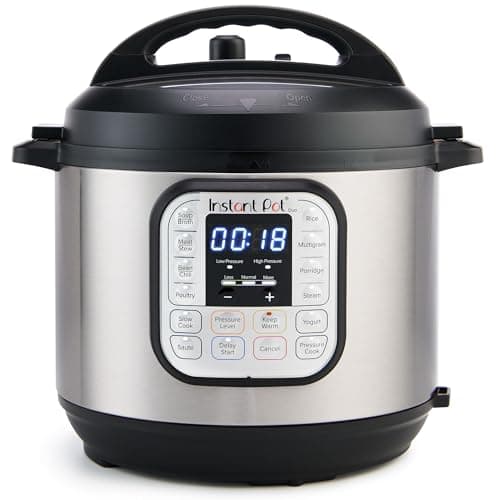
This is why most people leave, and the Instant Pot Duo 6-quart is the answer because it does not ask you to give anything up. Slow Cook is one of its seven published functions, so the recipes you already cook still work; pressure cooking is the addition. A chuck roast that is a six-to-eight-hour job in a Crock-Pot is roughly 40 minutes under pressure, which is the single biggest change in how a kitchen runs that any appliance on this site offers.

Instant Brands publishes 1,000 W, a working-pressure range of 10.2–11.6 psi (70–80 kPa) and an 18/8 stainless tri-ply pot — the only electric cooker on this site with a published pressure figure, and a bare cooking surface with no coating to wear through. It is also the best-documented multicooker we cover at any price, and one of the least expensive machines on this page.

Two honest limits. Slow cooking on an Instant Pot is not identical to slow cooking in a Crock-Pot: the heat comes from a flat element under a metal pot rather than from a wrap-around element around stoneware, and liquid does not reduce the same way under a sealing lid. We walk through what actually changes in can you slow cook in an Instant Pot and how to adjust a recipe in converting slow-cooker recipes. And the Duo has no sous vide and no air fry — it is the plain pressure-and-slow-cook model by design.

Reason 2: you want a bigger pot and no pressure at all

Plenty of people do not want a pressure cooker. They want the slow cooker they already own, in a pot big enough for a party, with the ability to brown the meat before it goes in.

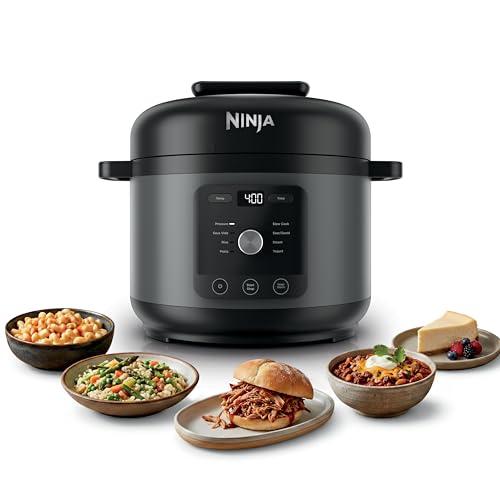
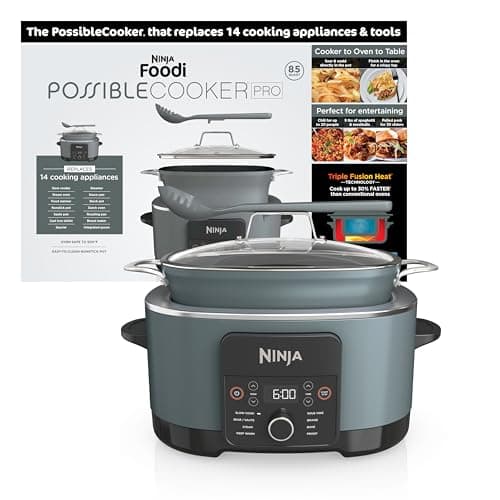
The Ninja PossibleCooker PROis that machine and it is deliberately not a pressure cooker. 8.5 quarts — the largest pot on this page and half again the Crock-Pot's six — 1,200 W, eight real cooking modes including sear/sauté and slow cook, and a pot SharkNinja publishes as oven-safe to 500 °F, so one vessel takes a stew from browning to a finished top under the broiler. For a household that never used the pressure button, this drops the mechanism you did not use and the gasket maintenance that comes with it.

The honest limits: it will not turn dried beans or a tough roast around in 40 minutes, because it cannot — that is pressure's job and this machine does not do it. Ninja's own copy describes the pot as stainless in one place and nonstick in another, which is a documentation inconsistency we could not resolve. And the “14-in-1” count rests on eight actual functions. The direct comparison is PossibleCooker versus Crock-Pot.

Reason 3: you want it to brown as well as braise

The thing a Crock-Pot structurally cannot do is put color on food. Pulled pork comes out of it pale; so does a casserole top. The usual fix is a second appliance.

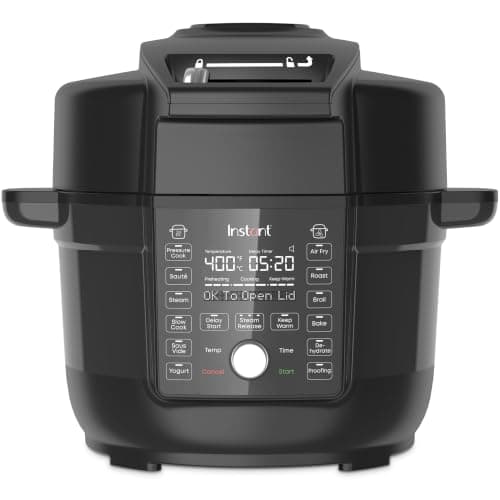
The Instant Pot Duo Crisp with Ultimate Lidis the one lid that both pressurizes and crisps: 6.5 quarts, a stainless inner pot and thirteen published functions including air fry, bake, dehydrate, sous vide and proof. Slow cook is in there too, so this is the full replacement rather than a partial one — the pot that braises the shoulder and then browns it without moving the food.

It is also the most expensive way to leave a Crock-Pot and the least efficient to run: Instant Brands publishes 1,500 W for it, the highest draw of any Instant Pot here, against the Crock-Pot's 240. Switching from pressure to air fry means removing a protective cover over the air-fry element that Instant Brands' own instructions warn will be hot — an oven-mitt step in the middle of a recipe. And one lid doing two jobs is more mechanism to go wrong over a decade. Our air-fryer multicooker ranking has the alternatives if this is your reason.

Reason 4: the coating is your reason

This is the one place the Crock-Pot is genuinely hard to improve on, and it is worth being straight about it: a glazed stoneware crock has no nonstick coating to scratch through, so a reader who leaves a Crock-Pot specifically over coatings is moving in the wrong direction on most of this page.

Two exits. The honest first choice is the stainless-pot Instant Pot at the top of this page — 18/8 stainless, tri-ply base, no coating at all, which is the only bare cooking surface among the five. If you want a Ninja, the Ninja HyperHeat PC201 is the one whose pot SharkNinja publishes as a PFAS-freenonstick ceramic coating over aluminum, named as such in its own specification table — and it publishes 1,200 W, 6.5 quarts, and a function list that explicitly names slow cook alongside pressure, rice, sous vide, steam, sear/sauté and yogurt.

Honest limits: PFAS-free is still a coating, and a coating is a surface with a finite life in a way stainless and glazed stoneware are not. The HyperHeat also has no crisping lid and no air fry function at all, which is the one feature the Foodi it replaces was chosen for. The full surface question, including which makers publish what, is in the stainless and uncoated multicooker ranking.

Reason 5: you want to spend less than the Crock-Pot cost

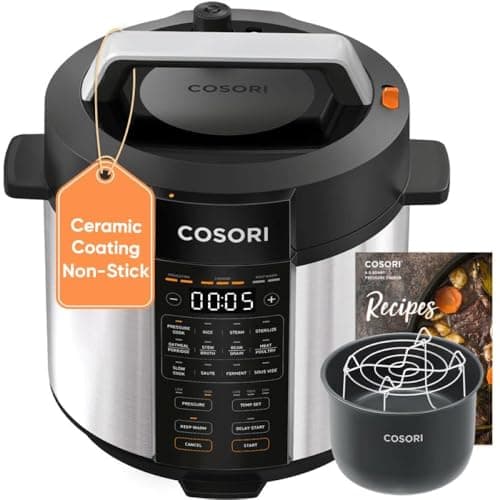
The Cosori 6-quartis the budget pick, and it is the only cooker on this page from outside Instant Brands and SharkNinja that publishes a real working-pressure range: both bands, in psi and kPa — 9.4–12.3 psi high and 5.1–8 psi low — which not even Instant Pot prints on its product pages. 1,100 W, 6 quarts, thirteen functions including sous vide and ferment, and a two-year warranty, the longest on any electric cooker here and double what Instant Brands gives.

The trade is the pot: a removable nonstick-coated interior rather than bare stainless, which is the one thing the Instant Pots do not compromise. Cosori's Amazon listing and its own product page also disagree on the function count. If an uncoated surface is your reason, this is the wrong machine and the Duo is the right one for roughly the same money — Cosori versus Instant Pot is the head-to-head.

The honest version of “do I need to replace it at all?”

If the only function you ever used was Slow Cook and the Crock-Pot still works, the answer is no, and we would rather say that than sell you a multicooker. The 240 W figure is the strongest single argument any appliance on this site has for itself, and a machine with no gasket and no valve will almost certainly outlive everything on this page.

Replace it when the reason is real: you want the time back, you want a bigger pot, you want to brown things, or you want the machine to do three jobs so your counter holds one appliance instead of three. We take both sides of that in do you need a slow cooker if you have an Instant Pot and multicooker versus slow cooker, and the mechanism comparison is in slow cooker versus pressure cooker.

One thing not to do: buy a multicooker to replace a slow cooker and then only use the slow-cook button. You will have paid for a pressure mechanism you do not use, taken on a gasket that needs replacing, and moved to a cooker that draws four to six times as much while doing the same job. That is the most common regret in this category, and it is why the Ninja PossibleCooker is second on this page rather than fifth.

In detail

The picks, in full

01
Instant Pot Instant Pot Duo 7-in-1 Electric Pressure Cooker, 6 Quart

The one to buy if you are not sure

Instant Pot Duo 7-in-1 Electric Pressure Cooker, 6 Quart

Stainless inner potWattage & pressure published
8.6/10

The multicooker that made the category, and still the right default. Instant Brands publishes the wattage, the working pressure range and a stainless (not nonstick) inner pot, which is more than most of the field manages — and it costs less than almost all of them.

Capability
7.5
Capacity
8
Documentation
9.5
Build
8.5
Value
9.5

What it gets right

  • Instant Brands publishes the wattage, the working-pressure range and the pot material — the full set, which most of the field does not, and the only electric cooker on this site with a published pressure figure
  • The 18/8 stainless inner pot has no coating to scratch off, so it outlives the nonstick pots in cookers costing more
  • At the current price it is the cheapest genuinely well-documented multicooker on this site, and the best-documented one at any price

What it doesn't

  • No sous vide or air-fry program — this is the plain pressure-and-slow-cook model, by design
  • The steam release is a manual toggle, not the quiet auto-release of the Duo Plus or Pro
  • Seven functions is fewer than the sticker-count leaders, though most of those are the same element at different set points

What it costs to run

About 18.8¢ an hour at full rated draw, at the US average of 18.83¢ per kWh.

1,000 W ÷ 1000 × 1 h × 18.83¢ = 18.8¢

1000 W at 120 V / 60 Hz, published on the Instant Pot Duo product page and confirmed on the IP-DUO60 manual specification page. This is an upper bound: the element only draws full power while it is heating up or pressurizing, then cycles off to hold temperature, and no manufacturer publishes a duty cycle — so we compute at full rated draw rather than invent a correction factor. The full method is published.

Skip this if…

…you specifically want sous vide, a quieter steam release, or an air-fry lid — the Duo has none of those, and reaching for it and then wishing it did more is the most common Instant Pot regret. Step up to the Pro or the Duo Crisp instead.

$100.32on Amazon

$109.999% off

Price last checked November 13, 2026. Prices move constantly — Amazon's at checkout is the one that counts.

#ad · we may earn a commission from this link to Instant Pot Duo 7-in-1 Electric Pressure Cooker, 6 Quart

02
Ninja Ninja 14-in-1 PossibleCooker PRO, 8.5-Quart Multicooker (MC1001)

Big-batch cooking without pressure

Ninja 14-in-1 PossibleCooker PRO, 8.5-Quart Multicooker (MC1001)

Oven-safe potNo pressure cooking
8.2/10

Ninja's current multicooker, and pointedly NOT a pressure cooker. It is an 8.5-quart pot that sears, slow-cooks, steams and goes in the oven to 500°F, at 1,200 W. If you never used the pressure function on your old Instant Pot, this is the more honest machine for how you actually cook.

Capability
7.5
Capacity
9.5
Documentation
8
Build
8
Value
8

What it gets right

  • 8.5 quarts and an oven-safe pot to 500°F means one vessel from sear to slow-cook to a browned finish under the broiler
  • SharkNinja publishes the wattage plainly, which a surprising number of multicookers do not
  • For a household that only ever slow-cooked and seared, this drops the pressure mechanism you never used and the maintenance it needs

What it doesn't

  • It does not pressure cook — so it will not turn dried beans or a tough roast around in 40 minutes the way an Instant Pot does
  • The '14-in-1' count rests on 8 actual functions; the extra six are the appliances it claims to replace, not separate modes
  • The pot's material is described inconsistently across Ninja's own copy, stainless in one place and nonstick in another

What it costs to run

About 22.6¢ an hour at full rated draw, at the US average of 18.83¢ per kWh.

1,200 W ÷ 1000 × 1 h × 18.83¢ = 22.6¢

1200 W as published by SharkNinja on the 8.5-quart PossibleCooker PRO (MC1001) product page. This is an upper bound: the element only draws full power while it is heating up or pressurizing, then cycles off to hold temperature, and no manufacturer publishes a duty cycle — so we compute at full rated draw rather than invent a correction factor. The full method is published.

Skip this if…

…speed is why you want a multicooker. The entire point of pressure cooking is time, and this machine deliberately does not do it — buy an Instant Pot if a weeknight roast is the goal.

$169.95on Amazon

Price last checked November 13, 2026. Prices move constantly — Amazon's at checkout is the one that counts.

#ad · we may earn a commission from this link to Ninja 14-in-1 PossibleCooker PRO, 8.5-Quart Multicooker (MC1001)

03
Instant Pot Instant Pot Duo Crisp Ultimate Lid, 13-in-1 Air Fryer & Pressure Cooker, 6.5 Quart

Pressure cook and air fry under one lid

Instant Pot Duo Crisp Ultimate Lid, 13-in-1 Air Fryer & Pressure Cooker, 6.5 Quart

One lid, both jobsHighest draw here
8.4/10

The one lid that both pressurizes and crisps, which is the whole argument against buying a pressure cooker and an air fryer separately. It draws 1,500 W — the most of any Instant Pot here — and that higher draw is the air-fry element doing real work, not a spec-sheet flourish.

Capability
9.5
Capacity
8.5
Documentation
8.5
Build
8
Value
7.5

What it gets right

  • The Ultimate Lid does pressure and air fry without swapping hardware, which is the genuine space-saving argument for the combo
  • Thirteen functions here include the ones people actually asked for — sous vide, dehydrate and proof, not just relabeled heat
  • Instant Brands publishes the 1,500 W rating and a stainless inner pot in its own manual — full documentation on a combo unit, which is rare

What it doesn't

  • 1,500 W is the highest draw of any Instant Pot on this site, so it is the most expensive per minute to run
  • Switching from pressure to air fry has an extra step: the protective pressure cooking cover over the air-fry element comes out first, and Instant Brands' own instructions warn it will be hot — an oven-mitt job mid-recipe
  • The single Ultimate Lid is more complex than a plain pressure lid, so there is more to go wrong over years of use

What it costs to run

About 28.2¢ an hour at full rated draw, at the US average of 18.83¢ per kWh.

1,500 W ÷ 1000 × 1 h × 18.83¢ = 28.2¢

1500 W at 120 V / 60 Hz, published on Instant Brands' own Duo Crisp with Ultimate Lid product page and confirmed in the model SLCO65000 user manual specification table. This is an upper bound: the element only draws full power while it is heating up or pressurizing, then cycles off to hold temperature, and no manufacturer publishes a duty cycle — so we compute at full rated draw rather than invent a correction factor. The full method is published.

Skip this if…

…you already own a separate air fryer you are happy with. The combo's entire premium is putting both jobs in one box; if crisping is already handled, the plain Pro does the pressure half better for less.

$219.99on Amazon

Price last checked November 13, 2026. Prices move constantly — Amazon's at checkout is the one that counts.

#ad · we may earn a commission from this link to Instant Pot Duo Crisp Ultimate Lid, 13-in-1 Air Fryer & Pressure Cooker, 6.5 Quart

04
Ninja Ninja HyperHeat 9-in-1 Pressure Cooker, 6.5-Quart (PC201)

Ninja's current pressure cooker

Ninja HyperHeat 9-in-1 Pressure Cooker, 6.5-Quart (PC201)

PFAS-free ceramic potNo air fry / crisping lid
7.7/10

Ninja's replacement for the Foodi pressure line, and a plainer machine than the one it replaces: 1,200 W, 6.5 quarts, sous vide and yogurt programs, a PFAS-free ceramic-coated pot — and no crisping lid. If you want a Ninja pressure cooker you can buy today, this is it. If you wanted the air fryer, this is not the one.

Capability
7.5
Capacity
8.5
Documentation
7.5
Build
7
Value
8

What it gets right

  • It is the Ninja pressure cooker that is actually in stock — the Foodi pressure line it replaces is gone, and the PossibleCooker does not pressure cook at all
  • Sous vide and yogurt are built-in programs, which the Foodi OS300 did not offer
  • SharkNinja publishes the wattage, the voltage and the pot material plainly, including that the ceramic coating is PFAS-free

What it doesn't

  • No crisping lid and no air fry function — the single feature that made the Foodi worth choosing over an Instant Pot is not on this machine
  • SharkNinja markets it as 9-in-1 but only itemizes seven of the nine functions on its own spec page, so the count is doing some work
  • The pot is ceramic-coated aluminum rather than the bare 18/8 stainless Instant Pot uses; a coating is a thing that can eventually fail, and stainless is not

What it costs to run

About 22.6¢ an hour at full rated draw, at the US average of 18.83¢ per kWh.

1,200 W ÷ 1000 × 1 h × 18.83¢ = 22.6¢

1,200 watts at 120 volts, published in SharkNinja's own specification table for the HyperHeat PC201. This is an upper bound: the element only draws full power while it is heating up or pressurizing, then cycles off to hold temperature, and no manufacturer publishes a duty cycle — so we compute at full rated draw rather than invent a correction factor. The full method is published.

Skip this if…

…you want to pressure-cook and then crisp in the same pot. This machine does not air fry, full stop — buy the Instant Pot Duo Crisp for that, and do not let the Ninja badge talk you into thinking it is the Foodi with a new name.

$169.99on Amazon

Price last checked November 13, 2026. Prices move constantly — Amazon's at checkout is the one that counts.

#ad · we may earn a commission from this link to Ninja HyperHeat 9-in-1 Pressure Cooker, 6.5-Quart (PC201)

05
Cosori Cosori 6-Quart Electric Pressure Cooker

The non-Instant-Pot option with published pressure

Cosori 6-Quart Electric Pressure Cooker

Both pressure bands publishedCoated inner pot
7.8/10

The one budget cooker here from outside Instant Brands that publishes a real working-pressure range — both the low and the high band, in psi and kPa, which not even Instant Pot does on its product pages. It loses to the Instant Pots on one spec that matters more than any of that: the pot is coated, not bare stainless.

Capability
8
Capacity
8
Documentation
8.5
Build
6.5
Value
8

What it gets right

  • Publishes both working-pressure bands in psi and kPa on its own product page — the most complete pressure documentation of any cooker on this list
  • Two years of warranty, double the one year Instant Brands gives, and the longest on any electric cooker here
  • Includes a sous vide and a ferment program the similarly-priced Instant Pot Duo does not have

What it doesn't

  • The inner pot has a nonstick interior coating rather than bare stainless — a surface that can scratch and will eventually wear, which is the one thing the Instant Pots do not compromise
  • Cosori's Amazon listing and its own product page do not agree on the function count, which is a documentation inconsistency the Instant Pot pages do not have
  • A smaller accessory and replacement-part ecosystem than Instant Pot, which matters in year three when a sealing ring perishes

What it costs to run

About 20.7¢ an hour at full rated draw, at the US average of 18.83¢ per kWh.

1,100 W ÷ 1000 × 1 h × 18.83¢ = 20.7¢

1100 W, published on Cosori's own 6.0-Quart Pressure Cooker product page alongside the working-pressure bands. This is an upper bound: the element only draws full power while it is heating up or pressurizing, then cycles off to hold temperature, and no manufacturer publishes a duty cycle — so we compute at full rated draw rather than invent a correction factor. The full method is published.

Skip this if…

…you want a pot with no coating on it. If an uncoated cooking surface is the reason you are buying a pressure cooker, this is the wrong one — buy a stainless-pot Instant Pot instead, for about the same money.

$89.99on Amazon

Price last checked November 13, 2026. Prices move constantly — Amazon's at checkout is the one that counts.

#ad · we may earn a commission from this link to Cosori 6-Quart Electric Pressure Cooker

Choosing by your reason, in one minute

Your reason is time. Instant Pot Duo 6-quart. Keeps Slow Cook, adds pressure, published pressure range, bare stainless pot, best-documented machine here.

Your reason is the pot size, and you do not want pressure.Ninja PossibleCooker PRO. 8.5 quarts, sears, slow cooks, oven-safe to 500 °F.

Your reason is that a Crock-Pot cannot brown anything.Instant Pot Duo Crisp with Ultimate Lid. One lid, both jobs — and the highest running cost on this page.

Your reason is coatings. The stainless-pot Duo first; the PFAS-free ceramic HyperHeat if it has to be a Ninja. And note that your glazed stoneware crock already beats every coating here.

Your reason is money, or warranty. Cosori 6-quart. Two years, both pressure bands published, coated pot.

Your reason is that the lid has to lock for the drive. Then keep the Crock-Pot. Nothing on this page travels.

The three figures to carry into the decision

240 W against 1,000–1,500 W. That is the Crock-Pot against every alternative here, and on an all-day cook it is the difference you will actually notice on a bill.

Eight hours against about forty minutes. That is a braise slow-cooked versus pressure-cooked, and it is the only reason most people switch.

One year against two. Instant Brands and SharkNinja give one year on everything here; Cosori gives two. Nobody on this page gives more.
The hardware

The cookers this page is about

The cookers referred to above, with prices pulled live from Amazon and dated on every card. Full rankings live in the roundups linked from this page.

  • Crock-Pot Crock-Pot 6-Quart Cook & Carry Programmable Slow Cooker

    240 W

    Crock-Pot 6-Quart Cook & Carry Programmable Slow Cooker

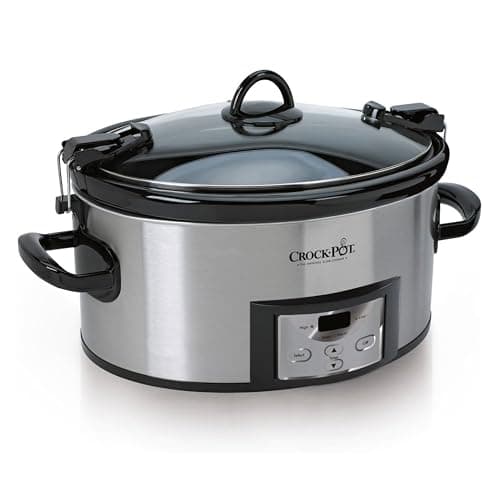
    Not a multicooker and not a pressure cooker — a plain 6-quart programmable slow cooker with a locking Cook & Carry lid. It is here as the honest counterweight to the whole category: if the only function you ever used on a multicooker was Slow Cook, this does that one job for a fraction of the price.

#ad · As an Amazon Associate we earn from qualifying purchases.

How we picked

Machines we claim to have tested: 0

Everyone in this category tells you they tested twenty cookers. We have tested none, and we say so. Here is what we do instead: read the manufacturer's manual and spec page, record the published wattage, capacity, pressure or temperature figure and warranty term, work out what the machine costs to run per hour, show the arithmetic so you can redo it with your own electricity rate, and cite all of it. Where a brand publishes no wattage, we print no running cost rather than borrowing a number from a similar model. Prices come live from Amazon's API and disappear rather than go stale.

The scores above are judgments from that documented research — not test results. One of the five metrics is Documentation: whether the manufacturer will tell you what its cooker draws at all. The full rubric, including what disqualifies a pick, is published in full.

Questions

Frequently asked

What is the best alternative to a Crock-Pot?
The Instant Pot Duo 6-quart, for most people. It keeps the Slow Cook function you are replacing - so your existing recipes still work - and adds pressure cooking, which turns an eight-hour braise into roughly forty minutes. Instant Brands publishes 1,000 W, a 10.2-11.6 psi working-pressure range and an 18/8 stainless tri-ply pot with no coating on it. If you never want a pressure mechanism, the 8.5-quart Ninja PossibleCooker PRO is the better answer: it sears, slow cooks and goes in the oven to 500 F, and it does not pressurize at all.
What can I use instead of a crock pot?
Any multicooker with a published slow-cook function, a plain stovetop Dutch oven in a low oven, or a dedicated multicooker without pressure such as the Ninja PossibleCooker PRO. The thing to check before you switch is which Crock-Pot feature you actually rely on. If it is unattended all-day cooking, almost anything here does it. If it is the 240 W running cost or the locking Cook & Carry lid that lets the pot travel, nothing on this page matches it and you should buy another slow cooker.
Is an Instant Pot as good as a Crock-Pot at slow cooking?
Close, and not identical. An Instant Pot heats a metal pot from a flat element underneath; a Crock-Pot wraps a lower-power element around a stoneware crock, which gives gentler, more even sides and a different evaporation rate under its loose lid. In practice recipes work with adjustments rather than unchanged - usually a little less liquid and attention to the lid. The bigger difference is the running cost: 1,000 W against 240 W for the same eight hours.
Why is a Crock-Pot so much cheaper to run?
Because it draws 240 W, which Crock-Pot publishes for the 6-quart Cook & Carry, and it is the lowest figure of any appliance on this site. The alternatives on this page are 1,000 W (Instant Pot Duo), 1,100 W (Cosori), 1,200 W (both Ninjas) and 1,500 W (Duo Crisp). A slow cooker gets away with it because it is designed to hold a low temperature for hours rather than to reach pressure or to crisp, and that single design decision is the strongest argument for keeping one.
Is there a Crock-Pot alternative without a nonstick coating?
Yes, and it is the one at the top of this page: the Instant Pot Duo's inner pot is 18/8 stainless with a tri-ply base and no coating at all. It is the only bare cooking surface among the five alternatives here. It is worth knowing that a Crock-Pot's glazed stoneware crock is also not a nonstick coating, so if coatings are your reason for leaving, the machine you own is already better on that axis than three of the five below.
Can I take a multicooker to a potluck the way I take a Crock-Pot?
Not safely, and not one on this page. The locking Cook & Carry lid is the Crock-Pot feature with no equivalent here - every alternative has either a pressure lid that is not designed to be clamped shut for transport or a loose lid that will slosh. If carrying food is a regular part of why you own a slow cooker, that is a reason to keep it even if you also buy a multicooker for the weeknight cooking.
Should I replace a Crock-Pot that still works?
Only if you have a specific reason: you want the time back, you need a bigger pot, you want to brown food in the same vessel, or you want one appliance instead of three on the counter. If the only button you ever pressed was Low and it still works, replacing it means paying for a pressure mechanism you will not use, taking on a sealing gasket that needs replacing, and running four to six times the wattage to do the same job.
Are the prices on this page current?
They come from a daily price refresh, and the Quick Picks table prints the date of the most recent one next to the buy buttons. If the refresh stops, every number on this site disappears and the buttons fall back to 'Check price on Amazon' rather than showing a stale figure. Treat the table as the authority over any number in the prose.

Keep reading

Receipts

Sources

We have not tested these machines in a lab and we do not pretend to have. Specifications come from the manufacturer's own published documents; electricity rates come from the US Energy Information Administration; prices come from the live Amazon API. Where a figure is not published, the page says “not published” rather than guessing. Read the full method.