Skip to content
DD

HUB 04 · Buying Guides

The Best Countertop Cooking Appliances

Not every countertop appliance earns its space. These three do the most for the most people — a multicooker, a rice cooker and a sous vide machine — and here is the single best pick in each, with the honest case for and against owning it.

By Stephen V.Updated How we rank
#ad

We earn a commission if you buy through our links. It does not change the price you pay, and it does not decide our picks — the scoring rubric is published in full, including what disqualifies a pick. How this works.

The short answer

Quick picks

#CookerBest forScorePrice
011,000 W
8.6
$104.04Amazon
02680 W
8.1
$265.96Amazon
03
Anova Anova Precision Cooker 3.0 (WiFi), 1100 W
Anova Precision Cooker 3.0 (WiFi), 1100 W

The default, and it earned it

1,100 W
9.0
$168.96Amazon

#ad · Prices pulled live from the Amazon Product API, last checked Jul 21, 2026. Where we have no verified live price we show none — we would rather leave a gap than print a number that has gone stale. The wattage column is what the manufacturer publishes; “not published” means exactly that, and we have not estimated one. Scores are ours, compiled from published specifications, and are not test results.

The three that earn their counter space

Counter space is the real currency in a kitchen, and most “must-have” appliances do not earn it. These three do the most work for the most people. If you owned only one, own a multicooker; if you eat rice, add a rice cooker; if you cook a lot of steak or chicken and want it exact, add a sous vide machine. Here is the single best pick in each category and whether it belongs on your counter.

The multicooker: start here

The Instant Pot Duo is the one appliance that replaces the most others — pressure cooker, slow cooker, rice cooker, steamer and sauté pan in one stainless pot. It is the highest-leverage kitchen purchase most people can make, and it is the one to buy first. If you buy nothing else on this page, buy this.

The rice cooker: if rice is a staple

The Zojirushi Neuro Fuzzy earns its space only if you eat rice regularly — but if you do, it earns it every day. It makes more even rice than the multicooker and holds it perfectly warm for hours. For a rice-eating household it is not a luxury; for everyone else it is a second machine doing a job the Instant Pot already does adequately.

The sous vide: if you cook proteins

The Anova Precision Cooker 3.0 is the smallest of the three to store — it is just a stick — and the most transformative if you cook steak, chicken or eggs and want them exact every time. It is the one to add last, once the pressure cooker is a habit, and only if precise proteins are something you actually care about.

What we left off, and why

No air fryers, blenders or stand mixers — not because they are bad, but because this site is about multicookers, rice cookers and sous vide, and a roundup that pretends to rank everything ranks nothing well. These three are the countertop cookers we can compare on published specs and stand behind. Buy the multicooker first, and add the others only when a real, repeated need appears.

In detail

The picks, in full

01
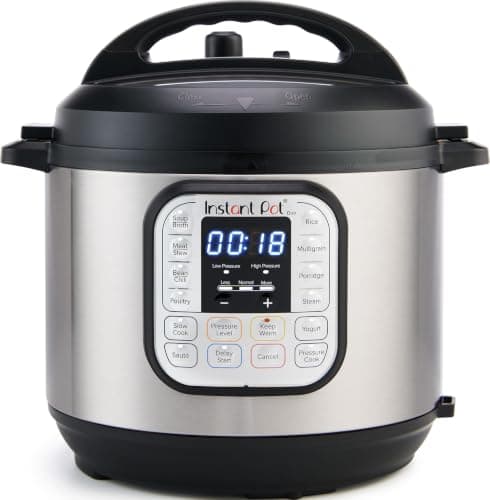
Instant Pot Instant Pot Duo 7-in-1 Electric Pressure Cooker, 6 Quart

The one to buy if you are not sure

Instant Pot Duo 7-in-1 Electric Pressure Cooker, 6 Quart

Stainless inner potWattage & pressure published
8.6/10

The multicooker that made the category, and still the right default. Instant Brands publishes the wattage, the working pressure range and a stainless (not nonstick) inner pot, which is more than most of the field manages — and it costs less than almost all of them.

Capability
7.5
Capacity
8
Documentation
9.5
Build
8.5
Value
9.5

What it gets right

  • Instant Brands publishes the wattage, the working-pressure range and the pot material — the full set, which most of the field does not
  • The 18/8 stainless inner pot has no coating to scratch off, so it outlives the nonstick pots in cookers costing more
  • At the current price it is the cheapest genuinely well-documented multicooker on this site

What it doesn't

  • No sous vide or air-fry program — this is the plain pressure-and-slow-cook model, by design
  • The steam release is a manual toggle, not the quiet auto-release of the Duo Plus or Pro
  • Seven functions is fewer than the sticker-count leaders, though most of those are the same element at different set points

What it costs to run

About 18.8¢ an hour at full rated draw, at the US average of 18.83¢ per kWh.

1,000 W ÷ 1000 × 1 h × 18.83¢ = 18.8¢

1000 W at 120 V / 60 Hz, published on the Instant Pot Duo product page and confirmed on the IP-DUO60 manual specification page. This is an upper bound: the element only draws full power while it is heating up or pressurizing, then cycles off to hold temperature, and no manufacturer publishes a duty cycle — so we compute at full rated draw rather than invent a correction factor. The full method is published.

Skip this if…

you specifically want sous vide, a quieter steam release, or an air-fry lid — the Duo has none of those, and reaching for it and then wishing it did more is the most common Instant Pot regret. Step up to the Pro or Duo Crisp instead.

$104.04on Amazon

$109.995% off

Price last checked Jul 21, 2026. Prices move constantly — Amazon's at checkout is the one that counts.

#ad · we may earn a commission from this link to Instant Pot Duo 7-in-1 Electric Pressure Cooker, 6 Quart

02
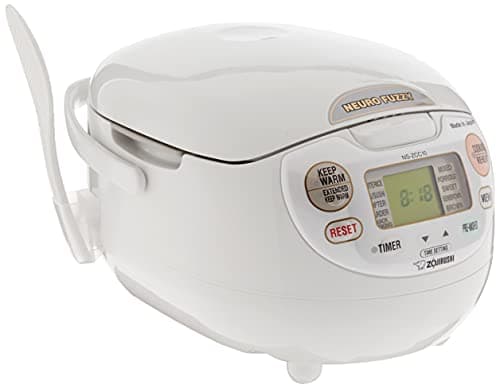
Zojirushi Zojirushi NS-ZCC10 Neuro Fuzzy Rice Cooker & Warmer, 5.5 Cup

The benchmark fuzzy-logic rice cooker

Zojirushi NS-ZCC10 Neuro Fuzzy Rice Cooker & Warmer, 5.5 Cup

Made in JapanFuzzy-logic heat control
8.1/10

The rice cooker every other one is measured against. Its Neuro Fuzzy microcomputer adjusts heat through the cook rather than running a fixed timer, which is the whole reason a $260 rice cooker cooks rice better than a $30 one. Made in Japan, 680 W, and the settings that matter are all there.

Capability
8.5
Capacity
7.5
Documentation
9
Build
8
Value
7.5

What it gets right

  • Neuro Fuzzy logic adjusts the heat during the cook, which is what actually separates good rice from timer-and-hope rice
  • Zojirushi publishes the wattage, the capacity and the origin plainly — and it is genuinely made in Japan
  • The settings people actually use are all present: white, sushi, softer, harder, mixed, porridge, brown, rinse-free

What it doesn't

  • It is a Micom cooker, not induction — the NP-HCC10 heats the whole pot electromagnetically and cooks marginally better, for a lot more money
  • At this price you are paying for the logic, not the build; the pot and body are ordinary
  • The retro 1990s styling has not changed in years and looks it

What it costs to run

About 12.8¢ an hour at full rated draw, at the US average of 18.83¢ per kWh.

680 W ÷ 1000 × 1 h × 18.83¢ = 12.8¢

680 W at 120 V, published on Zojirushi's own NS-ZCC10 product page. This is an upper bound: the element only draws full power while it is heating up or pressurizing, then cycles off to hold temperature, and no manufacturer publishes a duty cycle — so we compute at full rated draw rather than invent a correction factor. The full method is published.

Skip this if…

you eat rice most days and want the genuine best — then the induction NP-HCC10 is the upgrade, not this. Or if you cook rice a couple of times a week and $260 feels steep for the job, a budget Aroma does 80% of it for a sixth of the price.

$265.96on Amazon

Price last checked Jul 21, 2026. Prices move constantly — Amazon's at checkout is the one that counts.

#ad · we may earn a commission from this link to Zojirushi NS-ZCC10 Neuro Fuzzy Rice Cooker & Warmer, 5.5 Cup

03
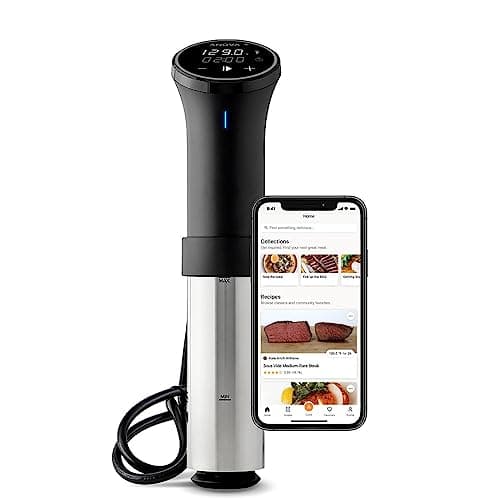
Anova Anova Precision Cooker 3.0 (WiFi), 1100 W

The default, and it earned it

Anova Precision Cooker 3.0 (WiFi), 1100 W

Fully specifiedWorks without the app
9.0/10

The sous vide circulator most people should buy. Anova publishes the full specification — 1,100 W, a 0–92°C range, ±0.1°C accuracy, an 8 L/min pump — and backs it with a two-year warranty, the longest here. It has an on-device screen so it works without the app, which the Joule does not.

Capability
9.5
Capacity
8.5
Documentation
10
Build
8.5
Value
8.5

What it gets right

  • Anova publishes the complete specification — wattage, temperature range, accuracy and pump flow — which almost nobody else in this class does
  • An on-device touchscreen means it works fully without a phone, unlike the app-only Joule
  • A two-year warranty, the longest of any sous vide machine on this site

What it doesn't

  • At 325 mm tall it is a large device to store next to the slimmer Nano or Joule
  • The clamp-and-skirt design is bulkier than the Joule's magnetic foot
  • 1,100 W is a real draw — powerful, but the most per hour of the sub-premium circulators here alongside the Joule and Greater Goods

What it costs to run

About 20.7¢ an hour at full rated draw, at the US average of 18.83¢ per kWh.

1,100 W ÷ 1000 × 1 h × 18.83¢ = 20.7¢

1100 W, published on Anova Culinary's own Precision Cooker 3.0 product page alongside the temperature range, accuracy and pump rate. This is an upper bound: the element only draws full power while it is heating up or pressurizing, then cycles off to hold temperature, and no manufacturer publishes a duty cycle — so we compute at full rated draw rather than invent a correction factor. The full method is published.

Skip this if…

you want the smallest possible device or you cook small portions in shallow water — the slimmer Nano is cheaper, lighter and enough for a single steak, and this is the one to buy only if you want the full power and the longer range.

$168.96on Amazon

$229.0026% off

Price last checked Jul 21, 2026. Prices move constantly — Amazon's at checkout is the one that counts.

#ad · we may earn a commission from this link to Anova Precision Cooker 3.0 (WiFi), 1100 W

How we picked

Machines we claim to have tested: 0

Everyone in this category tells you they tested twenty cookers. We have tested none, and we say so. Here is what we do instead: read the manufacturer's manual and spec page, record the published wattage, capacity, pressure or temperature figure and warranty term, work out what the machine costs to run per hour, show the arithmetic so you can redo it with your own electricity rate, and cite all of it. Where a brand publishes no wattage, we print no running cost rather than borrowing a number from a similar model. Prices come live from Amazon's API and disappear rather than go stale.

The scores above are judgments from that documented research — not test results. One of the five metrics is Documentation: whether the manufacturer will tell you what its cooker draws at all. The full rubric, including what disqualifies a pick, is published in full.

Questions

Frequently asked

What is the one kitchen appliance everyone should own?
A multicooker like the Instant Pot Duo. It replaces a pressure cooker, slow cooker, rice cooker, steamer and sauté pan in one machine, which makes it the highest-leverage single purchase for most kitchens. If you buy only one countertop cooker, buy this.
Do I need a rice cooker if I have an Instant Pot?
Only if you eat rice most days or want specialty-rice quality — the Instant Pot cooks perfectly good everyday rice on its own. A dedicated rice cooker makes more even rice and holds it warm better, which is worth it for rice-heavy households. We compare the two directly here.
Is a sous vide machine worth owning?
If you cook steak, chicken or eggs and want them cooked to an exact doneness every time, yes — and a capable one now costs under $100. If you rarely cook proteins or want fast, crisp food, it will sit in a drawer. It is the appliance to add last, once you know you want that precision.

Keep reading

Receipts

Sources

We have not tested these machines in a lab and we do not pretend to have. Specifications come from the manufacturer's own published documents; electricity rates come from the US Energy Information Administration; prices come from the live Amazon API. Where a figure is not published, the page says “not published” rather than guessing. Read the full method.