What a splurge cooker has to prove
At the top of each category the price gap is real, and the only honest reason to pay it is a mechanism the cheaper machine does not have: induction that heats the whole pot instead of the base, pressure that raises the boiling point, a lid that pressure-cooks and air-fries without swapping hardware. Every pick below has one, and every entry says who will actually notice it — because the fastest way to waste a generous budget is to give a daily-rice machine to someone who eats rice twice a month.
On price: nothing on this page prints a number; the live, dated price is on each card. Several of these machines discount irregularly, and one or two have a record of being cheaper outside Black Friday than during it — see our Black Friday & Cyber Monday hub before you assume November is the time to buy.
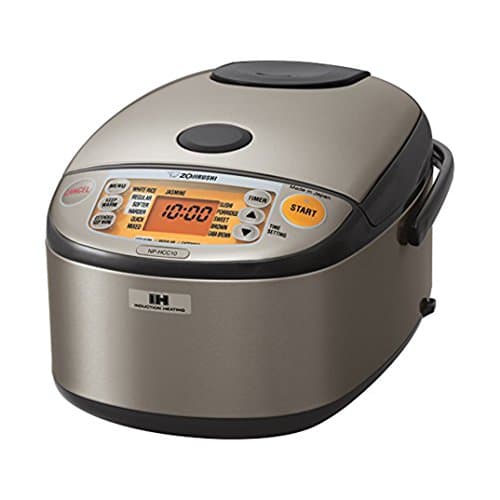
The best rice, for someone who eats it daily: Zojirushi NP-HCC10 induction
Who it suits: the person for whom rice is a daily staple, not a side. Why it lands: induction heats the whole pot electromagnetically rather than warming the base — the most even, responsive heat available in a home rice cooker — with a triple heater and the fullest program set on the site, and it is made in Japan. It tops our Japanese rice cooker rankings. Check before buying: at a published 1,230 W it is the most expensive rice cooker here to run per cook, and for someone cooking rice twice a week the gap over the Neuro Fuzzy below is small and hard to justify. Our are expensive rice cookers worth it page is the honest read.
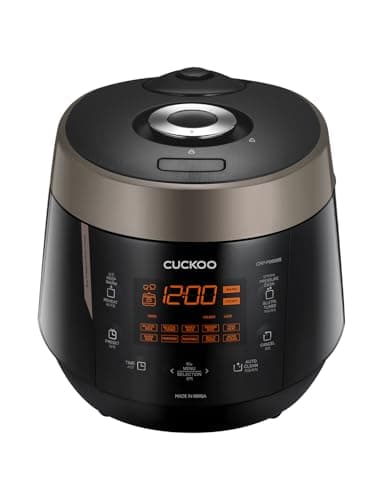
For the sticky-rice devotee: Cuckoo CRP-P0609S pressure
Who it suits: anyone who loves Korean or Japanese short-grain rice and notices texture. Why it lands: pressure raises the boiling point and produces a fluffier, stickier grain — the real advantage of the Korean-style cooker — on a 304 stainless-backed pot with fuzzy logic, GABA, porridge and a scorched-rice mode. It makes the fluffiest grain of the field in our Cuckoo review. Check before buying: a pressure cooker has a sealing gasket that eventually needs replacing, the talking voice guide is not to everyone's taste, and the wattage is only on the manual.
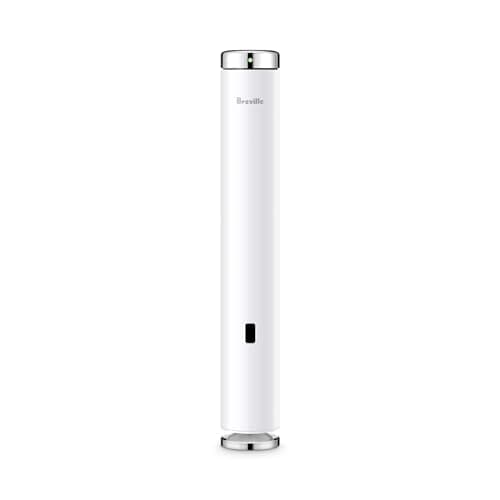
For the design-minded sous vide cook: Breville Joule Turbo
Who it suits: the cook who lives in their phone and likes beautiful tools. Why it lands: it is the most compact circulator we rank, stands in a pan on a magnetic foot without a clamp, is IPX7 waterproof, and its Turbo mode and visual doneness guide are the best beginner tools in the category. Full detail in our Joule Turbo review. Check before buying — this one matters: it is app-only. No buttons, no screen; if the recipient is the kind of person who would rather not pair an appliance to a phone, give the Anova instead. Breville also publishes no temperature-accuracy figure, and the warranty is one year to the Anova's two.
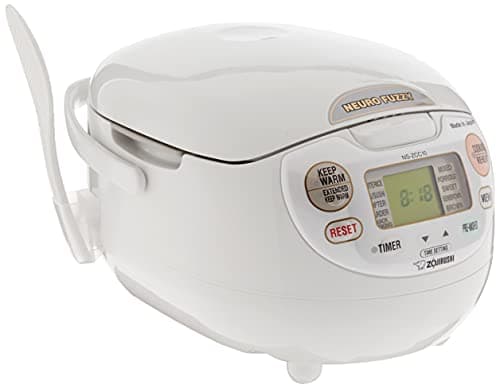
The classic: Zojirushi NS-ZCC10 Neuro Fuzzy
Who it suits: a rice lover who does not need the very top of the range — which is most rice lovers. Why it lands: it is the benchmark fuzzy-logic cooker, made in Japan, with every setting people actually use, and a step up from whatever basic cooker they own now that they will notice every time they cook. It leads our rice cooker rankings. Check before buying: it is Micom, not induction; the pot and body are ordinary at the price; and the retro styling has not changed in years.
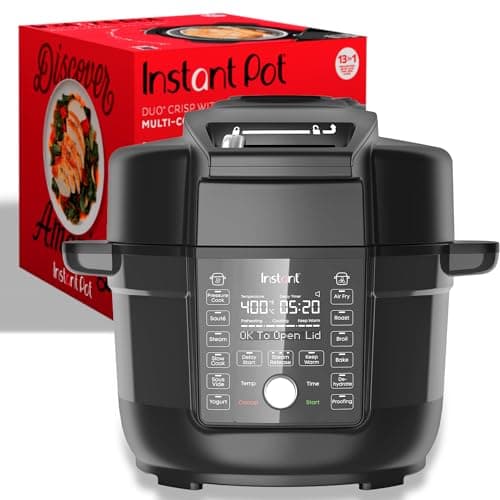
For the one-pot-does-everything household: Instant Pot Duo Crisp
Who it suits: a family that wants a pressure cooker and an air fryer and has room for only one appliance. Why it lands: the Ultimate Lid pressure-cooks and air-fries without swapping hardware, the thirteen functions include the ones people actually asked for (sous vide, dehydrate, proof), and Instant Brands publishes the full documentation — rare on a combo unit. It wins our air-fryer multicooker page. Check before buying: at 1,500 W it is the highest-draw Instant Pot on the site, switching from pressure to air fry means lifting out a hot protective cover first, and the single complex lid has more to go wrong over years than a plain pressure lid.
Three things to check before you buy any cooker as a gift
1. Counter and cupboard space. A 6-quart multicooker takes real counter space; a full-size rice cooker is smaller but lives on the counter permanently if it is used daily; a sous vide circulator is a stick that goes in a drawer but needs a pot or container to clip onto. The manufacturer's page linked from every spec chip lists the exact dimensions. If the recipient has a small kitchen, our small-kitchen picks are the safer list.
2. Whether they already own one. The most common way a cooking gift fails is duplication. An Instant Pot owner does not need a second 6-quart; they might love a rice cooker or a circulator instead — our do-you-need-both guides explain what each adds.
3. The return window and the warranty. Every warranty term on this site is read from the manufacturer's own document and shown on the product card; a few brands publish none at all, and we say so on the card rather than guessing. Buy from a listing with a clear return policy, and keep the box until the recipient has used it once.
How we picked
Machines we claim to have tested: 0
Everyone in this category tells you they tested twenty cookers. We have tested none, and we say so. Here is what we do instead: read the manufacturer's manual and spec page, record the published wattage, capacity, pressure or temperature figure and warranty term, work out what the machine costs to run per hour, show the arithmetic so you can redo it with your own electricity rate, and cite all of it. Where a brand publishes no wattage, we print no running cost rather than borrowing a number from a similar model. Prices come live from Amazon's API and disappear rather than go stale.
The scores above are judgments from that documented research — not test results. One of the five metrics is Documentation: whether the manufacturer will tell you what its cooker draws at all. The full rubric, including what disqualifies a pick, is published in full.