Skip to content
DD

HUB 01 · Multicookers

Instant Pot Duo Plus vs RIO Wide

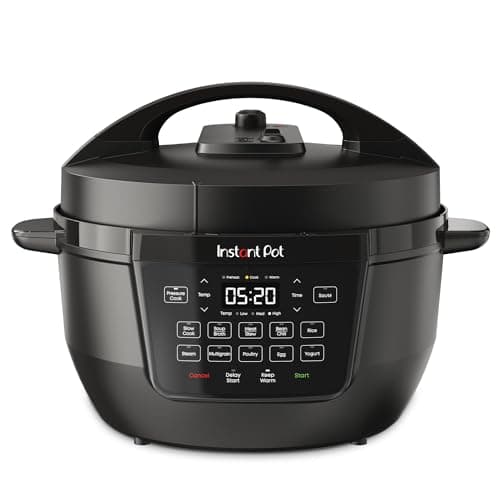
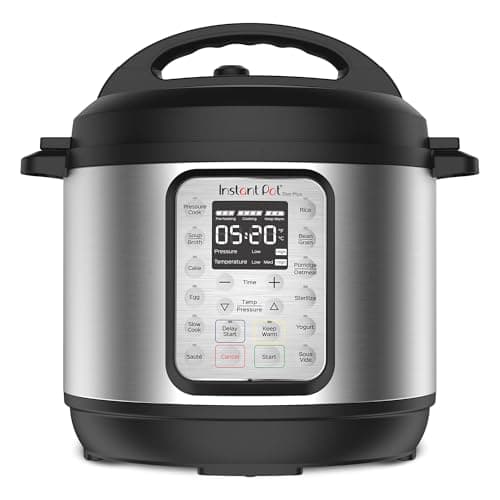
These two are not rungs on a ladder. The Duo Plus spends its budget on programs — nine functions including sous vide, in a standard 6-quart body. The RIO Wide spends it on the pot — 7.5 quarts and a wider searing floor, with only seven functions. So the question is not which is better, but which kind of headroom you want.

By Stephen V.Updated How we rank
#ad

We earn a commission if you buy through our links. It does not change the price you pay, and it does not decide our picks — the scoring rubric is published in full, including what disqualifies a pick. How this works.

The short answer

Quick picks

#CookerBest forScorePrice
01
Instant Pot Instant Pot Duo Plus 9-in-1 Multicooker, 6 Quart
Instant Pot Duo Plus 9-in-1 Multicooker, 6 Quart

Sous vide and sterilize without stepping up to the Pro

1,000 W
8.1
$96.19Amazon
02
Instant Pot Instant Pot RIO Wide 7-in-1, 7.5 Quart Multi-Cooker
Instant Pot RIO Wide 7-in-1, 7.5 Quart Multi-Cooker

A wide base for searing and big batches

1,200 W
8.3
$139.95Amazon

#ad · Prices pulled live from the Amazon Product API, last checked Oct 1, 2026. Where we have no verified live price we show none — we would rather leave a gap than print a number that has gone stale. The wattage column is what the manufacturer publishes; “not published” means exactly that, and we have not estimated one. Scores are ours, compiled from published specifications, and are not test results.

Two upgrades that point in opposite directions

Most Instant Pot comparisons are ladder questions — is the more expensive machine worth the money? This one is not. The Duo Plus and the RIO Wide are not a cheaper model and a dearer one — they are two different ways of spending a little more than the base Duo, pointed in opposite directions. The Duo Plus keeps the standard 6-quart body and buys more functions: nine cooking functions instead of seven, with sous vide and a cake program among them, plus 25 recipe presets and a quieter steam release. The RIO Wide buys more pot: 7.5 quarts instead of six, on a wider base that puts more of the floor over the heating element — and it drops back to seven functions to get there. That is the whole decision: whether your headroom is programs or quarts. Price does not settle it for you either, because whichever of the two happens to be discounted that week moves the gap between them — which is why this page ranks them on what they do, and leaves the numbers to the live cards.

What we are judging, and what we are not

Before the specifics, the criteria — because "which is better" has no answer until you say better at what. Four things separate these two in practice, and we weigh them in this order: capacity (does the pot fit what you cook?), the function set (are the extra programs ones you will actually press?), the searing floor (how much meat browns in one layer before the lid goes on?) and running cost and footprint (a tiebreaker, not a decider). Everything below is a published manufacturer figure, cited on the cards and in the sources at the foot of the page.

What you will not find here is a cooking test. We do not have a test kitchen and we have not cooked in either of these machines — our methodology says so plainly, and the scores on each card are judgments compiled from manuals, spec sheets and warranty documents rather than results from a countertop. For this particular comparison that matters less than usual, because almost every real difference between the two is a published number or a listed program rather than something you would have to cook to discover.

Capacity: 6 quarts vs 7.5

The Duo Plus holds 6 quarts. The RIO Wide holds 7.5. Six quarts is the classic Instant Pot size and the right default for most households — it takes a whole chicken, a double batch of chili or a pot of beans, and it comes up to pressure quickly because there is less mass to heat. The extra 1.5 quarts on the Wide is the difference between cooking for a couple with leftovers and cooking for four or more, or between one batch and two on a meal-prep afternoon. It is a real gain, but only if you hit the ceiling. A bigger pot you never fill is worse than a smaller one: it takes longer to come to pressure, it takes more counter, and it makes small batches look lost in the bottom. If you are unsure which side of that line you are on, we work the sizing question through properly in what size Instant Pot should I buy.

Functions: nine vs seven

Here is where the Duo Plus earns its keep. Instant Brands lists nine cooking functions on the Duo Plus — pressure cook, slow cook, steam, sauté, sous vide, rice, yogurt, cake and keep warm — against seven on the RIO Wide: pressure cook, slow cook, sauté, steam, rice, yogurt and keep warm. Strip out the overlap and the Duo Plus's additions are sous vide and cake. The preset counts differ too: 25 recipe presets on the Duo Plus against 13 one-touch options on the Wide, though presets are convenience rather than capability — they are pre-set times and temperatures for things you could dial in by hand.

Be honest with yourself about which of those you will press. A cake program on a pressure cooker is a genuine thing that works and a thing most owners try twice. Sous vide is the one that changes what the machine is for — and it deserves its own paragraph, because it is also the most oversold feature in this comparison.

Sous vide on a pressure cooker: what it really gets you

The Duo Plus's sous vide program holds the water in the inner pot at a set temperature, which is the core of the technique and a real way to try it without buying a second appliance. What it does not have is a pump. A dedicated immersion circulator moves water past a heater continuously, which is how it holds a tight temperature evenly throughout the bath; a pressure cooker heats a still pot from the bottom, so the temperature is looser and can vary between the middle and the edges. For a steak, eggs or chicken breasts now and then, that is fine and the result is far better than the pan alone. If precise doneness becomes the point rather than a novelty, the tool you want is a circulator — we explain the difference at length in sous vide vs pressure cooker, and the budget circulators start low enough that "the Duo Plus does sous vide" should not be the whole reason you pick it.

The practical read: count sous vide on the Duo Plus as a bonus you might grow into, not as a second appliance you are getting free. If you already know you want proper sous vide, the honest plan is the cheaper cooker plus a circulator, not the cooker that nearly does both.

The searing floor — and the fine print on the 35% claim

The RIO Wide's headline feature is its shape. Because it spreads 7.5 quarts sideways instead of upward, more of the pot bottom sits over the heating element, so browning before you pressurize is more even and you fit more food in one layer. That matters: searing then pressurizing is the backbone of a good braise, as laid out in how to use a pressure cooker, and on a tall narrow pot it means working in shifts.

But read Instant Brands' own wording carefully, because it is the single most misquoted number in this matchup. The claim on the RIO Wide product page is "35% larger searing surface than standard 8-quart multi-cookers"— the comparison is against 8-quart cookers, not against a 6-quart pot like the Duo Plus. So the Wide does have a meaningfully broader floor than a standard tall pot, but nobody has published a figure for "RIO Wide versus Duo Plus" specifically, and we are not going to invent one. Treat the wide base as a real directional advantage of unquantified size, and weigh it by how much of your cooking actually starts with browning meat. If you mostly dump, seal and walk away, it buys you nothing.

Power and running cost: 1,000 W vs 1,200 W

The Duo Plus is rated 1,000 W at 120 V; the RIO Wide is rated 1,200 W, both published by Instant Brands. The per-hour cost of each, at the US average residential electricity rate, is computed on the product cards below so you can compare them directly and redo the sum with your own rate. Two caveats keep this from deciding anything. The gap is small over a year of ordinary cooking, and a fuller pot holds more heat and can take longer to reach pressure, so the real-world difference is narrower than the 200-watt spread suggests. Neither is an expensive appliance to run — if you want that arithmetic in full, it is in are electric pressure cookers cheap to run.

Counter space, and the quiet-release question

The Wide's extra capacity goes sideways, which means it takes more counter than a standard 6-quart body for a smaller function set. In a tight kitchen, a shared apartment or an RV, that is a straightforward mark against it, and the small-kitchen picks weigh footprint across the whole catalog if space is your binding constraint.

One difference we will not overstate: the steam release. Instant Brands markets the Duo Plus with WhisperQuiet technology and says it "minimizes noise for a peaceful kitchen" — no decibel figure is published, so there is nothing to measure it against. Amazon's listing title for the RIO Wide also carries the WhisperQuiet name, while Instant Brands' own RIO Wide product page does not list it among the specifications. We cannot reconcile those two, so we are telling you the discrepancy instead of picking the version that makes a tidier story: do not treat quiet release as a reason to choose between these two. If venting noise genuinely matters because the kitchen backs onto a bedroom, the thing that actually helps is a natural release rather than a quick one, which is a technique, not a feature — natural vs quick release covers when each is appropriate.

What is identical on both

It is worth listing, because it is most of the machine. Both use an 18/8 stainless inner pot with a tri-ply bottom — no non-stick coating to scratch off or fail, which is a quiet durability advantage over cookers that cost more. Both carry the same one-year limited warranty. Both pressure-cook, slow-cook, sauté, steam, make rice and yogurt, and hold food warm. Both use a manual steam-release toggle rather than the auto-sealing lid you get on the Pro, which is the source of the classic beginner mistake of leaving the valve on Venting so the pot never comes up to pressure — the first-use water test exists to catch exactly that. Neither has an air-fry lid. In other words: the cooking core is the same, and the difference is a pot size, a function list and a floor shape.

Where each one loses

The Duo Plus's real problem is its position in the range rather than anything it does badly. It sits close enough to the Pro that a discount on the Pro often erases the gap, and the Pro adds an auto-sealing lid and programmable buttons on top of the same sous vide. Its interface is dated next to that dial, and its sous vide, as above, is the loose version of the technique. If you are weighing the middle of the range, the Duo vs Pro comparison is the one to read next.

The RIO Wide's real problem is that its whole case is size. Seven functions is the base feature set, so you are paying a comparable amount for fewer programs, a larger footprint and a slightly higher draw, and every bit of that is only worth it if you fill the pot or brown a lot of meat. Buy it for the number on the box rather than the way you cook and you have bought a standard cooker that takes more counter. The narrower Duo is the same seven functions in less space and at a lower draw, which is why Duo vs RIO Wide is really a pure sizing question.
In detail

The picks, in full

01
Instant Pot Instant Pot Duo Plus 9-in-1 Multicooker, 6 Quart

Sous vide and sterilize without stepping up to the Pro

Instant Pot Duo Plus 9-in-1 Multicooker, 6 Quart

Sous vide + sterilizeStainless inner pot
8.1/10

The Duo with two functions added that people genuinely use — sous vide and sterilize — plus a quieter WhisperQuiet steam release. Same 1,000 W, same stainless pot, same published working pressure, at a price between the Duo and the Pro.

Capability
8
Capacity
8
Documentation
9
Build
8
Value
7.5

What it gets right

  • Sous vide and sterilize on top of the Duo's core set, for meaningfully less than the Pro
  • The WhisperQuiet steam release is a real quality-of-life change if the kitchen is near a bedroom
  • Ships with a steam rack and two spare sealing rings, which is the accessory you always end up buying anyway

What it doesn't

  • The blue backlit LCD and button interface is dated next to the Pro's dial, and there is no auto-sealing lid
  • Sous vide on a pressure cooker holds temperature less tightly than a dedicated circulator with a pump
  • It sits in an awkward middle — close enough to the Pro's price that the Pro is often the better buy

What it costs to run

About 18.8¢ an hour at full rated draw, at the US average of 18.83¢ per kWh.

1,000 W ÷ 1000 × 1 h × 18.83¢ = 18.8¢

1000 W at 120 V / 60 Hz, published on the Duo Plus product page and confirmed on the Duo Plus manual specifications page 7. This is an upper bound: the element only draws full power while it is heating up or pressurizing, then cycles off to hold temperature, and no manufacturer publishes a duty cycle — so we compute at full rated draw rather than invent a correction factor. The full method is published.

Skip this if…

…the Pro is only a little more where you are shopping — the Pro's auto-sealing lid and programmable buttons are worth the gap, and the Duo Plus's one advantage over it is a lower list price that discounts often erase.

$96.19on Amazon

Price last checked Oct 1, 2026. Prices move constantly — Amazon's at checkout is the one that counts.

#ad · we may earn a commission from this link to Instant Pot Duo Plus 9-in-1 Multicooker, 6 Quart

02
Instant Pot Instant Pot RIO Wide 7-in-1, 7.5 Quart Multi-Cooker

A wide base for searing and big batches

Instant Pot RIO Wide 7-in-1, 7.5 Quart Multi-Cooker

Wide searing baseStainless inner pot
8.3/10

The Duo, rebranded RIO and widened. The 7.5-quart Wide has a larger searing base than the tall 6-quart pots, which is the one real ergonomic improvement in the line — more of the pot bottom touches the element, so browning is more even before you pressurize.

Capability
7
Capacity
9
Documentation
9
Build
8.5
Value
8

What it gets right

  • The wide base — Instant Brands claims 35% more searing surface — browns more food at once and more evenly than a tall 6-quart pot
  • 7.5 quarts genuinely cooks for a larger household or a batch-cooking weekend
  • 18/8 stainless anti-spin inner pot — no coating to fail, and it stays put while you stir

What it doesn't

  • 1,200 W is more than the standard 1,000 W Duo, so it costs marginally more per minute to run
  • The wider footprint takes more counter than the tall pots for the same 7-in-1 feature set
  • Seven functions only — no sous vide, no air fry

What it costs to run

About 22.6¢ an hour at full rated draw, at the US average of 18.83¢ per kWh.

1,200 W ÷ 1000 × 1 h × 18.83¢ = 22.6¢

1200 W at 120 V / 60 Hz, published on Instant Brands' own RIO Wide product page. This is an upper bound: the element only draws full power while it is heating up or pressurizing, then cycles off to hold temperature, and no manufacturer publishes a duty cycle — so we compute at full rated draw rather than invent a correction factor. The full method is published.

Skip this if…

…counter space is tight or you cook for one or two — the Wide's whole advantage is a bigger base, and if you do not need the width you are giving up counter for nothing. The standard Duo is the same idea, narrower and cheaper to run.

$139.95on Amazon

Price last checked Oct 1, 2026. Prices move constantly — Amazon's at checkout is the one that counts.

#ad · we may earn a commission from this link to Instant Pot RIO Wide 7-in-1, 7.5 Quart Multi-Cooker

Which one to buy

Buy the Duo Plus if 6 quarts covers how you cook and you want the extra programs — sous vide to try the technique, a cake function, and a deeper bench of presets. It is the better buy for one, two or a small family, and for anyone whose limit is what the machine can do rather than how much it holds. Buy the RIO Wide if you regularly feed four or more, batch-cook, or lean on browning before you pressurize and want a wider floor to do it on — and if you are genuinely content with the seven core functions, because that is what you get.

The rule that resolves it: capacity is a hard limit, functions are a soft one. A 6-quart pot that will not hold Sunday dinner is a problem you meet every week and cannot work around; a missing sous vide program is a gap you can fill later with a circulator that costs less than the difference between these two machines ever will. So if you are near the capacity ceiling, size up and take the seven functions. If you are comfortably inside it, take the programs. And if both descriptions fit — a big household that also wants sous vide — neither of these is your machine: look at the Pro, or at the whole range mapped by who each model is for in which Instant Pot to buy.

On price: neither of these is a tier above the other by design — they are two ways of spending a bit more than the base Duo — but the two listings discount independently, so the gap between them on any given day is a matter of what is on sale, not of which is the better machine. That is why there is no number in this paragraph: it would be wrong within the week. The live price on each card above is dated and refreshed from Amazon — that is the figure to act on. If one is heavily discounted and it happens to be the one that fits how you cook, that is the easy case. If the discount is on the wrong one for you, buy the right one anyway: the capacity ceiling and the function list outlast this week's price. And if a card shows no price at all, the listing had no buyable offer when we last checked — not that we left the number out.

How we picked

Machines we claim to have tested: 0

Everyone in this category tells you they tested twenty cookers. We have tested none, and we say so. Here is what we do instead: read the manufacturer's manual and spec page, record the published wattage, capacity, pressure or temperature figure and warranty term, work out what the machine costs to run per hour, show the arithmetic so you can redo it with your own electricity rate, and cite all of it. Where a brand publishes no wattage, we print no running cost rather than borrowing a number from a similar model. Prices come live from Amazon's API and disappear rather than go stale.

The scores above are judgments from that documented research — not test results. One of the five metrics is Documentation: whether the manufacturer will tell you what its cooker draws at all. The full rubric, including what disqualifies a pick, is published in full.

Questions

Frequently asked

What is the difference between the Instant Pot Duo Plus and the RIO Wide?
They upgrade in opposite directions from the same core cooker. The Duo Plus is a 6-quart, 1,000 W machine with nine cooking functions (including sous vide and cake) and 25 recipe presets. The RIO Wide is a 7.5-quart, 1,200 W machine with seven functions and 13 one-touch options, on a wider base that puts more of the pot floor over the element. Both use the same 18/8 stainless tri-ply pot and carry the same one-year limited warranty.
Is the RIO Wide better than the Duo Plus?
Only for a bigger household. The Wide's advantages are capacity and searing floor; its cost is two fewer functions, a wider footprint and a slightly higher power draw. If you cook for four or more or batch-cook, that trade is worth it. If you cook for one or two, the Duo Plus gives you more machine in less space.
Does the Instant Pot RIO Wide have sous vide?
No. Instant Brands lists seven cooking functions on the RIO Wide — pressure cook, slow cook, sauté, steam, rice, yogurt and keep warm — and sous vide is not among them. Within Instant Pot's range, sous vide is on the Duo Plus and the Pro. If sous vide is the priority, a dedicated circulator holds temperature far more tightly than any pressure cooker does; see how to choose a sous vide machine.
Is the RIO Wide's searing surface really 35% bigger than the Duo Plus?
No, and this is the most misread spec in the comparison. Instant Brands' claim is a 35% larger searing surface than standard 8-quart multi-cookers, not than a 6-quart cooker like the Duo Plus. The Wide genuinely has a broader floor than a tall pot of similar volume, but no published figure compares it directly with the Duo Plus, so we will not put a number on it.
Which costs more to run, the Duo Plus or the RIO Wide?
The RIO Wide, marginally. It is rated 1,200 watts against the Duo Plus's 1,000, and the per-hour cost of each at the US average residential rate is on the product cards above. The gap is small across a year of normal cooking, and a fuller pot takes longer to come to pressure, so treat running cost as a tiebreaker rather than a reason to choose.

Keep reading

Receipts

Sources

We have not tested these machines in a lab and we do not pretend to have. Specifications come from the manufacturer's own published documents; electricity rates come from the US Energy Information Administration; prices come from the live Amazon API. Where a figure is not published, the page says “not published” rather than guessing. Read the full method.