HUB 02 · Rice Cookers
How to Cook White Rice in a Rice Cooker
White rice is what a rice cooker was built for, and it is close to foolproof — but a few small habits separate good rice from great. Here is the whole routine: rinse, ratio, the right setting, and the rest-and-fluff step that most people skip and then wonder why their rice is gummy.
We earn a commission if you buy through our links. It does not change the price you pay, and it does not decide our picks — the scoring rubric is published in full, including what disqualifies a pick. How this works.
The one job a rice cooker was made for
White rice is the thing a rice cooker exists to make, and on a good one it is about as close to foolproof as cooking gets: measure, add water, press one button, walk away. That is the whole appeal. But “foolproof” is not the same as “effortlessly perfect,” and a few small habits are the difference between rice that is separate, glossy and tender and rice that is gummy or gluey. The good news is they take almost no extra effort once they are routine, and a fuzzy-logic cooker quietly handles the hardest part — adjusting the heat as it goes — so all you have to get right is the prep.
Rinse the rice first
Start by rinsing. Put the measured rice in the inner pot or a sieve and run cold water over it, swirling with your hand, until the water runs from cloudy to nearly clear — usually two or three changes of water. This washes off surface starch, and surface starch is exactly what makes rice clump and turn gluey. Rinsed white rice cooks up more separate and less sticky, which is what most people want from a plain bowl of long- or medium-grain rice. (Two exceptions: some enriched US rice is coated with vitamins you would rinse away — check the bag — and sushi rice is treated a little differently, which we cover in how to make sushi rice.) Drain it well before you add your cooking water so you are not throwing off the ratio.
Get the ratio right
Rice-to-water ratio is where most rice goes wrong, and it genuinely depends on the type of rice, so rather than repeat a number here that would be wrong for half of readers, we keep the ratios in one authoritative place: the rice-to-water ratio guide. The short principle is that plain white long-grain and medium-grain rice want a modest amount of water relative to the rice, and that the fill lines inside your pot already encode the right ratio ifyou measured with the cooker's own 180 ml cup — the measure most people get wrong, explained in what is a rice cooker cup. Use the lines, or use the ratio guide; just do not mix a US cup of rice with the pot's lines, because the lines are built for the smaller cup.
Pick the right setting and press start
On a basic cooker there is one button and you press it. On a fuzzy-logic or induction model, choose the White / Regular setting rather than a specialty mode — brown, sushi, porridge and quick settings all run different heat and time profiles, and using the wrong one is a quiet cause of off results. Then leave the lid shut. It is tempting to peek, but every time you lift the lid you let out steam the cooker is counting on, and on a sensing cooker you can confuse its readings. The machine will switch itself to Keep Warm when the rice is done, and that is your cue — not a timer you set, because a good cooker decides doneness by sensing, not the clock. This is the whole reason a fuzzy-logic Zojirushi makes better rice than a dumb timer-and-hope machine.
The step everyone skips: rest, then fluff
Here is the habit that fixes more “my rice is gummy” complaints than any other, and almost nobody does it: let the rice rest, lid closed, for about ten minutes after it finishes before you open it. That rest lets the moisture redistribute evenly through the grains and firms them up so they separate cleanly. Open it too soon and the bottom is wet while the top is still steaming. After the rest, fluff it gently with the paddle or a fork, lifting and turning rather than stirring, which releases steam and stops the grains compacting into a dense mass at the bottom. Rinse, ratio, right setting, rest, fluff — that is the entire routine, and it is why a rice cooker beats a pot for consistency, a case we make in rice cooker vs the stovetop.
The routine:rinse until the water runs nearly clear; get the ratio right with the pot's fill lines or the ratio guide; choose the plain White setting and leave the lid shut; then rest for about ten minutes and fluff gently before serving. The rest-and-fluff step is the one most people skip, and it is the difference between separate, tender rice and a gummy block.
The hardware
The cookers this page is about
The cookers referred to above, with prices pulled live from Amazon and dated on every card. Full rankings live in the roundups linked from this page.
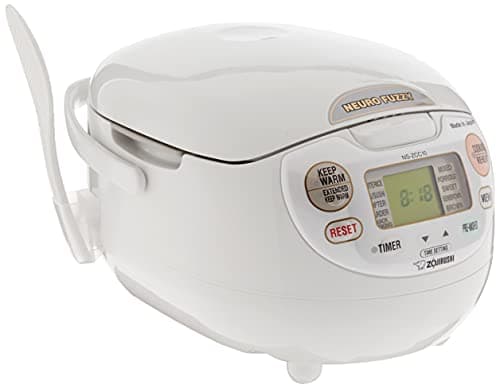
680 W
Zojirushi NS-ZCC10 Neuro Fuzzy Rice Cooker & Warmer, 5.5 Cup
The rice cooker every other one is measured against. Its Neuro Fuzzy microcomputer adjusts heat through the cook rather than running a fixed timer, which is the whole reason a $260 rice cooker cooks rice better than a $30 one. Made in Japan, 680 W, and the settings that matter are all there.
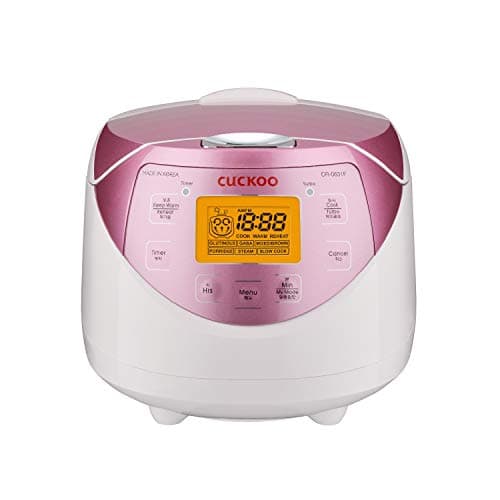
580 W
Cuckoo CR-0631F Micom Rice Cooker, 6 Cup
Cuckoo's non-pressure Micom cooker: the same Korean build and fuzzy-logic control as the CRP, without the pressure mechanism or its price. 580 W, a 6-cup nonstick pot, and a menu set that still covers GABA and brown rice. The sensible Cuckoo if you do not need pressure.
#ad · As an Amazon Associate we earn from qualifying purchases.
Questions
Frequently asked
Do you have to rinse rice before cooking it in a rice cooker?
Why is my rice cooker rice gummy or sticky?
What setting do I use for white rice?
Keep reading
Related
Receipts
Sources
- Zojirushi — NS-ZCC10 Neuro Fuzzy Rice Cooker product page
- USDA FoodData Central — rice, cooked (nutrition reference)
We have not tested these machines in a lab and we do not pretend to have. Specifications come from the manufacturer's own published documents; electricity rates come from the US Energy Information Administration; prices come from the live Amazon API. Where a figure is not published, the page says “not published” rather than guessing. Read the full method.